Planning a Home Addition? Why Your Solar Panels Need a Plan
Planning solar panels for a home addition in CT, MA or RI? Learn how to protect roof space, time panel removal and sequence the build and solar install.
Dan Katzman
Teamsun
Plan your solar panels for a home addition before framing starts: map which roof planes the new space will cover or shade, decide whether the array stays, moves or comes off temporarily, and book panel removal, roofing and reinstall as one sequence. In Connecticut, Massachusetts and Rhode Island, that early plan prevents shading, stranded panels and paying twice for roof access.
Key Takeaways
- Decide before framing: The addition's footprint, ridge height and roof pitch decide whether your existing panels keep full sun, so settle the solar layout while the plans can still change.
- Three outcomes for existing panels: they stay put, they come off and go back on the same roof, or they move to a new roof plane. Each one has a different cost and timeline.
- Use a qualified solar crew for removal: Panels are live electrical equipment. Your builder or roofer should not unbolt them; a licensed solar crew isolates, removes and reinstalls them.
- Sequence matters most: The safe order is design, permits, panels off, framing and roofing, building inspection, panels on, then utility sign-off.
- Bundle the electrical wishes: If you might add a battery, EV charger or service upgrade, do the design and trenching while walls and yards are already open.
Solar Panels for a Home Addition at a Glance
| Scenario | What happens to the panels | Who handles it | When it happens |
|---|---|---|---|
| Addition is on the ground or a different side of the house | Panels stay in place; check for new shade and conduit paths | Solar designer reviews the plans | Before framing |
| Addition ties into the roof under the array | Panels come off and are reinstalled after roofing | Licensed solar electricians, then your roofer | Panels off before roof tear-off |
| Second story shades the old roof | Panels move to the new roof or a sunnier plane | Solar design plus your builder | Design stage, install after roof is dry-in |
| New roof plane has good sun | Add panels there, sometimes in the same job as the reinstall | Solar crew | After roofing, before final inspection |
| Panel box or service must grow | Electrical upgrade is coordinated with the array and any battery | Electrician and solar installer | During rough-in |
| System modified in any way | Permit and utility notice for the changed layout | Installer files; you approve | Before work starts, and again at sign-off |
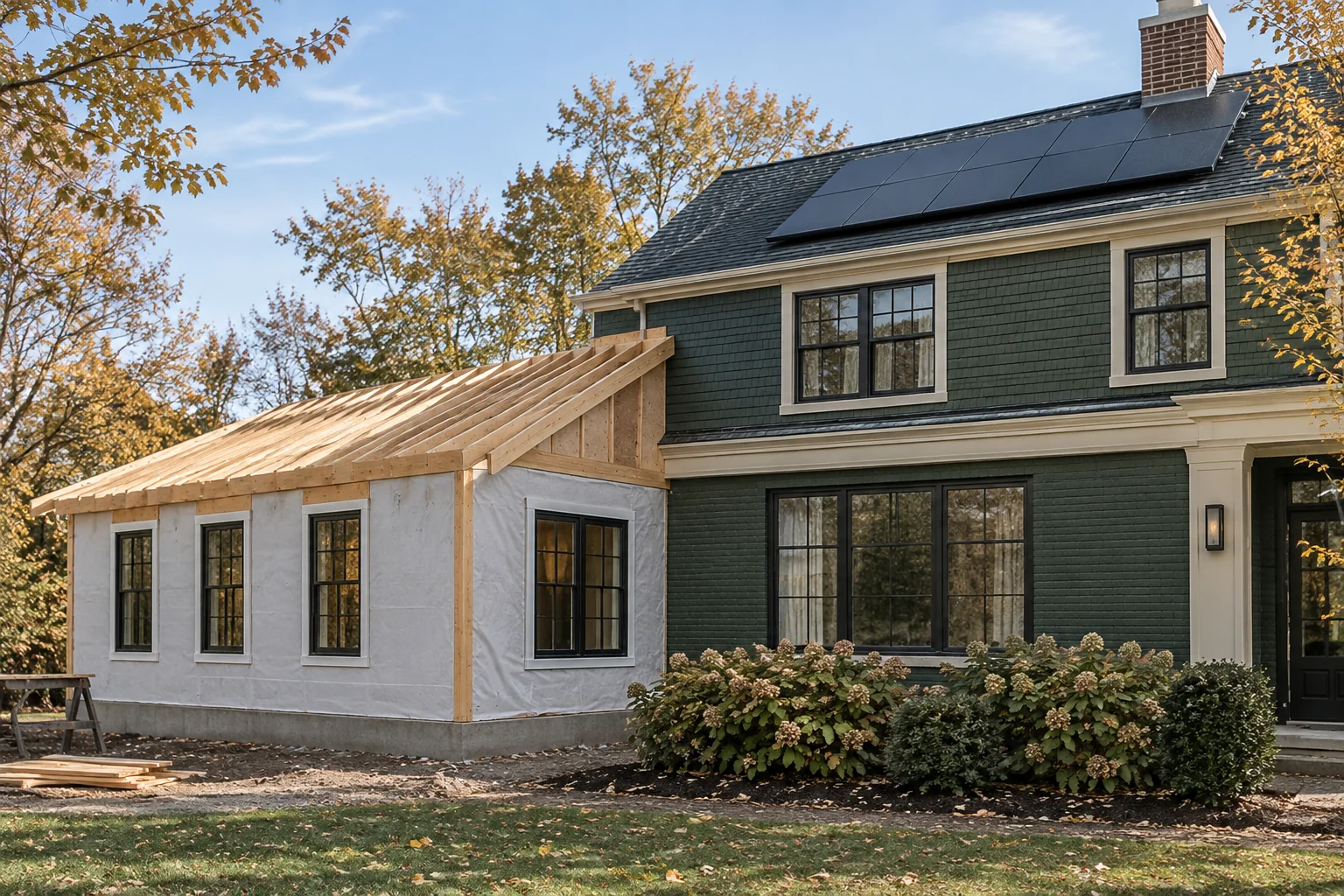
Why Does a Home Addition Affect Solar Panels?
A home addition affects solar panels because new walls and rooflines can shade the array, cover roof planes the panels sit on, or force the panels to come off during roofing. Even an addition on the far side of the house can change wire routes, panel box capacity and how inspectors view the system.
Most homeowners plan an addition around floor space, bedrooms and budget. Solar rarely makes the list until the framing crew asks what to do about the panels. By then, the design is often locked, and the options left are expensive ones.
Shade from a new second story or higher ridge
A second-story addition can throw a long shadow across the roof below it, especially in winter when the sun sits low. Panels wired in strings can lose far more output than the shaded area suggests, because one shaded panel can pull down others. Microinverters or optimizers soften that, but they do not fix a permanent shadow.
Run a quick shade check on the new design. Ask your architect for the ridge height and the distance from the new wall to your first panel row. Then have a solar designer check the sun path for December, not June. We cover how shade changes the math in our guide to solar panels for homes with trees and shade.
Panels sitting where the addition ties in
Many additions connect to the main house through the roof. A new gable might intersect the old roof plane, or a dormer might replace a section of it. If panels sit within a few feet of that tie-in, they usually have to come off while the roofers open the deck.
Panels in the way are the most common reason homeowners call us mid-project. It is also the easiest fix when planned: a crew removes the panels in a day, the builder works, and the panels go back on the finished roof.
Stranded panels and orphaned wiring
A stranded array is one that keeps its place on the roof but loses its path to the inverter or the main panel. This happens when a new wall now covers the old conduit run, or a rooftop junction box ends up inside the new envelope. The panels may look fine while producing nothing.
Mark the existing conduit, inverter and disconnect locations on the addition drawings. If any of them fall inside the construction zone, the electrician should plan their new route in the same set of plans the builder uses.
How Do You Plan Roof Space Before Framing the Addition?
Plan roof space by mapping your current array on a roof plan, marking the addition's footprint and new roof planes, then checking sun exposure, fire-code pathways and wire routes for every plane. Decide whether the old panels stay, move or grow, and do it before the framing drawings are final.
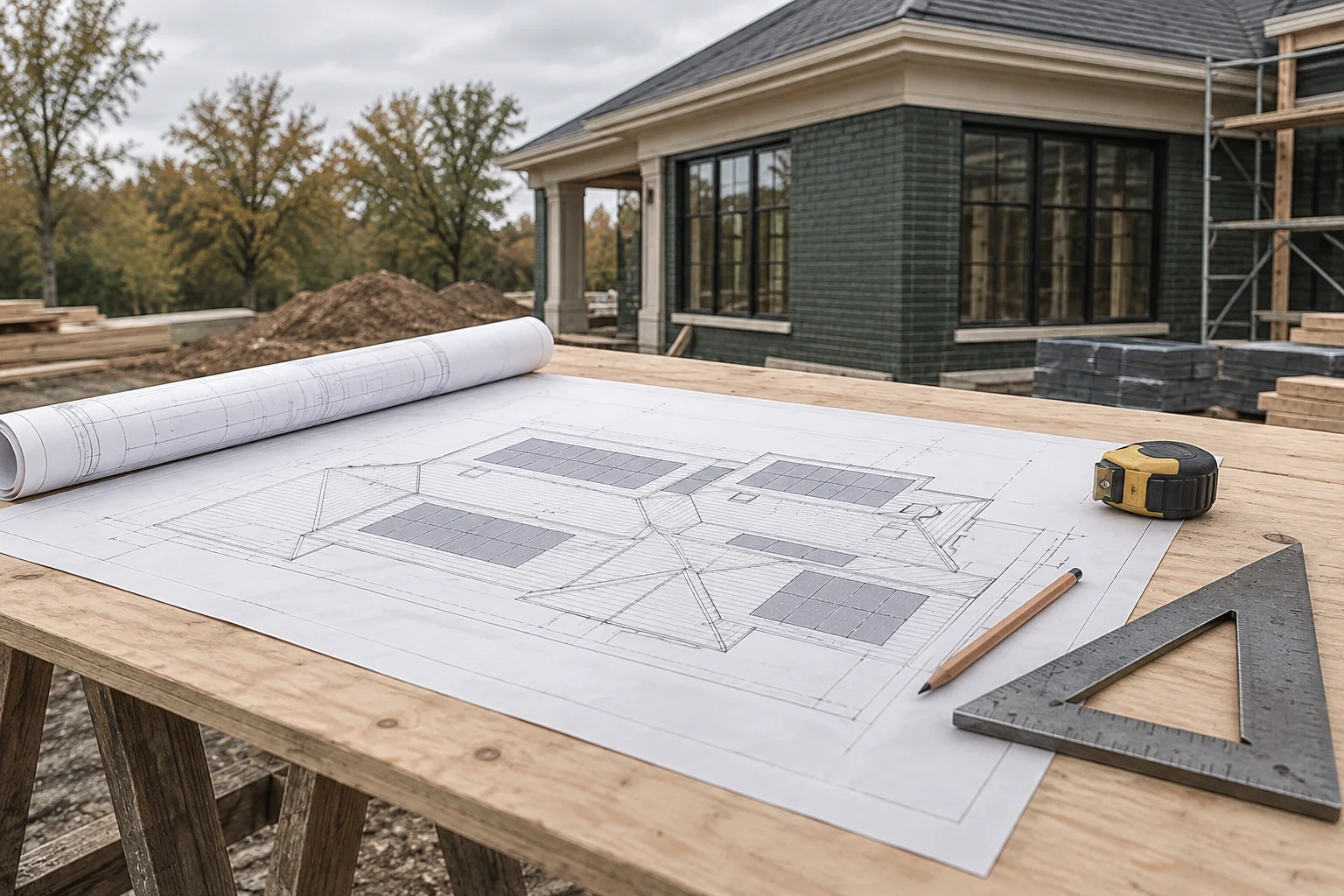
The U.S. Department of Energy's homebuilder's guide to going solar says site planning is one of the most important parts of a solar project. It also points to building a home as "solar ready" so equipment can be added later. The same logic applies to an addition on an existing house.
Step 1: Draw what you have now
Start with the as-built layout of your array: how many panels, which roof planes, the row spacing and where the conduit enters the house. Your original installer's design set or monitoring app often has this. If you do not have it, a site visit and a drone or roof photo can rebuild it.
We service systems installed by any company, so we can map an array we did not build. Bring whatever paperwork you have, including the permit and the utility interconnection letter.
Step 2: Overlay the addition
Put the addition's footprint, new roof pitch, ridge height and overhangs on the same drawing. Look for three things: roof planes the addition will cover, roof planes it will shade, and new planes that face south, southeast or southwest and could hold panels.
In our service area, a south-facing plane around a 30 to 40 degree pitch is the usual best case, but east and west planes still produce well. Ask the architect to consider pitch and orientation of any new roof with solar in mind. A slightly different pitch costs nothing at the drawing stage.
Step 3: Keep the fire-code pathways
Every residential array needs setbacks and walkable access on the roof for firefighters. Local plan review checklists, such as this Nantucket, Massachusetts residential PV checklist, ask for access pathways on each roof plane and for roof access that does not run through obstructions like vents or conduit.
A new roofline can eat the pathway the old layout relied on. Your solar designer should rerun the setbacks for the new roof geometry. A few panels may have to move even if the sun is fine.
Step 4: Check the roof underneath
Before panels go back on, ask whether the existing roof has enough life left. Rhode Island's residential guide to going solar notes that most installers recommend replacement if the remaining roof lifetime is eight years or less. If your addition will already have new shingles tied into the old ones, this is the time to decide whether to re-roof the whole plane.
We go deeper on timing in need a new roof: when to do it before solar. The short version: if the panels are coming off anyway, re-roofing under them costs far less than doing it later.
Step 5: Leave room for the future
If you may add panels, a battery or an EV charger later, ask the electrician to size the service and leave conduit routes now. A spare conduit run through an open wall costs little. Cutting that wall open later costs a lot.
Should You Remove and Reinstall Panels or Move Them?
Remove and reinstall panels when the roof work happens under the same roof plane, and relocate them when the addition shades or covers that plane. Leave them alone when the addition is far from the array. The right choice depends on where the new roof meets the old and how much sun each plane keeps.
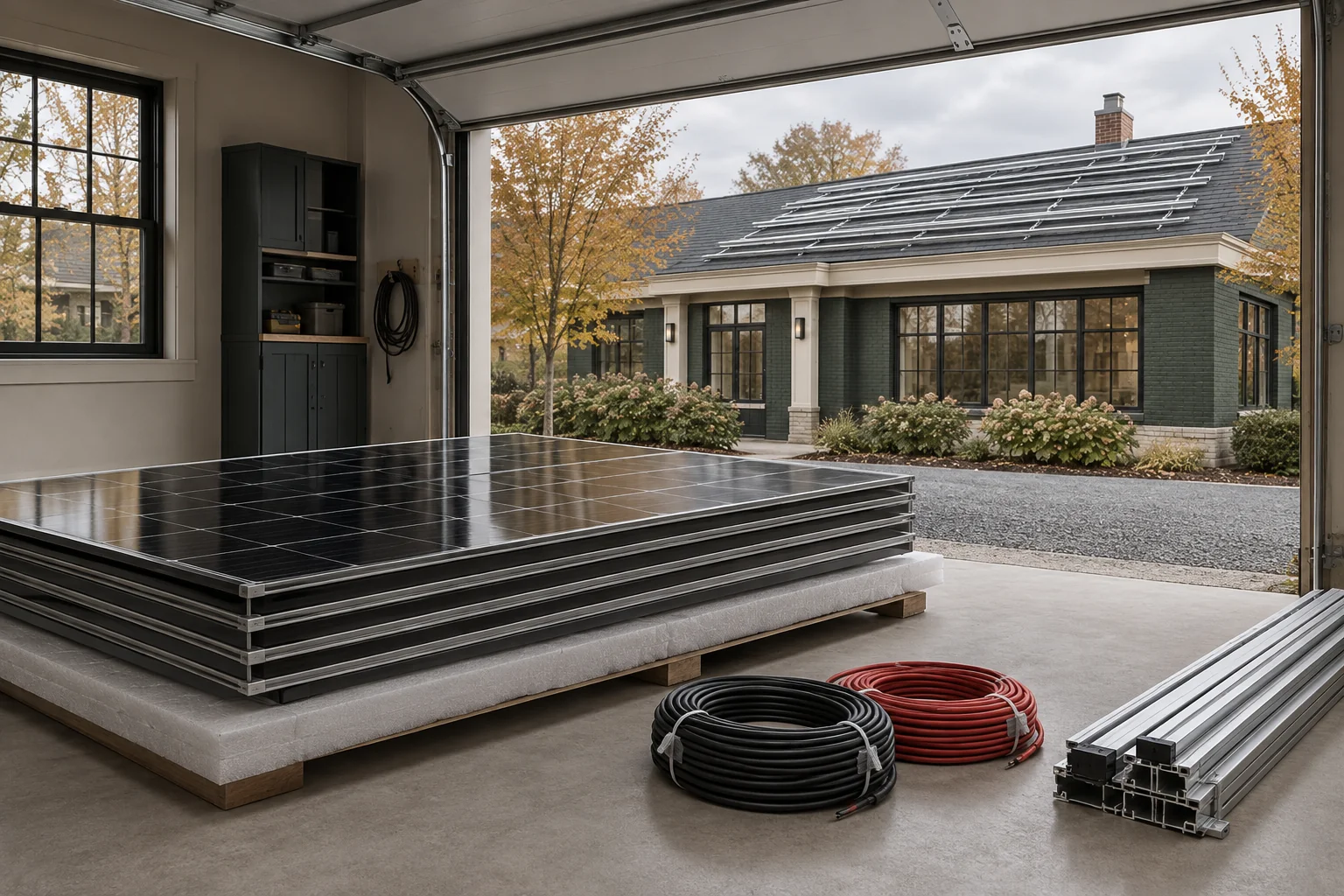
Two of the most common searches we see from homeowners are about solar panel removal and reinstall, and solar panel removal and reinstallation. The work follows the same pattern whichever phrase you use: isolate, remove, store, protect, then reinstall and recommission.
Compare the four options
| Option | Best when | Main tradeoff |
|---|---|---|
| Leave panels in place | Addition is away from the array and creates no new shade | Lowest cost, but you still need the shade and conduit check |
| Remove and reinstall on the same plane | Roofing or tie-in work happens under or next to the array | Array is offline while panels are off |
| Relocate to a new plane | Old plane is shaded or covered by the addition | New layout, new permit paperwork, possibly new wiring |
| Add panels on the new roof | New plane has strong sun and you want more production | Needs inverter and service capacity to handle more panels |
Why your roofer should not take the panels off
Solar panels are energized whenever the sun is out. The Department of Energy's solar energy guide for homebuilders says construction professionals who are not certified to install solar panels should not perform any portion of the installation process. Removal and reinstall is part of that work.
In Connecticut, solar electrical work sits under its own license categories, and the state publishes solar trades licenses and scope of work information. You can verify an electrician's or home improvement contractor's license through the state, as the Connecticut solar panel buyer's guide points out. Check it before anyone touches your array.
What a proper removal looks like
- Shut down the system at the inverter and AC disconnect, and isolate the DC strings.
- Photograph and label every string, panel position and wire run, so the layout comes back exactly.
- Remove panels, rails and flashing, then stack the panels flat or on edge on padding, out of the work zone.
- Cap and protect any open conduit or junction boxes from weather and dust.
- After roofing, reinstall flashings and racking on the finished deck, remount the panels, test each string and recommission the system.
The cost depends on array size, roof access, and whether new flashing, racking or a rewire is needed. We break down the steps and cost factors in remove and reinstall solar panels for a new roof. For a quote on your specific roof, we need to see it.
Our view: relocate when shade is permanent
If an addition will shade a plane for much of the day in winter, we would not put those panels back there just because it is cheaper. You pay for the panels once but lose their output every year. Moving them to a sunnier plane, even at a higher upfront cost, usually wins over the life of the system.
The exception is a plane that loses only the first or last hour of sun. Panels there often still earn their place. A shade analysis, not a guess, should settle it.
How Do You Sequence the Roof, Addition and Solar Dates?
Sequence the work as design, permits, panels off, framing and roofing, building inspection, panels on, then utility sign-off. The panels come off right before roof work and go back on only after the roof is dry and the deck is finished, which keeps the array offline for the shortest time.
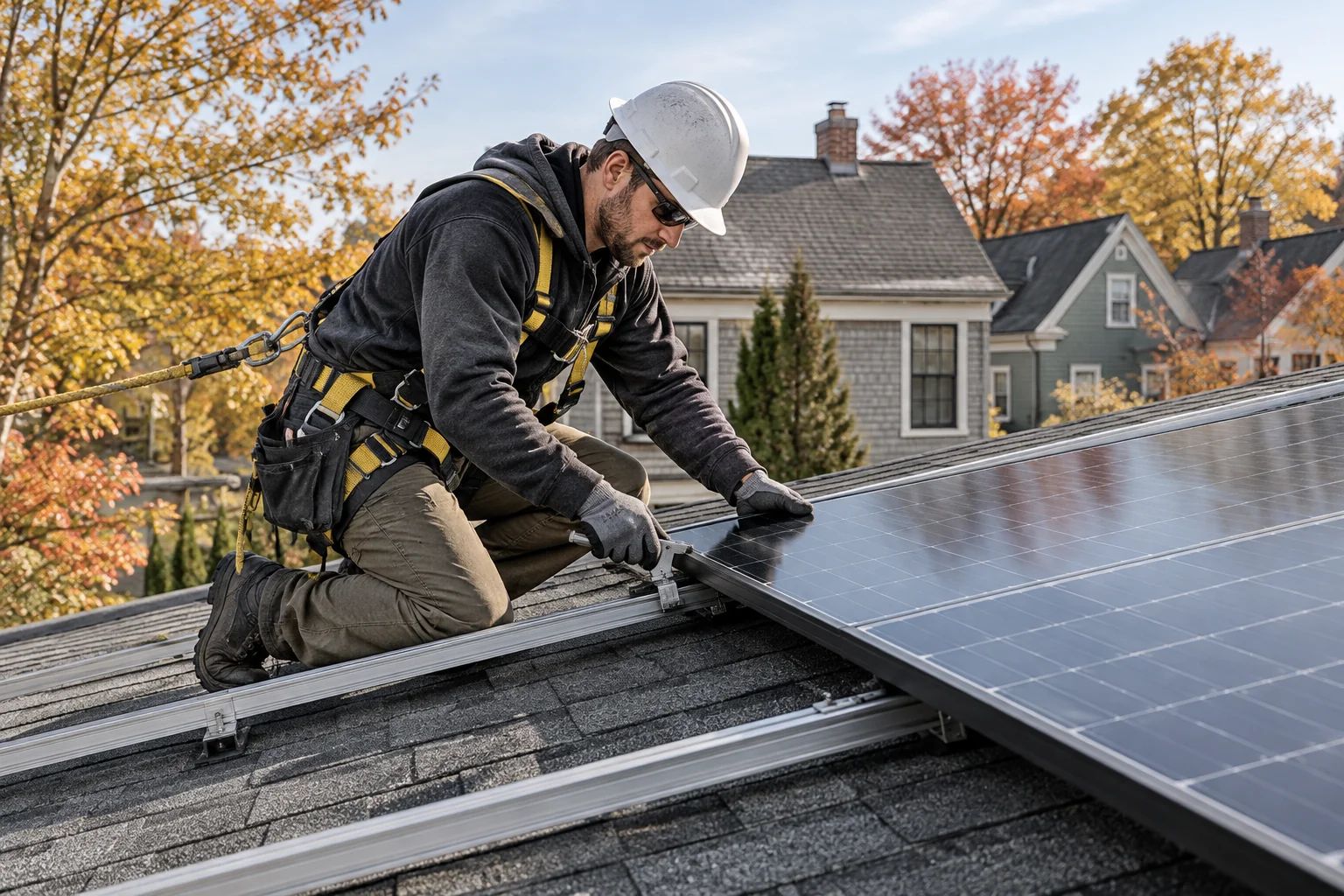
The sequence we recommend
- Design together. Share the addition drawings with your solar installer before the builder finalizes them. Settle roof pitch, ridge height and conduit routes.
- Permits. File the building permit for the addition and any solar permit for relocated or added panels. Our solar installation and service offerings include permitting and utility paperwork.
- Panels off. A solar crew removes the affected panels and labels everything. Aim for this to happen within days of roofing, not weeks.
- Framing and roofing. The builder frames the addition, ties in the roof and finishes the deck. Ask for the roofing to be completed on the planes where panels will return.
- Rough electrical and building inspection. Any conduit, junction box or panel upgrade is inspected at this point while it is still accessible.
- Panels on. The solar crew reinstalls or adds panels, tests each string and brings the system back online.
- Final sign-off. The local inspector approves the work, and your installer notifies the utility if the system layout or size changed.
How long are the panels off?
For a single-plane remove and reinstall on an average home, the panels are often off for the duration of the roofing and tie-in work. That can be days or several weeks, depending on your builder's schedule and the weather. Every week offline is lost production, so push the builder to compress the roof stage.
Our average install timeline from contract is 47 days for new systems. Reinstalls are shorter, but the same bottlenecks apply: permits, inspection slots and weather. Ask us for a firm window once your builder gives dates.
Seasonal timing in New England
Many New England additions start in spring and run into fall, but winter work is possible. Roofing in freezing weather is slower, and shingles seal poorly in the cold, so builders often schedule roof work for milder days. Solar crews can work through winter, as we explain in can solar panels be installed during a New England winter.
If snow is likely when the panels are off, make sure the open conduit and flashing are weather-protected. And remember that panels sitting offline in January miss less production than panels offline in June.
What Permits and Utility Paperwork Does a Modified Array Need?
A modified array usually needs a building permit for the addition, a solar or electrical permit for any changed layout, and notice to your utility if the system size or configuration changes. Requirements vary by town, so your installer should confirm them with the local building department before work begins.
A straight removal and reinstall on the same layout is often handled differently from a relocation or expansion. Adding panels can trigger a new interconnection review. Ask the installer to state in writing which permits apply and who files them.
Keep your original solar paperwork handy: the permit, the interconnection approval and the equipment list. If you claim incentives, any system change can affect your records, so our designers can walk through the paperwork with you before you commit to a layout.
Monitoring and warranty records
Ask the installer to confirm that the monitoring connection returns after reinstall, with every panel reporting. Also ask who warranties the reinstall labor and any new flashing. Panel and inverter warranties come from the manufacturers, while workmanship coverage comes from whoever does the work, so get the reinstall scope in writing.
Which Electrical Add-Ons Should You Decide On During the Addition?
Decide on a service upgrade, battery and EV charger during the addition, because the walls, trenches and electrical panel are already open. Running conduit and sizing the panel now costs far less than reopening finished spaces later, even if you install the equipment itself years from now.
Panel box and service capacity
New bedrooms, a kitchen or heat pumps add electrical load. If your main panel is near its limit, the electrician may need to upgrade it, and that upgrade should be designed around solar and any future battery. Ask for a load calculation, not a guess.
Battery and EV charger planning
A battery needs wall space, a clear location and a backup circuit plan. Our guide to how a solar battery retrofit works covers what the install involves. We install FranklinWH, Tesla Powerwall and Enphase IQ batteries on systems of any brand.
For an EV charger, a hardwired Level-2 unit needs a dedicated circuit. If the garage is part of the addition, put the conduit in now. We install hardwired Level-2 chargers and can coordinate it with the same electrician pulling wire for the addition.
Who Should Do the Work in Connecticut, Massachusetts and Rhode Island?
Use a solar installer whose own crews do the removal, reinstall and electrical work, and who will coordinate with your builder. The more handoffs between subcontractors, the greater the chance panels sit offline longer than planned or the layout shifts without anyone owning the change.
Teamsun is a privately owned local installer serving Connecticut, Massachusetts and Rhode Island, and our crews are in-house W-2 employees, not subcontractors. That means the same company that designs your layout also takes the panels off and puts them back. We also service systems installed by other companies, so you do not need the original installer.
Questions to ask before you hire
- Who removes and reinstalls? Pass mark: licensed solar electricians employed by the installer, named in the contract. Walk away if the answer is "your roofer."
- How long will the array be offline? Pass mark: a written window tied to your builder's roof schedule. Walk away from vague answers like "a while."
- Who owns the reinstall warranty? Pass mark: a written workmanship term covering reinstall labor and new flashing. If it is verbal only, ask for it in writing.
- Who files permits and utility notices? Pass mark: the installer, with copies to you. If it is "you handle it," expect delays.
- Will you review the addition drawings? Pass mark: yes, before framing. If they only want to see the roof after it is built, the design window is already closed.
If a check fails, you have two options: change the vendor or change the scope. Do not let the addition go forward on a verbal plan for the panels, because the fix after framing is nearly always more expensive.
Frequently Asked Questions About Solar Panels and Home Additions
Can I add more solar panels after my addition is finished?
Yes, if the new roof has usable sun and your inverter and electrical service can handle more capacity. Adding panels during the same project is usually cheaper than a separate job later, because the crew is already on site and the roof deck is open for racking.
Does moving my panels void the warranty?
Not automatically, but it depends on who does the work. Manufacturer product warranties generally depend on proper handling and installation, so have a qualified solar crew do the removal. Ask whoever reinstalls the panels to provide written workmanship coverage for their labor and new roof penetrations.
Is a solar panel removal and reinstall expensive?
Cost varies with array size, roof access, how much racking and flashing must be replaced, and whether wiring changes. It is usually far less than buying new panels. The best way to control the price is to bundle it with roofing or addition work and have a solar installer quote the exact scope.
Can my builder or roofer handle the panels?
No. Panels are live electrical equipment, and federal guidance says construction workers who are not certified solar installers should not do any part of the installation process. Have a licensed solar crew isolate and remove them, and let your builder handle only the roof work around them.
Will an addition affect my net metering or utility approval?
Only if the system layout or size changes. Moving or adding panels can require notice to your utility, while a plain reinstall on the same layout is often simpler. Your installer should check your utility's rules in Connecticut, Massachusetts or Rhode Island before work begins.
Plan the Addition and the Array Together
An addition is the one time your roof, your walls and your electrical service are all open at once. That is the cheapest moment to fix solar problems and the costliest moment to ignore them. Send us your drawings before the framing crew starts, and we will tell you what stays, what moves and what it takes to keep the array producing.
The next step is simple: request a free quote and include your addition plans, or call us at 203-903-4091 to talk through your timeline. We will review your roof, shade and electrical capacity, then give you a clear plan for panel removal, reinstall or relocation.
Recommended Resources
Written by
Dan Katzman
Teamsun
Teamsun writes practical solar guidance to help property owners compare equipment, project scope, costs, and long-term service before making a decision.
Keep going.
Can Solar Panels Work With Your Home Generator?
Learn how a solar panel system with existing home generator setups can work together, what transfer switch changes are needed, and when a battery skips the generator.
Dan Katzman
Teamsun
Do Solar Panels Increase Home Resale Value? Sellers' Guide
Do solar panels increase home resale value? See how buyers and appraisers treat owned vs leased systems in CT, MA and RI, and what paperwork to gather.
Dan Katzman
Teamsun
How Many Solar Panels Does a Small Business Need?
Learn how many solar panels for small business use based on kWh usage, roof size, and budget, plus the 25kW-500kW range Teamsun installs across CT, MA, RI.
Dan Katzman
Teamsun