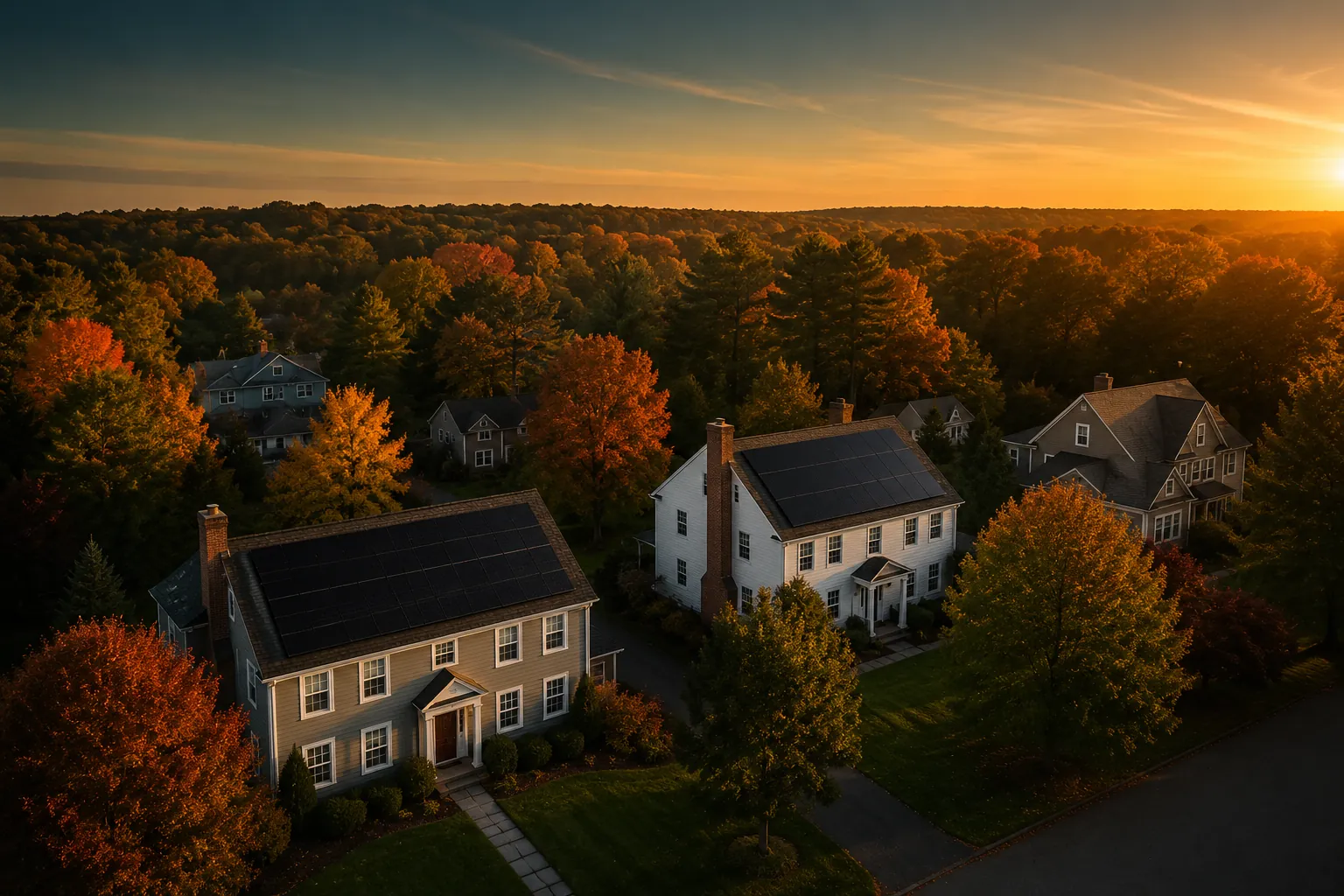
Solar Panels for Homes With Trees and Shade
Solar panels for homes with trees and shade can still pay off. Learn when placement, microinverters or tree trimming beat skipping solar in New England.
Dan Katzman
Teamsun
Yes, solar panels for homes with trees and shade are often still worth it, as long as the shade is partial and you can put panels on the sunniest roof sections.
Shade that hits only part of the roof, or only part of the day, can be managed with smart panel placement and the right inverter. Heavy, all-day shade is the case where trimming a tree beats skipping solar, or where skipping it is the honest answer.
Key takeaways
- Partial shade is not a dealbreaker: the Department of Energy says excessive shade may rule out rooftop panels, but a few shaded hours on one roof section usually does not.
- Placement comes first: put panels on the cleanest roof faces and leave the shaded section empty before you spend money on hardware.
- Inverter choice matters most on mixed roofs: microinverters (or optimizers) keep one shaded panel from dragging down the rest; a string inverter fits a roof that is clean and uniform.
- Trim when one or two trees cause most of the loss: it can cost far less than the system's lifetime value, but removal needs a local rules check and an arborist.
- Walk away when shade covers the whole usable roof: if no section gets solid sun through the day, consider a ground mount or skip solar.
Shade and solar at a glance
| Your shade situation | Best first move | Inverter fit | Verdict |
|---|---|---|---|
| One roof face is clear, another is shaded | Put all panels on the clear face | Either; microinverters add flexibility | Usually worth pursuing |
| Shade from a chimney or vent at certain hours | Shift panel rows away from the shadow path | Microinverters or optimizers | Usually worth pursuing |
| One or two trees shade the best face | Get an arborist opinion on trimming | Decide after trimming | Often worth trimming first |
| Shade on a few panels only in winter | Keep panels; check summer sun hours | Microinverters | Usually worth pursuing |
| Mature canopy shades every roof face most of the day | Look at a ground mount in a clear spot | Depends on the layout | Roof solar likely not worth it |
| Protected or very valuable tree causes the shade | Design around it; do not count on removal | Microinverters | Case by case |
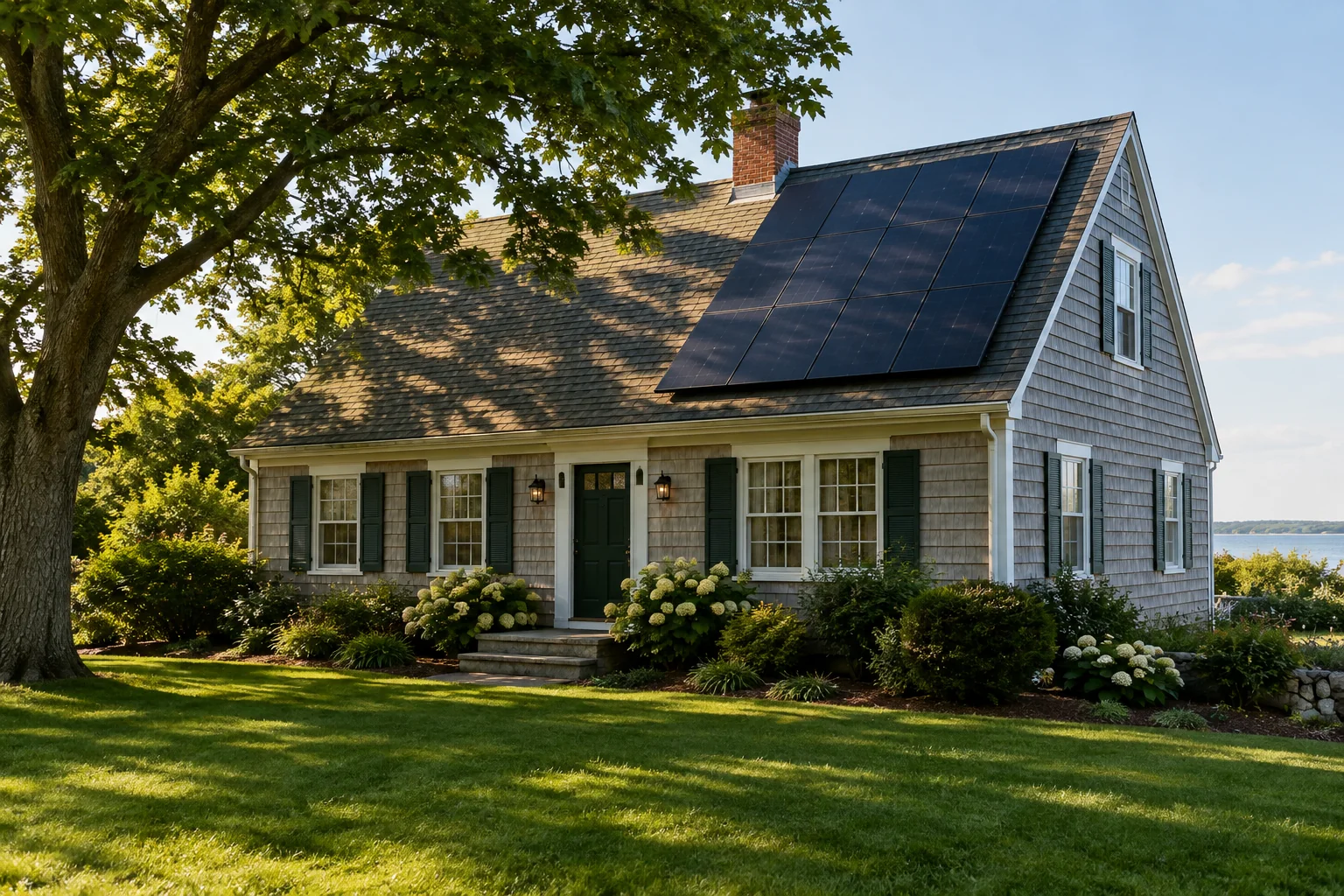
Why is partial shade the most common objection to solar panels for homes?
Partial shade is the most common objection because New England is heavily wooded, and most homeowners can see a tree from their roof. People assume any shadow ruins a solar system. In practice, shade is a matter of how much, where and when, not a simple yes or no.
The Department of Energy does say that excessive shade from nearby trees may make rooftop panels a poor option, and it lists roof size, shape and slope as other factors. The word that matters there is "excessive." A roof with one shaded corner is a very different case from a roof under a full canopy.
We hear the same objection on almost every first call from Connecticut, Massachusetts and Rhode Island homeowners. The question is usually phrased as "I have a big oak in the front yard, so is solar even possible?" Often the answer is yes, with changes to the design.
Why shade hits harder in New England than the map suggests
Two things work against you. First, the sun sits low in winter, so shadows from tall trees stretch much farther across a roof than they do in June. Second, many older neighborhoods have mature trees that were planted before anyone thought about roofs.
Deciduous trees complicate things in a useful way. A maple that blocks sun in July may let most light through in January once the leaves drop. A white pine blocks light all year. Knowing which tree you have changes the answer.
Shade also changes how much power you can expect on cloudy days, a separate issue we cover in how much power solar panels actually produce in cloudy New England weather.
How much shade is too much for rooftop solar?
Shade is too much when no usable roof section gets steady, direct sun through the middle of the day across most of the year. If at least one roof face stays clear during those core hours, solar can work. If every face is covered for most of the day, rooftop solar rarely makes sense.
No single percentage works for every house, so we judge each roof by section, season and time of day. Here is how to run the check yourself before anyone visits.
A simple pass or walk-away test
- Pass: at least one roof face with open sky from roughly mid-morning to mid-afternoon, including in the leafless months. Shade limited to early morning or late evening is a pass.
- Maybe: the best face is shaded by one or two identifiable trees or a structure. This is a "trim or redesign" case, so get both options priced.
- Walk away: every roof face is shaded through the middle of the day by several large trees you cannot or will not trim. Consider a ground mount, or put the money elsewhere.
Watch the roof on a clear day at three times: about 9 a.m., noon and 3 p.m. Photograph where shadows land. Repeat in winter if you can. Those photos make the site visit faster and more accurate.
The real measurement comes from a shade analysis during the site visit, which maps the sun path over your actual roof. If a company quotes you without ever measuring shade, treat that as a red flag. We cover this in the checklist below.
Panel placement strategies that reduce shade losses
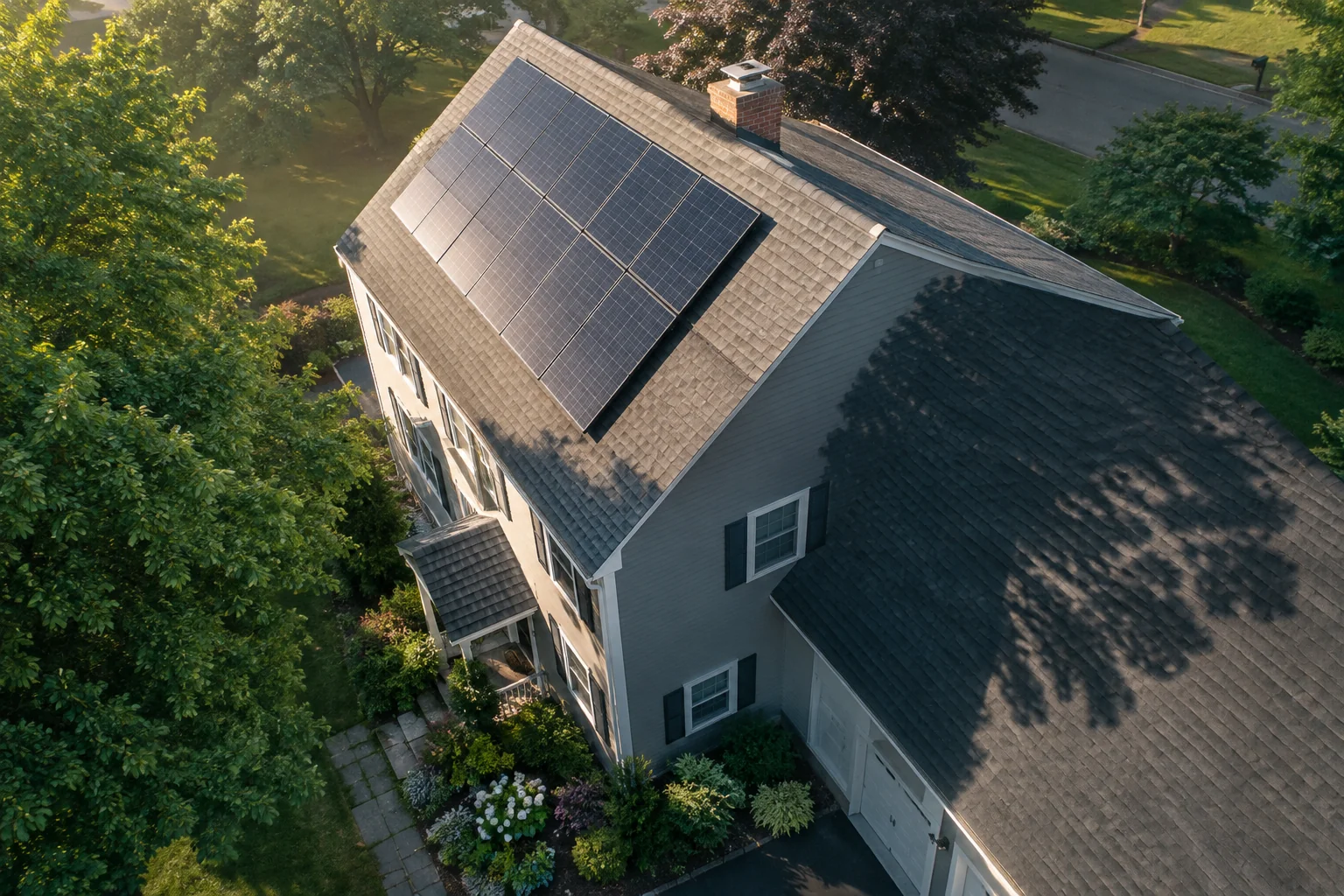
Good placement is the cheapest fix for shade, because it costs nothing in hardware. The goal is simple: put panels where the sun is, and leave the shaded areas empty. A smaller system on clean roof space often beats a larger one that includes shaded panels.
1. Use the cleanest roof face first
A south-, east- or west-facing roof plane with open sky usually produces more than a perfect-orientation plane that sits under a tree. We rank each roof face by actual sun exposure, not by compass direction alone, and fill the best one first.
2. Skip the shaded corner
It is tempting to fill every square foot. Resist it. A panel that spends half the day in shadow adds cost and little output. We often leave out the one or two panel positions closest to a tree or chimney.
3. Keep shade-affected panels together
When panels share an electrical string, shade on one can pull down the others. Grouping the exposed panels together, and the clear panels together, limits the damage. Splitting panels across separate roof planes into separate circuits does the same thing.
4. Mind the shadow path, not just the shadow
A vent pipe or chimney casts a shadow that moves across the roof through the day. Placing a row directly in that path costs you more than placing it a few feet over. A good layout is drawn with the sun path overlaid on it.
5. Consider a ground mount when the roof loses
Some lots have a clear open spot in the yard even when the roof is under trees. A ground mount can solve that, though it adds trenching and installation work. Check setbacks and local permitting before counting on it.
Microinverters vs string inverters on a shaded roof
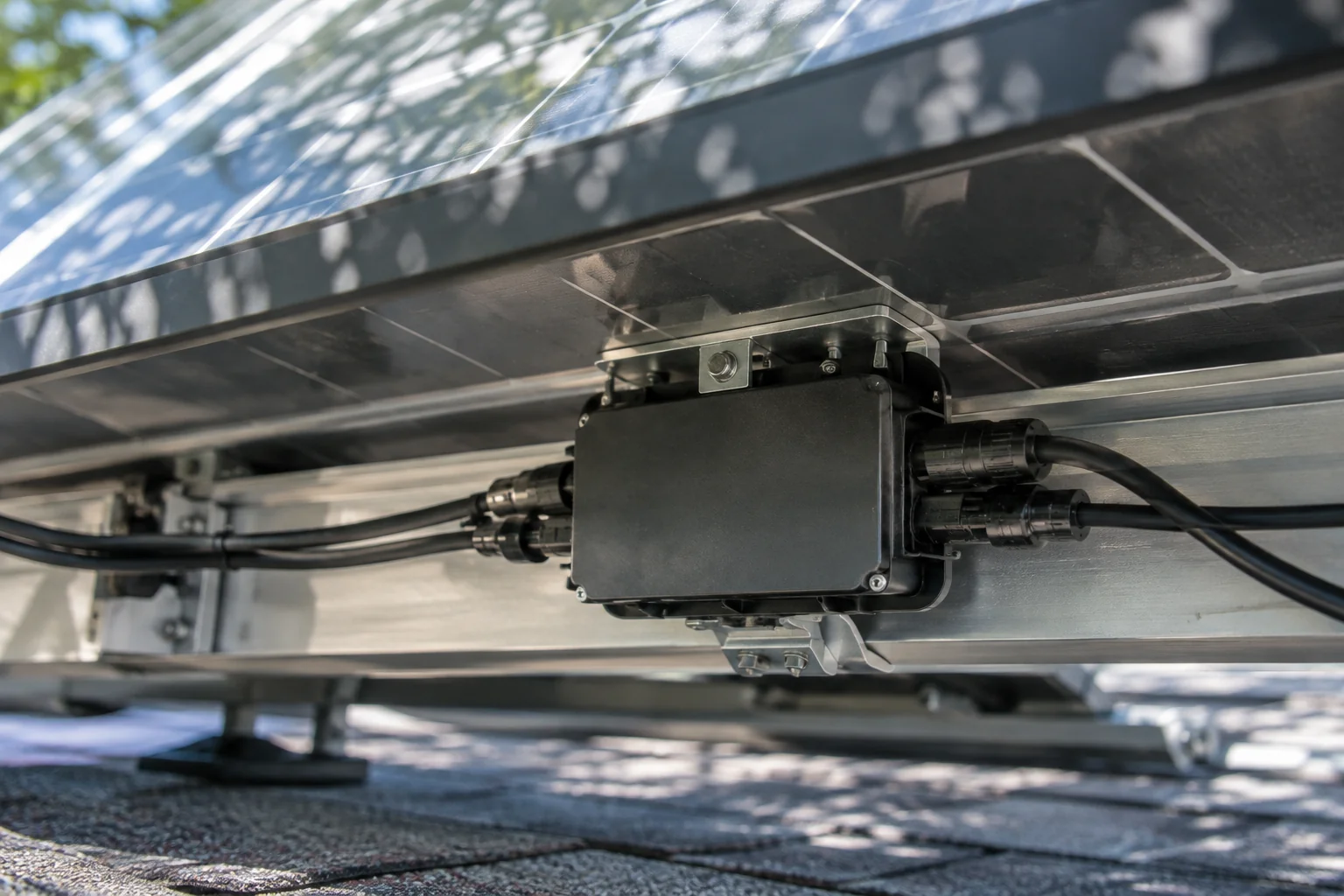
On a roof with uneven shade, microinverters usually handle it better than a basic string inverter. A string inverter links panels in series, so one shaded panel can pull down the whole string. Microinverters work per panel, so the loss stays with the shaded panel. On a clean roof, the gap is small.
| Factor | String inverter | Microinverter |
|---|---|---|
| How shade affects output | Shade on one panel can reduce the whole string | Loss mostly stays with the shaded panel |
| Best roof type | One or two clean roof planes, no shade | Multiple planes, chimneys, trees, mixed angles |
| Panel-level monitoring | Usually string-level | Each panel reports separately |
| Where the electronics sit | One unit, often on a wall at ground level | One under each panel, on the roof |
| Service on a failure | Replace one central unit | Replace a single small unit, with a roof visit |
| Upfront cost | Typically lower | Typically higher |
Power optimizers are a middle path. They sit on each panel and condition its output, but still feed a central string inverter. They also limit the effect of a shaded panel on its neighbors.
What the research says, and does not say
An International Energy Agency PVPS Task 13 report on partially shaded systems notes that the promised annual gains from panel-level electronics are often not realistic for light shading. That matches what we see. Panel-level electronics earn their cost when shade is real and recurring, not when a branch brushes one corner for an hour.
So the honest rule is this: if you have no meaningful shade, a string inverter is fine and often cheaper. If shade touches several panels at different times of day, or you have several roof planes, go with microinverters or optimizers. Teamsun installs Enphase-based systems and can quote either route, so you can compare them side by side.
When does tree trimming or removal beat skipping solar?
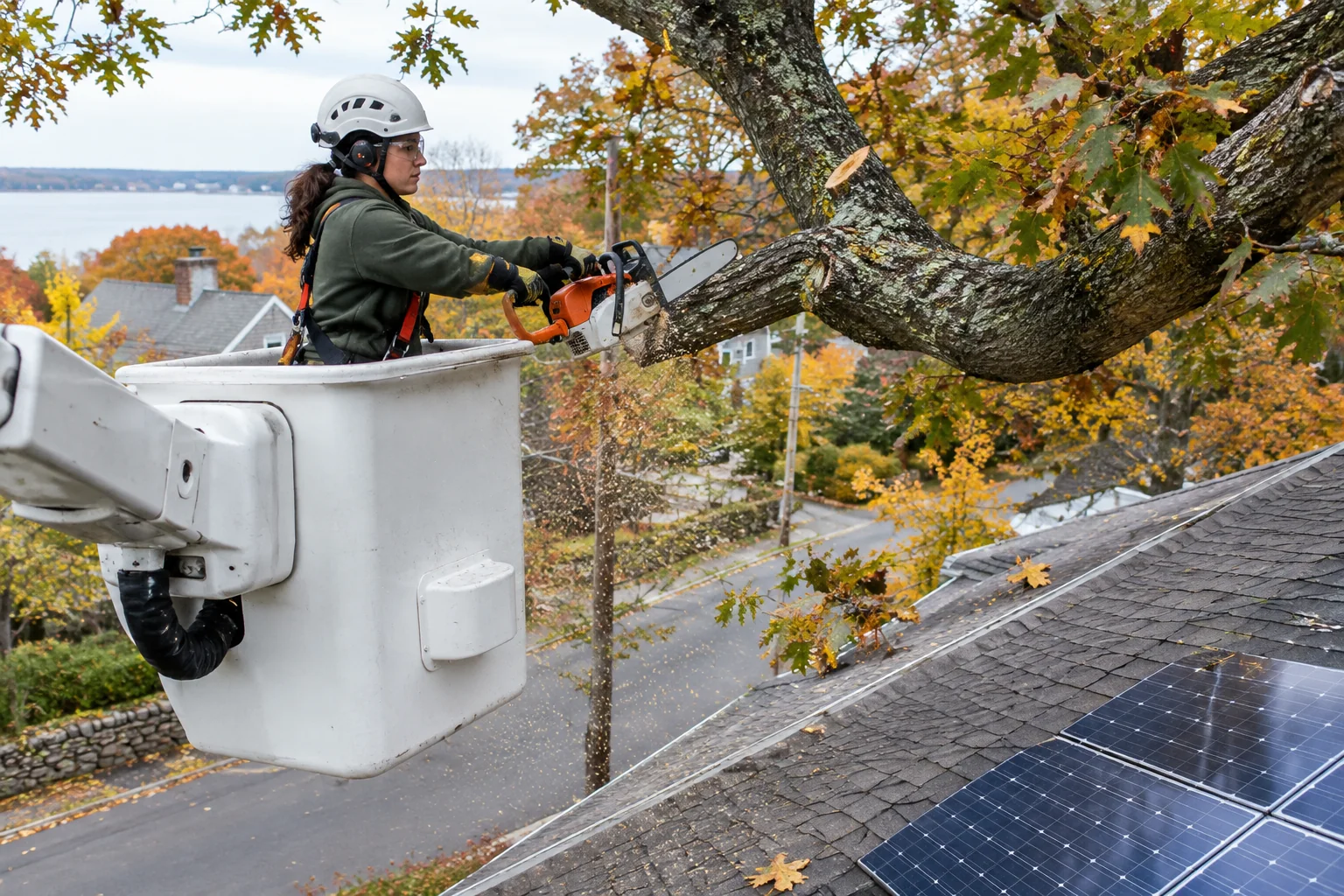
Trimming or removal beats skipping solar when one or two identifiable trees cause most of the shade on your best roof face, and the tree work costs little against the system you would gain. If the trees are protected, owned by a neighbor, or too numerous, skipping or redesigning is smarter.
The Department of Energy lists tree cover as one factor that can make a roof unsuitable. That is the starting point, not the end. Pruning can recover a meaningful amount of production, as installers in Massachusetts commonly point out, and the cost of an arborist is often small compared with a system that lasts decades.
A decision rule for trim, remove or skip
- Trim when overhanging limbs or the crown edge cast the shade. Trimming is cheaper, keeps the tree and often fixes most of the problem.
- Remove when a single tree sits in the sun path of your best roof face, is already sick, dying or a storm risk, and you are permitted to take it down. Solar then becomes one reason among several.
- Skip or go ground mount when shade comes from many trees, from a neighbor's property, or from a protected tree, and no roof face reaches the pass level above.
- Do not remove a healthy tree only for solar without pricing a redesign first. A smarter layout and microinverters may recover most of the output without losing the tree.
Hypothetical example: the oak and the colonial
Suppose a Connecticut colonial has a south-facing front slope with one large oak at the lower corner and a clear rear slope facing west. A design that uses only the rear slope avoids the oak entirely. If the owner wants more output, an arborist might take the oak's lower limbs, which clears the front slope's lower rows.
In that case we would quote two options: rear slope only, and rear slope plus a trimmed front slope. The owner then compares the extra production against the added panels and the arborist's invoice. That is a labelled example, not a real customer, but it is the order we work through on real roofs.
Before you cut anything
- Check local rules. Some towns regulate tree removal, especially large or protected trees and trees near wetlands. Call your town hall before scheduling work.
- Hire a licensed arborist. Cutting large limbs over a roof is dangerous work.
- Ask about neighbors' trees. You cannot remove a tree on someone else's land. Talk to the neighbor first, and keep any agreement in writing.
- Plan for regrowth. Trees keep growing. Ask the installer to model the shade as the tree will look in several years, not just today.
A checklist before you decide on solar panels for homes with shade
Follow these steps in order. Each one has a pass mark, so you know when to continue and when to stop.
- Photograph your roof at 9 a.m., noon and 3 p.m. Pass: at least one roof face is mostly sunlit at all three times. Stop and reconsider if none is.
- Identify each tree. Deciduous or evergreen, yours or the neighbor's, healthy or declining. This tells you what can change.
- Book a site visit with a real shade analysis. Pass: the installer measures shade on your roof and shows you production estimates by roof face. Walk away from any quote built only from a satellite image with no on-site check.
- Ask for two designs. One with the shaded area left empty, and one with trimming. Compare panel count and production, not just price.
- Compare inverter options on your layout. Ask which panels the installer expects to see shade and how the inverter handles it.
- Check the installer's license. In Connecticut, solar installers must be licensed by the Department of Consumer Protection. Confirm it before you sign.
- Watch for high-pressure tactics. Connecticut's Attorney General has urged homeowners to be wary of misleading marketing and high-pressure sales from solar companies. A quote that ignores your trees and promises full output is a warning sign.
- Get the cost picture. Our solar panel installation cost breakdown for 2026 shows what goes into a quote, so you can see what trimming or microinverters add.
Red flags specific to shade
- No on-site shade measurement before the quote.
- A production estimate that looks the same as your unshaded neighbor's.
- A design that covers every roof face, including the heavily shaded one.
- No mention of what happens to output as trees grow.
What do Teamsun crews see on shaded New England roofs?
Teamsun crews see that most shaded roofs are workable once panels are placed on the right sections. We serve Connecticut, Massachusetts and Rhode Island with in-house W-2 installers, so the same crew that designs placement also installs and services the roof afterward.
That matters on a shaded roof because layout decisions are made on the roof, not just on a screen. A person who has stood next to your oak at 3 p.m. makes a better call than a subcontractor handed a drawing. There is also one team to call if a tree grows or a panel underperforms years later.
If your system was installed by another company and a tree now shades it, we service any brand. Sometimes the fix is trimming, sometimes it is moving a few panels, and sometimes it is a battery or panel-level upgrade. If you are replacing a roof or moving panels, see our guide to removing and reinstalling solar panels for a new roof. You can also explore our services to see what we handle.
FAQ: solar panels, trees and shade
Can solar panels work if my roof is partly shaded?
Yes. Panels can work on a partly shaded roof if at least one roof section gets steady sun through the middle of the day. Placing panels on the sunny sections, leaving shaded spots empty, and using microinverters or optimizers keeps the loss from shade small.
Are solar panels worth it with a lot of trees around the house?
It depends on whether the trees shade the best roof face during peak sun hours. If trimming one or two trees clears that face, solar is often still worth it. If shade covers every roof face all day, rooftop solar usually is not.
Will shade damage my solar panels?
Shade does not usually damage panels. It reduces their output while they are shaded. Prolonged shading of one panel in a string can cause extra heating in rare cases, which is one reason we leave heavily shaded positions empty.
Can I add trees or let them grow after installing solar?
You can, but growth will cut output over time. Ask your installer to model shade at the tree's mature size before design is final. Panels cannot be easily moved afterward, though removal and reinstallation is possible if the shade gets worse.
Does snow or winter shade change the answer?
Yes. Low winter sun makes shadows longer, so check shade in the leafless months too. Snow cover is a separate issue, covered in our guide to solar panel snow removal.
Get a shade-aware design for your roof
An open question remains for every shaded roof: how fast will your trees grow compared with the panels' 25-year lifespan? No installer can answer that perfectly, which is why we model growth and show you the trade-offs instead of a single hopeful number.
If trees are the reason you have not gone solar, let us look at your actual roof. Request a free quote and we will map shade by roof face, price a trimming option next to a clean-roof design, and tell you plainly if solar is not worth it. You can also talk to a designer about your layout, or call 203-903-4091 to schedule a site visit.
Recommended Resources
Written by
Dan Katzman
Teamsun
Teamsun writes practical solar guidance to help property owners compare equipment, project scope, costs, and long-term service before making a decision.
Keep going.
Solar Panels for Homes With Well Pump: Sizing Guide
Do solar panels work for homes with a well pump? Yes, if sized for startup draw and paired with a battery. A beginner's guide for CT, MA and RI.
Dan Katzman
Teamsun
Battery Storage vs More Solar Panels
Battery storage or more solar panels? Compare outage protection, self-consumption and net metering in CT, MA and RI to decide where your next dollar goes.
Dan Katzman
Teamsun
Do Solar Panels Make Sense for Rental Properties?
Solar panels for rental property owners: how tenant savings, added property value, and financing stack up for landlords in CT, MA, and RI.
Dan Katzman
Teamsun