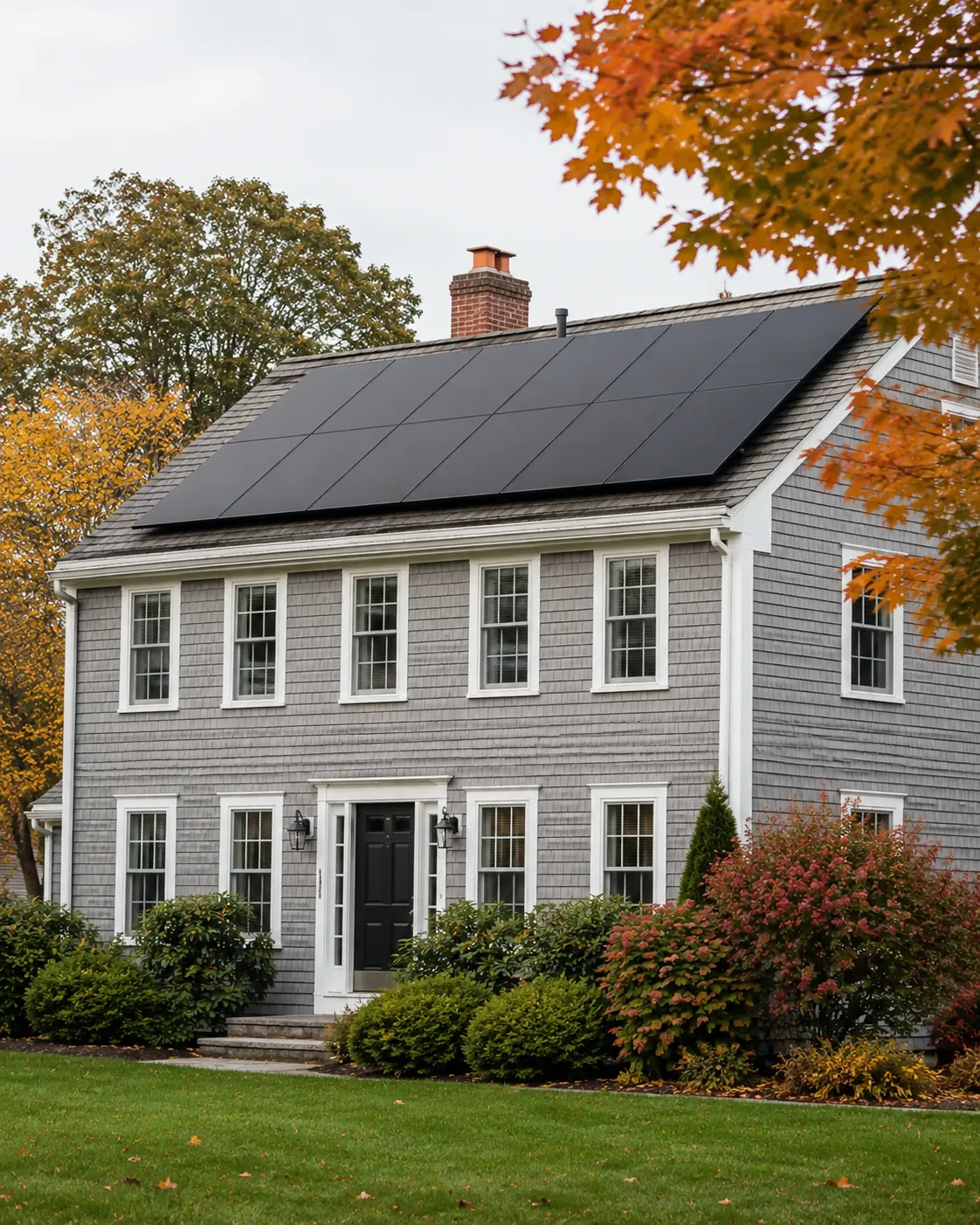
A solar system upgrade changes an existing installation to improve its capability, address unsupported equipment, or meet a new energy need. It can involve adding panels, replacing an inverter, installing a battery, improving monitoring, or redesigning a larger portion of the system. The right scope depends on the problem being solved.
Teamsun assesses upgrades for existing systems in Connecticut, Massachusetts, and Rhode Island. A useful proposal should show which components remain, which change, and how the modified system will be approved and supported.
Define the reason before choosing equipment
Different goals require different work. A homeowner who added a heat pump may need more annual generation. Someone who wants outage protection needs a backup design. An owner whose monitoring hardware is no longer supported may primarily need a communications solution.
List the desired result in terms that can be checked: restored reporting, additional modeled annual energy, specified backed-up circuits, or replacement of an identified failed component. Avoid using “upgrade” as a substitute for a diagnosis.
If production recently fell, investigate the cause before ordering a larger system. Replacing working equipment to compensate for an unresolved fault can add expense while leaving the original problem in place.
Assess the existing installation
Review equipment models, roof condition, available space, electrical capacity, monitoring access, warranties, and original permits. The approved system may differ from the system an owner remembers purchasing. Missing documents can also affect the work needed before a change can proceed.
Ask the installer to identify compatibility at the model level. A product carrying the same brand name may belong to a different generation or require a different controller. The proposal should distinguish manufacturer-supported combinations from assumptions awaiting confirmation.
Compare three levels of work
| Option | Main question |
|---|---|
| Targeted repair | Can a diagnosed problem be corrected while preserving the rest of the system? |
| Partial upgrade | Can selected equipment change without making the remaining design unsuitable? |
| Repowering | Does a broader redesign offer a supported, practical path for the older installation? |
Compare these options using the same goal. A repair quote and an expansion quote are not competing prices for the same result. Request the expected service life assumptions, monitoring arrangement, written warranty scope, and any future work excluded from each option.
Review the utility consequences
An equipment change can require utility review even when it occurs behind the same meter. Added generation, changed inverter ratings, storage, and export controls raise different questions. In Connecticut, the current residential program documents specifically address additional generation and the treatment of existing arrangements. UI renewable-energy interconnection resources
Before approving work, ask whether the proposal changes the existing tariff or enrollment, requires revised plans, or depends on additional inspection. The answer should identify the actual utility and agreement rather than assume all New England systems follow one rule.
What counts as an upgrade, and what is simply a repair?
An upgrade changes what the installation can do or how it is supported. It may add generating capacity, add storage, replace unsupported equipment, improve the monitoring arrangement, or renew a substantial portion of the system. A repair restores the existing intended function. The distinction matters because an attractive new capability should not obscure an unresolved fault.
Consider a homeowner whose electric bill rose after purchasing an EV. If the original solar system is operating normally, additional generation or a different charging strategy may be worth evaluating. If production also fell because an inverter is offline, repairing that issue may recover energy before any expansion is considered. The two problems can exist together, but they need separate evidence and a clear financial comparison.
Ask the provider to state the upgrade objective in one sentence. “Supply more annual energy,” “support selected loads during outages,” and “replace unsupported conversion equipment” are actionable objectives. “Make the system better” is too vague to establish whether the proposed equipment achieves anything important to the owner.
Establish the baseline before changing equipment
A baseline describes the system you have and how it currently operates. It includes the array and inverter configuration, recent production, known faults, roof condition, household electricity consumption, and the utility arrangement. Without that baseline, a proposal may attribute recovered production to an upgrade when part of the gain would have come from a simpler repair.
Use comparable periods when reviewing performance. A short summer snapshot should not be treated as an annual forecast, and exported electricity should not be mistaken for total solar generation. If consumption has changed, document the new appliances and their expected use separately from historic bills. That prevents old and future loads from being mixed in one unexplained number.
The baseline also reveals what is worth retaining. Working panels, sound mounting, and supported electrical equipment can have continuing value. A component’s age is relevant context, but age alone is not a complete condition assessment or an instruction to replace the whole installation.
Adding panels: capacity and usable energy
An array expansion increases nameplate generating capacity, but the additional annual energy depends on the new modules’ location, shade, orientation, and the supported electrical design. An available roof plane may perform differently from the original one. Ask for the incremental production estimate for the added section rather than simply multiplying the old system’s performance by the number of new panels.
The designer must consider the inverter, module characteristics, wiring, protection, safety functions, and service connection. Existing and new panels are not interchangeable merely because their advertised wattages look similar. A separately designed addition can be an option in some projects, while another may justify a broader configuration change. The proposal should identify which route it takes.
There is also a billing question. The value of additional production depends on how much is used at the property and how the applicable program treats exports. Adding more capacity without reviewing that treatment can produce energy that is less valuable than the owner expected.
Replacing conversion equipment
An inverter replacement can restore production, accommodate a supported new configuration, or address a serviceability problem. Start with the exact installed model and the equipment connected to it. A proposed replacement must support the retained design or identify the modifications needed to create a supported one.
Ask whether the new inverter changes the system’s AC rating, monitoring platform, module-level equipment, battery options, or utility paperwork. A compatible direct replacement and a redesigned installation may carry very different costs and approval requirements. They should not be compared as though both are simply an inverter in a box.
If a warranty replacement is available, compare its full installed scope with a voluntary upgrade. Include labor, access, monitoring, and any required modifications. A new feature may be useful, but the owner should know what additional cost buys that feature rather than assuming the more expensive choice is necessary to restore operation.
Adding storage as a distinct upgrade
Battery storage can change when electricity is available and, with the right configuration, supply selected loads during an outage. It does not inherently increase the sunlight collected by the panels. Define whether the goal is backup, greater on-site use of solar electricity, tariff-based operation, or an eligible grid program.
A retrofit may retain the existing solar inverter through an AC-side arrangement, or it may involve a compatible shared conversion design. Neither path is automatically best. Compare the actual retained components, controls, electrical work, supported outage behavior, and total installed cost.
For backup, establish both energy and power requirements. A battery with enough energy for a desired duration may still be unable to start a particular load, and a system with substantial output can still run out of stored energy quickly. Teamsun’s battery retrofit service addresses this separate design question for existing solar installations.
Monitoring upgrades and ownership access
Monitoring improvements can make the installation easier to understand and service, but they should have a defined purpose. Replacing a failed communications device, restoring homeowner access, adding consumption measurements, and combining information from separate systems are different scopes.
Ask which measurements will actually be available and how they are obtained. A display of solar generation does not necessarily include whole-home consumption, and a single app does not guarantee that every device communicates directly with every other device. The proposal should distinguish a unified view from a supported control relationship.
Keep the owner account under supported access arrangements and document who receives alerts. If ongoing oversight is offered, establish who reviews the data and responds. Better visibility can help identify a problem; it does not guarantee that somebody will automatically schedule service when the problem appears.
Coordinate upgrades with roof and electrical work
An upcoming roof replacement can change the most practical sequence. If panels must already be removed, the project may create an opportunity to inspect and evaluate retained equipment. It does not prove that every component should be discarded. Compare the costs and benefits of retaining, partially renewing, and replacing equipment using documented condition.
Electrical changes should also be coordinated with realistic future loads. A planned EV charger or heat pump can affect the household’s consumption and electrical assessment. Separate committed changes from possibilities so the solar design does not rely on loads that may never materialize.
Ask the project team to identify dependencies: which decisions must be made before the roof work, which require utility review, and which can wait. A clear sequence can reduce duplicated work and prevent one contractor’s assumptions from conflicting with another contractor’s design.
Compare upgrade proposals using a common worksheet
| Comparison item | What the owner should see |
|---|---|
| Existing condition | Confirmed faults and useful retained equipment |
| Proposed result | Added capability or restored function |
| Equipment changes | Exact components removed, retained, and installed |
| Energy model | Baseline, incremental production, and operating assumptions |
| Utility treatment | Required review and the assumed compensation arrangement |
| Complete cost | Design, equipment, labor, access, approvals, and commissioning |
| Support | Warranty boundaries, monitoring access, and future service responsibility |
Use the same household consumption and financial assumptions for each proposal. A larger claimed benefit may result from more optimistic utility-price escalation or an unapproved incentive rather than a better technical design. Request a conservative case so the result can be understood when conditions differ from the sales forecast.
Keep optional work separately priced. If a project includes a necessary repair, an array addition, and a battery, the owner should understand the contribution of each. That creates a practical choice among scopes rather than an all-or-nothing package whose individual benefits are impossible to evaluate.
Frequently asked questions
Should I replace old equipment before it fails?
Compare condition, service history, support availability, warranty terms, and the consequences of downtime. Proactive replacement can be considered when those factors justify it, but a fixed age alone does not establish the right decision. Ask what evidence supports replacing equipment now and what risk remains if it is retained.
Can an upgrade increase my home’s value?
Property value depends on the market, ownership and contract terms, system condition, documentation, and buyer preferences. Do not treat a generic resale claim as guaranteed compensation for an upgrade. A well-documented installation can make a future buyer’s evaluation clearer, but it does not establish a particular sale-price increase.
Can I install the project in stages?
Sometimes, if the equipment and design support the planned sequence. Ask which future combinations are currently approved, what work would be repeated, and which approvals would need updating. Do not rely on an unspecified future product to make today’s design complete.
What if the original installer is no longer available?
Provide the records you have and describe the missing information. A new provider may need additional assessment before recommending changes. Recovering monitoring access and confirming the existing utility arrangement are useful early steps because both can affect the upgrade scope.
Will old and new equipment appear in one app?
Ask for a demonstration of the proposed monitoring arrangement. Equipment compatibility and a unified display are separate features.
Can I add a battery without expanding the panels?
Potentially. Battery suitability depends on the existing electrical design and intended operation, not simply whether additional panels are installed.
What documents should I receive?
Request the final equipment schedule, updated plans where applicable, commissioning results, inspection and utility records, warranties, and supported monitoring access. These records make later service easier.
Request a system-upgrade consultation with Teamsun. Include current equipment details and recent energy use so the assessment can compare repair, partial replacement, and expansion on a consistent basis.