Solar Panels for Homes With Well Pump: Sizing Guide
Do solar panels work for homes with a well pump? Yes, if sized for startup draw and paired with a battery. A beginner's guide for CT, MA and RI.
Dan Katzman
Teamsun
Yes, solar panels work for homes with a well pump, as long as the system is sized for the pump's startup surge and paired with battery storage if you want water during an outage. Panels alone will cut the electric bill your pump adds. They will not keep the tap running when the grid drops.
We are Teamsun, a privately owned solar and battery installer in Connecticut, Massachusetts and Rhode Island. Our in-house W-2 crews design, install and service every system, so the same people who size your array also look at your well setup. This guide covers the basics for well-dependent homeowners.
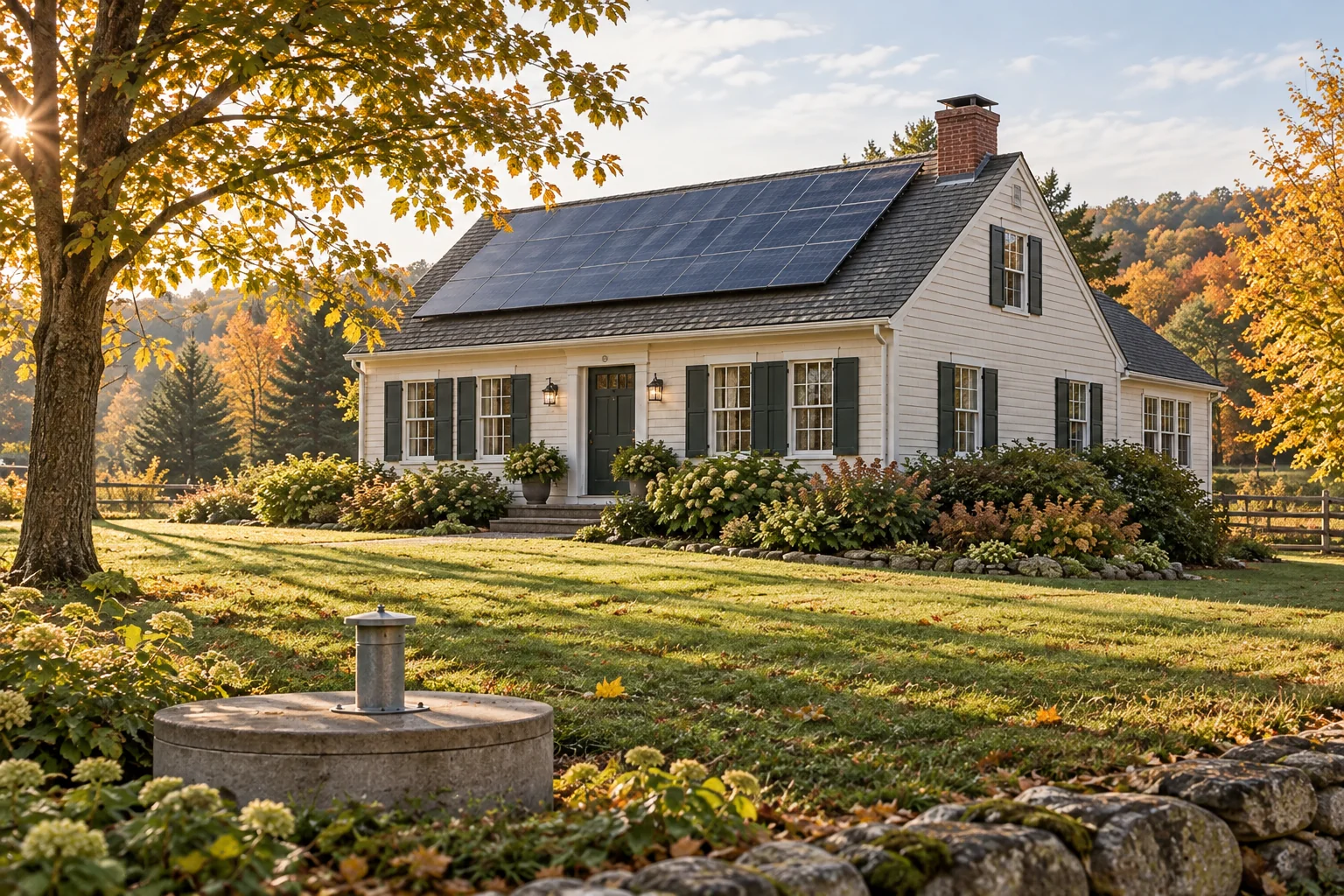
Can solar panels run a well pump?
Yes. Solar panels can supply the energy a well pump uses every day, whether the home stays tied to the utility or adds a battery. The catch is the pump's short, heavy startup draw, which the inverter and battery must handle. Panels size the energy; inverter and battery size the surge.
That split is the whole idea behind this topic. A pump might use modest energy over a day, yet demand a large burst of power for a second or two each time it kicks on. Most sizing mistakes come from planning for the first and forgetting the second.
For most of our customers on private wells, the pump is one of several loads in the house, alongside the fridge, furnace blower and lights. A normal rooftop system offsets all of them on the bill. What changes with a well is what you want to happen on the day the power goes out.
Why does a well pump need more power to start than to run?
An electric motor needs a sudden surge of current to get its shaft spinning from a standstill, often several times what it draws once it is turning. A well pump starts and stops all day as the pressure tank drains and refills, so that surge repeats constantly.
Think of pushing a stalled car. The first shove takes real effort, and then it rolls with much less. A pump motor behaves the same way. The startup rush is brief, but a solar inverter or battery that cannot deliver it will trip or shut down, even if it has plenty of stored energy.
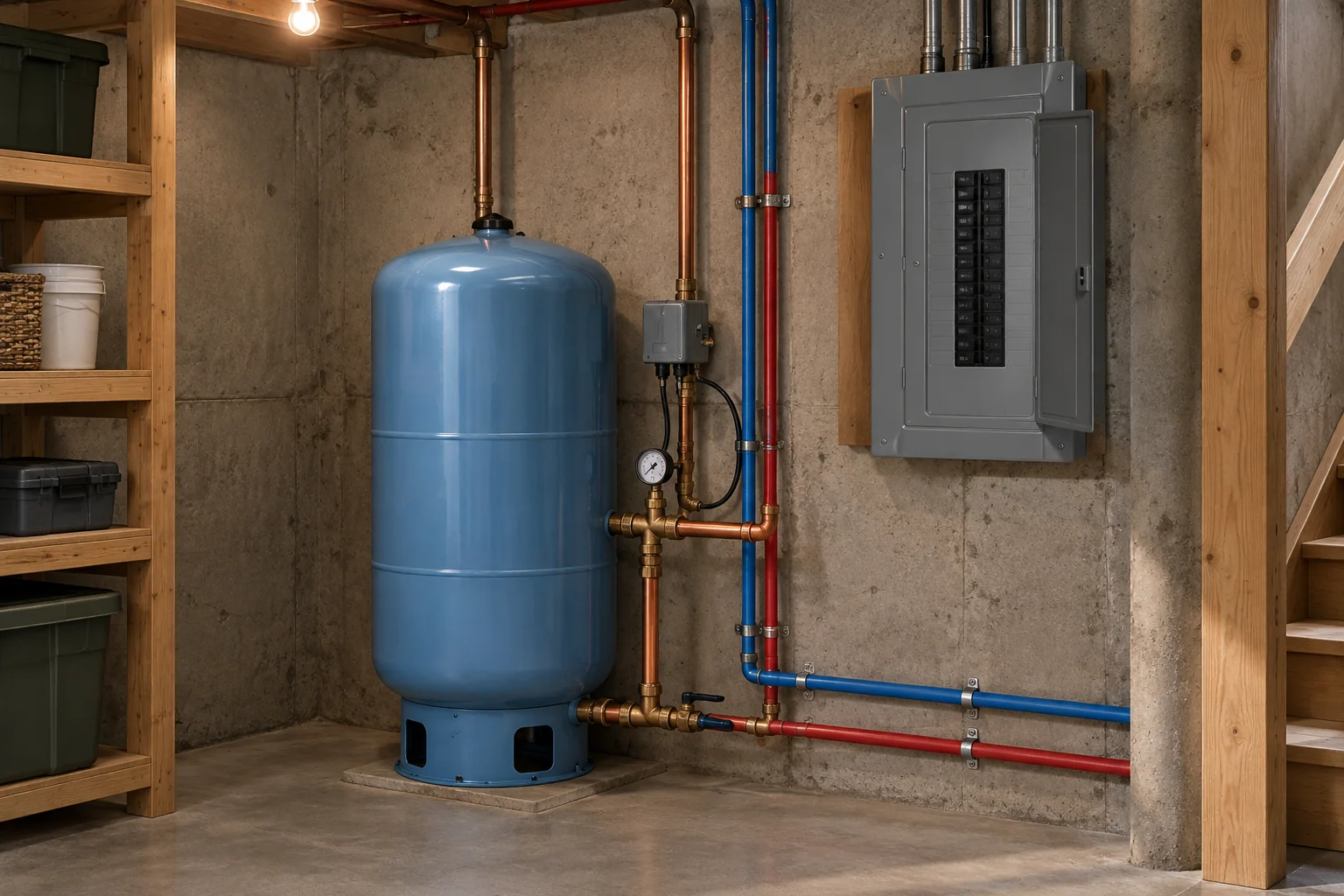
Where the surge matters most
The surge depends on the pump type. Submersible pumps sit down in the well casing and are often 240-volt. Jet pumps sit in the house or a pump house. Larger motors pull a bigger startup rush than smaller ones, and a deeper well usually means a bigger motor.
You can find your pump details in three places: the label on the pump or control box, the double-pole breaker in your electrical panel, and any paperwork from the well driller. Write down the horsepower, voltage and breaker size. An installer needs all three to size the system correctly.
How should you size solar panels and an inverter for a well pump?
Size the panels for your total household energy use, then size the inverter and battery for the pump's peak startup demand. Panels cover kilowatt-hours over the day. The inverter and battery must deliver the pump's surge in kilowatts at the moment it starts, with room left for everything else running.
Here is the order we work in on a home with a well:
- Collect the pump facts. Horsepower, voltage, breaker size, pump type and well depth.
- Read your utility bills. Twelve months of use shows how much the pump and the rest of the house really draw.
- Choose backup loads. Decide what must stay on in an outage: pump, fridge, some lights, maybe a furnace blower.
- Check the surge against the equipment. Each battery and inverter has a continuous rating and a higher short-term peak rating. The pump's startup must fit under the peak.
- Add the panels. Roof orientation, shade and space decide how many panels fit. If shade is a concern, our guide on solar panels for homes with trees and shade explains what is workable.
Worked example: does a 1 HP 240-volt submersible pump pass?
This is a hypothetical for illustration only, not a manufacturer rating. Suppose the pump's startup draw is a value S for a second or two, and the fridge and a few lights add a value L. The battery must then hold S + L at the moment of startup.
- Battery A (hypothetical): its peak rating is above S + L, and its continuous rating is above the pump's running load plus L. Pass.
- Battery B (hypothetical): its peak rating is below S + L. Fail, even if the battery has plenty of stored energy.
To run this check on your own home, get the pump's real startup figure from the manufacturer's spec sheet or your well professional. Then compare it with each battery's published continuous and peak ratings.
Ways to tame the surge
A soft starter or a variable-speed pump drive can ease the startup rush, so the pump asks for less power at once. That can let a smaller battery or inverter do the job. It is an add-on for the installer and a well professional to evaluate together, not a default.
Another lever is water use. A pressure tank holds a reserve, so the pump runs in bursts, not constantly. During an outage, skipping long showers and laundry keeps the pump cycling less, and stretches stored battery energy.
Why won't a standard solar system keep your water running in an outage?
A standard grid-tied solar system shuts itself off when the grid goes down. This is a safety feature that protects line workers repairing the lines. With no battery to form a local power supply, the panels sit idle and the well pump has no power, even on a sunny day.
Grid-tied systems, also called grid-connected, tie into the utility grid and make electricity while the sun shines. They are the most common home setup, and they work well for cutting bills. They just do not provide backup by themselves.
This surprises many rural homeowners. In Connecticut, Massachusetts and Rhode Island, storms, ice and downed branches can knock out power on country roads for long stretches. With a well, no power means no water for drinking, flushing or cooking. That is the real reason well owners add storage.
How does battery storage keep a well pump running?
A battery supplies power to the pump when the grid is down, and the solar panels recharge it during the day. It works only if the battery and inverter can deliver the pump's startup surge and the battery has enough stored energy for the loads you chose to back up.
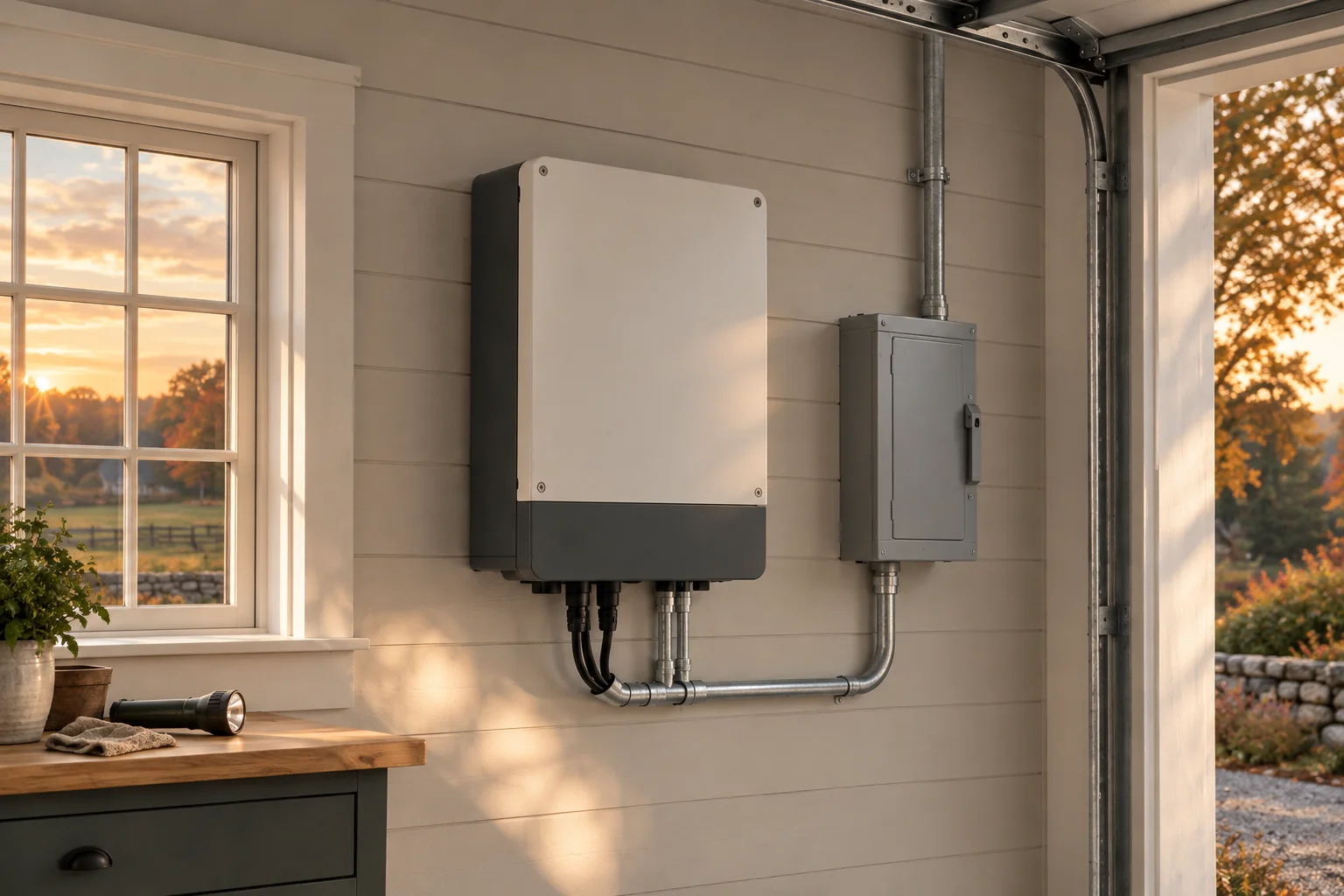
Every home battery has two limits. One is how much power it can deliver continuously. The other is a higher peak it can hold for a moment. If the pump's startup rush is bigger than that peak, the system can shut down. This is why a battery that looks large on paper can still fail to start a pump.
A well-designed system can run both a well pump and a refrigerator through an outage. Whether it does comes down to the pump's running and starting load, and how the battery is configured. We install FranklinWH, Tesla Powerwall and Enphase IQ batteries, and we check each against the pump before recommending one.
The critical-loads panel
Most backup systems feed a separate subpanel holding only the circuits you chose. The well pump breaker moves there, along with the fridge and a few outlets. Putting a 240-volt pump on that panel is a design decision, so do not assume it happens automatically.
If you already own solar, you do not have to start over. A battery can often be added later, which we cover in our guide to how a solar battery retrofit works. For a new build, see how to combine solar panels with battery backup.
What about a generator?
Many well owners already have a generator. It can start a pump, but it needs fuel and someone at home. A battery responds on its own, silently. The two can coexist, and our piece on solar panels with a home generator explains how.
Which setup fits: grid-tied, battery backup or a dedicated solar pump?
For most New England homes on a well, grid-tied solar plus a battery on a critical-loads panel fits best. It cuts bills and keeps water running in outages. Grid-tied alone suits homes where outages are rare. Dedicated solar pumps suit remote sites with no grid, such as livestock watering.
| Setup | Cuts the electric bill | Water in an outage | Best for |
|---|---|---|---|
| Grid-tied solar only | Yes | No | Homes with reliable power and a plan for outages |
| Grid-tied solar plus battery | Yes | Yes, if the battery is sized for the pump surge | Well-dependent homes in outage-prone areas |
| Dedicated solar pump (off-grid) | Not applicable | Yes, runs only when the sun or stored power allows | Remote wells and livestock watering |
| Generator only | No | Yes, while fuel lasts | A low-cost backup, or a partner to solar |
Dedicated solar pumping systems are a different product. Mississippi State University Extension describes them as an option for remote areas without easy access to the public power grid, installed successfully for livestock watering. A home already on the grid rarely needs one.
Stand-alone pumping systems often use deep-cycle batteries as backup, recharged during the day by the PV array and drained at night or on cloudy days. Home batteries follow the same logic in a more integrated package.
When should you talk to a local installer about your well setup?
Talk to an installer before you buy any panels or battery, as soon as you know you want water during outages. The pump's size, voltage and wiring decide which battery and inverter will work, so those facts should shape the design from the first conversation, not be fixed afterward.
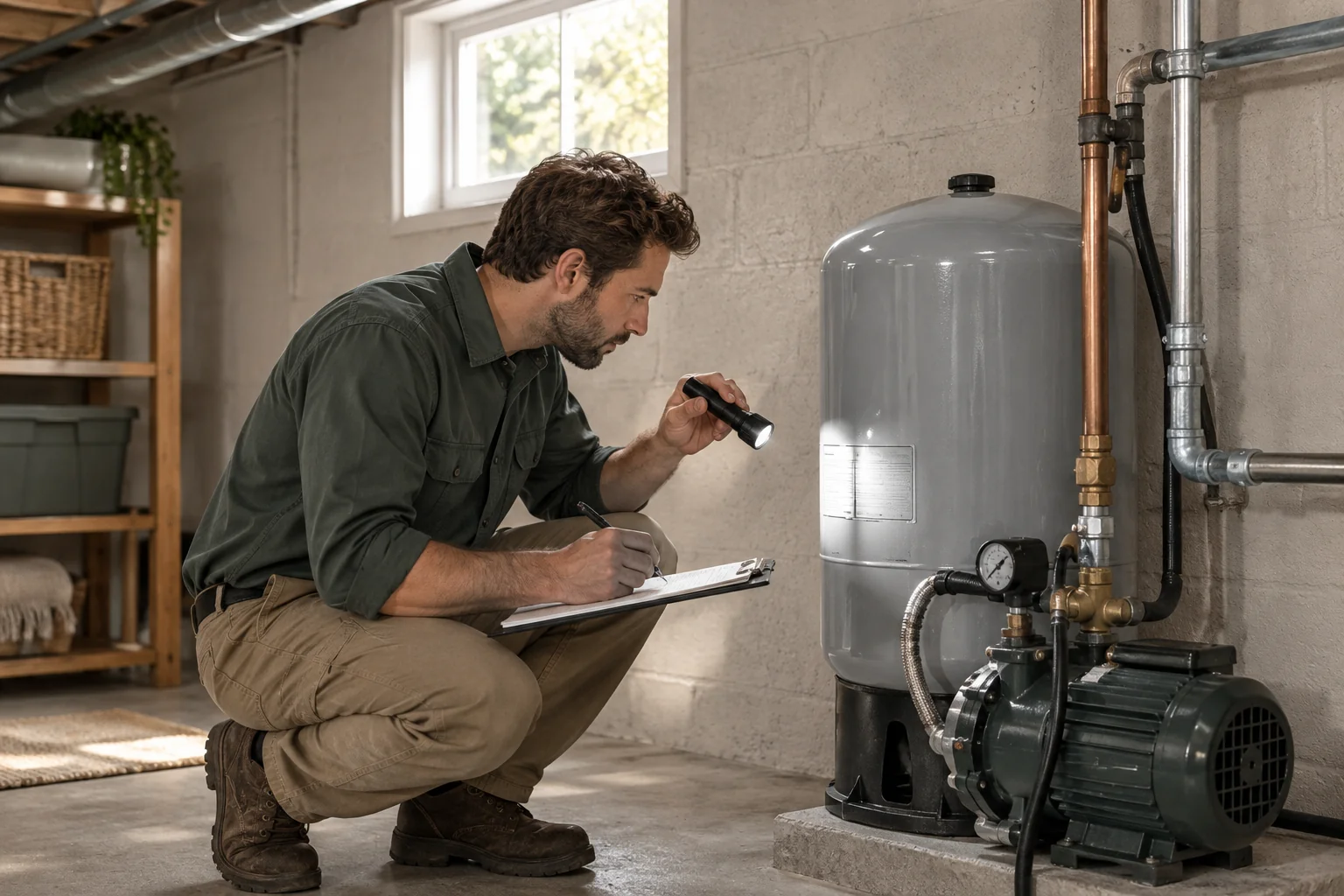
Before the call, gather what you can:
- Pump type (submersible or jet), horsepower and voltage from the label
- Breaker size for the pump circuit
- Well depth and pressure tank size, if you have them
- Past outage lengths in your area
- Whether you have a generator or an existing solar system
Then ask any installer direct questions. What are the battery's continuous and peak ratings, and does the pump's startup fit under the peak? Which circuits will the backup panel hold? What happens if the pump trips the system? Beware of a quote that never mentions the pump at all.
The same caution applies to the sales process generally. Connecticut's consumer protection office has warned buyers to review residential solar contracts carefully. Get your backup loads written into the design, not promised in conversation.
Why local crews matter on a well job
Wells are site-specific, and so is the fix. Our in-house crews visit your property, look at the pump and panel, and service the system afterward. If you are weighing options, you can explore our services or talk to a designer about your pump. You can also call 203-903-4091.
Ready for numbers on your own home? Request a free quote and tell us you are on a well, so we size the battery and inverter around your pump's startup, not just your bill.
Recommended Resources
Written by
Dan Katzman
Teamsun
Teamsun writes practical solar guidance to help property owners compare equipment, project scope, costs, and long-term service before making a decision.
Keep going.
Can Solar Panels Work With Your Home Generator?
Learn how a solar panel system with existing home generator setups can work together, what transfer switch changes are needed, and when a battery skips the generator.
Dan Katzman
Teamsun
Solar Panels for Homes With Trees and Shade
Solar panels for homes with trees and shade can still pay off. Learn when placement, microinverters or tree trimming beat skipping solar in New England.
Dan Katzman
Teamsun
Battery Storage vs More Solar Panels
Battery storage or more solar panels? Compare outage protection, self-consumption and net metering in CT, MA and RI to decide where your next dollar goes.
Dan Katzman
Teamsun