Do Solar Panels Increase Home Resale Value? Sellers' Guide
Do solar panels increase home resale value? See how buyers and appraisers treat owned vs leased systems in CT, MA and RI, and what paperwork to gather.
Dan Katzman
Teamsun
Yes, in most cases an owned solar system does increase home resale value, with studies putting the premium at roughly $4 per watt of installed capacity. Leased and PPA systems add less, because the buyer has to take over a contract instead of just buying a house. For sellers in Connecticut, Massachusetts and Rhode Island, ownership type and paperwork decide how much of that premium you actually capture.
At Teamsun, we are a local installer with in-house W-2 crews. We design and install systems, and we also service, upgrade and add batteries to systems that other companies installed. That means we see what happens to solar when a house goes on the market, and the sellers who struggle are rarely the ones with a bad system. They are the ones who cannot find the documents.
What Do Studies Say Solar Adds to a Sale Price?
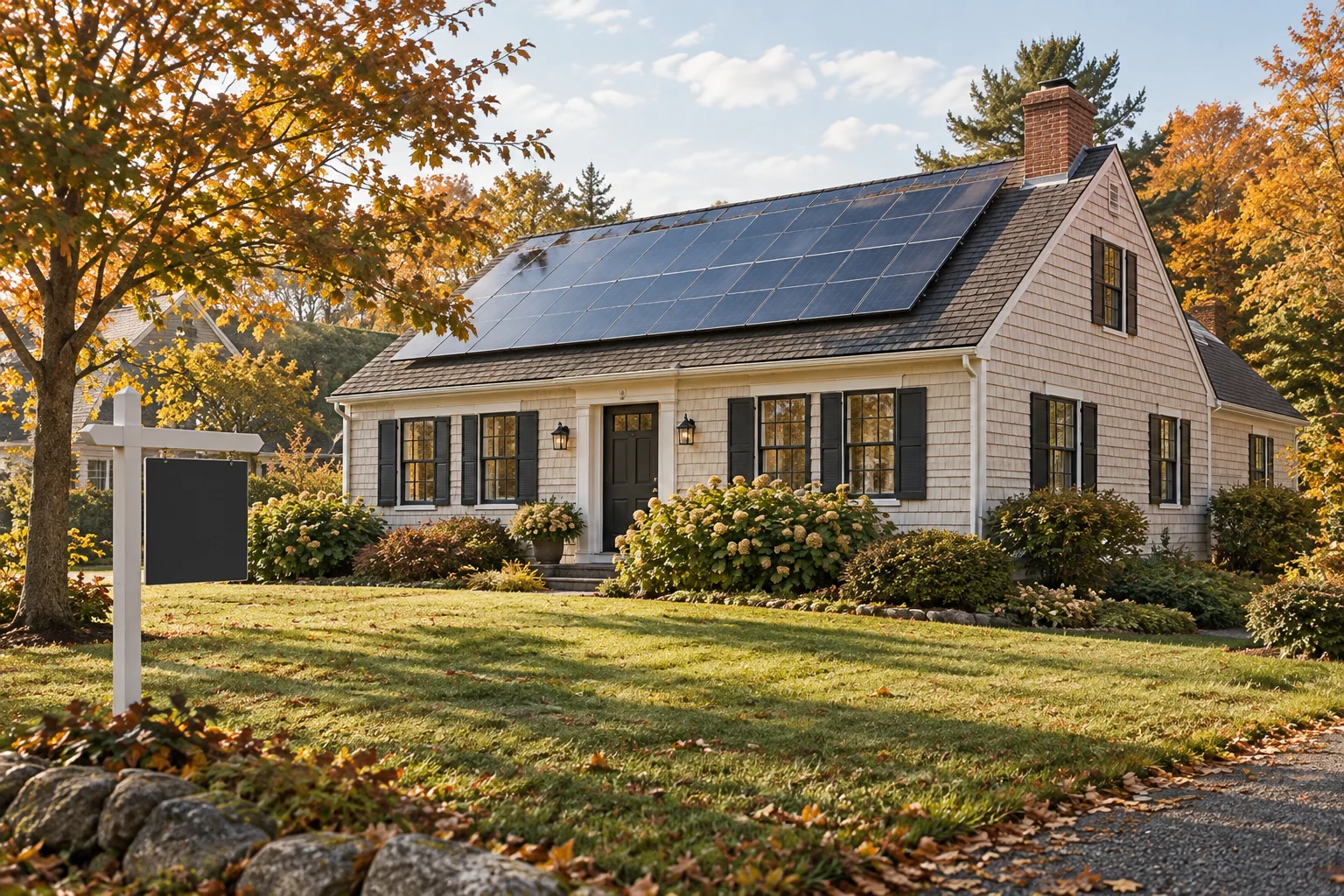
Studies point to a premium of about $4 per watt for owned systems, which works out to roughly $15,000 on an average system. Zillow's analysis found solar homes sold for about 4.1% more, or around $9,000. These are national averages, so your local result depends on system age, roof condition and ownership.
Those figures come from a pv magazine report on rooftop solar and home sales, which cites Lawrence Berkeley National Laboratory and Zillow. The lab's own fact sheet on solar home premiums puts the existing-home premium at $4.51 per watt. It also found only a small, statistically insignificant gap between new and existing homes.
Treat all of this as a range, not a promise. A 7 kW system and a 12 kW system do not sell for the same bump, and a buyer in a high-electric-rate town values panels differently than one who plans to renovate the roof. A premium also shrinks when the system is old, shaded, or sitting on a roof near the end of its life.
What the studies do not tell you
The averages blend owned systems with other cases, and they do not predict your appraisal. A comparable sale next door with similar panels is stronger evidence than any national number. Ask your listing agent to pull recent solar sales within your town, since New England markets vary a lot from the shoreline to the hills.
Why Do Owned and Leased Systems Get Different Buyer Treatment?
An owned system is part of the house, so it transfers with the property at closing. A leased or PPA system belongs to a provider, so the buyer must be approved to take over the contract, or the seller must buy it out. That extra step can shrink the premium and make some buyers hesitate.
The U.S. Department of Energy's consumer guide to buying a house with solar panels says that when a seller bought the system outright or with a loan, ownership should convey with the property. It adds that a third-party owned system may need extra steps to assume ownership or transfer the contract.

| How the system is held | Who owns the panels | What happens at sale |
|---|---|---|
| Paid in cash | You | Ownership conveys with the house. Hand over the documents. |
| Owned with a loan | You | Ownership conveys, but the loan has to be settled or handled with your lender at closing. |
| Prepaid lease | The provider | The contract usually has to be transferred. Check the transfer clause first. |
| Lease or PPA | The provider | The buyer typically needs the provider's approval. A buyout may be allowed, but it is not assured. |
A lease or PPA is not a bad choice. Many are written to be transferred, and plenty of buyers take them over without trouble. The risk is timing: provider approval takes days or weeks, and a buyer's lender may have its own view of the contract. Read the transfer terms before you list, not after you have an offer.
If you are still deciding how to pay for a system and expect to sell within a few years, compare the exit terms of each option. Connecticut's solar panel buyer's guide from the Department of Consumer Protection is a useful read on contract basics.
How Do Appraisers and Buyers View Solar as Property?
Appraisers typically treat an owned solar system as a feature of the home and adjust value using comparable sales and documentation of the system. Buyers look at lower electric bills, system age, roof condition and warranties. Leased equipment often is not counted as part of the home's value because the seller does not own it.
The challenge for appraisers is data. Solar homes are a small share of sales in many towns, and listings often leave out the details. A National Renewable Energy Laboratory-linked report hosted by OSTI on PV system ownership and home market value notes that the listing agent is typically the first person to encounter the system, which makes the listing a chance to record it properly for everyone downstream.
What buyers ask about
- Ownership: Do the panels come with the house, or is there a contract to assume?
- Production: What did the system generate over the last few years, and what were the electric bills?
- Roof: How old is the roof under the array, and does it need replacing soon?
- Warranties: Who stands behind the panels, inverter and installation work, and do they transfer?
- Equipment: Which brand of panels and inverter, and is there a battery?
Roof age is the question that surprises sellers most. A buyer who sees a 17-year-old roof under a 5-year-old array is looking at a panel removal and reinstall bill in the near future. If that is your house, read our guide to removing and reinstalling solar panels for a new roof before you list.
Finding an appraiser who knows solar
If your appraiser has never valued a solar home, hand them the system documents and the studies above. The Connecticut Chapter of the Appraisal Institute is one place to start when you are looking for an appraiser with more solar experience. Your lender chooses the appraiser on most sales, so give the documents to your agent early.
What Paperwork Should Sellers Gather Before Listing?
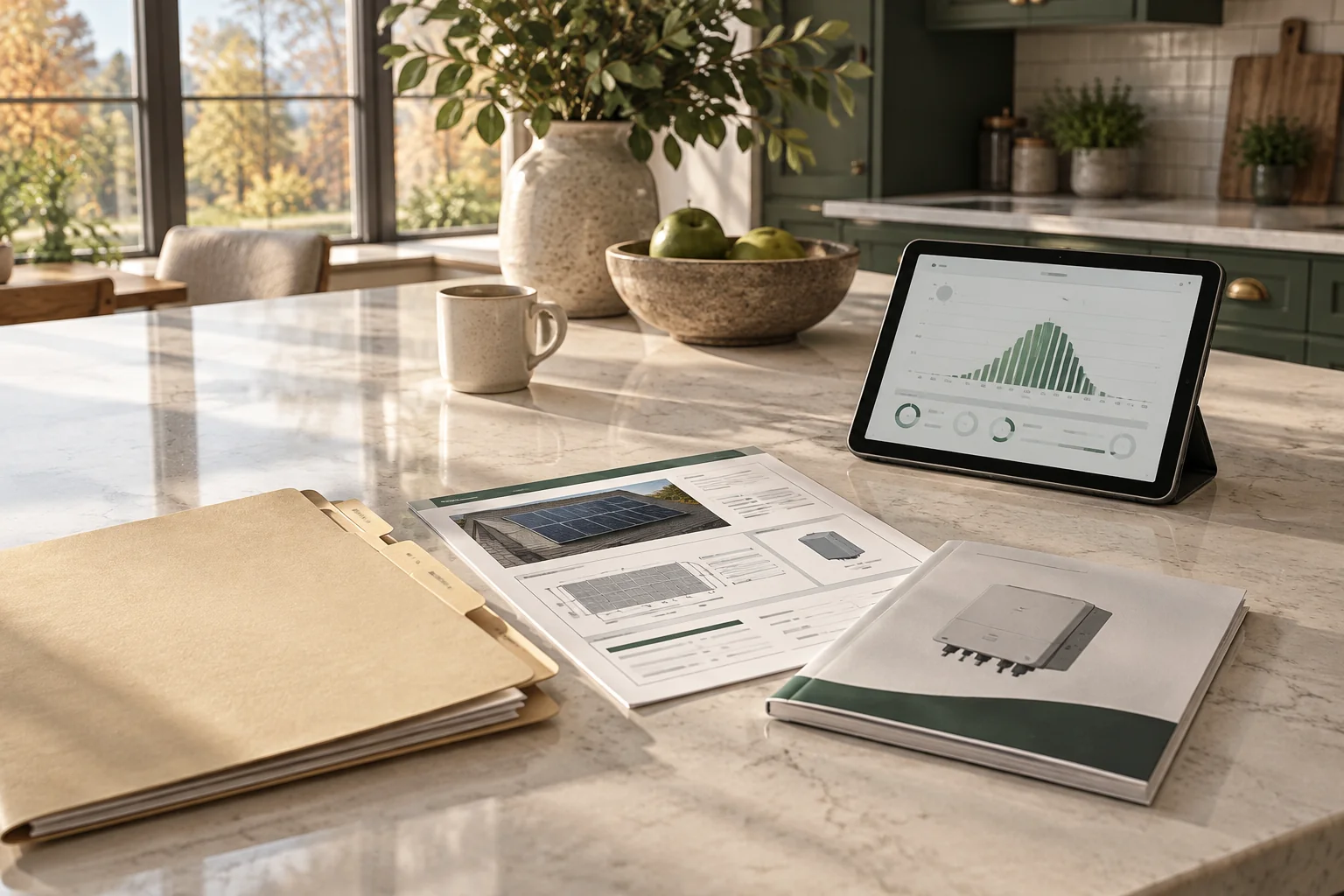
Gather proof of ownership or the full lease or PPA contract, the system spec sheet with kW and module count, permits and utility interconnection approval, warranties, and production history. Add battery details if you have one. Having this ready before listing lets agents, appraisers and buyers verify the system quickly.
Start about two to three months before you list. Some of these documents sit with your installer or utility, and replies can be slow. Here is the checklist we give homeowners:
- Ownership proof. Purchase contract, final invoice and any loan payoff details. For a lease or PPA, the complete agreement with transfer and buyout terms.
- System spec sheet. System size in kW, module count, panel and inverter make and model, and install date.
- Permits and sign-offs. Building and electrical permits with final inspection approval.
- Utility interconnection. Written permission to operate, plus the current net metering or export arrangement. Our post on when to upgrade an older solar system covers what to do if your equipment predates current rules.
- Warranties. Panel product and performance warranties, inverter warranty, and the installer's workmanship warranty. Confirm which ones transfer to a new owner.
- Production history. Twelve to 36 months of monitoring data, and a login or screenshot export the buyer can see.
- Roof records. Roof age, shingle warranty and any penetration or flashing work done during install.
- Battery details. Brand, usable kWh, output in kW, and which circuits it backs up.
- Incentive paperwork. Any state program enrollment, such as Massachusetts SMART, so the buyer knows what continues and what must be re-registered.
If any of these are missing, ask your installer first. If the installer has closed, the manufacturer and utility can often supply specs and interconnection records. Do not guess at system size in a listing. A wrong kW number in the listing can cost you credibility during the appraisal.
Can a Battery Retrofit or System Upgrade Help Resale?
It can help a sale, but there is no reliable published dollar figure for it. A battery gives buyers outage backup, and a repaired inverter or working monitoring gives them confidence in an older system. Spend on upgrades only if they fix a real problem or you plan to stay a while.
Outages are a real worry in New England, and a battery answers that worry on the spot. If you are weighing it, our guide to battery storage versus more solar panels walks through where the next dollar does the most. We retrofit batteries onto existing systems of any brand, including FranklinWH, Tesla Powerwall and Enphase IQ.
We would not add a battery just before listing and expect to recover all of it. Install it if you want the backup power while you still live there. For a sale, the cheaper moves usually matter more:
- Fix any inverter fault or dead monitoring so the production history is complete.
- Clean up the documents so the system is easy to verify.
- Handle roof work first if the shingles are near the end of life, since roof condition can drive buyer concerns.
- Skip cosmetic additions that have nothing to do with how the system performs.
Selling a Home With Solar in Connecticut, Massachusetts and Rhode Island
The rules around net metering, incentives and utility approval differ across our three states, so what transfers to a buyer is not identical. In general, the process looks like this:
- Confirm how the system is held. Owned, loan, prepaid lease or PPA decides the rest of the steps.
- Collect the documents. Use the checklist above and fill any gaps early.
- Get the system checked. A service visit catches inverter faults, loose wiring or panel damage before a buyer's inspector does.
- Brief your agent. Give them the kW size, install year, production figures and warranty details for the listing.
- Start any contract transfer early. For a lease or PPA, contact the provider as soon as you have a buyer, or sooner if the contract allows.
If your array was installed by another company, we can inspect it and give you a clear picture of its condition. Explore our services to see what we handle on existing systems, or talk to a designer about upgrades before you list. You can also call us at 203-903-4091.
Thinking of going solar and selling within a few years? Request a free quote and we will lay out an owned system you can document cleanly, so the premium is easier to keep when it is time to sell.
Recommended Resources
Written by
Dan Katzman
Teamsun
Teamsun writes practical solar guidance to help property owners compare equipment, project scope, costs, and long-term service before making a decision.
Keep going.
Commercial Solar Depreciation (MACRS)
Commercial solar depreciation under MACRS explained: how 5-year recovery stacks with the federal tax credit, and what to ask your accountant before filing.
Dan Katzman
Teamsun
Battery Storage vs More Solar Panels
Battery storage or more solar panels? Compare outage protection, self-consumption and net metering in CT, MA and RI to decide where your next dollar goes.
Dan Katzman
Teamsun
Can Solar Panels Work With Your Home Generator?
Learn how a solar panel system with existing home generator setups can work together, what transfer switch changes are needed, and when a battery skips the generator.
Dan Katzman
Teamsun