Solar Panels Tripping Circuit Breaker? Causes & Fixes
Solar panels tripping circuit breaker? Learn the common electrical causes, what is normal, and when to call a technician in CT, MA and RI.
Dan Katzman
Teamsun
Solar panels tripping a circuit breaker once after a storm is usually fine. Repeated trips are not, and resetting the breaker each morning can let a small fault become a fire risk.
We are Teamsun, a local installer serving Connecticut, Massachusetts and Rhode Island with in-house W-2 crews, and we service and retrofit systems that other companies installed. That means we often open up a panel and find what a previous installer left behind. This guide walks through what we look for, so you can tell a harmless blip from a repair job.
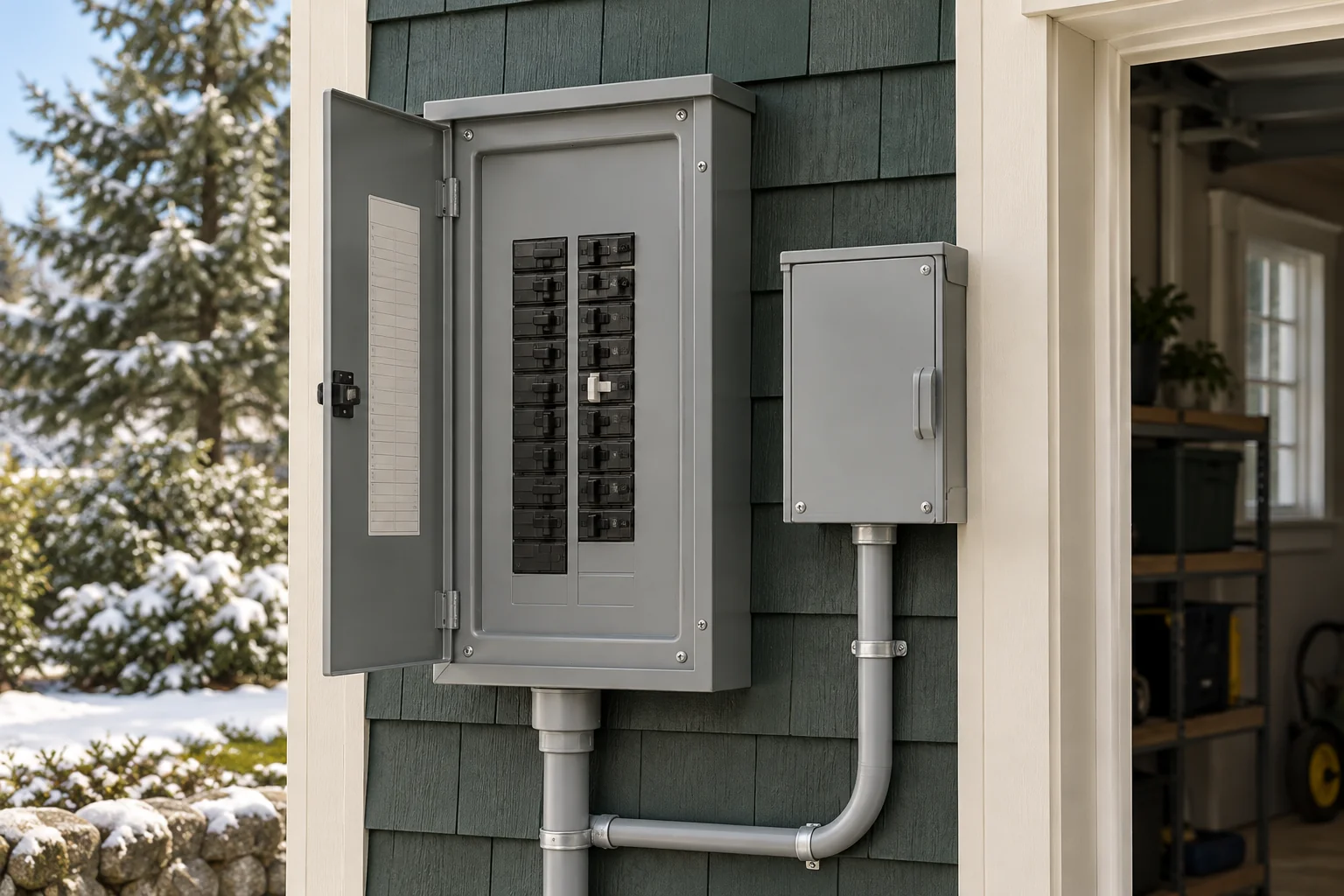
Is a Tripping Breaker Normal With Solar Panels?
An occasional single trip, for example after a storm or a utility outage, can be normal. Repeated trips mean something is overloaded, loose, damaged or failing.
A breaker exists to protect the wire behind it. When it opens, it is doing its job. The question is what pushed it open. A grid blip can cause one nuisance trip, and the system restarts on its own. A trip that returns on sunny afternoons, at the same hour, or every time the dryer starts has a pattern, and patterns point to causes.
Solar adds a twist most homeowners do not expect. In a normal house, power flows one way, from the utility into your panel. With solar, power also flows backward, from your roof into the panel and out to the grid. That second path needs its own correctly sized breaker, and the panel itself has to be built to handle it.
First, Identify Which Breaker Is Tripping
Before you guess at causes, find out which device opened. The answer narrows the problem fast. Look at the panel and your inverter display or monitoring app, and write down what you see, including the time of day.
| Which breaker trips | What it often points to | Next step |
|---|---|---|
| The solar (backfeed) breaker in the main panel | Inverter output fault, wrong breaker size, loose connection, or a worn breaker | Leave the system off and book a technician |
| A solar disconnect or breaker near the inverter | Ground fault, wiring damage, or an inverter problem | Check the inverter display for a fault code, then call for service |
| A single house circuit (kitchen, garage, dryer) | A normal overload or a faulty appliance, often unrelated to solar | Unplug devices and see if it repeats |
| The main breaker | Total load exceeds what the service can carry, or a serious fault | Call a licensed electrician or your solar service company |
| A battery or backup gateway breaker | Battery wiring, load limits on backed-up circuits, or equipment fault | Check the battery app, then call for service |
If a house circuit trips and the solar breaker does not, solar may be innocent. Plenty of tripping happens on old kitchen circuits with no panels in sight. If the solar breaker or the main trips, treat it as a system issue.
What Causes Solar Panels to Trip a Circuit Breaker?
Solar-related breaker trips usually come from one of six causes: an overloaded electrical panel, a wrongly sized or worn breaker, loose or damaged wiring, a ground fault, an inverter problem, or new household loads added after install. Each leaves different clues, so the first job is finding which breaker trips and when.
Panel and Breaker Sizing Problems
Your main electrical panel has a busbar, the metal strip the breakers clip onto. Code limits how much combined current the main breaker and the solar breaker can put on it. The common rule of thumb is that the two together may reach up to 120% of the busbar rating, with the solar breaker placed at the far end from the main.
When a system was squeezed into a panel that was too small, trips and overheating follow. A "200A panel" label does not guarantee a 200A busbar, so someone has to read the panel listing. Fixes include a panel upgrade, a load-side tap, or a smaller solar breaker with a matching inverter setting.
The breaker type matters too. Federal building guidance describes a dedicated double-pole breaker for PV systems, installed to protect modules and wiring from reverse current flow. A breaker that is undersized for the inverter's output will trip on sunny days at peak production. One that is oversized fails to protect the wire.
Loose Connections, Damaged Wiring and Ground Faults
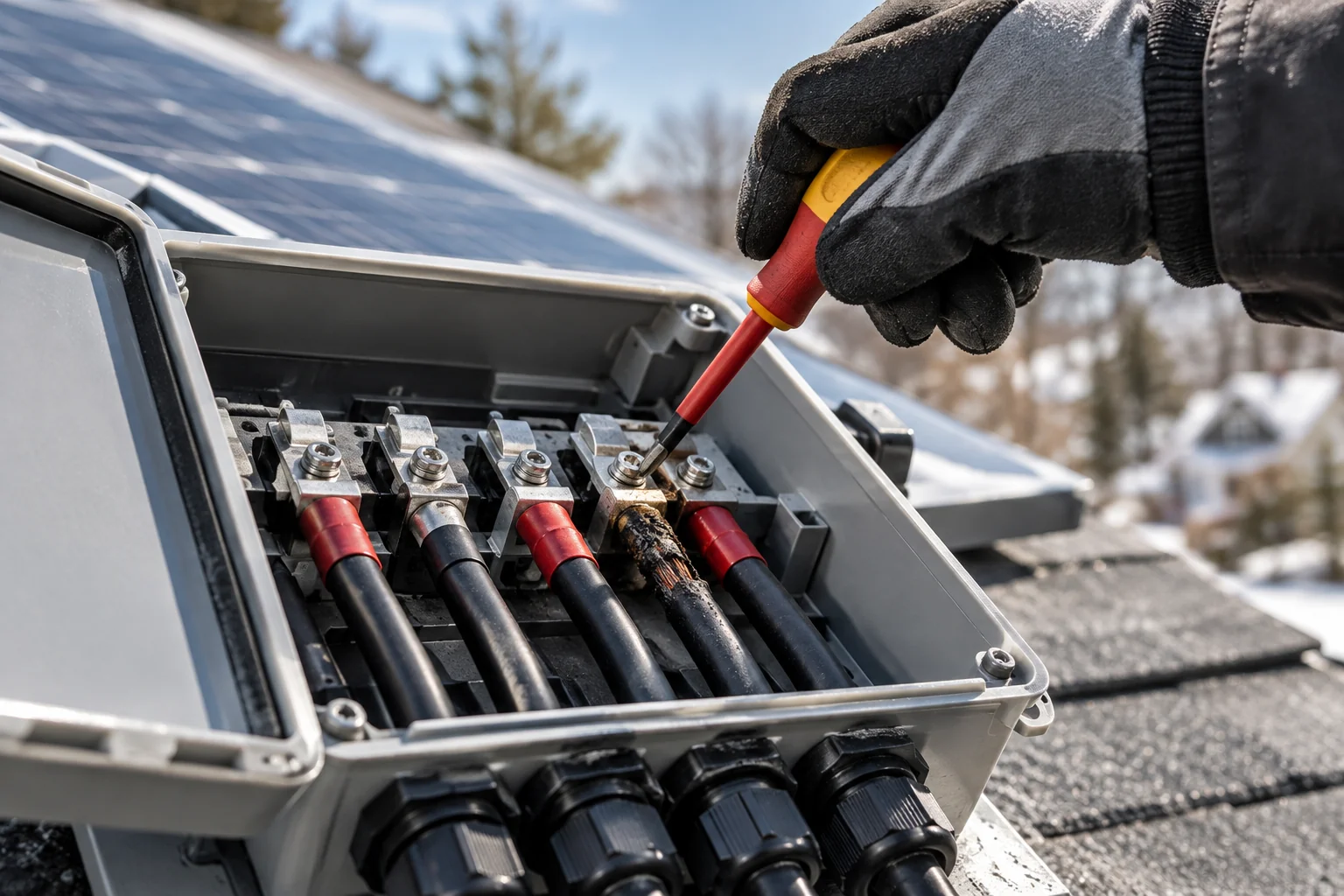
Heat expands and cools wire over thousands of cycles. Terminals that were not torqued correctly at install can work loose over a few years, and loose connections create heat and intermittent trips. Wind, ice and snow load on the array add stress.
Animals are a real cause in New England. Squirrels chew conductor insulation under panels. Water gets into a junction box or conduit and creates a ground fault, which trips the breaker or shuts the inverter down. These faults often appear after rain or snowmelt and clear when things dry.
Undersized Panels, Overloaded Service and New Loads
"Undersized" can mean three different things. The solar breaker can be undersized for the inverter. The main panel can be undersized for the combined system. Or the whole electrical service can be undersized for what the home now does.
That third case is the one we see most after the fact. A homeowner adds a Level 2 EV charger, a heat pump or an electric range, and the load on the panel climbs. Add solar backfeed on top and the main breaker has less headroom. If you plan an EV charger, our guide on pairing an EV charger with solar panels covers how the loads and the array fit together.
Retrofit batteries change the circuit as well. A battery adds a charging path, a backup subpanel and a gateway, and each one must be sized to the existing panel. If a battery was added without checking the busbar, trips are a common symptom. See how a solar and battery backup system is meant to be wired.
Inverter Issues and Aging Equipment
The inverter turns panel DC power into the AC your house uses. When it faults, it can push abnormal current into the backfeed breaker, or the breaker can trip as the inverter loses sync with the grid. Most inverters show a fault code on the display or in the monitoring app. Write it down before anything resets.
Age matters. Breakers have a mechanical spring and contacts that wear. Signs of a tired breaker include a loose handle, one that will not stay reset, brown heat marks, or tripping under modest load. Replace those rather than testing your luck.
Inverters wear as well, and a unit that trips often or restarts all day may be near the end of its life. If a generator is part of your setup, the transfer switch must be wired correctly, as covered in our piece on solar panels with a home generator.
Nuisance Trips and Inverter Fault Codes
Two kinds of trip look alike but differ. A grid event can make the inverter lose sync and restart once, which is normal. A breaker that opens repeatedly points to a real fault.
AFCI breakers watch for arcing, often from a loose connection. GFCI devices watch for current leaking to ground, often from moisture. If either trips only after rain or snowmelt, suspect water in a junction box or conduit. A ground-fault code on the inverter points the same way.
To know which code list to read, find the inverter manufacturer's name on its label, then use that brand's manual. Codes are not universal, so never rely on another brand's list. Send us the exact code and we can tell you what it means for your system.
A repair usually goes in this order:
- Review your notes, code and monitoring data.
- Inspect the breaker, busbar rating and inverter output rating.
- Check connection torque, wiring condition and grounding.
- Repair or replace the failed part, then restart and watch the system.
Hypothetical example: suppose a panel has a 200A busbar. At 120%, the limit is 240A. With a 200A main breaker, that leaves 240A − 200A = 40A for the solar breaker. A 50A solar breaker would exceed that limit and need a fix such as a smaller breaker or panel upgrade.
In New England, snow sliding off the array can also strain wiring and conduit, so check after heavy slides. We have not been given a diagnostic visit price or response time, so please call 203-903-4091 to ask.
Normal Behavior vs a Repair Problem
Some trips deserve a shrug and some deserve a service call. The pattern tells you which.
| Normal or low concern | Likely repair problem |
|---|---|
| One trip after a storm or neighborhood outage, then normal operation | Trips that repeat daily or weekly |
| Inverter restarts once after the grid returns | Trips on sunny afternoons at peak production |
| A house circuit trips when you run several appliances at once | Breaker will not stay reset |
| Brief production dip with no fault code | Fault codes that return after a restart |
| No heat, smell or marks at the panel | Burning smell, warm breaker, discoloration or buzzing |
Any trip that comes with heat, a burning smell, melted plastic or crackling is an emergency. Shut the system down using the AC disconnect and call a professional. Do not keep resetting.
Safe Checks Before You Call a Technician
You can gather useful information without touching live parts. Do not open the main panel cover or any junction box yourself. Stay on the safe side of the cover.
- Note the time and weather. Did it trip at noon, after rain, or when the heat pump started?
- Read the inverter display or monitoring app. Copy any fault code and screenshot the production graph around the trip.
- Look at the panel from the outside. Photograph the labels and the tripped breaker. Look for scorch marks or a warm surface.
- List what changed. New EV charger, battery, appliance, roof work or storm?
- Turn the system off properly. Use the labeled AC disconnect if trips repeat, so the fault stops while you wait.
A technician can use that list to arrive with the right tools. It often saves a second visit. If a monitoring app shows production dropping to zero around each trip, that data also shows how much output you are losing.
Licensed Electrical Work in Connecticut, Massachusetts and Rhode Island
Breaker, panel and inverter work is not a DIY job. In Connecticut, the state's solar buyer's guide says connecting a system to the electrical panel requires an E-1 Unlimited Electrical Contractor. The state's solar trades license page also clarifies that PV-1 and PV-2 license holders are limited in scope and cannot work inside the structure on the existing electrical system.
Ask any service company who will actually touch your panel and what license they hold. Changes to breaker size, panel capacity or battery wiring may also need a permit and utility sign-off, such as from Eversource, before the system is switched back on. An unpermitted fix can cause trouble later with insurance or a home sale.
Our crews are W-2 employees on our payroll, not subcontractors, so the person who diagnoses your panel works for the company that answers for the repair.
Service for Systems Another Installer Left Behind
Many of the systems we repair were not ours. The original installer may have closed, been acquired, or stopped returning calls. We service and retrofit solar systems of any brand and any age, and we have powered 9,000+ homes across New England. We keep a record of install counts in the states we serve, including 5,400+ in Connecticut, 2,900+ in Massachusetts and 700+ in Rhode Island.
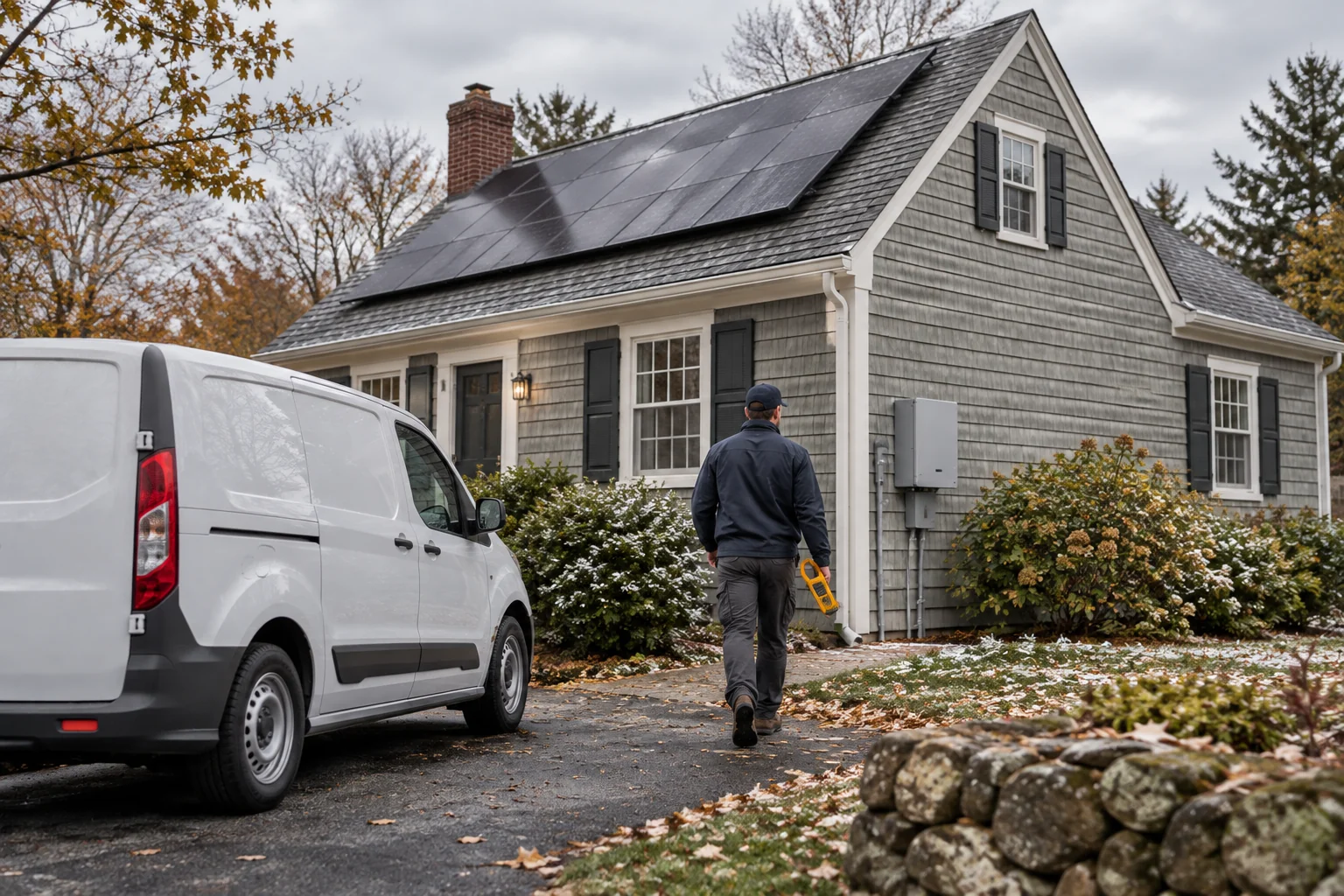
When we look at a tripping system, we check the breaker rating against the inverter output, the panel busbar rating, the torque and condition of connections, the grounding, and any loads added since install. If we find the system was set up wrong, we tell you what it takes to correct it and what should be replaced versus repaired.
If your system is older, a tripping breaker may also be a sign that parts are near end of life. Panel manufacturer warranties run 25 years, while a standard battery warranty is 10 years, so some equipment on your roof may still be covered. Check your paperwork before paying for parts.
Ready to Get It Looked At?
If your breaker trips more than once, stop resetting it and have it checked. You can request a free quote for service or a retrofit, call us at 203-903-4091, or talk to a designer about adding a battery or upgrading an older panel. You can also explore our services to see what we handle beyond repairs.
Recommended Resources
Written by
Dan Katzman
Teamsun
Teamsun writes practical solar guidance to help property owners compare equipment, project scope, costs, and long-term service before making a decision.
Keep going.
Can Condo and Townhouse Owners Get Solar Panels? Here's
Solar panels for condo and townhouse owners are possible in CT, MA and RI. See how HOA approval, shared roofs and community solar work, and what to ask first.
Dan Katzman
Teamsun
Do Solar Panels Increase Home Resale Value? Sellers' Guide
Do solar panels increase home resale value? See how buyers and appraisers treat owned vs leased systems in CT, MA and RI, and what paperwork to gather.
Dan Katzman
Teamsun
How Much Power Do Solar Panels Actually Produce in Cloudy
Solar panel output in cloudy New England weather: what overcast days, short winters and seasons really do to production, plus how to size a system.
Dan Katzman
Teamsun