Solar Panels and Homeowners Insurance: What to Check
Solar panels and homeowners insurance: what to confirm with your carrier before install, after power-on, and when filing a storm claim in CT, MA and RI.
Dan Katzman
Teamsun
Confirm three things with your insurance carrier before you install: that panel damage is covered, how liability applies to rooftop equipment, and what changes to the policy are needed once the system is live. Solar panels and homeowners insurance usually work together, but "usually" is not a promise, and a storm claim is a bad time to find the gap.
We are Teamsun, a local solar and battery installer serving Connecticut, Massachusetts and Rhode Island. Our W-2 crews have powered more than 9,000 homes across New England, and the insurance question comes up on nearly every project. We are not an insurance agency and cannot tell you what your policy covers. We can tell you what to ask, in what order, and what paperwork to keep.
Does Homeowners Insurance Cover Solar Panels?
Usually, yes, but not automatically. Many homeowners policies treat rooftop solar panels as part of the dwelling, so wind, fire and theft losses may be covered. Limits, deductibles and exclusions vary by carrier and by how you own the system. Confirm coverage with your insurer in writing before installation.
The National Laboratory of the Rockies (formerly NREL) notes that for residential owners, PV systems are generally covered under homeowners policies that include both property and liability exposures, with property coverage reaching attached fixtures such as rooftop PV. The U.S. Department of Energy's consumer guide says the same in plainer words: most homeowner policies will cover the system, but check with your insurance agent to be sure.
That "check" is the whole point. A policy that covers your roof does not always cover a $25,000 to $40,000 equipment add-on in full. Our owner-reported range for a typical residential system before incentives is $25,000 to $40,000, and that is the value your dwelling limit may need to absorb.
Before Install: What to Ask Your Carrier
Call your agent or carrier while you are still comparing quotes, not after you sign. Rhode Island's state energy office also recommends that homeowners speak with their property insurance company about a solar PV system. Work through this list and write down the name of the person who answers each item.
- Is the array covered as part of the dwelling? Ask whether panels, racking, wiring and the inverter are treated as attached fixtures, and whether any sub-limit applies.
- Which causes of loss are covered? Name them one by one: wind, hail, fire, falling trees, theft, water, electrical events and heavy snow or ice.
- What is the deductible? Some carriers apply a separate wind or hail deductible. The Connecticut Insurance Department's FAQ confirms that deductible type and amount vary by company, and that some offer optional wind or hail deductibles.
- Is the dwelling limit high enough? Give the carrier the quote total and ask if the limit should rise to reflect the added equipment.
- What happens to the roof? Ask how damage to shingles underneath the array is handled, and whether debris removal and panel detach-and-reset costs are included.
- Will the premium change? Ask for a number, not a guess, and ask whether the answer changes with the system size.
- Do batteries and EV chargers count? If you plan storage or a charger now or later, ask whether they are treated the same way as panels.
Ownership model changes who insures what
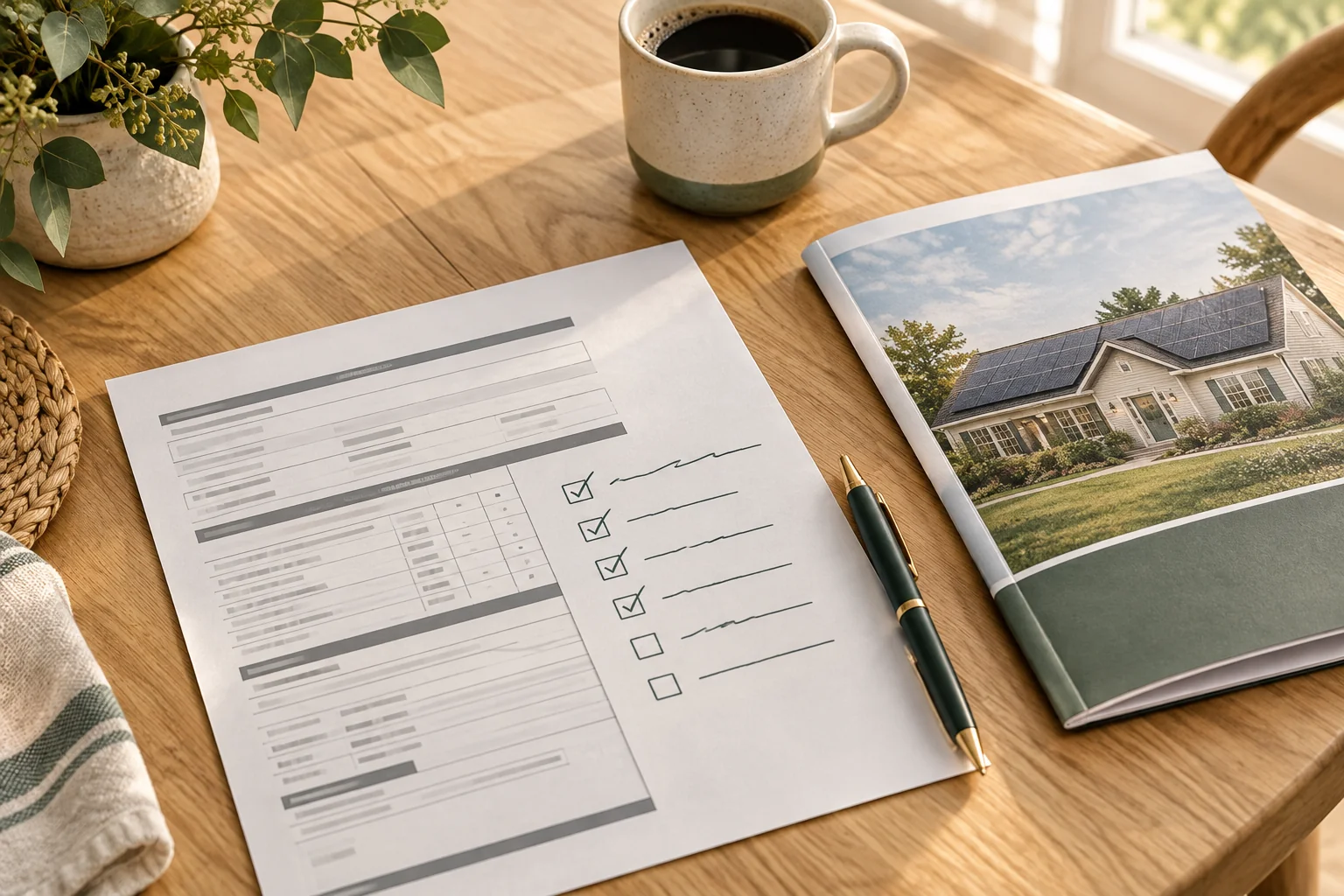
If you buy the system with cash or a loan, the equipment is yours and your policy is the main protection. With a PPA or lease, the arrangement may put insurance duties on the provider, on you, or on both. Read that clause before you sign, and ask your carrier how a third-party-owned system is treated. Our guide to how solar PPA financing works covers the contract side.
Liability Questions for Rooftop Equipment
Liability is the second half of the carrier conversation. A rooftop array adds new ways for something to go wrong: sliding snow or ice, a panel that shifts in high wind, or an electrical fault. Your homeowners liability coverage is what responds if equipment from your roof hurts a person or damages a neighbor's property.
Ask your carrier three plain questions. Does the personal liability coverage apply to the solar equipment? Is there any exclusion for roof-mounted systems or third-party-owned systems? And does the carrier want anything on file, such as a permit sign-off or an installer certificate?
Check the installer's license and insurance, too
Your own policy is only one layer. The installer should carry its own coverage, and it should be properly licensed. Connecticut's solar buyer's guide says an E-1 Unlimited Electrical Contractor license is what allows a contractor to connect your system to the grid and electric panel.
The Connecticut Attorney General has also warned that many solar companies contract out their marketing and installations to third parties, so you may sign with one company while another works on your roof.
Our installs are done by W-2 employees on our payroll, not subcontractors. That makes it simple to know who was on your roof if a question ever comes up. Ask any installer to put its license numbers and certificate of insurance in writing.
Insurance vs Warranty: Who Covers What
A warranty and an insurance policy answer different questions. A warranty covers defects and failures in the equipment or the work. Insurance covers sudden outside losses such as a storm, fire or theft. Mixing them up is how people end up with a damaged array and no clear claim path.
| Situation | Usually handled by | What to confirm |
|---|---|---|
| Panel fails early or output drops below its guarantee | Manufacturer warranty (25 years on the panels we quote) | Warranty terms and who files the claim |
| Battery defect | Battery warranty (10 years standard) | Whether the warranty transfers and what it excludes |
| Installation or workmanship problem | Installer's workmanship coverage | Length of coverage in the contract |
| Storm, tree fall, fire or theft | Your homeowners policy | Covered perils and deductible |
| Leased or PPA system damaged | Depends on the contract | Who is responsible for insurance and repairs |
The warranty figures above are the ones we quote: 25 years from the panel manufacturer and a standard 10-year battery warranty. Confirm the exact terms for the equipment on your own proposal. For how panels hold up in severe weather and what the process looks like afterward, see our article on solar panel hail damage.
After Power-On: Update Your Policy
Once the system is live, send your carrier the final facts and ask for an updated declarations page. Pre-install answers are based on a quote; the finished system is what the policy should reflect. This takes about one phone call and one email, and it closes the gap that causes most claim surprises.
Our average from contract to a live system is 47 days, and most installs take one day on the roof. Utility approval comes after that, so wait until you have permission to operate before you finalize the paperwork. Then do this:
- Send the carrier the final system size, total cost, install date and equipment list.
- Ask for the updated declarations page and confirm the new dwelling limit.
- Save the permit, the utility interconnection approval, the final invoice and the warranty documents in one folder.
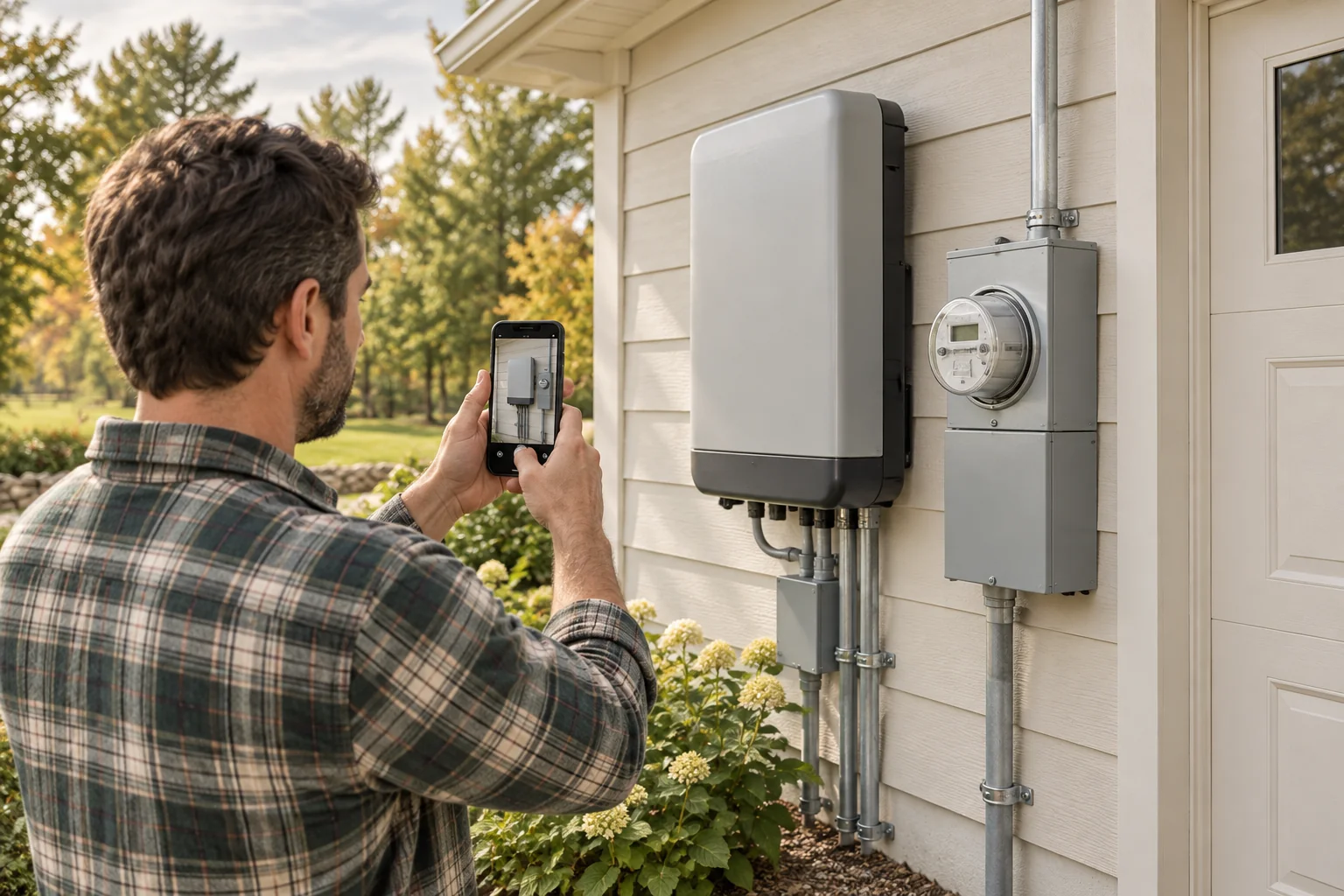
- Photograph the array, inverter, meter and any battery while everything is in good condition.
- Tell the carrier again if you add a battery or EV charger later.
Adding storage later is common. We retrofit batteries onto solar systems of any brand and any age, and the project typically runs 3 to 6 weeks. Whenever that happens, treat it as a new item to report. Our remove-and-reinstall guide applies the same rule to roof work: when panels come off and go back on, tell your carrier and your roofer who handles damage in between.
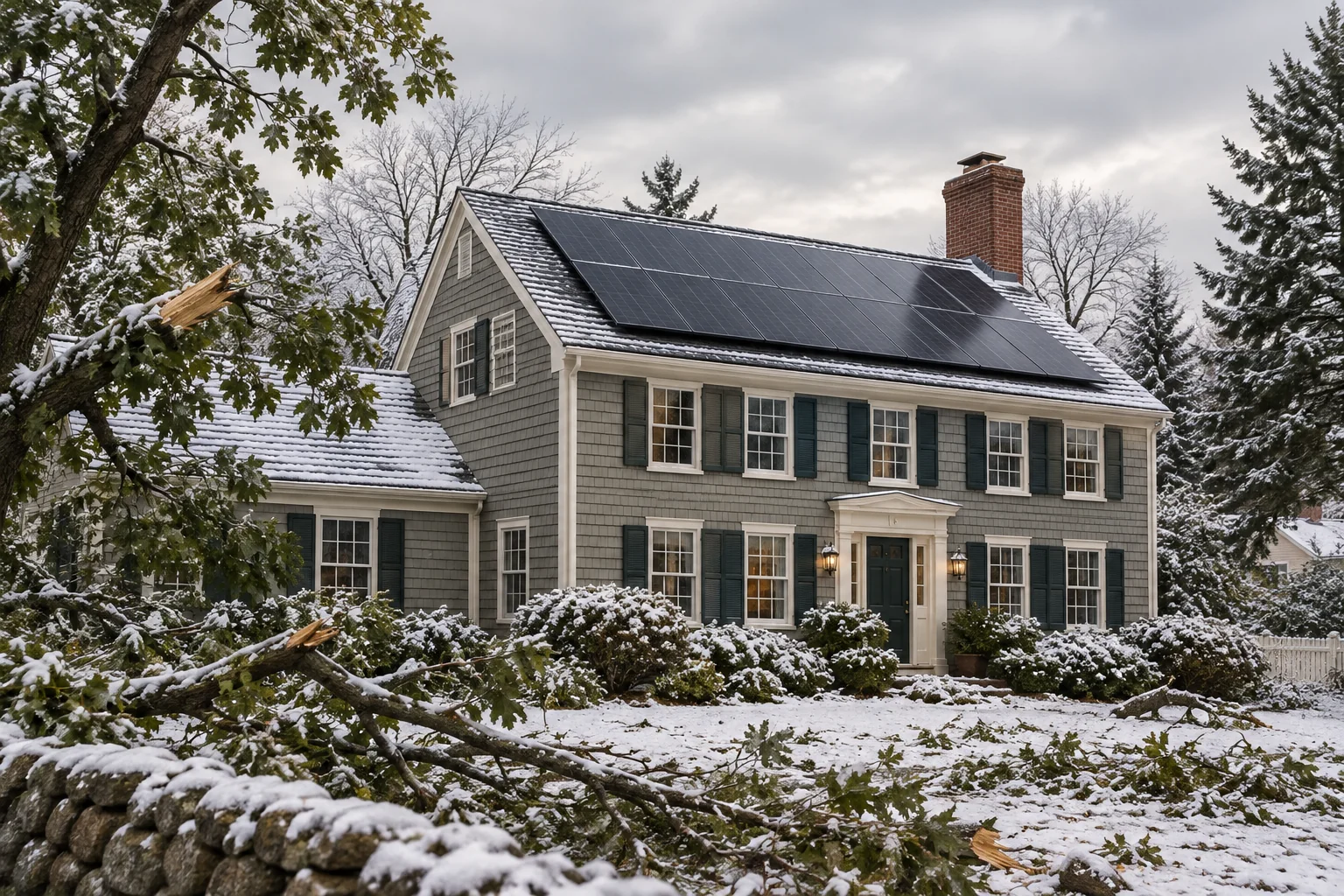
Who Do You Call After a Storm Damages Your Panels?
Call your insurance carrier first to open the claim, after you make the area safe and photograph the damage. Then call your installer to inspect and repair the system. Stay off the roof, and do not touch damaged wiring or panels yourself.
The order matters because the claim clock starts with your carrier, while the repair depends on a qualified technician. Here is the sequence we recommend:
- Stay safe. If you see sparks, a burning smell or broken panels hanging off the roof, keep people away and call emergency services.
- Document everything. Take photos of the array, the roof, fallen branches and any water inside. Your "before" photos from install day help here.
- Open the claim. Give the carrier the declarations page, your photos and the installer's contact details. Ask what the carrier wants in writing.
- Protect the property. Tarps or temporary roof repairs may be needed. Ask the carrier before spending money so you know what is reimbursable.
- Call the installer. Request an inspection and a written repair estimate. We service systems of any brand, so ask us even if another company installed yours.
- Check warranties. If the failure looks like a defect rather than storm damage, the warranty path may apply instead.
Reconnecting a damaged system is a licensed electrical job, so do not restart it yourself. If you are reading this after damage, you can call us at 203-903-4091.
Questions Homeowners Ask Before Signing
Do I have to tell my insurer I am installing solar?
Yes, and the sooner the better. The Rhode Island guide cited above recommends informing your property insurer about the system, and telling the carrier up front avoids a dispute over whether the policy was set up for it. Your agent can confirm whether any form needs to be signed.
Does solar raise my premium?
It can, because the home's replacement value goes up. We cannot predict your carrier's rate, so ask for a quote in writing before you sign the solar contract. Weigh any increase against the savings; our owner-reported figure for homeowners is 30 to 50% lower effective costs over the first five years.
What if my roof needs work first?
Ask the carrier about the roof's age and condition, since some carriers care about it. If your roof is near the end of its life, see our guide on our solar plus roofing services, where a bundle comes with roof warranties of 25 to 50 years and a combined timeline of 5 to 10 weeks.
Where can I get help if my carrier is unclear?
In Connecticut, the Connecticut Insurance Department assists consumers with questions about their policies, at 860-297-3800 or toll-free at 800-203-3447. In Massachusetts and Rhode Island, start with your state insurance regulator.
Next Steps
Make the insurance call before you sign, update the policy after power-on, and keep one folder of records. If you want a system priced with Tier 1 equipment and a clear equipment list to hand your carrier, request a free quote. You can also talk to a designer about how your roof and system size affect the figures you will give your insurer.
Recommended Resources
Written by
Dan Katzman
Teamsun
Teamsun writes practical solar guidance to help property owners compare equipment, project scope, costs, and long-term service before making a decision.
Keep going.
Can Condo and Townhouse Owners Get Solar Panels? Here's
Solar panels for condo and townhouse owners are possible in CT, MA and RI. See how HOA approval, shared roofs and community solar work, and what to ask first.
Dan Katzman
Teamsun
Do Solar Panels Increase Home Resale Value? Sellers' Guide
Do solar panels increase home resale value? See how buyers and appraisers treat owned vs leased systems in CT, MA and RI, and what paperwork to gather.
Dan Katzman
Teamsun
Solar Panel Hail Damage: How Panels Hold Up and What to Do
Solar panel hail damage explained for CT, MA and RI homeowners: how panels are tested, signs to check from the ground, safety steps, insurance and repairs.
Dan Katzman
Teamsun