Solar Panel System Size for an EV Charger: Do You Need More?
Adding a Level-2 EV charger raises home electricity use. See how to estimate charging load and resize your solar panel system size before you buy.
Dan Katzman
Teamsun
Yes, in most cases. If your solar panel system size was set from electric bills written before you bought an electric vehicle, a Level-2 charger will push your use past what the panels offset. Size the system for the household you will have after the car arrives, not the one you have today.
We are Teamsun, a local installer serving Connecticut, Massachusetts and Rhode Island with in-house W-2 crews, not subcontractors. We install both solar and EV chargers (hardwired and NEMA 14-50), so we see this sizing gap on real quotes. This guide walks through the math in order: estimate the load, convert it to panels, then decide whether to build it now or later.
Why Does a Level-2 Charger Leave Today's Solar System Short?
A solar system is usually sized to offset your yearly electricity use. A Level-2 charger adds a new block of kilowatt-hours to that total. Unless the system was designed with the car in mind, the panels cover your old usage and the car runs largely on utility power.
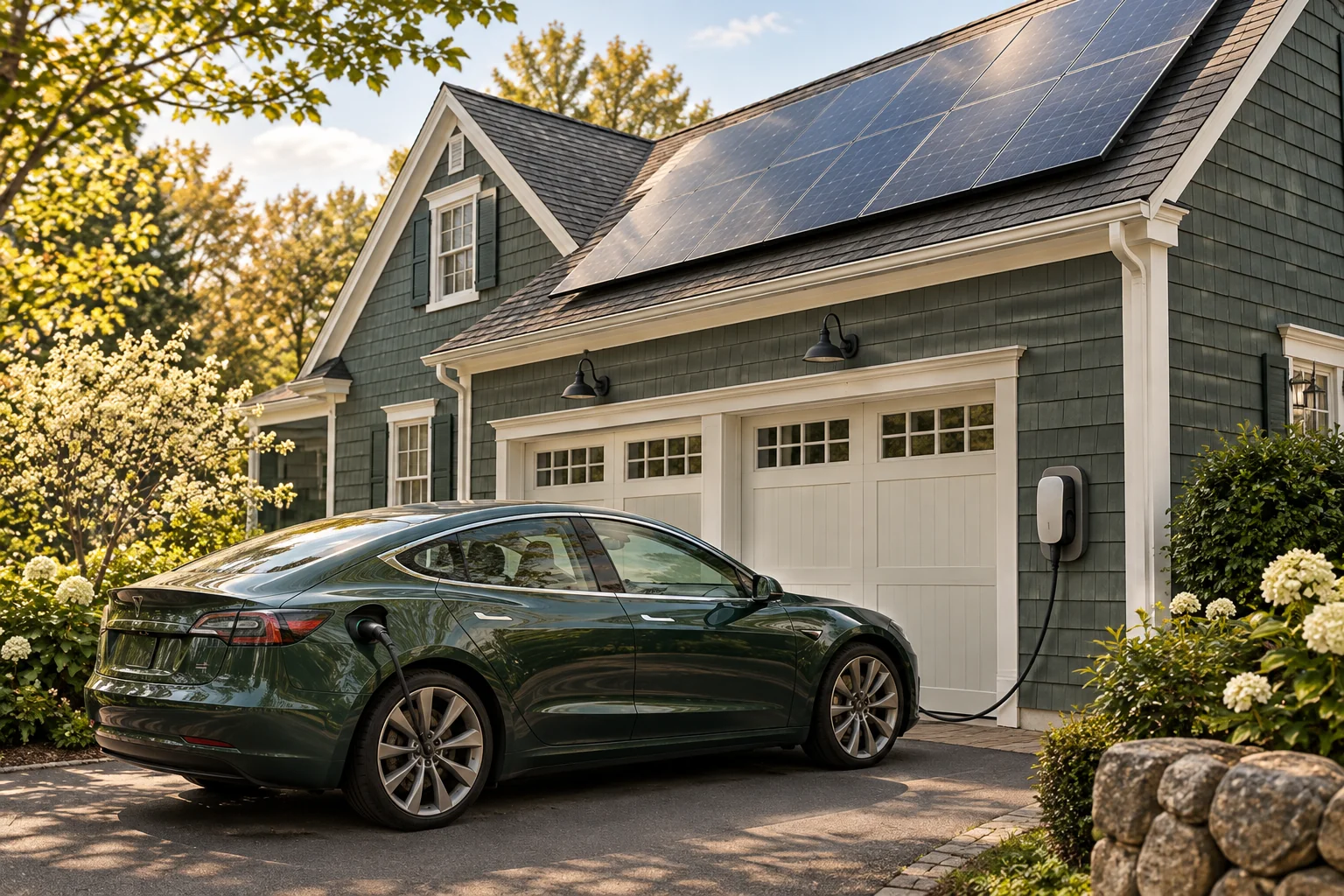
Installers start from your historical yearly usage, plus any allowance for growth. The Eastham, Massachusetts solar clinic FAQ says the recommended panel count comes from your past yearly usage and may include room for added loads. An EV is exactly that kind of added load.
The Vermont Department of Public Service sizing fact sheet notes that the share of your use offset by solar can be anywhere from 25% to 100%. So the real question is what share of the new total you want the panels to cover.
Plain-language rule: divide the car's yearly charging kWh by your roof's yearly kWh per kW, and the result is the kW to add. In our example, 4,380 kWh ÷ 1,200 kWh per kW is about 3.65 kW. For the general sizing steps (usage, sun hours, roof area), see the Solar Energy Worksheet, which walks through usage and system size.
It is the energy, not the charger's power rating, that drives panel count. A Level-2 unit may pull a lot of power for a few hours, but the yearly total comes from how many miles you drive. The charger's rating matters later, for your electrical panel and wiring.
How Do You Estimate Daily EV Charging Load?
Multiply the miles you drive per day by your car's energy use per mile, then add a margin for charging losses. At 40 miles a day and 0.30 kWh per mile measured at the wall, that is 12 kWh daily, or about 4,380 kWh a year. Your mileage and vehicle change the result.
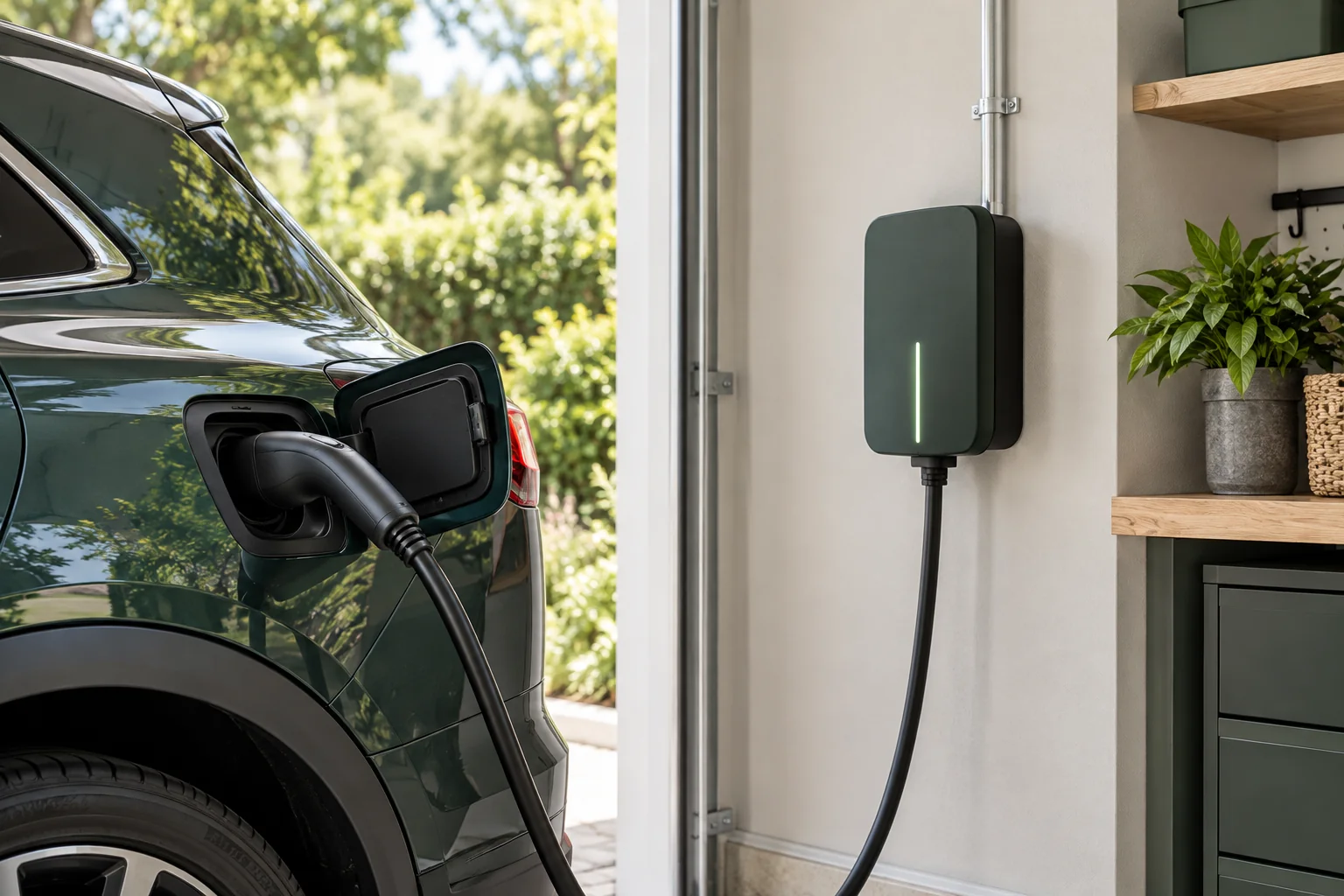
Here is where the inputs come from. Your car's window sticker or manual lists its efficiency, often as kWh per 100 miles. The U.S. Department of Energy uses 27 kWh per 100 miles as an example, and the Federal Highway Administration lists average annual miles per driver at 13,476. Together that is about 3,600 kWh a year before charging losses.
Published ranges are wide. One Long Island planning guide puts EV use between 500 and 4,500 kWh a year, depending on driving miles and efficiency. That spread is why a flat rule of thumb is risky. Use your own commute, not an average.
Check These Inputs Before You Resize
- Daily miles: use your real commute plus weekend driving, averaged over a year.
- Vehicle efficiency: kWh per mile or per 100 miles from the manufacturer or the EPA label.
- Charging losses: energy lost between the wall and the battery, so the wall number runs higher than the car's rating.
- Winter driving: cold weather raises use per mile, which matters in New England.
- A second EV: if one is likely within a few years, count it now.
How Does Panel Count Change When You Add an EV?
Divide the car's yearly kWh by what one panel produces in a year at your address. With an assumed 1,200 kWh per kW and 400-watt panels, each panel makes about 480 kWh annually. So 4,380 kWh of charging needs roughly nine or ten more panels. Roof direction and shade move that number.
That example is hypothetical, built on assumptions. One regional sizing guide gives 1,100 to 1,300 kWh per kW per year for Connecticut, New York and New Jersey, and most current residential panels run 400 to 450 watts. Your installer's production model for your roof replaces both assumptions.
| Step | What you need | Hypothetical example |
|---|---|---|
| 1. Daily charging load | Miles per day, kWh per mile at the wall | 40 miles × 0.30 kWh = 12 kWh |
| 2. Yearly charging load | Daily kWh × 365 | About 4,380 kWh |
| 3. Output per panel | Roof production estimate for one panel | 400 W × 1,200 kWh per kW = 480 kWh |
| 4. Added panels | Yearly load ÷ output per panel | About 9.1, so 9 to 10 panels |
| 5. Added system size | Panels × panel wattage | About 3.6 to 4 kW |
Add that to the size your home already needs. If your current bills call for a 9 kW system, the EV pushes the target toward 13 kW. The UMass Extension fact sheet on home solar arrays starts from the same place: total your monthly bills for a year, then size from that usage.
When the Roof Cannot Hold the Extra Panels
Ten more panels need roof area with good sun. If your best roof plane is already full, you have three options: use a secondary plane at lower output, choose higher-wattage panels to fit more power in the same space, or accept a lower offset and cover the rest from the grid.
A roof check at the site visit settles this before you commit. Ask the designer which roof planes they measured and what yearly output they assumed for each.
Should You Size Up Now or Add Panels Later?
Size up now if you will buy an EV within the next year or two. One permit, one utility approval and one install day cost less effort than a second project. Wait only if the purchase is uncertain and your roof and electrical panel can take more panels later. A practical threshold: if the car is within about 12 months, size up now.
Our 47-day average timeline means you should start roughly two months before you want the system live. To check the electrical panel, photograph its label and breaker layout, and ask the electrician or designer to confirm there is room for a new 240-volt breaker and that the main service can carry the added load.

Our average from contract to a live system is 47 days. That breaks down to about 7 to 10 days for the site visit, 20 to 30 days for permitting, one day for most installs, and 5 to 15 days for utility approval. Most of that time is paperwork, and an add-on project repeats the paperwork.
| Factor | Size up now | Add panels later |
|---|---|---|
| Permits and utility approval | One round | A second round of both |
| Install visits | One crew visit, usually one day | A second visit |
| Upfront cost | Higher on the first quote | Lower at first, spread over two projects |
| Roof space | Reserved for the full layout | Must still be free and unshaded |
| Inverter and equipment | Matched to the final size | May hit an inverter limit |
| Best for | EV purchase planned or already ordered | EV purchase uncertain or years away |
Net metering helps the case for building it all at once. For Eversource and UI customers, our installs get a full retail 1:1 offset on what your panels send back to the grid. Your panels can export in the afternoon, and the credit offsets the power your car draws at night.
Hypothetically, if the car needs 12 kWh a night, as in our example, that is about 360 kWh over 30 nights (12 × 30). Panels that export 360 kWh by day earn 360 kWh of credit, which fully covers the charging.
Two mistakes come up often. One is sizing for the car only and forgetting the heat pump or home addition you will add next year; our post on planning solar around a home addition covers that case. The other is assuming the charger and panels will be fine because the car is not here yet. They usually are not.
What Else Changes When a Charger Joins Your Solar Plan?
A charger adds two decisions: which type to install, and whether your electrical panel can carry the new circuit. We install hardwired and NEMA 14-50 chargers, and most installs take one day. Panel capacity, inverter limits and roof space decide whether the larger system fits.
A hardwired unit is wired directly to a dedicated circuit. A NEMA 14-50 is a 240-volt outlet that your charging cable plugs into. Either way, the wiring is separate from the solar system, so a licensed electrician and your solar installer should coordinate. Our guide on pairing an EV charger with solar panels goes through the wiring choices.
Money matters too. Eversource lists a rebate of up to $1,000 for EV chargers, so ask us to confirm eligibility for your address before you buy equipment. For the full cost picture of the solar side, see our solar panel installation cost breakdown. A typical residential system runs $25,000 to $40,000 before incentives, and a larger system for an EV sits higher in that range.
Licensing and Who Does the Work
Connecticut's Department of Consumer Protection tells homeowners to verify the license of electricians and home improvement contractors in its solar panel buyer's guide. Check the license of whoever pulls your charger permit. Our crews are W-2 employees on the payroll, and we have powered 9,000+ homes across New England.
Battery storage adds a further variable. If you want the car to charge from stored solar at night, a battery changes both cost and sizing. We install FranklinWH, Tesla Powerwall and Enphase IQ batteries, and we retrofit batteries onto systems we did not install.
Your Sizing Checklist Before You Request a Quote
Bring the same short list to every installer, so the quotes compare cleanly. Having these items ready also speeds up the site visit.
- Twelve months of electric bills showing total kWh.
- The EV make and model, or the two you are deciding between.
- Your honest daily miles, including winter.
- The charger type you prefer: hardwired or NEMA 14-50.
- Any other new loads in the next few years: heat pump, addition, second EV.
- Photos of your electrical panel and the roof planes with the best sun.
With those in hand, request a free quote and ask for two system sizes: one for today's use and one with the EV included. The gap between them is your answer. If you want to talk it through first, talk to a designer, call 203-903-4091, or explore our services to see how solar, battery and charger work fit together.
Recommended Resources
Written by
Dan Katzman
Teamsun
Teamsun writes practical solar guidance to help property owners compare equipment, project scope, costs, and long-term service before making a decision.
Keep going.
Solar Panel System for a Home Office: Sizing & Payback
A solar panel system for a home office can pay back faster because you use power while the sun shines. See sizing, payback math and when a battery helps.
Dan Katzman
Teamsun
When Should You Upgrade an Older Solar System?
Signs it's time for a solar system upgrade for older panels, from declining output to inverter age. Learn what Teamsun checks before recommending changes.
Dan Katzman
Teamsun
Solar System Not Working? Find a Repair Company for Any
Solar not producing power? Learn how to find a solar company that services any brand, plus what Teamsun checks before repairing or upgrading your system.
Dan Katzman
Teamsun