Solar Inverter Noise: Normal Sounds vs Failing Parts
Solar inverter noise explained: which hums, clicks and fan sounds are normal, which signal a failing part, and when to book a repair visit.
Dan Katzman
Teamsun
A soft hum on sunny afternoons and a click or two at sunrise and sunset are normal solar inverter noise. A new loud buzz, rapid repeated clicking, a grinding fan, or crackling means the unit needs a technician. Most inverters sit between roughly 25 and 55 decibels, about a quiet conversation to a refrigerator.
We are Teamsun, a local installer serving homeowners across Connecticut, Massachusetts and Rhode Island. Our in-house crews also service inverters on systems we did not install, on any brand. This guide helps you sort a harmless sound from a failing part before you pick up the phone.
Which Solar Inverter Sounds Are Normal?
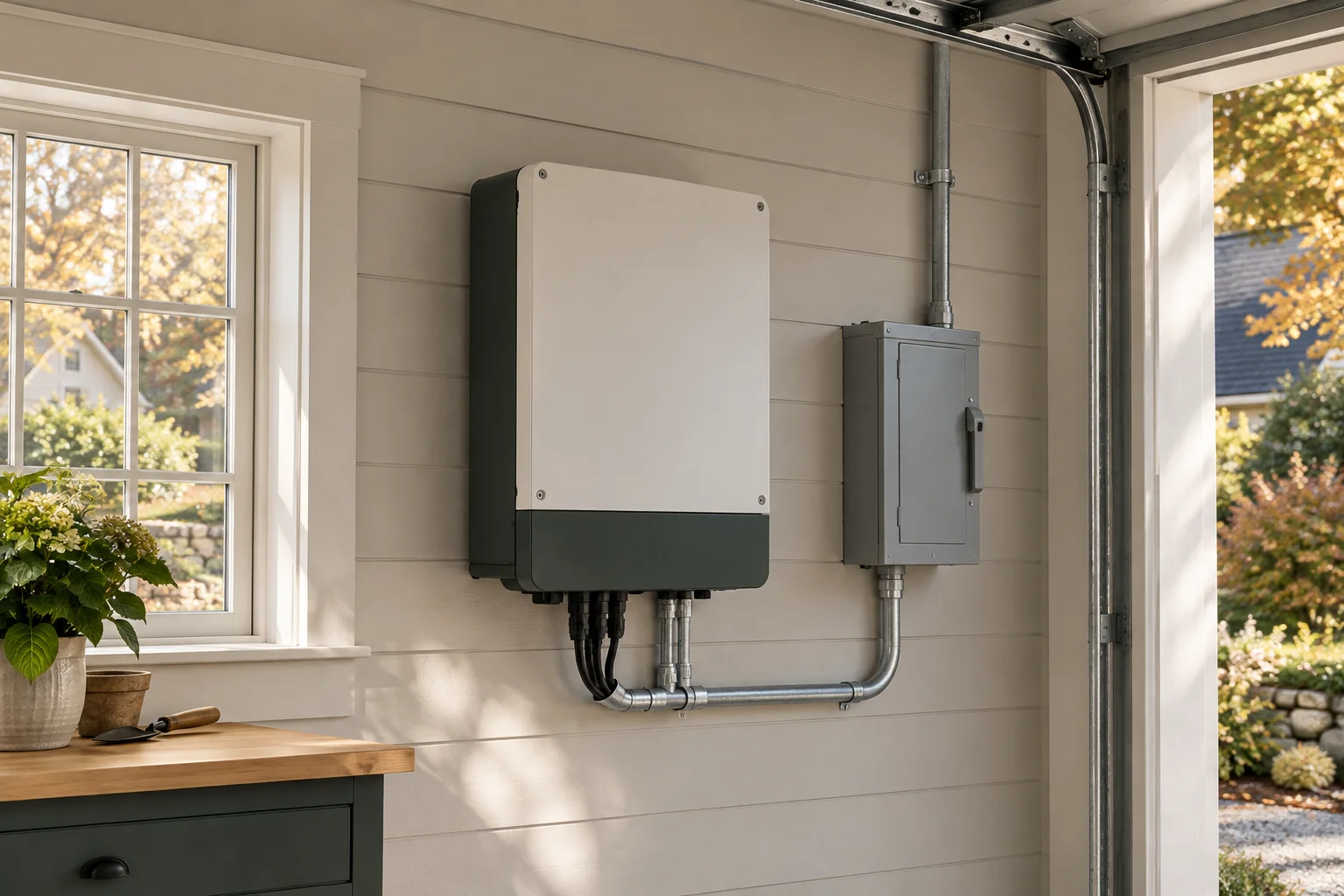
Normal inverter sounds are a low hum or faint whine while the panels produce power, a click or two at sunrise and sunset as the relays connect and disconnect from the grid, and a cooling fan that spins up on hot afternoons. They follow the sun and stay steady from day to day.
An inverter turns the direct current from your panels into the alternating current your house uses. That conversion involves coils, a transformer in many models, and fast-switching electronics. All of them vibrate slightly under load, so the unit is loudest when panels are producing the most.
Why it gets louder at midday
Sound tracks output. On a clear June noon, the inverter works hard and may hum audibly. On an overcast morning it may be nearly silent. If your unit follows that pattern, it is behaving as designed.
Heat adds to it. When the cabinet warms up, the fan runs faster to protect the electronics. A fan that ramps up in the afternoon and quiets down in the evening is doing its job.
Why the model and the location matter
String inverters, the wall-mounted boxes common in New England garages and basements, usually run louder than microinverters mounted behind each panel. Microinverters generally have no fan, so you rarely hear them from inside the house.
Where the box hangs matters too. A unit on a thin wall shared with a bedroom can seem louder than the same unit on a concrete foundation wall.
In a Massachusetts acoustic study of solar PV project sites, readings in front of the inverter face ran 4 to 13 dBA higher than at the same distance off to the side. That study covered large commercial inverters, but the direction effect applies to your wall box too: stand beside it, not in front of it, when you compare.
Sound-by-Sound Guide: Normal or Not
Use this table to match what you hear with the usual cause. If a sound lands in the "call us" column, skip the rest of the article and book a visit.
| What you hear | Usual cause | Verdict | What to do |
|---|---|---|---|
| Soft hum or whine on bright days | Coils and electronics under load | Normal | Nothing; note the pattern |
| One or two clicks at dawn and dusk | Relays connecting to or leaving the grid | Normal | Nothing |
| Fan running on hot afternoons | Cooling the cabinet | Normal | Keep vents clear |
| Fan at full speed all day, even in cool weather | Blocked vents, heat buildup or a fan control fault | Watch closely | Clear dust and clutter; call if it continues |
| Hum that is suddenly much louder than last month | Loose mounting, a failing component | Not normal | Book a service visit |
| Rapid, repeated clicking | Relay cycling on an unstable grid or a fault | Not normal | Log the times and any alarm; call |
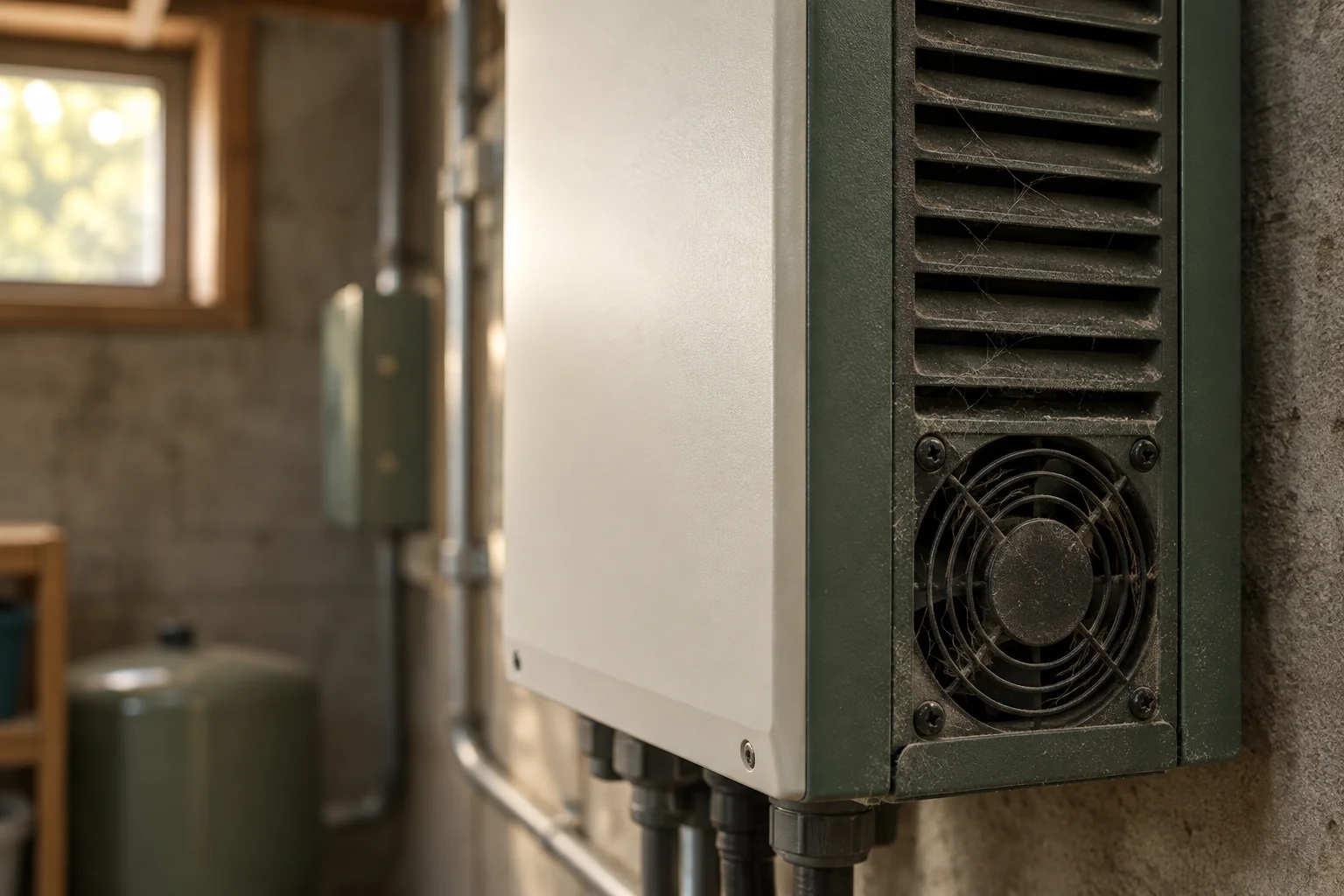
| Grinding, scraping or rattling from the fan | Worn fan bearing or debris | Not normal | Book a service visit |
| Crackling, popping or a burning smell | Arcing or an overheating component | Unsafe | Shut off the AC disconnect and call right away |
Which Noises Signal a Failing Component?
Rapid repeated clicking, a grinding or rattling fan, a new loud buzz, and any crackling or burning smell point to a failing part. The risk rises when the noise comes with an error code, a blinking fault light, or a drop in production on your monitoring app.
The U.S. Department of Energy's research repository lists the usual weak spots in a report on inverter faults and failures. It names subsystems such as storage capacitors, power stage drivers and cooling. Each one can produce a sound before it stops working.
Cooling fan trouble
A fan bearing wears out like any other small motor. It starts with a faint whir that gets rougher, then a grind or rattle. Left alone, the unit overheats and reduces its output to protect itself, so you lose solar production on the hottest, sunniest days.
Capacitor and switching faults
Capacitors age with heat. A failing one can cause a buzz that was not there before, a louder whine, or a unit that restarts again and again. Power stage faults tend to show up as shutdowns with a fault code rather than as a sound alone.
Relay chatter
Relays click when they connect. When they click over and over in quick succession, either the grid voltage at your house is swinging in and out of range or the relay itself is wearing out. A New York City owner's guide on long-term solar ownership and maintenance notes that grid voltage or frequency out of range can cause an inverter to turn off, which cuts your yield.
Arcing and burning smells
Crackling, popping or a sharp electrical smell is a safety problem, not a nuisance. Switch off the AC disconnect next to the inverter, leave the cover closed, and call. Do not restart the system to see if it "goes away."
What to Check Yourself Before You Call?
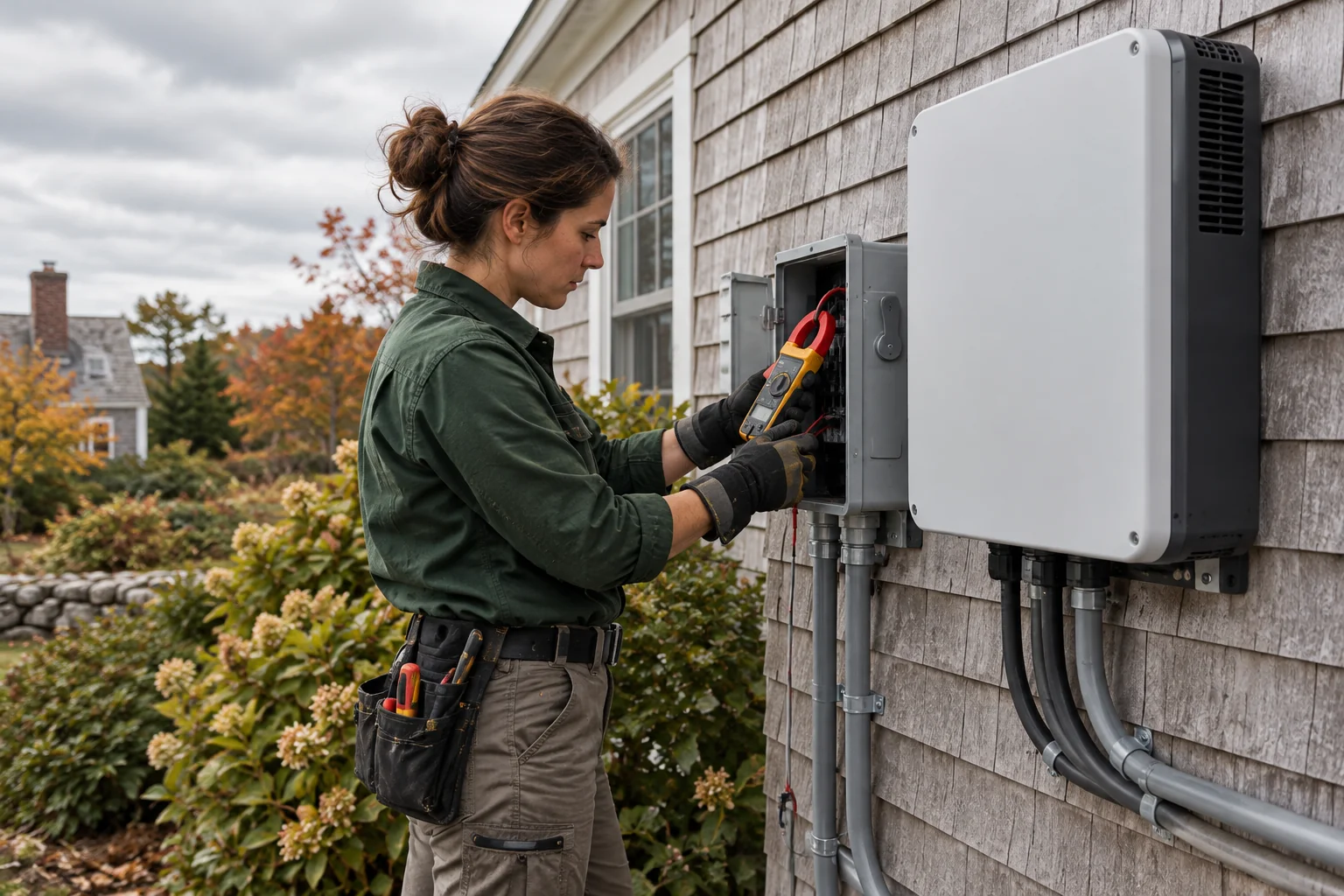
Before you call, record when the sound happens, check your monitoring app for dips or error codes, make sure the vents are clear, and listen for rattling from the mount. Never open the inverter cover. Those notes help a technician find the fault faster on the first visit.
- Write down the timing. Note the time of day, the weather, and whether the sound follows sunlight or appears at night. Noise at night with no production is unusual and worth reporting.
- Check the app. Look for a production dip, a fault code, or repeated restarts on the same days as the noise. Our guide to reading your solar monitoring app data shows what those graphs mean.
- Look at the vents and the area. Stored boxes, paint cans or a pile of snow against the unit can block airflow. Dust on the grille can be wiped off the outside only.
- Press gently on the mounting plate and conduit. A hum that turns into a buzz can come from a loose bracket or a conduit touching a stud. That is a cheap fix when the inverter itself is fine.
- Take a short video. A 20-second clip with the inverter's display in frame is worth more than a verbal description.
If the unit has an inverter-level display, photograph any code. Also photograph the manufacturer label on the side, which carries the model and serial number. Do not open the front cover or the wiring compartment. That is a job for a licensed electrician; Connecticut's consumer protection office reminds homeowners in its solar panel buyer's guide that you can verify the license of electricians and home improvement contractors before they work on your home.
When Should You Book a Repair Visit?
Book a repair visit right away for crackling, burning smells or a unit that shuts down repeatedly, and within a week or two for new loud buzzing, a grinding fan, rapid clicking or any noise paired with falling production. A sound that has not changed in months can wait for your next service check.
Call today
- Crackling, popping or a burning smell (turn off the AC disconnect first)
- The inverter shuts down over and over, or shows a persistent fault code
- Visible scorching, melted plastic or water inside the enclosure
Book within a week or two
- A new buzz, or a hum clearly louder than it was last month
- A grinding, scraping or rattling fan
- Rapid repeated clicking, especially with production dips
- Production that has dropped while the noise grew
Watch and log
- A steady hum that follows the sun and has not changed
- Single clicks at dawn and dusk
- A fan that runs on hot afternoons and stops in the evening
Age and warranty shape the next step. If the inverter is within its manufacturer warranty, a failing part is often replaced under it, so keep the paperwork and model details handy. If the unit is older, a repair visit also tells you whether a fix makes sense or whether replacement does. Our breakdown of solar inverter replacement cost and the signs of a failing inverter covers that decision.
Winter has its own quirks in New England. Cold mornings and snow cover can make relays click as the system wakes and sleeps, and a unit mounted in an unheated garage can behave differently from one in a basement. If the pattern only appears on the coldest days, say so when you call.
Can One Company Service an Inverter It Did Not Install?
Yes. Many homeowners end up with a system installed by a company that has closed, been sold or stopped returning calls. A service company that works on any brand can diagnose, repair or replace the inverter without having installed it, as long as the technician is licensed and trained on that equipment.
That is what our crews do. We service systems across Connecticut, Massachusetts and Rhode Island, including inverters installed by another company. Our technicians are our own W-2 employees, not subcontractors, so the person who diagnoses the noise is accountable for the repair. If you want a credential to ask any service provider about, NABCEP publishes its certification and code of ethics in its consumer brochure.
What to have ready when you call
- The inverter brand, model and serial number from the label
- Your video clip and a photo of any display code
- Screenshots from your monitoring app showing the dates of the noise
- The original install date and any warranty paperwork you still have
- Your notes on when the sound happens and what changed
If your original installer is gone, finding a repair company for any brand walks through who to call and what to ask. Whether the fix is a fan, a loose bracket or a full replacement, you should get the cause in plain words and a written scope before work starts.
Get an Inverter Checked by Our Service Crew
If your inverter sounds different than it did a month ago, do not wait for it to fail on a sunny week. Request a free quote for an inverter diagnosis or replacement, or call 203-903-4091 to describe the sound to our team. You can also talk to a designer about upgrades, or explore our services for battery retrofits and system maintenance on any brand.
Recommended Resources
Written by
Dan Katzman
Teamsun
Teamsun writes practical solar guidance to help property owners compare equipment, project scope, costs, and long-term service before making a decision.
Keep going.
Mistakes When Switching Solar Companies: 8 to Avoid
Unhappy with your installer? Avoid 8 costly mistakes when switching solar companies, from warranty gaps to skipped audits, in CT, MA and RI.
Dan Katzman
Teamsun
Need a New Roof? When to Do It Before Solar
Learn when to replace your roof before solar installation, how to check roof age and condition, and how Teamsun bundles solar plus roofing with one crew.
Dan Katzman
Teamsun
Prepaid Solar Lease: How It Works and When It Beats a Loan
A prepaid solar lease swaps monthly bills for one upfront payment. See how it works, how it compares with a loan or PPA, and what to check in the contract.
Dan Katzman
Teamsun