Going Solar in Connecticut: Timeline, Rebates & Checks
Going solar in Connecticut, step by step: timeline, ESS battery rebate, net metering, permitting, interconnection and what to check before you sign.
Dan Katzman
Teamsun
Going solar in Connecticut takes about 47 days on average from signed contract to a live system, and the roof work is the shortest part. Most of that time goes to the site visit, town permits and utility approval. Knowing the order of those stages is the best way to compare installers before you sign.
We are Teamsun, a local installer serving Connecticut, Massachusetts and Rhode Island. Our crews are W-2 employees on our payroll, not subcontractors, and we have completed 5,400+ installs in Connecticut. This guide walks through every stage, the state incentives, where delays happen and what to check in a contract.
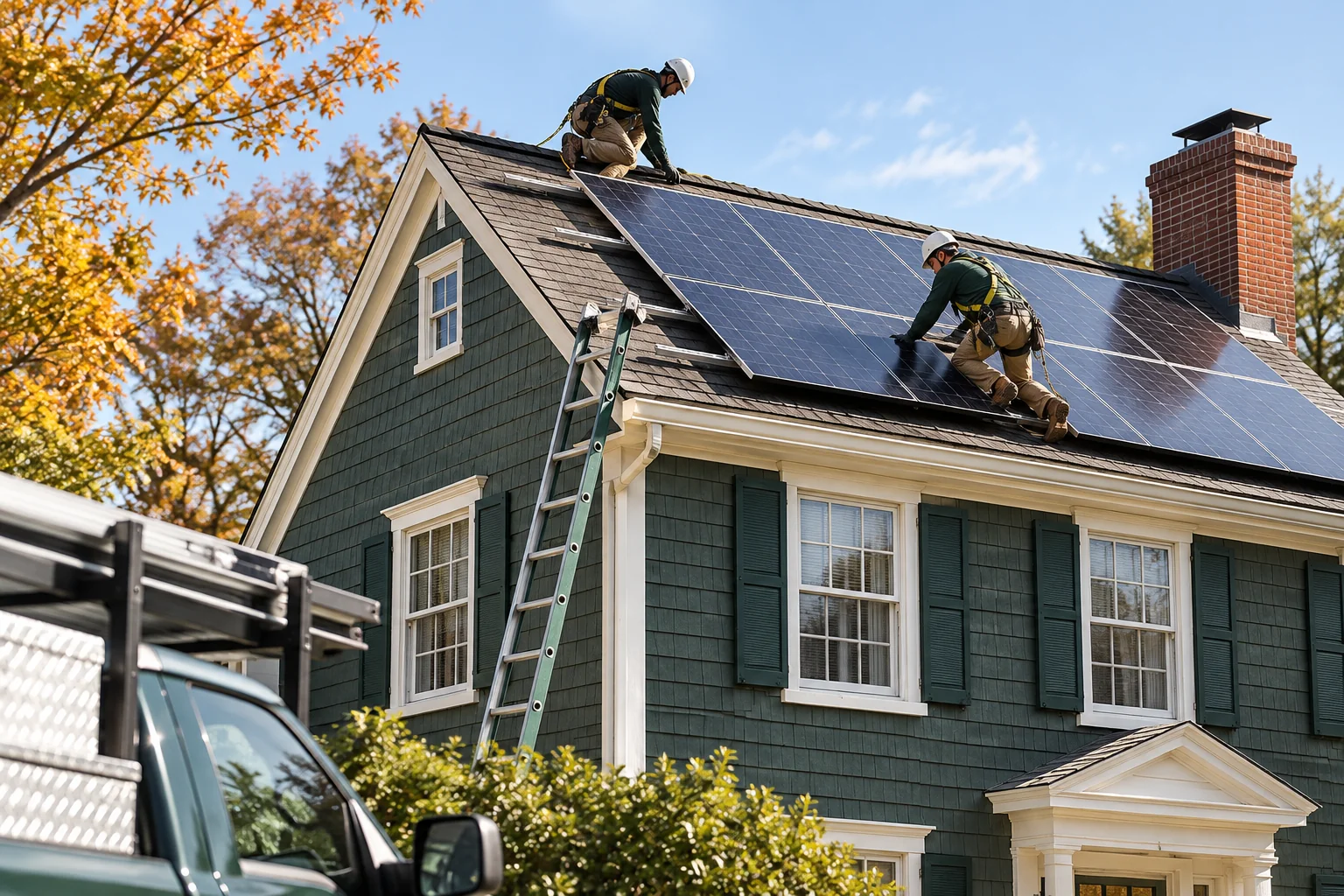
How Long Does Going Solar in Connecticut Take?
Teamsun's average is 47 days from contract to a live system. Our stated range for a residential solar project is 4 to 8 weeks. Install day itself is usually one day. Permitting and utility approval take most of the calendar, and both depend on your town and your utility.
Here is how our average breaks down, stage by stage:
| Stage | Typical time |
|---|---|
| Site visit | 7 to 10 days |
| Permitting | 20 to 30 days |
| Installation | 1 day for most installs |
| Utility approval | 5 to 15 days |
The stages run one after another, because each one needs the last to finish. The permit cannot be filed until the design is final, and the design cannot be final until someone has stood on your roof and opened your electrical panel. That is why a company that promises "install next week" is usually only talking about the one day on the roof.
Ask any installer to quote you the full span from signature to permission to operate, not just the install date. A one-day install attached to a three-month wait is a slow project, whatever the brochure says. For a deeper look at what moves each number, see our guide on how long solar installation takes from contract.
The Stages From First Call to Power-On
A solar project runs in a fixed order. The U.S. Department of Energy lays out the same consumer path, starting with an installer who can judge whether your roof is suitable for solar panels. Here is how it plays out with us, and what you do at each point.
1. First call and quote
You tell us about your electric bill, your roof and your goals. Have a recent bill handy, because annual usage drives system size. We build a quote with Tier 1 panels, inverters and batteries, since every Teamsun quote uses that equipment tier.
Get at least two itemized quotes from different installers. Compare equipment models, system size in kilowatts, and what is and is not included, such as electrical panel upgrades or roof work.
2. Free site visit
A technician checks the roof, the electrical panel and the shading. This usually lands 7 to 10 days after the contract. The visit decides panel layout, whether your main panel needs work, and whether the roof should be handled first.
Be there, or have someone there, who can show the technician the basement panel and the attic access. Mention any plan for a new roof, an addition or a generator now, because each one changes the design. Our guide on services covers the add-ons we handle in the same project.
3. Design and permit package
We draw the plan set and file it with your town. Permits are the longest stage, at 20 to 30 days on our average. A town may also route the file through other boards, which adds time.
Fees vary by town. As one published example, East Hartford's solar permit procedure sets an application fee of $30 per first $1,000 and $15 per $1,000 thereafter, with projects valued at $3.50 per watt. Your town will differ, so ask what yours charges.
4. Install day
Most installs take one day. Racking goes on first, then panels, then the inverter and wiring. Our own employees do the work, so the person who answers for the job is the person on your roof.
Expect the power to go off for a short stretch while the system is tied into your panel. After the crew leaves, the system sits idle until the utility says it can run.
5. Utility approval and activation
After inspection, your utility (Eversource or United Illuminating for most homes) reviews the interconnection and gives permission to operate. That takes 5 to 15 days on our projects. Do not switch the system on before you get that approval.
Once you have it, set up the monitoring app so you can see production from day one. If production looks off in the first weeks, call the installer rather than waiting for the first bill.
What Does Solar Cost in Connecticut Before Incentives?
A typical residential system from Teamsun costs $25,000 to $40,000 before incentives. Size, roof layout, equipment and any electrical upgrades move the number. Teamsun reports 30 to 50% lower effective costs over the first five years for homeowners, and savings of 40 to 60% on average.
For context, the average Connecticut system is roughly 12 kW and prices near $2.70 per watt before incentives, which lands in the low $30,000s. Your quote will differ because every roof differs. Our guide to why solar quotes differ between neighbors explains the usual reasons.
We offer cash, loan, PPA and prepaid lease options, and our PPA underwrites at a 620 FICO. A PPA means $0 down and a fixed monthly rate that is typically below your current utility bill from day one. We keep the financing details on our website so you can compare current terms, and you can ask for them in your free quote.
Which Connecticut Incentives Apply?
Three state-level items matter most: the Connecticut ESS battery rebate, which starts at $5,000; credit on the power your panels send back to Eversource or United Illuminating; and a property tax exemption worth $300 to $700 a year. Federal credits have changed, so confirm your own eligibility.
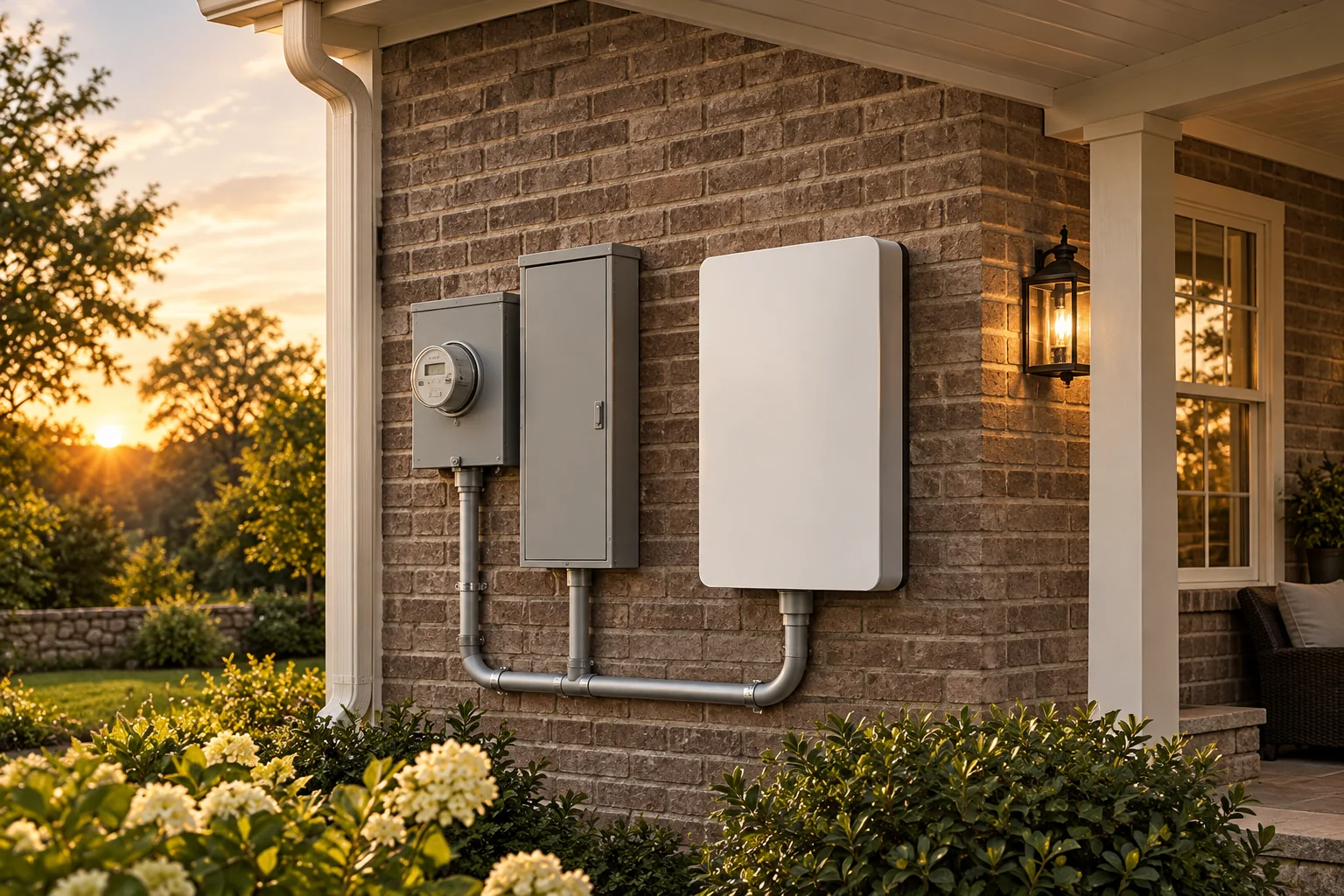
State ESS battery rebate
Our figure for the Connecticut ESS battery rebate is a minimum of $5,000. Depending on location, up to 100% of the battery cost can be covered. The program serves customers of the two investor-owned utilities, Eversource and United Illuminating, so confirm that your utility qualifies before counting on it, especially if you are served by a municipal utility.
The rebate is the reason many Connecticut homeowners add a battery to the first quote. We install FranklinWH, Tesla Powerwall and Enphase IQ, and we can price each so you see what is left after the rebate.
Net metering and bill credits
Our quotes treat power your panels send back to Eversource or UI as a full retail 1:1 offset. Connecticut utilities run this through a program overseen by PURA, and you select a rate option when you apply, so the exact terms depend on that choice. Ask any installer to show which option their savings estimate assumes. We explain the mechanics in how solar net metering works with your utility.
Property tax exemption and the federal credit
Connecticut's property tax exemption for solar is valued at $300 to $700 a year. On the federal side, the 30% residential credit for homeowners who buy a system ended for expenditures after December 31, 2025, under Public Law 119-21. Leased and PPA systems are owned by a company that may claim a separate business credit, and commercial systems list an ITC of up to 40%.
Because this area keeps changing, check the state-by-state incentive comparison and talk to a tax professional about your own return. Any installer who tells you a federal homeowner credit still applies to a 2026 purchase should show you the rule in writing.
Where Permitting and Utility Interconnection Slow Things Down
Delays almost never start on the roof. They start at a town counter or in a utility queue. Plan for permitting to take the most calendar time, then allow another stretch for the utility to approve interconnection before you can switch the system on.
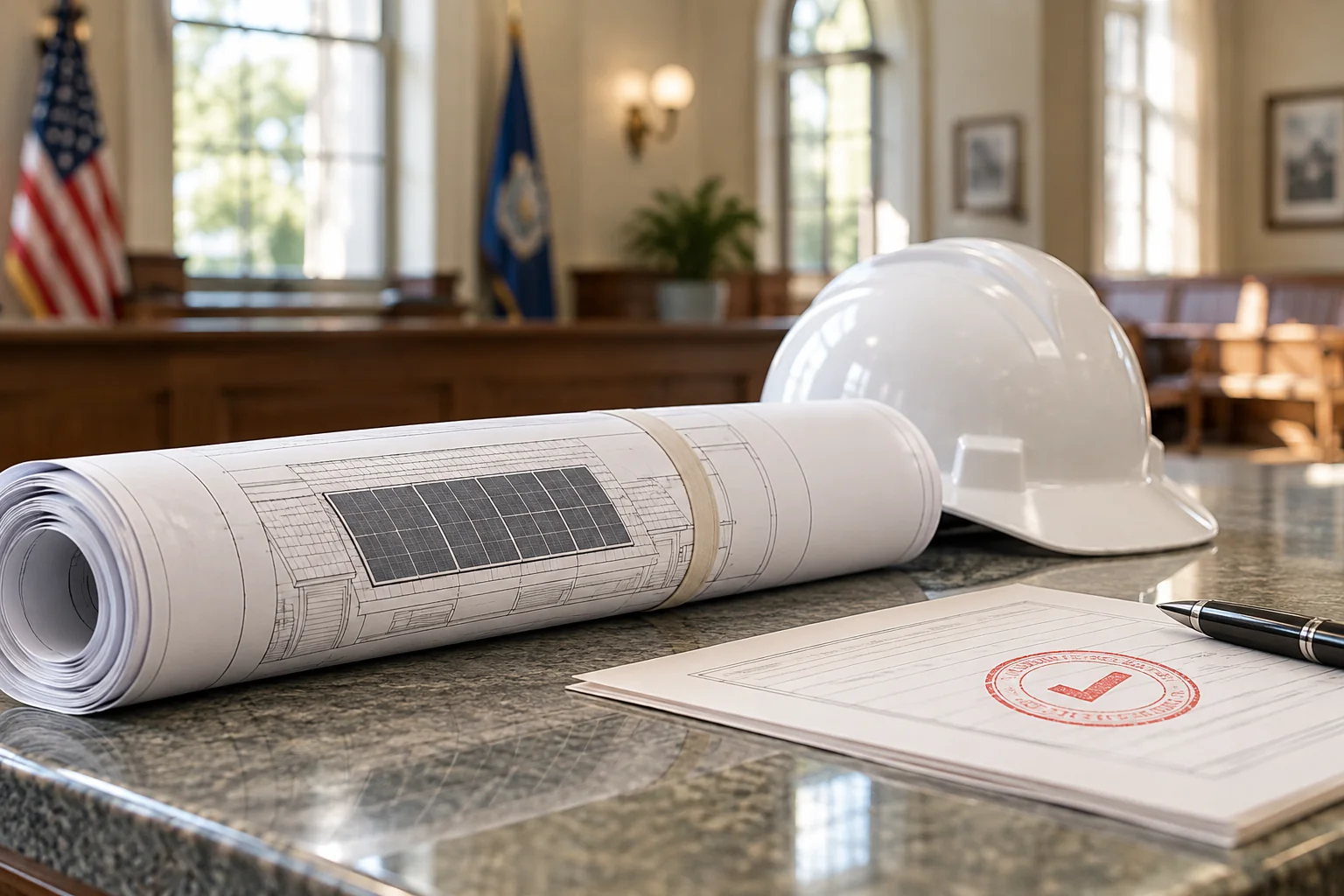
Town permits
Each Connecticut town sets its own process and fees. East Hartford's residential PV permit procedure lists a wetlands commission review of 30+ days where it applies. Properties near wetlands, ground mounts and incomplete plan sets are the usual causes of slow permits.
A plan set that contradicts itself, such as a panel count that does not match the electrical diagram, gets sent back, and each round trip costs days. Clean drawings are the cheapest way to save time.
Utility interconnection
Eversource and United Illuminating review each system before it can operate. The Public Utilities Regulatory Authority says it regulates only solar installers' participation in the interconnection process through the utilities. It has no oversight of solar sales or financing companies, so a complaint about a sales promise goes elsewhere.
Our utility approvals run 5 to 15 days. Some projects take longer when the utility asks for corrections or has a backlog, and an installer that files complete paperwork the first time is the one least affected.
How to avoid the common delays
- Fix a known electrical panel or roof problem before the permit goes in.
- Tell your installer about wetlands, a ground mount or an HOA at the first call.
- Ask for permit and utility status updates in writing at each stage.
- Confirm who handles the utility application; at Teamsun, we do.
What Should You Check Before Signing a Solar Contract?
Check five things: the installer's Connecticut license, whether employees or subcontractors will do the work, a written timeline, the equipment and warranty terms, and who services the system after install. Compare at least two itemized quotes from different installers on those same points before you sign.
Connecticut's Department of Consumer Protection says system installers must be licensed by the Department of Consumer Protection. The state's solar panel buyer's guide notes that the crew on your roof will likely be subcontractors of the company you hire. Ask the question directly.
A pre-signing checklist
- License: verify it with the state before any deposit.
- Crew: ask whether installers are W-2 employees. Ours are.
- Timeline: get contract-to-power-on in writing, with the permit and utility stages named.
- Equipment: require brand and model of panels, inverter and battery on the quote.
- Warranties: panel manufacturer warranties run 25 years, and our standard battery warranty is 10 years.
- Service: ask who will fix the system in year eight. We service any brand, any age.
Why the crew question matters
When subcontractors install, the company that sold you the system and the people who built it are two different businesses. A roof penetration done badly or a wiring fault becomes a hand-off problem. With W-2 employees, one company owns the work from sale to service, and you know who to call.
Red flags
Walk away from pressure to sign the same day, quotes without equipment models, savings claims with no assumptions behind them, and vague answers about who does the install. If you already own a system with a company that has stopped answering, read our list of mistakes to avoid when switching solar companies.
Roof, Battery and EV Charger: Add-Ons to Plan Now
Decide on these before the design is final, since changing them later costs time. A worn roof, a battery, or an EV charger each changes the plan set and sometimes the permit.
- Roof: a combined solar and roofing project runs 5 to 10 weeks with us, and the roofing side carries a 25 to 50 year warranty range. Replacing the roof first avoids pulling panels off later.
- Battery: we install FranklinWH, Tesla Powerwall and Enphase IQ. We also retrofit batteries onto systems we did not install, with a free site visit and a typical 3 to 6 week timeline.
- EV charger: we install hardwired and NEMA 14-50 chargers in one day. Eversource lists a rebate of up to $1,000 for chargers.
If your system is already on the roof and was installed by another company, that is not a dead end. Battery retrofits are open to any brand and any age, and we do repair and upgrade work on systems we did not build.
Serving Connecticut, Massachusetts and Rhode Island
We have 2,900+ installs in Massachusetts and 700+ in Rhode Island, and we are also licensed in ME, NH, VT and FL. Across New England we have powered 9,000+ homes, and our third-party post-install surveys show 95% customer satisfaction. Commercial projects from 25 kW to 500 kW take 8 to 16 weeks.
If you live in Massachusetts or Rhode Island and found this page while searching for local solar companies, the process is the same: site visit, permit, install, utility approval. Incentives and utilities differ by state, so your quote will reflect your own state's programs.
Being local matters after install, too. A company that keeps its crews on the payroll and its service team in the same three states can reach your roof when something needs attention, whoever installed it.
Your Next Step
If you are comparing installers, bring us your current quote and your last electric bill. We will lay out the timeline, equipment and state incentives for your roof, line by line, so you can compare it against any other bid.
Request a free quote to get that breakdown. If you have layout, roof or battery questions first, you can talk to a designer, or call 203-903-4091.
Recommended Resources
Written by
Dan Katzman
Teamsun
Teamsun writes practical solar guidance to help property owners compare equipment, project scope, costs, and long-term service before making a decision.
Keep going.
Solar Incentives Massachusetts vs Connecticut vs Rhode
Compare solar incentives in Massachusetts, Connecticut, and Rhode Island for 2026, including SMART payments, RSIP, net metering, and real payback timelines.
Dan Katzman
Teamsun
Stacking solar incentives in Connecticut: Federal ITC + CT ESS + RRES Netting in 2026
How the CT ESS battery rebate, RRES tariff, and tax exemptions stack for Connecticut solar in 2026, with a worked example on a $30K install.
Dan Katzman
Founder, Teamsun
How Does Solar Net Metering Work With Your Utility?
Learn how solar net metering works with Eversource, National Grid, and other utilities in CT, MA, and RI, and how Teamsun handles interconnection paperwork.
Dan Katzman
Teamsun