Best Time of Year to Install Solar Panels in New England
Which season is best to install solar panels in New England? We rank all four by permitting, utility approval and weather, with our 47-day timeline.
Dan Katzman
Teamsun
Late winter into early spring, roughly February to April, is the best time to install solar panels in Connecticut, Massachusetts and Rhode Island. The slow paperwork stages (site visit, permits, utility approval) run through the cold months, and the one-day roof install lands in better weather. Fall comes second, summer third, and early winter last.
We are Teamsun, a privately owned installer serving Connecticut, Massachusetts and Rhode Island with in-house W-2 crews, not subcontractors. Because we see every job from signed contract to power-on, we know where the days go. Our average is 47 days from contract to a live system.
One caution before the rankings: the best season to start is not the same as the best season to sign. Paperwork does not care about the weather. If you sign in a "worse" season, your permit and utility application still move. Waiting for the perfect month often costs more time than it saves.
Where Do the 47 Days Actually Go?
Our average from contract to a live system is 47 days. That breaks down to about 7 to 10 days for the site visit, 20 to 30 days for permitting, one day for most installs, and 5 to 15 days for utility approval.
Look at that breakdown again. The crew is on your roof for about one day of the 47. Most of the wait is paperwork handled by town building departments and your utility, which is why the season of the roof work matters less than people expect.

| Stage | Typical duration (Teamsun average) | What happens |
|---|---|---|
| Site visit | About 7 to 10 days | We measure the roof, check the electrical panel and finalize the design |
| Permitting | About 20 to 30 days | Plans go to your town for building and electrical permits |
| Installation | One day for most installs | Crew mounts panels, wires the inverter and any battery |
| Utility approval | About 5 to 15 days | Eversource or UI approves the system to switch on |
The U.S. Department of Energy says the same thing in general terms: installing the PV system generally takes only a few days, but permits and inspections can take weeks to months depending on local rules.
For a simple residential job, we typically quote 4 to 8 weeks from contract to install. If you add a roof replacement, the combined solar and roofing timeline is 5 to 10 weeks. Commercial projects take longer, at 8 to 16 weeks.
The Four Seasons Ranked for When to Install Solar Panels
This ranking is our judgment from running installs across three states. We rank each season by how well it protects the paperwork stages, how easy it is to book a crew, and how likely weather is to push a roof day. We are not citing a statewide dataset, because none measures this by season.
| Rank | Season to start | Paperwork pace | Weather risk on install day | Best for |
|---|---|---|---|---|
| 1 | Late winter to early spring (Feb to Apr) | Moves while demand is lower | Moderate, snow days possible | Fastest path to a live system by summer |
| 2 | Fall (Sep to Nov) | Steady, busier near year end | Low to moderate | Owners who want power before winter bills |
| 3 | Summer (Jun to Aug) | Fine, but vacations can slow offices | Low | Homes with complex roofs or ground work |
| 4 | Early winter (Dec to Jan) | Holiday slowdowns possible | Highest, storms and short days | Owners who would rather sign now than wait |
1. Late Winter to Early Spring (February to April)
This is our top pick. Paperwork for a February contract runs through the slowest stretch of the year, so the permit and utility approvals are often done by the time the weather turns reliable. Panels go up in spring and start producing as the days lengthen.
The trade-off is real. A snowstorm can push a roof day by a few days, and frozen ground makes ground mounts harder. Roof work itself is routine in the cold; our guide to installing solar during a New England winter covers what crews do differently.
2. Fall (September to November)
Fall has the most stable weather for a crew, and a system that goes live in October or November is already working before heating season raises the bills. The downside is demand. Many homeowners decide in the same few weeks, so calendars fill.
If you want a fall install, sign in late summer. Under net metering, what your panels send back to Eversource or UI earns a full retail 1:1 offset, so a system that starts earlier simply banks credits sooner. Confirm the current rate on your utility's net metering page before you sign.
3. Summer (June to August)
Weather is the easiest of the year, and a system turned on in July produces right away at peak sun. Summer ranks third because the paperwork slows in places: staff vacations at town offices and a busy utility queue can stretch the approval stages.
Summer is a good time for complicated jobs. A roof replacement with solar, a ground mount or a battery add-on benefits from dry ground and long days. Plan on the upper end of the 5 to 10 week combined solar and roofing range.
4. Early Winter (December to January)
Early winter ranks last, but it is not a bad time to sign. Short days, storms and holiday closures can cost a few days on the install day and in the approval stages. Crews still install through the cold months.
Our advice is blunt: do not wait out the winter to sign. A contract signed in December starts the permit clock, and you can be first in line for a spring install. Waiting until April to start puts you at the back of the same line.
What Delays a Start Date Regardless of Season?
A roof that needs replacing first, an electrical panel that needs an upgrade, a rejected permit and a slow utility approval delay a start date in every season. Roof work is the one homeowners miss most, and it can add weeks before panels go up.
Roof Replacement Comes First
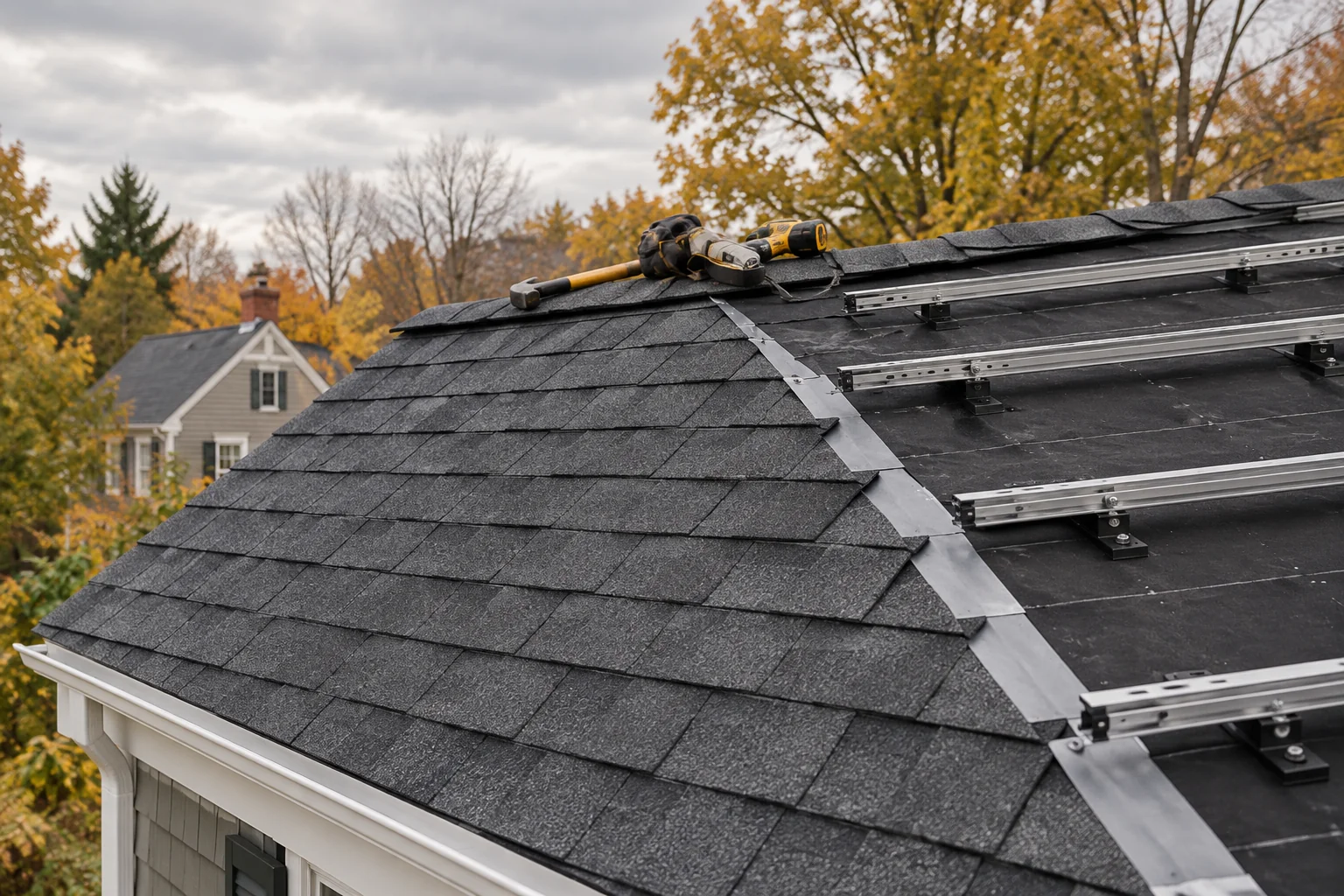
Panels are warrantied for 25 years, so putting them on a roof with a few years left is a mistake. If your shingles are near the end of life, the roof goes first, or we bundle it. Solar plus roofing carries roof warranties of 25 to 50 years in our offering. Read when to replace the roof before solar to judge yours.
Bundling matters for scheduling. One crew team, one permit sequence and one combined 5 to 10 week timeline beat two contractors working around each other. It also avoids paying to remove and reinstall panels later.
Permit and Town Differences
Permitting speed depends on your town, not the season. Boston's standard process averages 30 days, but under its Solar Fast Track program the same review takes seven days. Our own average across all three states is 20 to 30 days.
Be careful with big numbers you see online. A 2026 study of locally permitted wind and solar projects in Massachusetts found permitting averaged 250 days and rising. That data covers wind and larger solar, not typical home rooftops. Even so, it shows why an incomplete plan set is the delay to avoid.
Electrical Panel, Utility and Licensing
- Electrical panel: an older or full panel may need an upgrade before the system can connect. We check this at the free site visit.
- Utility approval: our average is 5 to 15 days. A system cannot switch on until the utility signs off, even if the panels are up.
- Licensing: in Connecticut, the state's solar buyer's guide says you need an E-1 Unlimited Electrical Contractor to connect the system to the grid. Verify your installer before you sign.
- Equipment and HOA: a back-ordered inverter or a pending HOA approval can add days, so ask about both early.
Plan Your Start Date in Five Steps
Work backward from the month you want power on. Add about 47 days for a standard system, more with a roof or battery, then start the process that far ahead. These steps keep you on that schedule. We have not published seasonal averages for our own permit or weather delays, so ask your designer about your town's current pace.
- Get a quote and book the free site visit. The visit takes about 7 to 10 days to schedule and complete, and it is where we spot panel, roof and shade issues.
- Decide on the roof. If it needs work, choose bundled solar plus roofing now so the 5 to 10 week timeline starts as one job.
- Choose your battery plan. We install FranklinWH, Tesla Powerwall and Enphase IQ. If you want one later, we also retrofit batteries on any brand of solar system, and a retrofit typically takes 3 to 6 weeks. See how a solar battery retrofit works.
- Pick your financing. Cash, loan, PPA (we underwrite at 620 FICO) or prepaid lease. Settling this before signing keeps the paperwork from stalling.
- Map your date to a contract date. Suppose you want power on by June 1. Our 47-day average means signing about 47 days earlier, so around April 15. For a 5 to 10 week solar plus roofing job, count back 35 to 70 days instead.
- Sign, then let the permit clock run. Sign in whatever season you are in. A signed contract in December beats a perfect plan in April.
Typical residential systems cost $25,000 to $40,000 before incentives, and many homeowners see 30 to 50% lower effective costs over the first five years. Incentive rules change, so confirm which credits and state rebates apply to you before you sign. We cover that paperwork with every quote.
Get a Start Date That Fits Your Roof and Your Town
We have completed 5,400+ installs in Connecticut, 2,900+ in Massachusetts and 700+ in Rhode Island, powering 9,000+ homes across New England. Our customers rate us at 95% satisfaction in third-party post-install surveys. That volume is how we can give you a start date based on your town's actual permit pace, not a generic calendar.
To plan your install month, request a free quote and tell us when you want power on. We will work backward from that date. You can also talk to a designer about your roof, call us at 203-903-4091, or explore our services if you are weighing batteries, roofing or an EV charger alongside the panels.
Recommended Resources
Written by
Dan Katzman
Teamsun
Teamsun writes practical solar guidance to help property owners compare equipment, project scope, costs, and long-term service before making a decision.
Keep going.
The Best Battery Storage Options for New England Winters
Compare FranklinWH, Tesla Powerwall 3, and Enphase IQ 5P on cold-weather performance for CT, MA, RI, VT, NH, and ME winters before storm season hits.
Dan Katzman
Teamsun
Can Solar Panels Be Installed During a New England Winter?
Solar panel installation during winter is possible in CT, MA and RI. See how crews handle snow and ice, and how a winter start affects your time to power-on.
Dan Katzman
Teamsun
How Much Power Do Solar Panels Actually Produce in Cloudy
Solar panel output in cloudy New England weather: what overcast days, short winters and seasons really do to production, plus how to size a system.
Dan Katzman
Teamsun