When Should You Upgrade an Older Solar System?
Signs it's time for a solar system upgrade for older panels, from declining output to inverter age. Learn what Teamsun checks before recommending changes.
Dan Katzman
Teamsun
A solar panel losing 0.5% of its output every year doesn't feel dramatic in year one, but by year 15 that's a system running at 92% of its original capacity, and if your inverter is also aging, real-world losses are often steeper. A solar system upgrade for older panels makes sense once production drops noticeably, your inverter approaches its warranty limit, or you want to add a battery or EV charger that your original setup wasn't built to handle.
Key Takeaways
- Degradation is gradual but real: Most Tier-1 panels lose about 0.5% output per year, meaning a 15-year-old system may run 7-10% below its original rating.
- Inverters fail before panels do: String inverters typically last 10-15 years, so a system installed before 2016 is likely due for inverter replacement regardless of panel condition.
- Battery retrofits need compatibility checks: Older string inverters often aren't battery-ready, which can mean adding a hybrid inverter or a separate AC-coupled battery system.
- Reroofing is a natural upgrade window: If panels have to come off for a new roof anyway, that's the cheapest time to swap in higher-wattage panels or a modern inverter.
- Any-brand service matters: Teamsun evaluates and upgrades systems originally installed by other companies, which isn't standard across the industry.
At a Glance: Solar Upgrade Signs and Options
| Situation | Typical System Age | Likely Fix | Rough Timeline |
|---|---|---|---|
| Production down 10%+ vs. year one | 10-20 years | Panel or inverter replacement | 1-3 days |
| Inverter fault codes or shutdowns | 10-15 years | Inverter swap | 1 day |
| Want battery backup added | Any age | Battery retrofit, possible hybrid inverter | 1-2 days |
| Roof needs replacement | 15+ years | Panel removal, reroof, reinstall (often upgraded) | 1-2 weeks |
| Adding EV charger, usage grew | Any age | Panel addition or full re-sizing | 1-3 days |
| Original installer out of business | Any age | Third-party inspection and repair/upgrade | Same-week evaluation |
How Solar Panels Actually Degrade Over Time
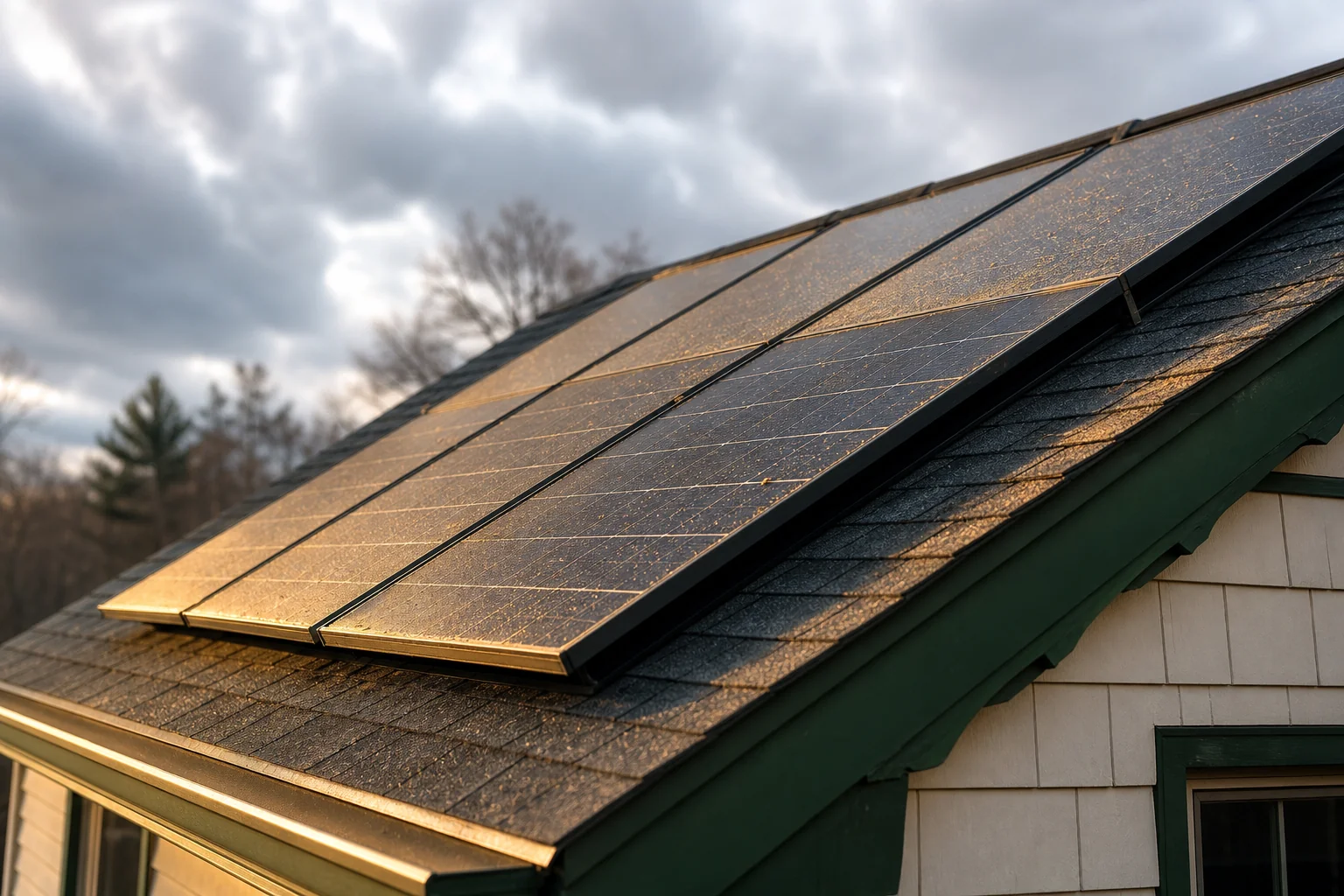
Panels don't fail suddenly. Silicon cells slowly lose efficiency from UV exposure, thermal cycling, and micro-cracks that form over years of freeze-thaw cycles common in Connecticut, Massachusetts, and Rhode Island winters. Manufacturers typically warranty panels for 25 years at 80-85% of original output, so a small annual dip is expected and priced into your original system design.
The problem shows up when degradation compounds with other issues. A panel rated at 300 watts in 2011 already produces less energy per square foot than a 400-watt panel installed today. Pair that lower baseline with a decade of gradual decline, and an old system can be generating 20-30% less usable power than a new installation of the same physical size.
That gap matters more now than it did when the system went in, especially if you've added an EV or your household electricity use has climbed. A system sized for 2013 usage rarely covers a 2026 electric bill without some kind of expansion.
1. Falling Production Is the First Red Flag
Your monitoring app is the fastest way to spot trouble. Compare the same month year over year, not month to month, since seasonal swings from sun angle and daylight hours will always create noise. A 5-10% year-over-year dip in a single month can be normal weather variation. A consistent decline across three or more months in the same season usually points to a real problem, not just aging silicon.
If you're not sure what you're looking at, our guide on how to read your solar monitoring app data walks through what a healthy production curve looks like versus one flagging a failing string or a shading issue that developed after installation.
Production drops aren't always about the panels. Loose connections, a failing optimizer, or debris buildup on specific panels can drag down an entire string's output while the rest of the array performs fine. A proper diagnostic separates a wiring fix from an actual panel replacement need.
2. Your Inverter Is Nearing End of Life
Inverters are the part of your system most likely to need replacement before your panels do. String inverters commonly last 10-15 years; microinverters and power optimizers tend to run longer, often 20-25 years, because the failure risk is spread across many smaller units instead of one central box.
Watch for these signs your inverter is failing:
- Error codes or blinking status lights that weren't there before
- The unit shutting off during peak sun hours, then restarting later
- An audible hum that's louder or different than usual
- Your monitoring app showing zero production for stretches with no weather explanation
Replacing a single inverter typically costs a fraction of a full system replacement and can restore your system to near-original output overnight. If your solar system upgrade for older panels conversation starts with an inverter, that's often the most cost-effective fix available.
If your original installer is no longer around to diagnose the fault, our piece on finding a repair company for any solar brand covers what to check before you call someone in.
3. You Want to Add Battery Storage
A growing number of homeowners with panels installed five to fifteen years ago are calling not because anything is broken, but because they want backup power during outages or want to shift usage to avoid peak utility rates. That's a compatibility question, not a degradation question.
Older string inverters usually aren't battery-ready out of the box. Depending on your existing equipment, a retrofit might mean adding a hybrid inverter, installing a separate AC-coupled battery system like FranklinWH or a Tesla Powerwall, or in some cases replacing the inverter entirely to unlock DC coupling. None of that requires new panels if your existing array is still producing well.
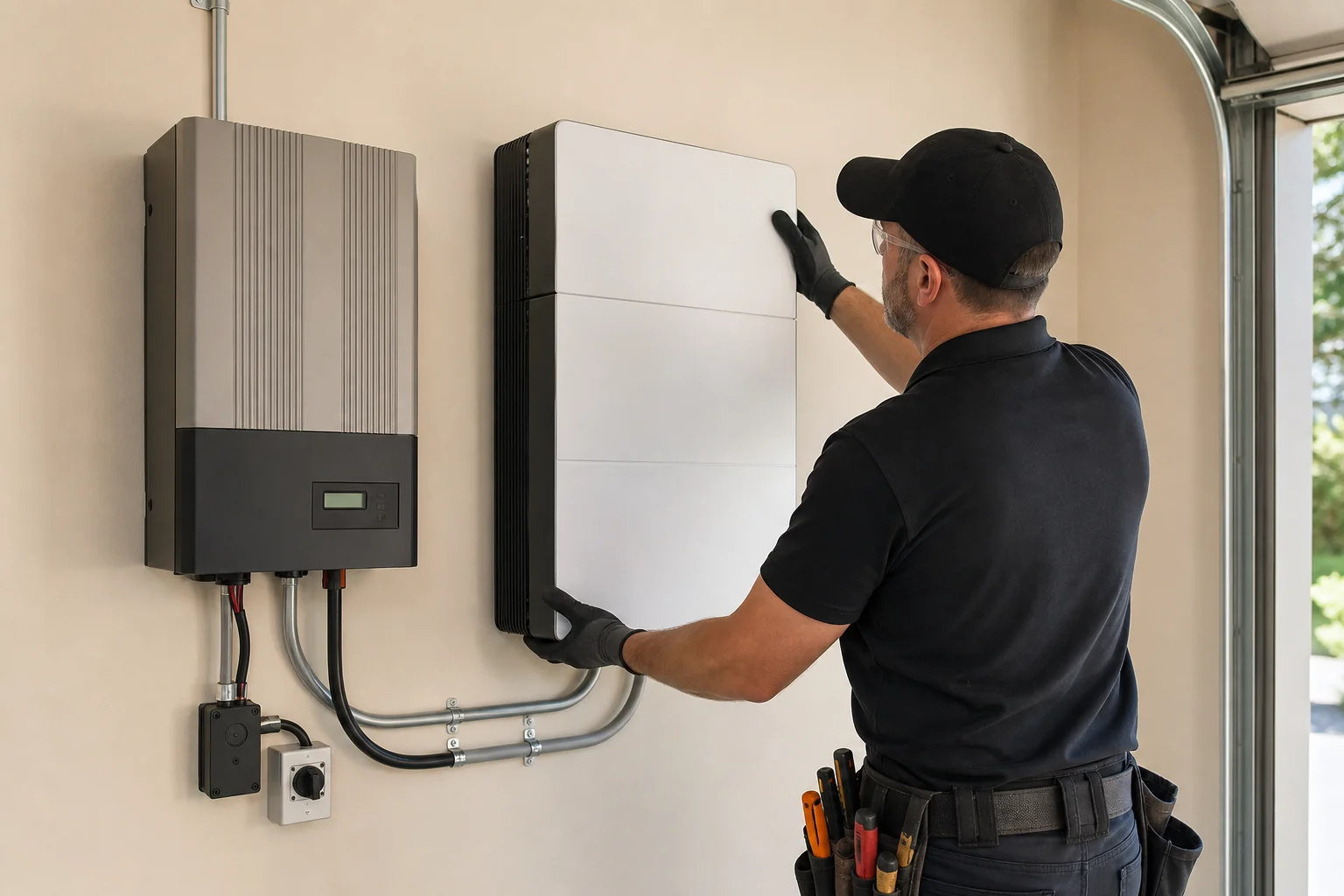
Our detailed walkthrough on how a solar battery retrofit works covers the AC versus DC coupling decision in depth, and our comparison of Tesla Powerwall versus FranklinWH is a good next stop if you're weighing which battery fits your home.
4. Your Roof Needs Replacement
If your roof is nearing the end of its usable life, panels have to come off before shingles or membrane can be replaced underneath them. That's not optional, and it's also the single best window to combine roofing work with a system upgrade, since the labor to remove and reinstall panels is already priced into the reroof.
Homeowners in this position often ask whether to reinstall their existing panels as-is or upgrade to higher-wattage models while the roof is exposed. If your panels are already 12+ years old and lower-output, this is usually the cheapest point in the system's life to make that swap, because you avoid paying for a second removal-and-reinstall labor cycle down the road.
Our guide on when to replace your roof before solar lays out the decision tree for coordinating roofing and solar work, and covers what happens when your roof is already carrying an older array.
5. You're Adding an EV Charger or Expanding Usage
Solar systems are sized to the electric usage on file at the time of installation. If you've added an EV, a heat pump, or a pool since your panels went in, your system may simply be undersized for your current draw, independent of any degradation.
Panel technology has also moved fast. A system built around 250-300 watt panels in the early 2010s takes up the same roof space as a modern 400+ watt array, but produces meaningfully less energy. Expanding a system sometimes means adding panels to open roof space; other times it means replacing older, lower-wattage panels with fewer, higher-output ones to hit the same production target.
If an EV charger is part of the plan, our guide on installing a hardwired EV charger at home covers panel and circuit requirements worth reviewing before you size any solar addition.
Upgrade, Retrofit, or Replace: What's the Difference?
These three terms get used loosely, but they describe different scopes of work with different costs and timelines.
| Path | What Changes | Best For | Typical Timeline |
|---|---|---|---|
| Component Upgrade | Inverter, optimizers, or monitoring hardware only | Failing inverter, outdated monitoring, panels still healthy | 1 day |
| Retrofit | Adding battery storage or an EV charger to an existing array | Homeowners wanting backup power or EV charging without new panels | 1-2 days |
| Full Replacement | New panels, new inverter, sometimes new mounting | Systems 15+ years old, major roof work, or significant usage growth | 2-5 days |
Most homeowners we evaluate fall into the first two categories. A full replacement is less common than people expect, since panels degrade slowly and often still have a decade or more of useful life left even when the inverter doesn't.
Will New Equipment Work With My Old Panels?
Compatibility is the question that stops most homeowners from calling anyone. Many installers only service systems they originally installed, and some won't touch equipment from a competing brand at all. That leaves homeowners stuck when their original installer has closed, gone national, or simply doesn't answer the phone anymore.
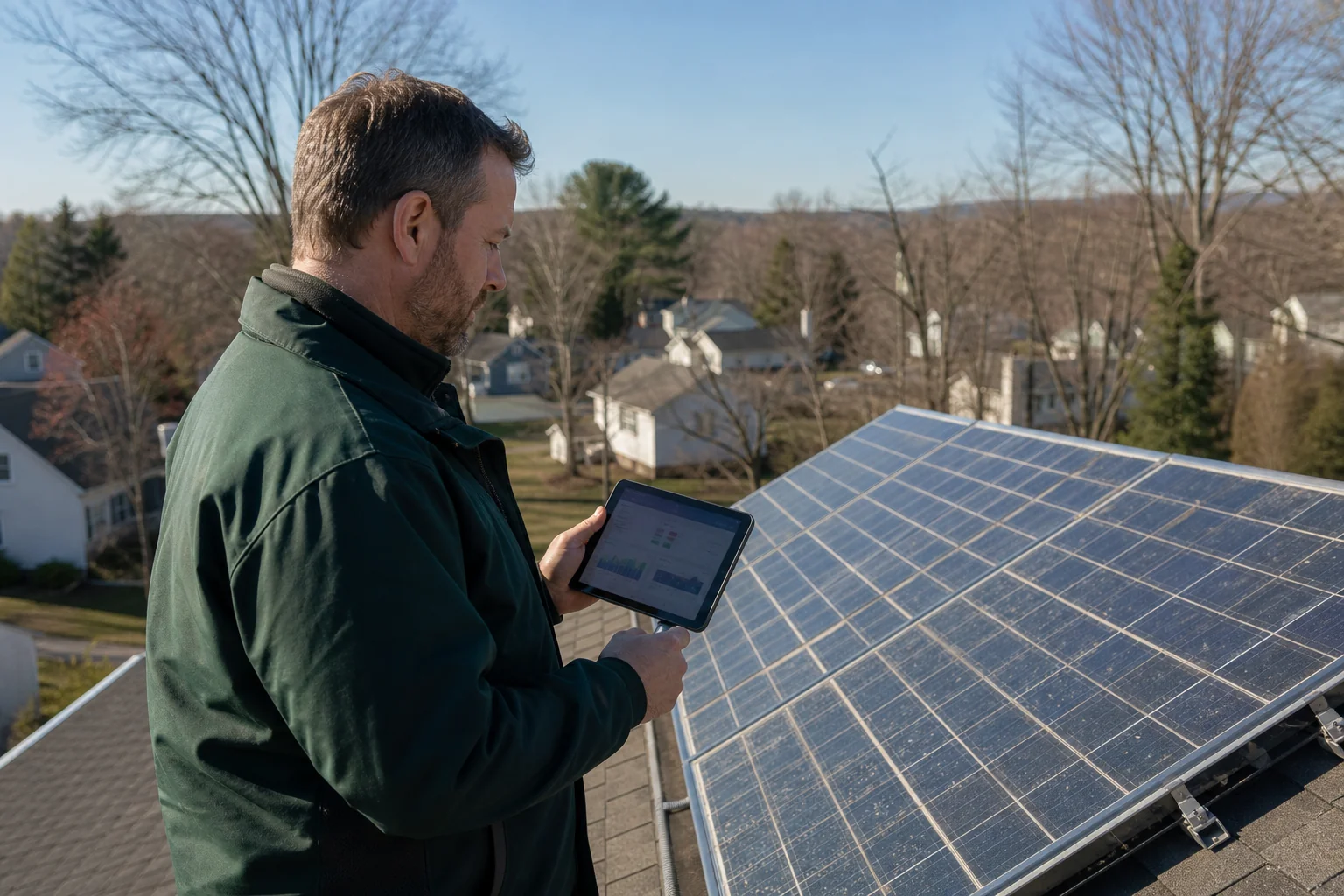
Teamsun services and upgrades systems of any brand, not just the ones we install. A site evaluation checks panel condition, inverter age and fault history, wiring integrity, and roof-mount condition before recommending anything. In most cases, existing panels can stay in place while the inverter, monitoring, or battery gets upgraded around them, keeping costs down and avoiding unnecessary rework.
Permitting and utility interconnection also need a second look whenever you change major equipment. Adding a battery or a hybrid inverter can require an updated interconnection agreement with your utility, even if your net metering contract itself doesn't change. Our explainer on how solar net metering works with your utility covers what stays the same and what triggers a new filing.
What to Expect When Teamsun Evaluates an Older System
Every evaluation starts with a site visit, not a sales pitch. A technician checks each panel's individual output, tests the inverter for fault history, and inspects the racking and roof penetrations for wear. From there, you get a straight answer: repair, retrofit, or replace, along with the tradeoffs of each.
Teamsun uses in-house W-2 crews for installs and upgrades, not subcontracted labor, which means the person who diagnoses your system is accountable for the work that follows. That's a different model than the dealer-network approach used by some larger national installers, and it's worth understanding before you commit to any upgrade. Our comparison of in-house crews versus subcontractors and our breakdown of Sunrun versus local solar installers both dig into what that difference means for long-term service.
Frequently Asked Questions
How old does a solar system need to be before it's worth upgrading?
There's no fixed age. Some 12-year-old systems with failing inverters need attention now, while some 18-year-old panel arrays still perform close to spec. The signal to watch is production trending down over multiple months, not a birthday on the calendar.
Can I add a battery to a solar system that's already 10 years old?
Usually, yes. Most retrofits pair a new battery with your existing panels through either AC or DC coupling, and the panels don't need to be new for this to work. The main variable is whether your current inverter needs to be replaced or supplemented to support the battery.
Will upgrading my system affect my net metering agreement?
Adding equipment can require an updated interconnection filing with your utility, but it doesn't typically void your existing net metering terms. Any upgrade that changes system capacity should be paired with a check on your interconnection agreement before work begins.
Is it worth upgrading a small residential system, or only larger ones?
System size doesn't change the logic. A small 4kW system with a failing inverter benefits from a swap just as much as a 12kW array does, since the inverter is what converts your panels' output into usable power regardless of array size.
If your production has slipped, your inverter is throwing errors, or you're ready to add a battery or EV charger to a system another company installed, a proper diagnostic beats guessing. Request a free quote and we'll evaluate what you have before recommending anything. You can also explore our services, talk to a designer about your specific setup, or call 203-903-4091 to get a straight answer on your options.
Recommended Resources
Written by
Dan Katzman
Teamsun
Teamsun writes practical solar guidance to help property owners compare equipment, project scope, costs, and long-term service before making a decision.
Keep going.
15 Questions to Ask a Solar Installer Before You Sign
The essential questions to ask a solar installer before signing, covering crew type, timelines, financing, and warranty coverage for CT, MA, and RI homeowners.
Dan Katzman
Teamsun
Battery retrofit cost for old solar system
Battery retrofit cost for old solar system owners in CT, MA & RI: real 2026 price ranges by inverter type, battery brand, and panel condition.
Dan Katzman
Teamsun
Need a New Roof? When to Do It Before Solar
Learn when to replace your roof before solar installation, how to check roof age and condition, and how Teamsun bundles solar plus roofing with one crew.
Dan Katzman
Teamsun