We take the systems we did not install
Most national installers refuse to touch a system they did not build. Teamsun retrofits hundreds of systems every year — original installer does not matter.
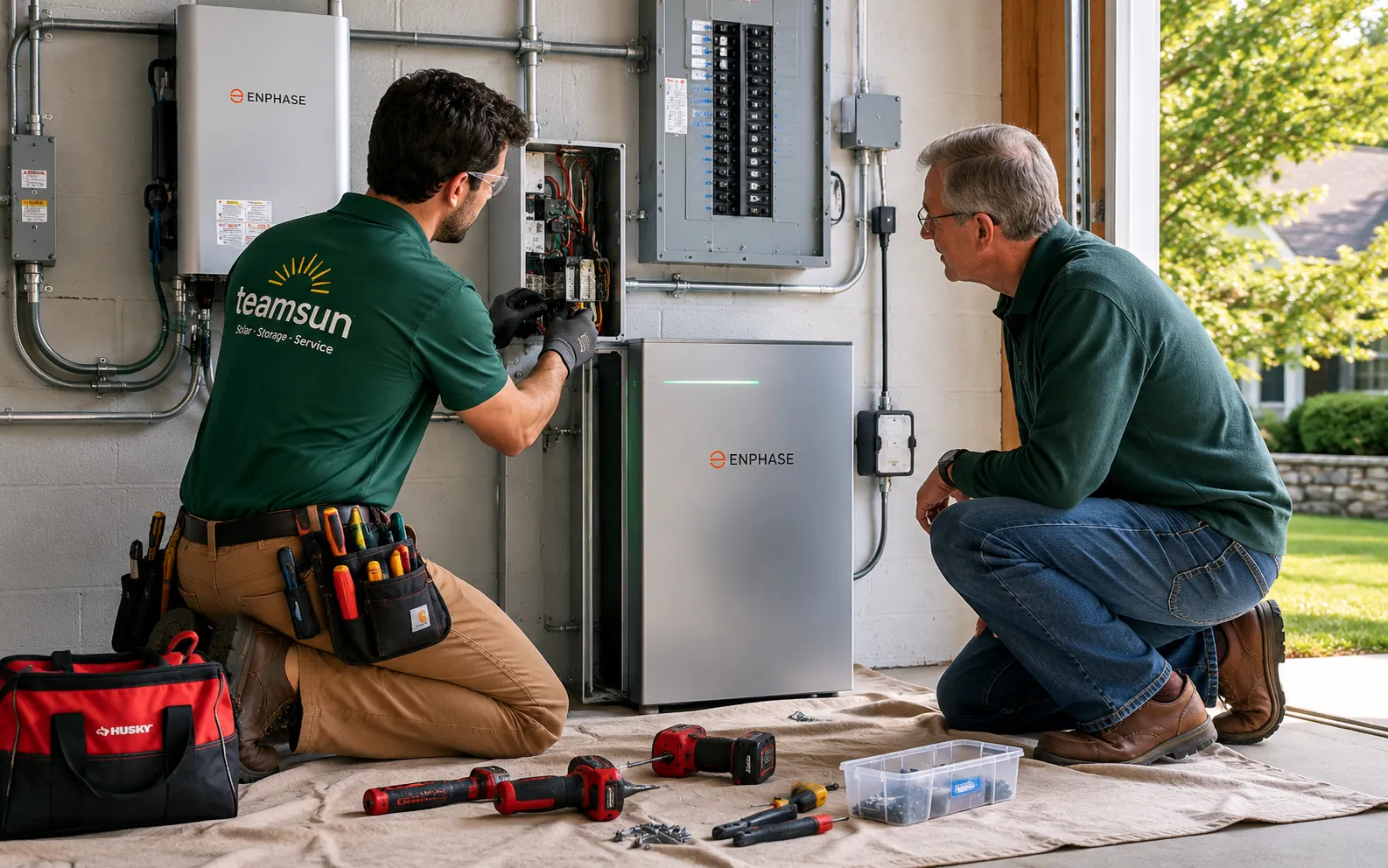
Most national installers refuse to retrofit batteries onto systems they did not build. We do hundreds every year across CT, MA, and RI — AC-coupled, DC-coupled, original installer doesn't matter.
By the numbers
Battery retrofit is its own discipline. We built a team around it because solar systems do not stop existing the day their original installer goes out of business.
Most national installers refuse to touch a system they did not build. Teamsun retrofits hundreds of systems every year — original installer does not matter.
AC-coupled retrofits (FranklinWH, Enphase) work with most existing inverters. DC-coupled (Tesla Powerwall 3) requires more careful integration. We handle both paths.
CT ESS and MA Connected Solutions both accept retrofitted batteries. Teamsun files the enrollment paperwork as part of every retrofit project.
Commercial retrofits qualify for up to 40% federal ITC on the battery. Residential ITC no longer applies in New England — CT ESS (from $5,000) and MA Connected Solutions carry the residential math.
AC-coupled retrofits work with most modern systems. DC-coupled retrofits require careful integration. We diagnose during your site visit — no guesses.
SolarEdge, SMA, Fronius, and Enphase microinverter systems from 2014 onward typically retrofit cleanly with an AC-coupled FranklinWH or IQ Battery.
Some legacy inverters (early SunPower, Power-One, original Enphase M-series) require replacement before a battery can integrate. We diagnose during the site visit.
Enphase IQ6 and IQ7 systems pair best with the Enphase IQ Battery 5P for sunlight-backup capability and per-panel monitoring.
FranklinWH is the workhorse. Enphase 5P is the Enphase-system pick. Powerwall 3 is the case-by-case option that often pairs with a system upgrade.
AC-coupled and inverter-agnostic. Best fit for most retrofits — works with nearly any existing string inverter or microinverter system without inverter replacement.
AC-coupled stackable battery purpose-built for Enphase microinverter systems. Per-module monitoring and sunlight-backup capability.
Hybrid solar inverter and battery. DC-coupled, retrofits are case-by-case — usually requires replacing the existing string inverter. Best fit when paired with a system upgrade.
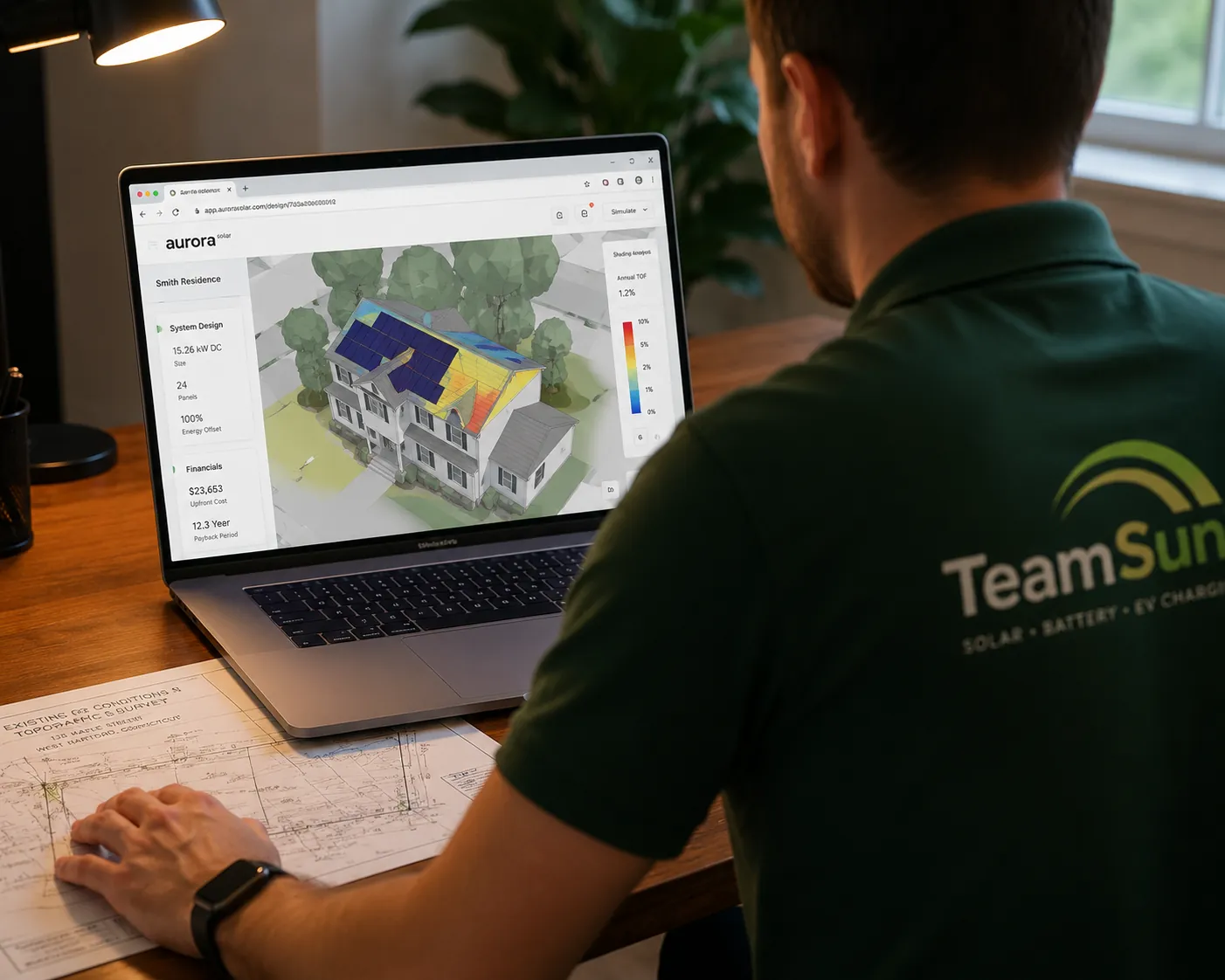
A 15-minute call, then a remote or on-site visit. Aurora-based design, panel and battery brand named on the proposal.
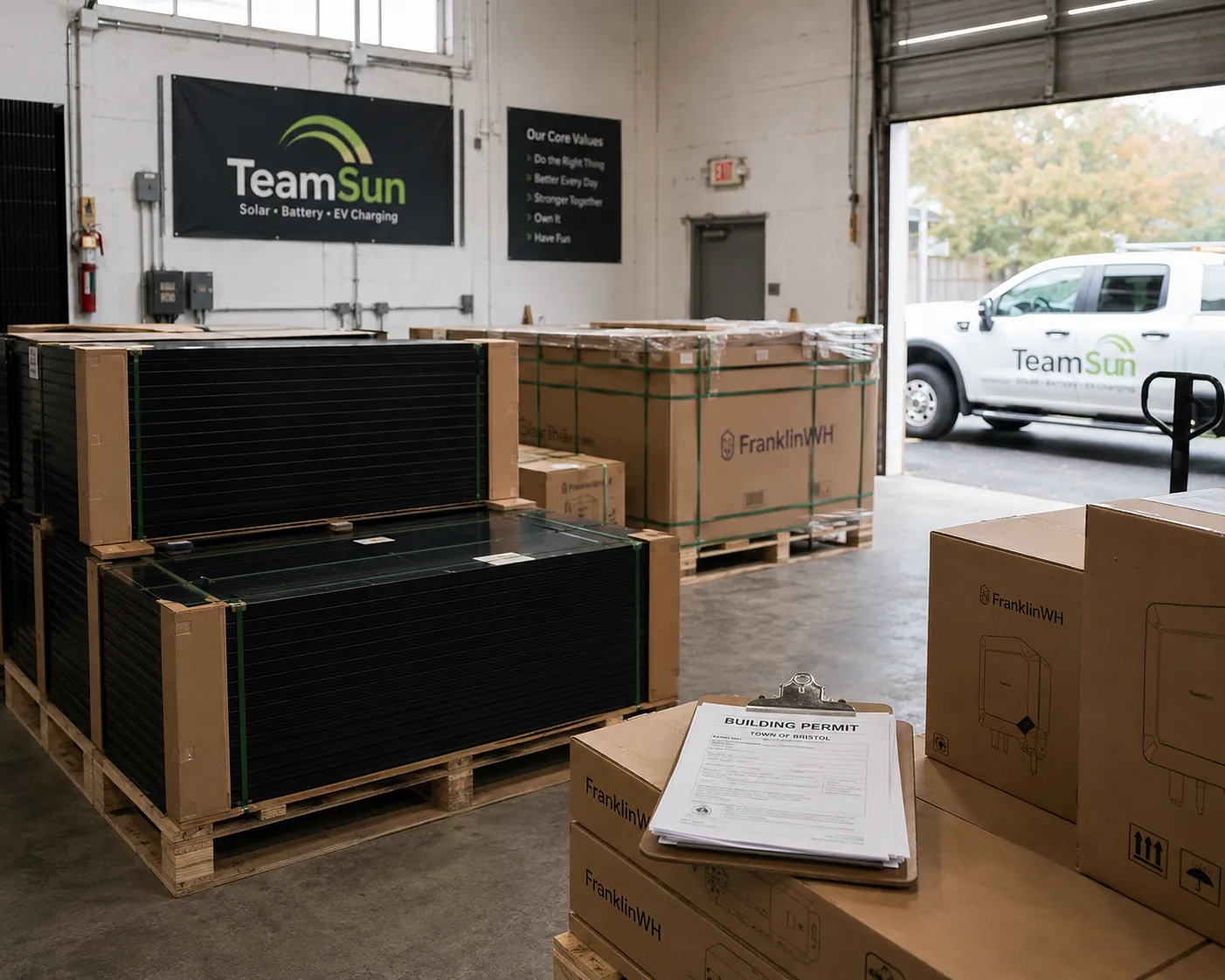
Permits filed, utility interconnection submitted, and equipment staged at our Bristol warehouse.
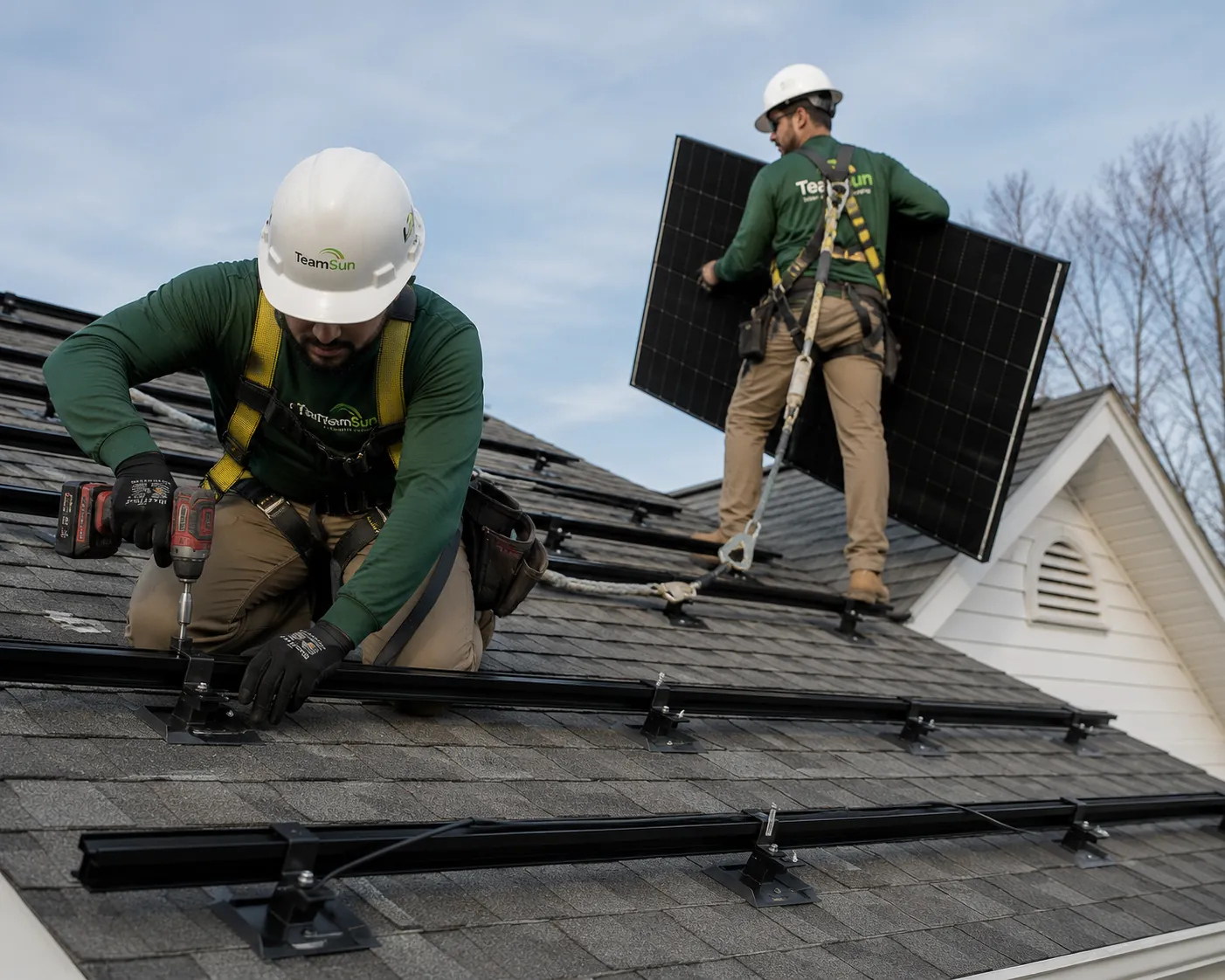
Local crew, local trucks. Most systems installed & completed in one day. Final inspection scheduled before we leave.
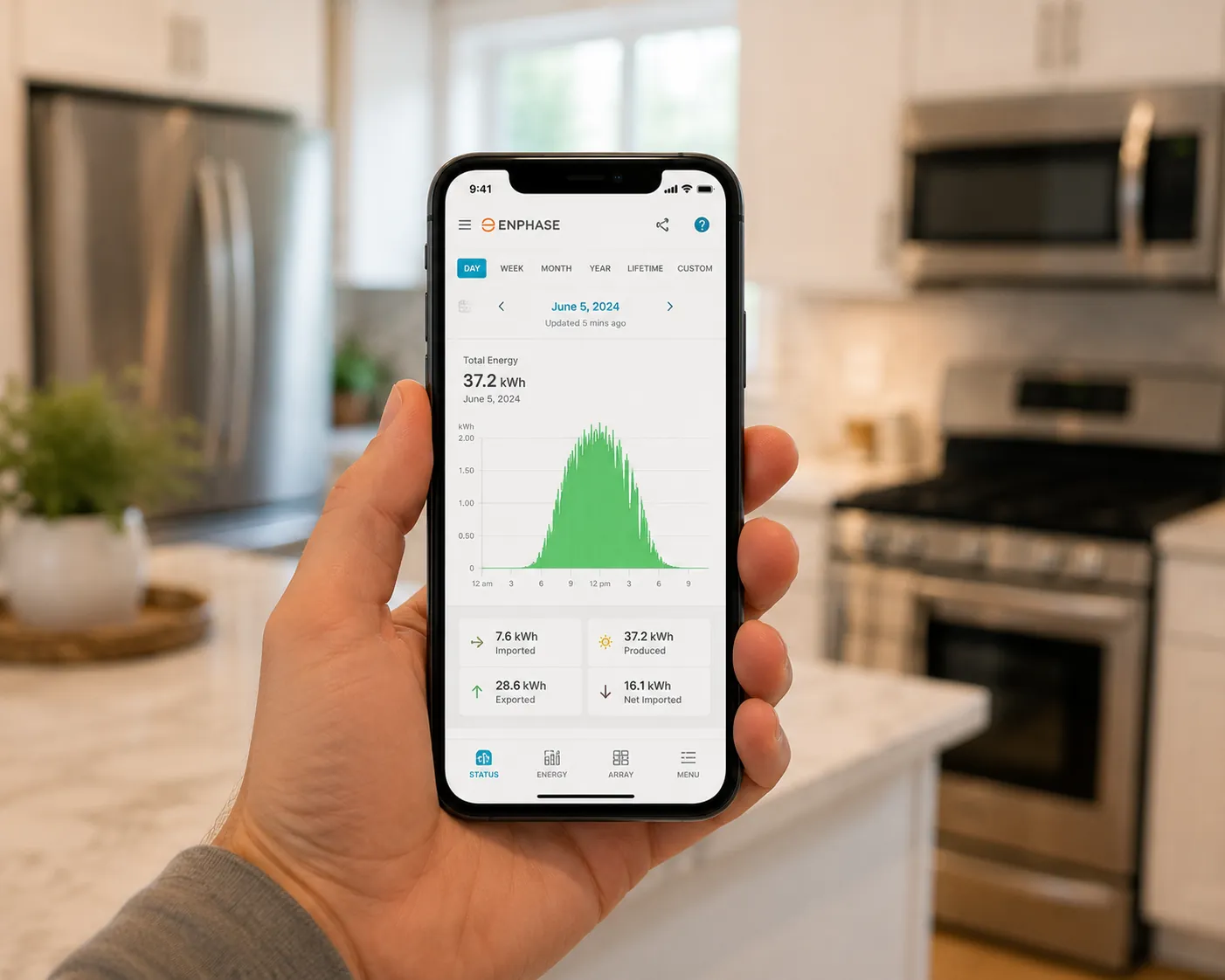
PTO from your utility, ITC and rebate paperwork filed, and 25 years of local service after the system goes live.
Residential ITC no longer applies in New England, but with high energy costs, state rebates, and CT ESS coverage from $5,000 up to 100% by location, our systems will always save you money. Commercial systems also stack up to 40% federal ITC. We file every form with you.
Federal ITC
Up to 40%
Still available for commercial systems. Residential ITC no longer applies in New England, but our systems still save homeowners money on high energy costs.
CT ESS battery rebate
From $5,000
Certified CT ESS Install Program Partner. Minimum $5,000 rebate — depending on location, up to 100% of the battery cost can be covered.
Net metering
Full retail
1:1 offset on what your panels send back to Eversource or UI.
CT property tax exemption
$300 – $700/yr
System value excluded from your assessment. Sales tax also exempt.
Connecticut, Massachusetts, and Rhode Island. Every pin is a Teamsun install. We're licensed in ME, NH, VT, and FL too.
“Teamsun was the only crew that walked the roof, named the panel brand, and answered every question without checking with someone. Same lead tech came back a year later when I added a battery.”

“Three of my neighbors had Teamsun, so I called them. The crew was on my street five days after I signed.”

“They knew the historic district secretary by first name. Saved us six weeks on permitting alone.”
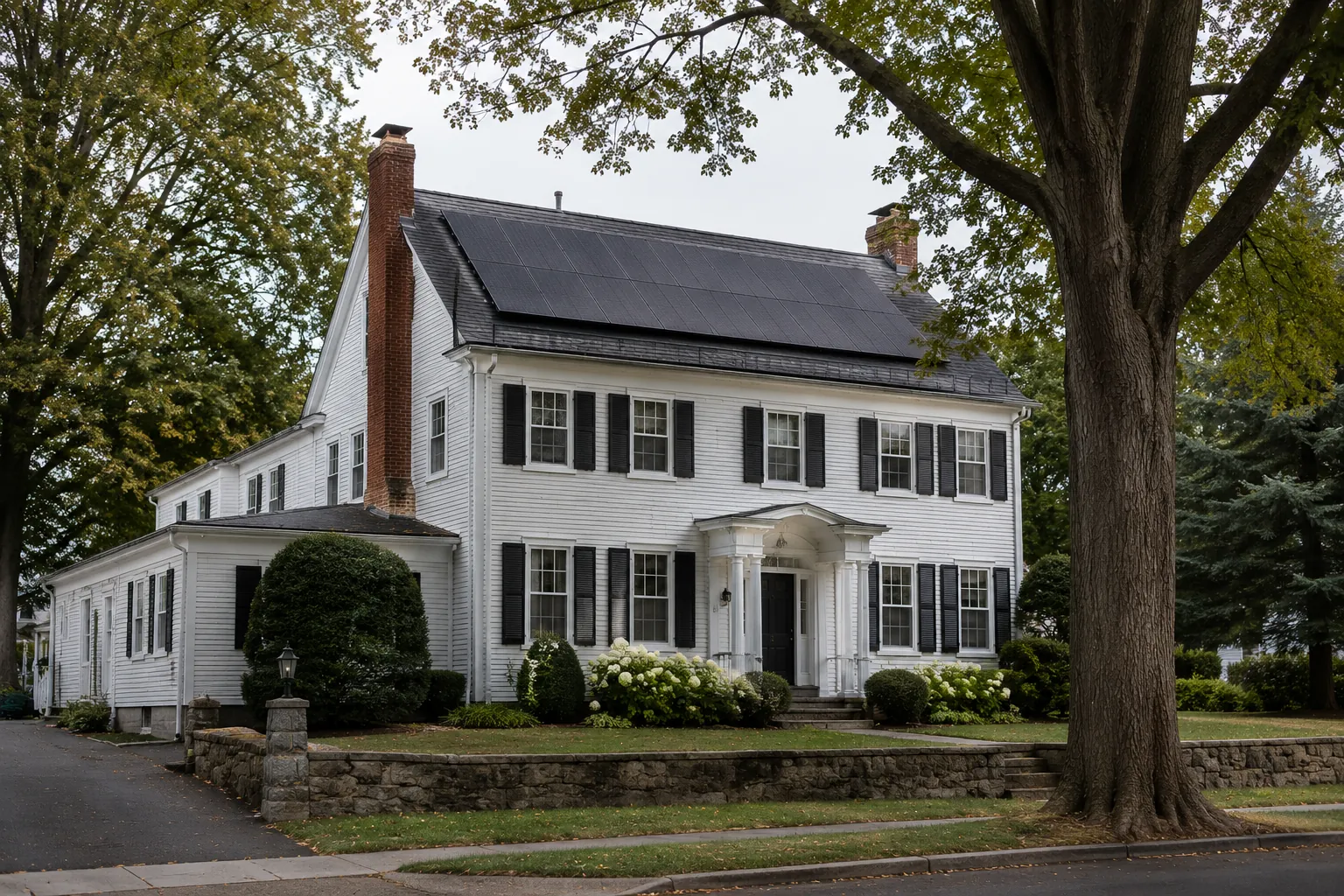
“Same lead tech who installed it came back four years later to swap an inverter under warranty. No charge, no excuses.”
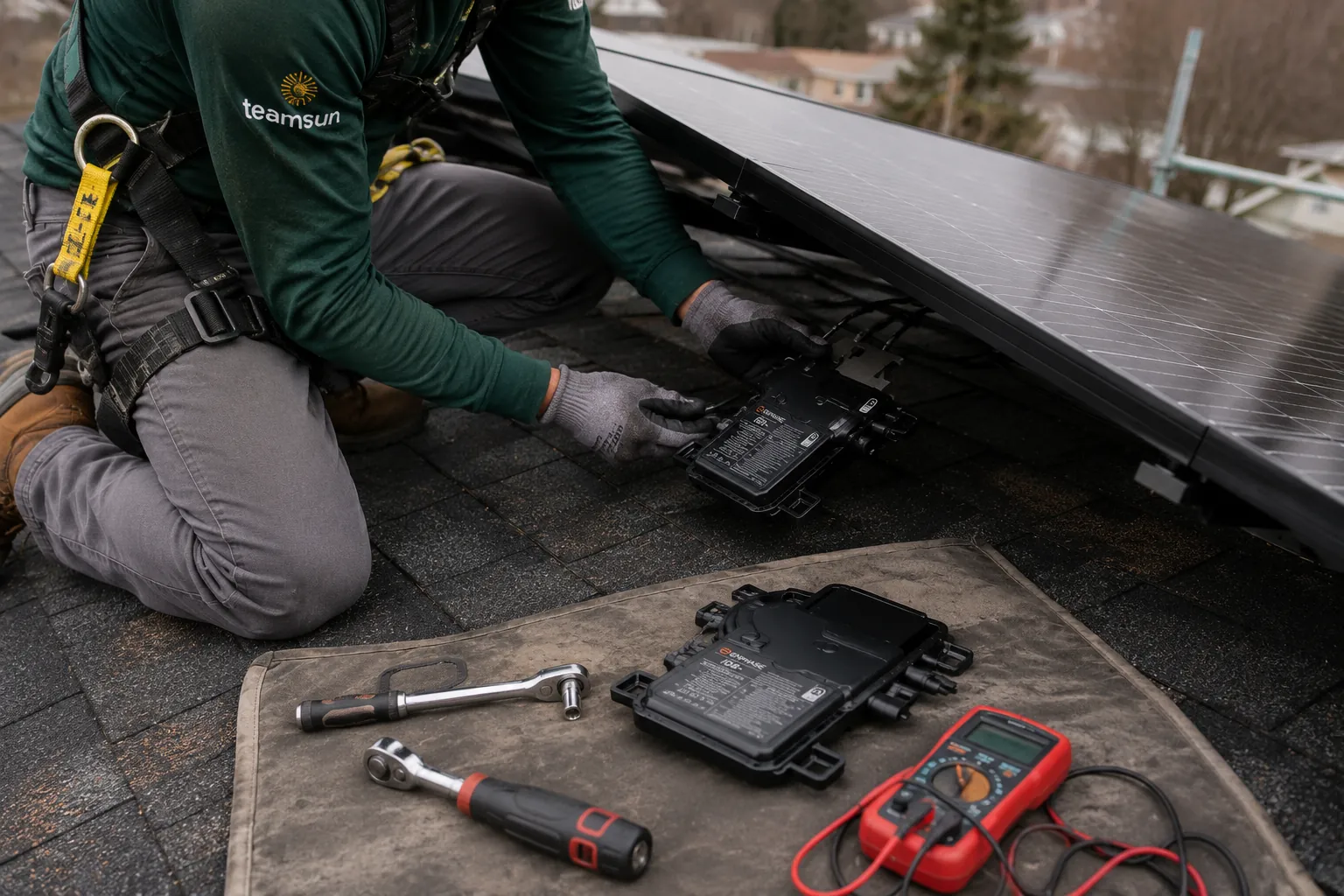
Yes — an installer going out of business does not block a retrofit. We do not need the original installer to be in business. We pull your inverter make and model from the equipment label, run a compatibility check, and design the retrofit around what you have.
For AC-coupled retrofits with FranklinWH or Enphase, no — your existing inverter and panel warranties remain intact because we do not modify them. For DC-coupled retrofits (Tesla Powerwall 3) that require an inverter swap, we transition warranty coverage to the new equipment as part of the project.
3 – 6 weeks from contract to commissioned. Site visit and design lock takes 1 week, electrical permit and utility update takes 2 – 4 weeks, and the install itself is 1 – 2 days on-site.
Yes — both the CT ESS rebate and MA Connected Solutions accept retrofitted batteries on existing solar systems. The enrollment paperwork is identical to a new install. Teamsun handles every form.
Retrofit pricing depends heavily on your existing system. AC-coupled retrofits onto modern string-inverter or microinverter systems are typically 20 – 30% less than a comparable new install because no PV work is required. DC-coupled retrofits requiring inverter replacement run closer to a full system upgrade.
Yes — standalone battery installs (no solar required) are eligible for CT ESS (minimum $5,000) and MA Connected Solutions enrollment. Commercial standalone batteries also stack up to 40% federal ITC; residential ITC no longer applies in New England. We install standalone batteries for backup-only use cases regularly.
A single 13.6 kWh battery (FranklinWH or Powerwall 3) typically backs up essential loads — fridge, lights, internet, well pump, gas-furnace blower — for 12 – 36 hours. Whole-home backup including AC and electric heat usually requires two stacked units.
A small percentage of older homes need a service panel upgrade to add a battery. We diagnose during the site visit and quote both as part of one project — no surprises later.
Yes. Once we retrofit a battery, that system is on our service list. You call our Bristol office and a person picks up — same as if we had installed the original solar.
Three quick signals: you have time-of-use utility rates, you live in CT or MA where demand-response programs pay, or you have outage frustration that solar alone does not solve. We run the math during the site visit using your last 12 months of utility data.
Retrofit compatibility comes down to your existing inverter. These guides work through the common New England equipment combinations.
By existing equipment
Design decisions
Tell Teamsun about your property, energy goals, and questions. We will help you identify the right next step for the project.
Start with the property
Share the address,
utility, and project goal.
Confirm availability
Teamsun will confirm
coverage for your address.
Match the next step
Solar, storage, roofing,
EV charging, or service.