The Best Battery Storage Options for New England Winters
Compare FranklinWH, Tesla Powerwall 3, and Enphase IQ 5P on cold-weather performance for CT, MA, RI, VT, NH, and ME winters before storm season hits.
Dan Katzman
Teamsun
When an ice storm drops power lines across Vermont, New Hampshire, or Maine, the battery that keeps your heat and well pump running matters more than the one with the best spec sheet in a showroom.
Among the best battery storage options for New England winters, the Tesla Powerwall 3 leads for most homes because of its cold-weather output, FranklinWH wins for large rural properties, and Enphase IQ Battery 5P fits homeowners who want to add capacity in stages.
Key Takeaways
- Tesla Powerwall 3 delivers 11.5 kW of continuous power with built-in thermal management, which matters when a well pump or heat pump has to start cold in a January outage.
- FranklinWH aPower is a 13.6 kWh battery built for whole-home backup, and it's the stronger fit for large or rural properties running multiple heavy loads at once.
- Enphase IQ Battery 5P works on a modular, per-unit basis, letting homeowners add storage in phases instead of committing to one large unit up front.
- Cost and payback: a battery backup system in Massachusetts runs roughly $22,000 before incentives, and ConnectedSolutions earnings add $1,000 to $1,500 a year, putting payback around 10 to 13 years.
- Installation matters as much as brand: a rushed install by a subcontracted crew can undercut any battery's cold-weather performance if panel upgrades or transfer switches are done wrong.
Quick-Reference Comparison Table
| Battery | Continuous / Peak Output | Best For | Cold-Weather Note |
|---|---|---|---|
| Tesla Powerwall 3 | 11.5 kW continuous | Most homes, ice storm resilience | Active thermal management holds output in freezing temps |
| FranklinWH aPower | 13.6 kWh capacity, high surge | Large or rural whole-home backup | Handles complex, simultaneous heavy loads |
| Enphase IQ Battery 5P | Modular per-unit output | Phased installs, smaller loads | Add capacity over multiple winters |
| Typical MA system cost | — | Budget planning | ~$22,000 before incentives |
| ConnectedSolutions earnings | — | Ongoing savings | $1,000–$1,500/year |
| Payback period | , | Financial planning | 10-13 years typical |
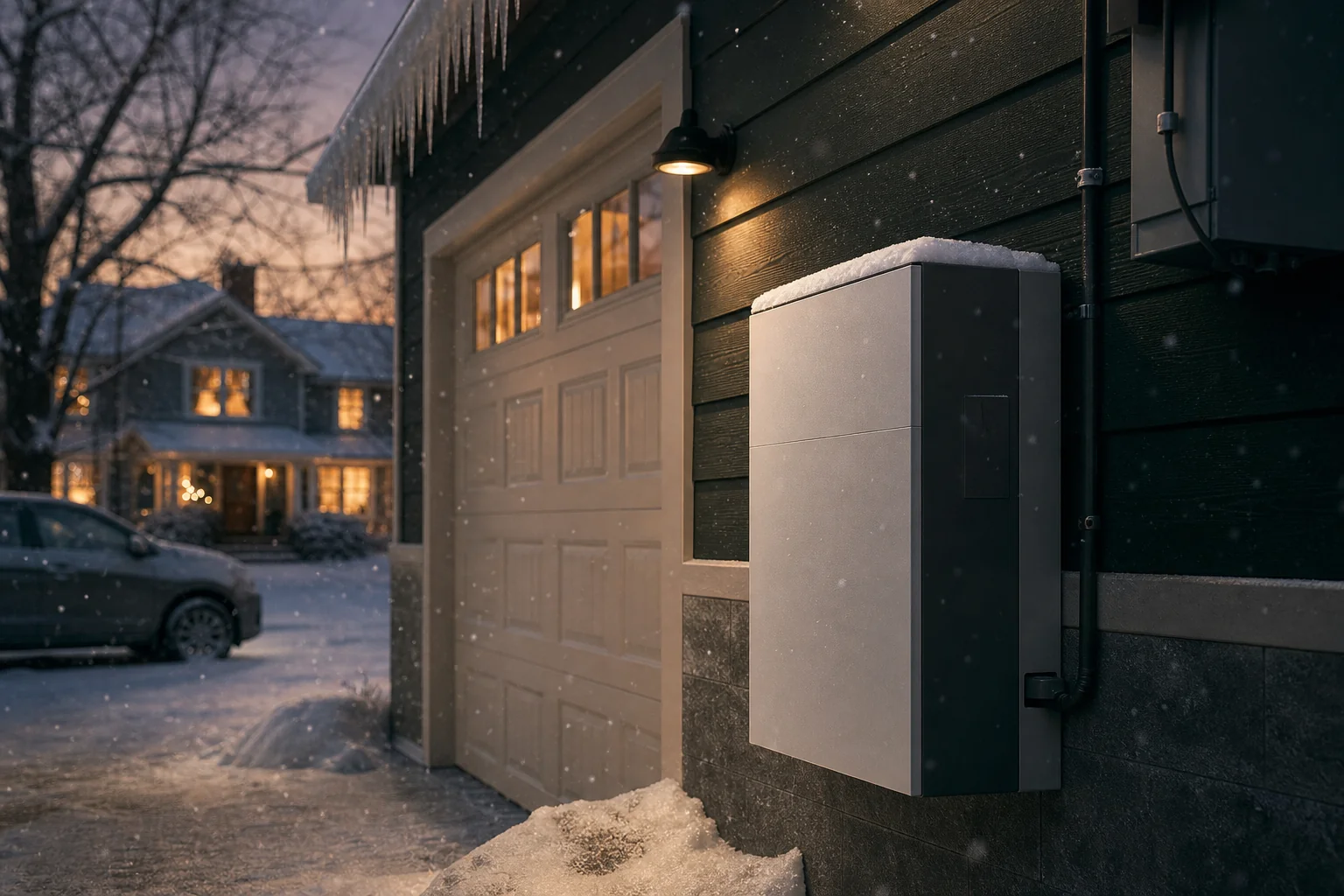
1. Tesla Powerwall 3: Best All-Around Pick for Ice Storm Resilience
The Tesla Powerwall 3 is the strongest choice for most New England homes bracing for winter outages. Its 11.5 kW continuous power output can start heavy loads like well pumps and electric heating systems, the equipment that most often fails on smaller units mid-storm.
Tesla's integrated active thermal management system is the differentiator. It maintains a higher discharge rating in freezing temperatures than some competing batteries, according to a side-by-side comparison for New England winters. That matters in a region where a January cold snap and a grid outage often arrive together.
The Powerwall stores electricity generated by your solar array, or drawn from the grid, for backup power and time-of-use load shifting. Homeowners weighing the Tesla Powerwall vs FranklinWH decision usually land on Tesla when the priority is a single, well-integrated unit rather than a whole-home system built for very large surge loads.
2. FranklinWH aPower: Best for Whole-Home Backup on Large Properties
The FranklinWH aPower is a 13.6 kWh battery built to store energy from solar, grid, generator, or EV sources, positioning it as a whole-home backup solution rather than a partial-load backup unit. That makes it a natural fit for larger farmhouses and multi-building rural properties common across Vermont, New Hampshire, and Maine.
For estates that need to run a furnace, well pump, sump pump, and kitchen appliances simultaneously during an extended outage, FranklinWH's surge capacity and load management are built for that scenario. A 2026 comparison of FranklinWH versus Tesla Powerwall 3 found FranklinWH the stronger choice specifically for large estates requiring high surge power and complex load management, while Powerwall 3 wins on value for standard residential homes.
Rural properties often stack two or three battery units to cover an entire home through a multi-day outage. If you're evaluating whether your current setup can handle that load, our guide on running solar alongside a home backup generator covers how these systems coordinate with existing propane or diesel backup.
3. Enphase IQ Battery 5P: Best for Modular, Phased Installs
The Enphase IQ Battery 5P takes a different approach: instead of one large unit, homeowners add individual battery modules over time. That makes it the most flexible option here for a homeowner who wants backup now but isn't ready to size for a worst-case, multi-day outage on day one.
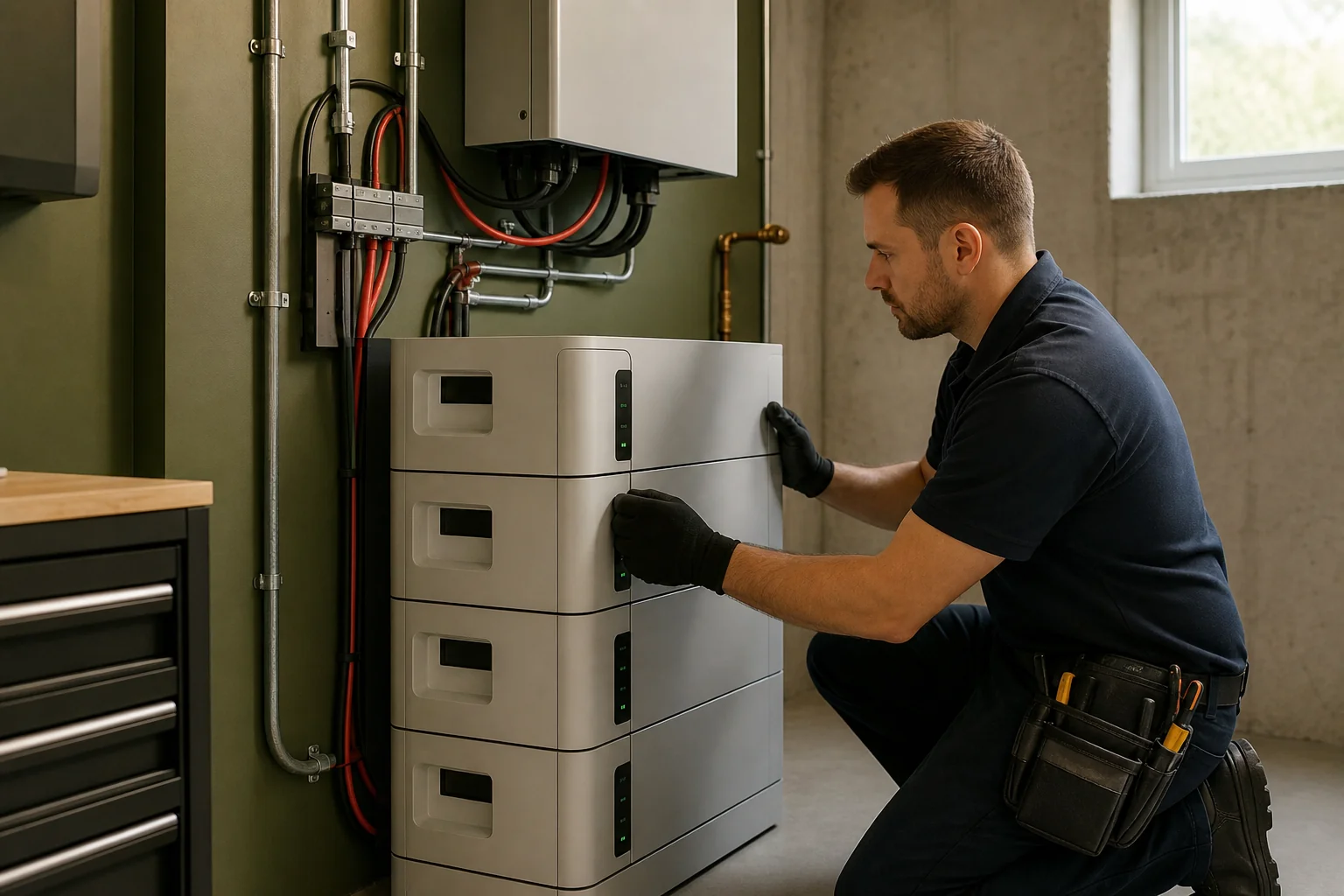
The 5P offers a higher peak power output in short bursts than some alternatives, though a head-to-head comparison for New England conditions found the Powerwall 3 wins on sustained cold-weather discharge.
Enphase's system integrates with its own monitoring app, so homeowners already running Enphase microinverters get a single dashboard for panels, EV chargers, and battery status. If you already own an Enphase solar system and want to check how your array is performing before winter, see our post on reading your solar monitoring app data.
The tradeoff is that stacking multiple 5P units to match a FranklinWH or Powerwall 3's whole-home coverage costs more per kWh in most configurations, and doesn't always match a single large unit's surge capacity for starting a well pump cold.
How Do These Batteries Actually Perform in Ice Storms and Sub-Zero Cold?
Tesla Powerwall 3 holds its rated output better in sub-zero conditions because of its active thermal management, while FranklinWH and Enphase units perform reliably too but are more often sized in pairs or trios to match a Powerwall 3's single-unit surge capacity. All three lose some usable capacity as temperatures drop.
Ice storms in northern New England don't just cut power, they often cut it for multiple days. ISO New England, the grid operator for all six New England states, has studied how behind-the-meter batteries affect winter grid reliability at a regional level. That regional view doesn't change what happens at your breaker panel: a battery sized for a two-hour summer outage isn't sized for a 30-hour ice storm outage.
The practical fix is oversizing slightly and prioritizing circuits. Heat, well pump, and refrigeration first; everything else waits. A properly configured transfer switch and load panel decide whether that prioritization actually works when the power goes out, not just the battery brand on the wall.
Installation Considerations for Vermont, New Hampshire, and Maine Homes
Rural New England properties often need a panel upgrade, a longer conduit run from an outbuilding, or a generator interconnection before any battery goes in. None of that shows up on a spec sheet, and it's where installs commonly go sideways.
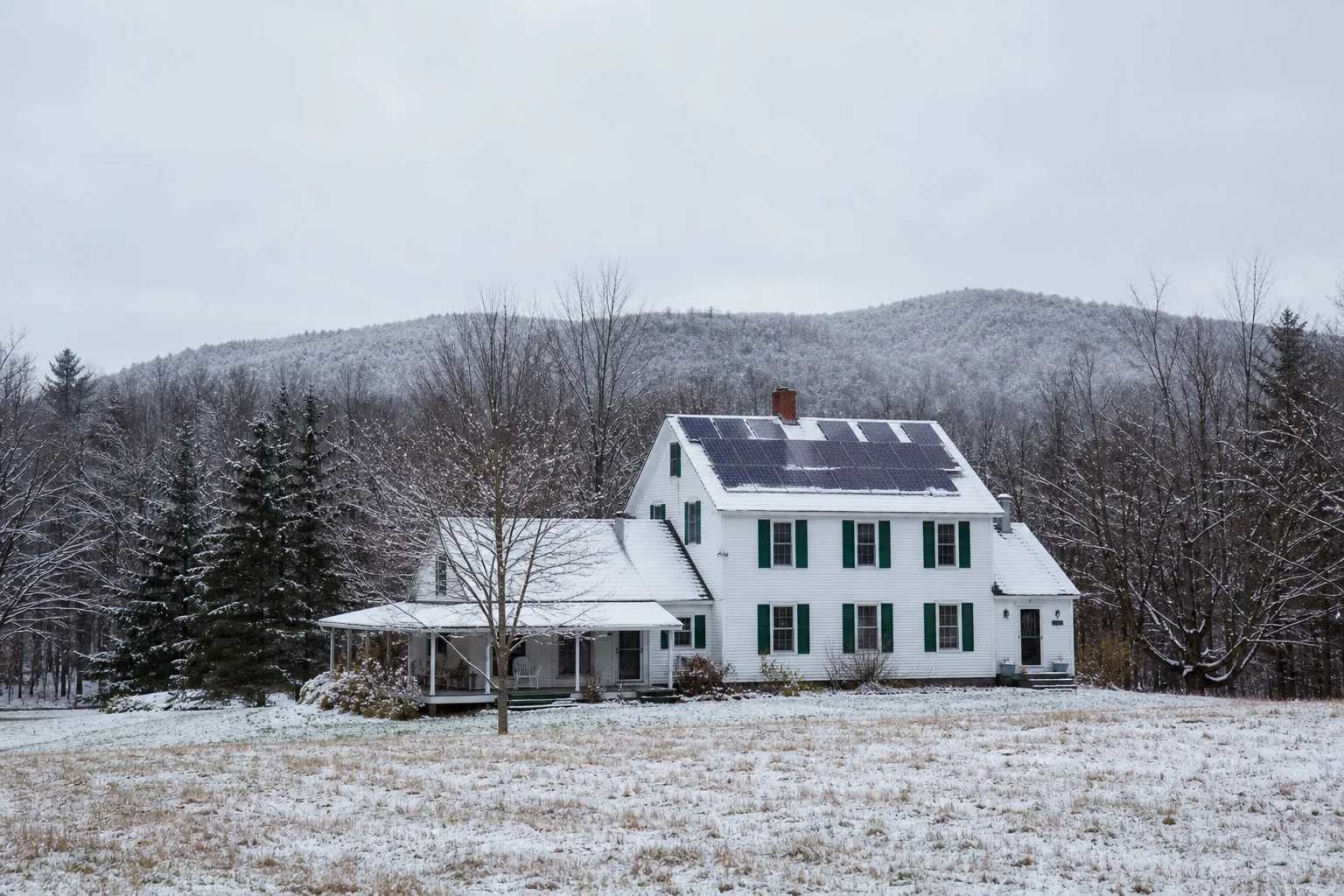
Homes running a well pump on a shared circuit with a septic system, or a wood-heat backup with electric ignition, need the installer to map every critical load before deciding on battery size. A crew that shows up once and never returns for warranty work is a real risk in a region where winter access to a rural driveway isn't guaranteed.
Teamsun uses in-house W-2 crews rather than subcontractors for exactly this reason: the same team that installs your battery is the one that services it. Our breakdown of in-house crews versus subcontractors covers what to ask any installer before you sign.
If your home already has solar from another company and you're only adding storage, that's a retrofit, not a new build, and the scope of work is different. See our guide on how a solar battery retrofit works for what that involves regardless of which brand installed your original panels.
What Does Battery Storage Cost in New England Before Storm Season?
A solar battery backup system in Massachusetts costs roughly $22,000 before incentives, and homeowners earning $1,000 to $1,500 a year through ConnectedSolutions typically see payback in 10 to 13 years. Costs shift with battery brand, home size, and how many critical circuits you back up.
That estimate comes from a 2026 Massachusetts battery backup cost analysis, and it reflects the state's combination of high electricity rates and utility incentive programs. Homes in Vermont, New Hampshire, and Maine don't have identical incentive structures, so actual payback varies by state and utility. For a full walkthrough of tax credit paperwork that applies regardless of battery brand, read our solar tax credit and rebate paperwork guide.
Financing shouldn't be the barrier that keeps a household without backup power through a multi-day outage. Homeowners with credit below 700 still have options worth asking about directly rather than assuming they're locked out.
Frequently Asked Questions
Is battery storage worth it in a New England winter?
Yes, for most homes facing frequent winter outages, given a typical Massachusetts system cost of roughly $22,000 before incentives and a 10 to 13 year payback once ConnectedSolutions earnings are included. The math improves further for households with well pumps, medical equipment, or livestock that can't lose power for even a few hours.
How many battery units does a New England home need?
Most standard homes run comfortably on a single Tesla Powerwall 3 or FranklinWH aPower unit if backup covers heat, refrigeration, and a well pump. Larger rural properties with multiple heavy loads running simultaneously often need two or three units, particularly with FranklinWH or Enphase's modular approach.
Can I add a battery to solar panels I already have, regardless of brand?
Yes. A battery retrofit doesn't require replacing your existing solar panels or inverter in most cases, though your installer needs to confirm compatibility with your current equipment. Our guide to combining solar panels with battery backup walks through what a retrofit actually involves.
Do these batteries work with a home generator I already have?
Generally yes, but the transfer switch usually needs reconfiguring so the battery and generator don't try to power the same circuits at once. That coordination is a wiring and permitting question, not a battery brand question.
Winter storm season doesn't wait for a homeowner to finish comparing spec sheets. If you want a straight answer on which battery fits your home's load, roof, and budget, request a free quote and get a design based on your actual house, not a generic estimate.
You can also talk to a designer about retrofit options if you already have solar from another installer, or call 203-903-4091 to ask about install timelines before the next ice storm rolls through. For a full look at what Teamsun installs and services, explore services covering battery storage, solar, and EV charging across Connecticut, Massachusetts, and Rhode Island.
Recommended Resources
Written by
Dan Katzman
Teamsun
Teamsun writes practical solar guidance to help property owners compare equipment, project scope, costs, and long-term service before making a decision.
Keep going.
Ground Mount vs Rooftop Solar: Best for Your Business?
Ground mount vs rooftop solar for commercial properties: compare costs, permitting, and ROI to find the right fit for your 25kW-500kW system.
Dan Katzman
Teamsun
How Does a Solar Battery Retrofit Work? 2026 Guide
Learn how does a solar battery retrofit work, from compatibility checks to activation. See equipment options, permitting steps, and install-day timelines.
Dan Katzman
Teamsun
Need a New Roof? When to Do It Before Solar
Learn when to replace your roof before solar installation, how to check roof age and condition, and how Teamsun bundles solar plus roofing with one crew.
Dan Katzman
Teamsun