Solar Panels on a Metal Roof
Solar panels on a metal roof: how standing seam clamps differ from corrugated rail mounts, plus snow, warranty and roof-life tips for CT, MA and RI.
Dan Katzman
Teamsun
Solar panels on a metal roof work well, and on a standing seam roof they can usually be attached with clamps that grip the seams, so no holes go through the metal. Corrugated and exposed-fastener roofs are different: they take rails fastened with sealed screws. Both suit homes and small businesses in Connecticut, Massachusetts and Rhode Island.
Key Takeaways
- Standing seam: Clamps grip the raised seams, so the roof surface is typically not penetrated.
- Corrugated and exposed-fastener: Rails are screwed into the structure below with sealed fasteners, so there are penetrations that must be done right.
- Warranty: Read the roof manufacturer's warranty before signing, and get approval for the mounting method in writing.
- Snow: Metal sheds snow fast, so panel placement and snow guards matter over walkways, doors and driveways.
- Roof age: If the roof will not outlast the panels, fix that first or bundle the work.
Metal Roof Solar at a Glance
| Roof type | Typical attachment | Roof penetrated? | Main New England concern |
|---|---|---|---|
| Standing seam | Clamps on the seams, then rails or direct-mount panels | Typically no | Snow sliding off in sheets |
| Corrugated | Rails or hangers fastened through the wave crest into purlins | Yes, sealed | Fastener sealing and purlin location |
| Exposed-fastener panel | Rails with sealed, stainless fasteners | Yes, sealed | Aging screws and gaskets on the roof |
| Trapezoidal / R-panel | Wide brackets fastened through the high crown | Yes, sealed | Landing fasteners in structure |
How Are Solar Panels Mounted on a Metal Roof?
Panels are mounted on a metal roof with a racking system. On standing seam roofs, clamps grip the raised seams. On corrugated or exposed-fastener roofs, brackets or rails are screwed through the metal into the framing, with sealed fasteners.
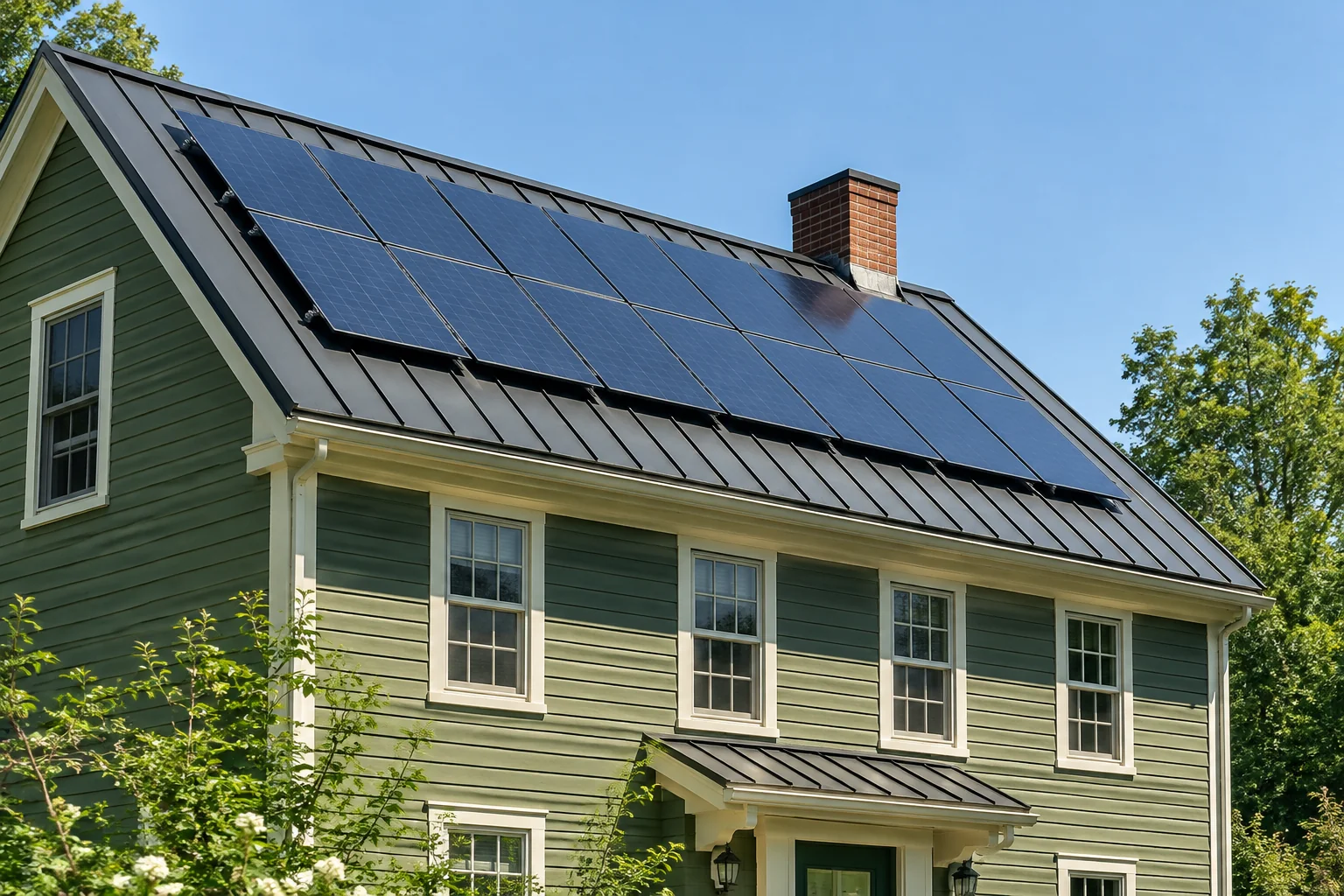
The Building America Solution Center notes that manufacturers design their own mounting mechanisms, but most systems tie panels to the roof structure with bolts and clamps. The details change with roof profile, which is why one-size quotes are a red flag.
Metal is a good base for solar. It is flat, durable and often lasts longer than shingles. The attachment method is where the roof can go wrong, so that is where the design effort should go.
Standing Seam Roofs: Clamps Instead of Holes
Standing seam roofs have raised seams joined between long metal panels. Roofing is held down by concealed clips, and solar clamps can bite onto those seams. The panel skin stays unpunctured.
Review rules exist for this. California's IR 16-8 interpretation has a section for solar PV connected directly to standing seam metal roofing, a sign that seam attachments are treated as an engineered detail. New England towns follow their own codes, so your installer should confirm local requirements.
What to confirm before clamps go on
- The seam profile and the clamp designed for it (seam shapes differ).
- The gauge and condition of the metal.
- Where the roof clips sit, so loads reach the structure.
- Whether the clamp setscrews dent or mark the seam, which can matter for finish warranties.
Some installers tell customers a standing seam roof is always hole-free. Be careful with "always". Conduit runs, roof-edge equipment and some layouts can still need a penetration somewhere. Ask where each one will be.
Corrugated and Exposed-Fastener Roofs
Corrugated, trapezoidal and exposed-fastener roofs have no seams to clamp. Racking is fastened through the metal, so every attachment is a penetration that has to be sealed and land in solid structure.
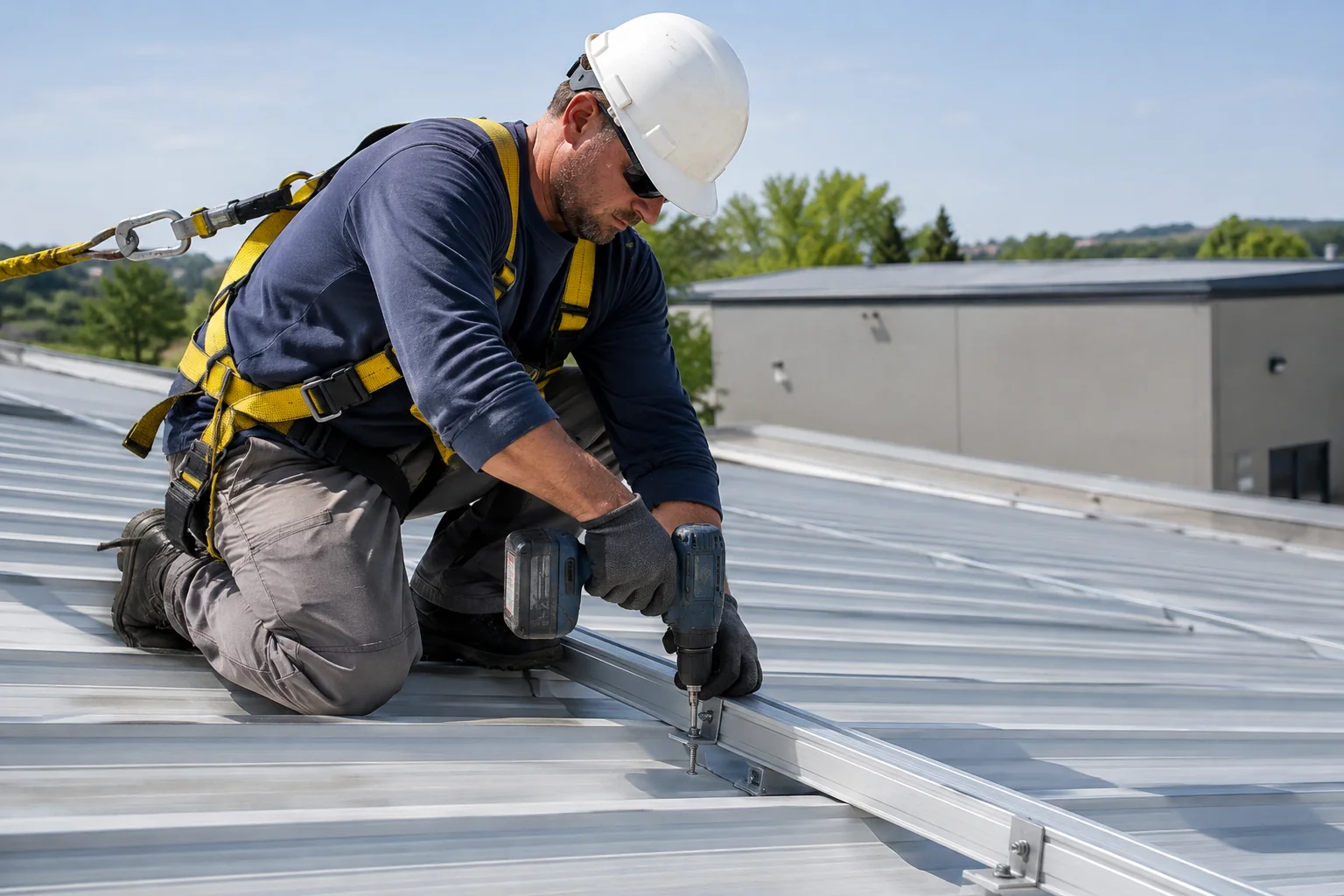
Design guides describe the approach: on corrugated roofs, narrow hangers fasten through the wave crest with short self-tapping screws, while trapezoidal roofs use wide flat brackets that fasten through the high crown into the purlin below. Both call for EPDM-sealed stainless fasteners that land in structural members, not just thin metal.
Many small-business roofs in our region, such as barns, garages and light commercial buildings, use this type. The existing fasteners may also be aging. Old gaskets crack, so a roof check before solar is worth it. See our guide on solar on an old roof for what to inspect.
The Building America Solution Center separates metal roofing into shingles and panels, and panels into exposed-fastener and concealed-fastener types. Knowing which you own is the first design question.
Does Solar Void a Metal Roof Warranty?
It can, if the install ignores the roof manufacturer's terms. Many warranties restrict penetrations, fastener types or who may work on the roof. Check the paperwork first, and get written approval for the chosen mounting method before work starts.
Two warranties are in play: the roofing material and finish warranty, and the installer's workmanship warranty. Ask for both in writing and ask how they interact if a leak appears near an attachment.
- Find your roof warranty and read the sections on penetrations and alterations.
- Tell the installer the roof brand and profile at the start.
- Ask whether the roofer needs to approve or inspect the attachment.
- Keep photos of the finished attachments for your records.
I would not sign a contract that says "warranty is fine" without a document. That is the one thing I would push on hardest.
Snow, Ice and Sliding in New England
Metal roofs shed snow quickly, and panels are slicker than the metal around them. In Connecticut, Massachusetts and Rhode Island, a warm day after a storm can send a sheet of snow and ice down all at once.
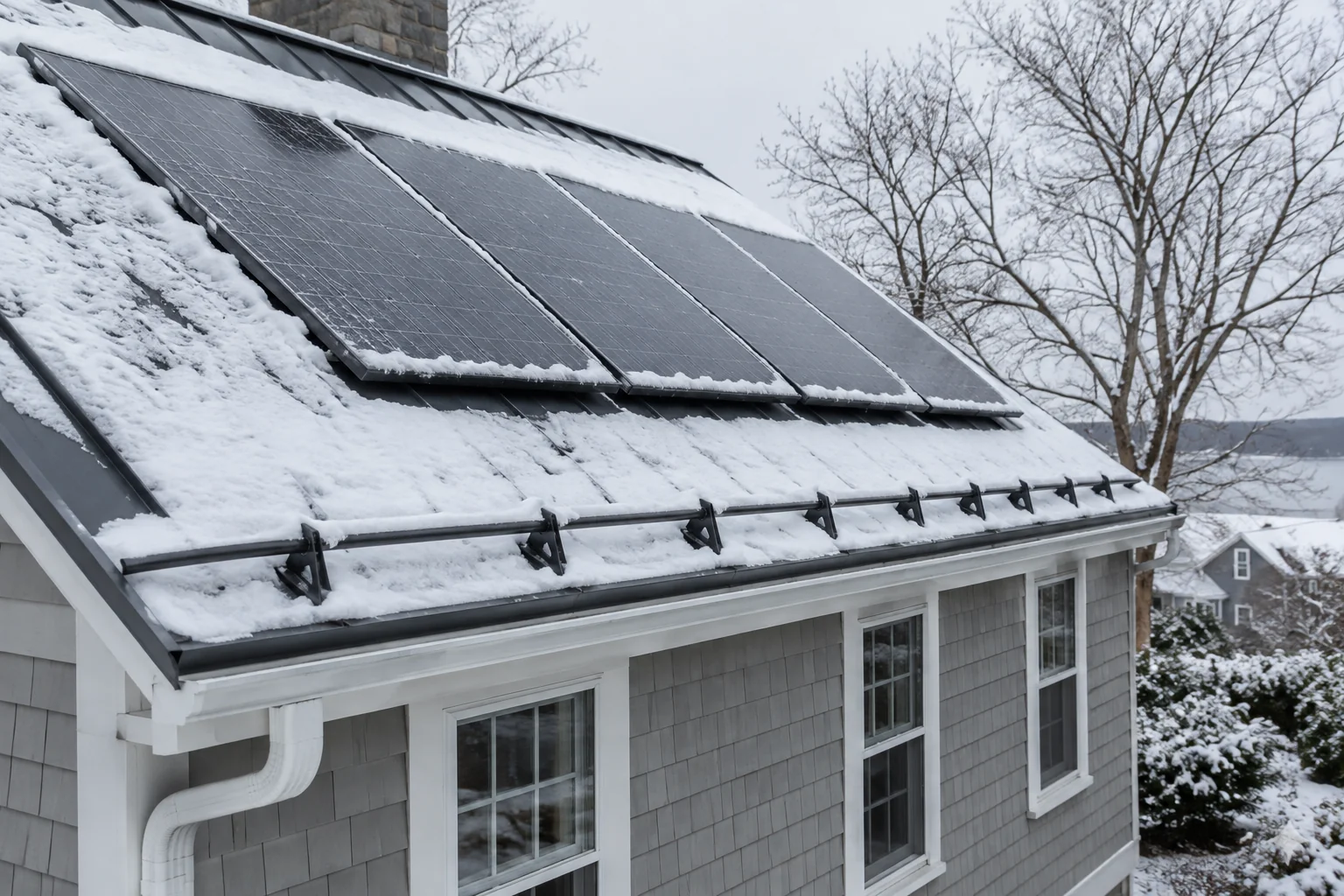
Plan for the slide path. Look at what sits below the array: doors, walkways, driveways, gas meters, a neighbor's property line. Snow guards, fences or panel layout changes can slow or break up the slide.
- Do not stand below panels after a thaw.
- Do not climb up to rake snow; panels can be damaged and roofs are slippery.
- Ask the installer how roof loads and snow retention were accounted for in the design.
Whether snow guards are needed on a given roof is a judgment call, and I will not pretend there is one rule. It depends on pitch, eave height and what is underneath. Our post on pairing solar with battery backup also matters here, since winter outages are when snow loads and storms hit together.
Roof Life vs Panel Life
Panels are meant to run for decades, so the roof under them should be sound for that long. Metal often fits this, but fasteners, sealants and coatings age sooner than the panels themselves.
If the roof is near the end of its life, replace it first or pair the jobs. Removing and re-mounting an array later costs money and time; our guide on remove and reinstall covers that. A solar plus roofing bundle puts one crew and one schedule on both jobs, which is what Teamsun offers with in-house W-2 crews rather than subcontractors.
Grounding and Bonding Are the Installer's Job
Metal roofs conduct electricity, so panels, rails and the roof must be bonded and grounded to code. This is licensed electrical work, not a homeowner task, and your installer should handle and document it.
Ask how the system bonds to the racking and whether the inspection includes it. Standing seam clamps and rail splices each have listed bonding methods that depend on the product. Teamsun designs each system in Aurora, so the layout, string design and attachment points are mapped before the crew arrives.
Checklist for Choosing an Installer for a Metal Roof
- Do they ask your roof type and brand before quoting?
- Do they explain the attachment method and where penetrations will be?
- Will they get warranty questions answered in writing?
- Do their own employees do the roof work?
- Can they discuss snow slide and layout?
Red flags: a flat "metal roofs are easy" pitch, no roof inspection, and no answer on warranty. Business owners with larger buildings can also see our small business roof guide; Teamsun designs commercial rooftops from 25kW to 500kW.
Next Steps
Tell us your roof type, age and warranty, and we will lay out the mounting method, snow plan and timing before you commit. Request a free quote for your metal roof, talk to a designer, or call 203-903-4091. You can also explore our services.
Recommended Resources
Written by
Dan Katzman
Teamsun
Teamsun writes practical solar guidance to help property owners compare equipment, project scope, costs, and long-term service before making a decision.
Keep going.
Can You Get Solar Panels That Match Your Roof Color?
Solar panels that match roof color: your real options in CT, MA and RI, from all-black panels to low-profile racking, plus HOA and historic district rules.
Dan Katzman
Teamsun
Remove and Reinstall Solar Panels for a New Roof
How to remove and reinstall solar panels for a new roof in CT, MA and RI: the steps, what drives cost, warranty risks and questions to ask your installer.
Dan Katzman
Teamsun
5 Signs Your Roof Needs Replacing Before Solar Goes On
Five clear signs your roof needs replacing before solar goes on, from shingle age to flashing, plus a decision rule for Connecticut homeowners.
Dan Katzman
Teamsun