Remove and Reinstall Solar Panels for a New Roof
How to remove and reinstall solar panels for a new roof in CT, MA and RI: the steps, what drives cost, warranty risks and questions to ask your installer.
Dan Katzman
Teamsun
To remove and reinstall solar panels for a new roof, a licensed crew shuts the system down, labels and detaches the panels and racking, stores them safely, waits for the roofer to finish, then remounts everything on new flashing and re-commissions it. Homeowners in Connecticut, Massachusetts and Rhode Island should expect permits, inspection and a utility check at the end.
Key takeaways
- Full re-roofs need a detach and reset: panels sit over the shingles, so they must come off for the new roof to go on.
- Cost follows scope: panel count, racking type, roof pitch and material, permits and damaged parts drive the quote.
- Warranties hold when the work is documented: use a licensed crew and get the work in writing.
- One crew beats two: when roofing and solar share a crew, nobody can blame the other trade for a leak.
- Get a firm price: we do not quote generic dollar figures here because they vary by house; ask for an itemized quote.
Remove and reinstall at a glance
| Stage | What happens | Who is involved |
|---|---|---|
| Shutdown | AC and DC disconnects off, inverter and battery isolated | Licensed solar electricians |
| Detach | Panels labelled, wiring disconnected, panels and racking removed | Solar crew |
| Storage | Panels kept flat or upright, padded, dry and off the ground | Solar crew |
| Roofing | Old roof torn off, decking checked, new roof installed | Roofing crew |
| Reinstall | New flashing, mounts, racking, panels and wiring restored | Solar crew |
| Sign-off | Local inspection and utility approval, then power on | Town inspector, utility |
When do solar panels have to come off the roof?
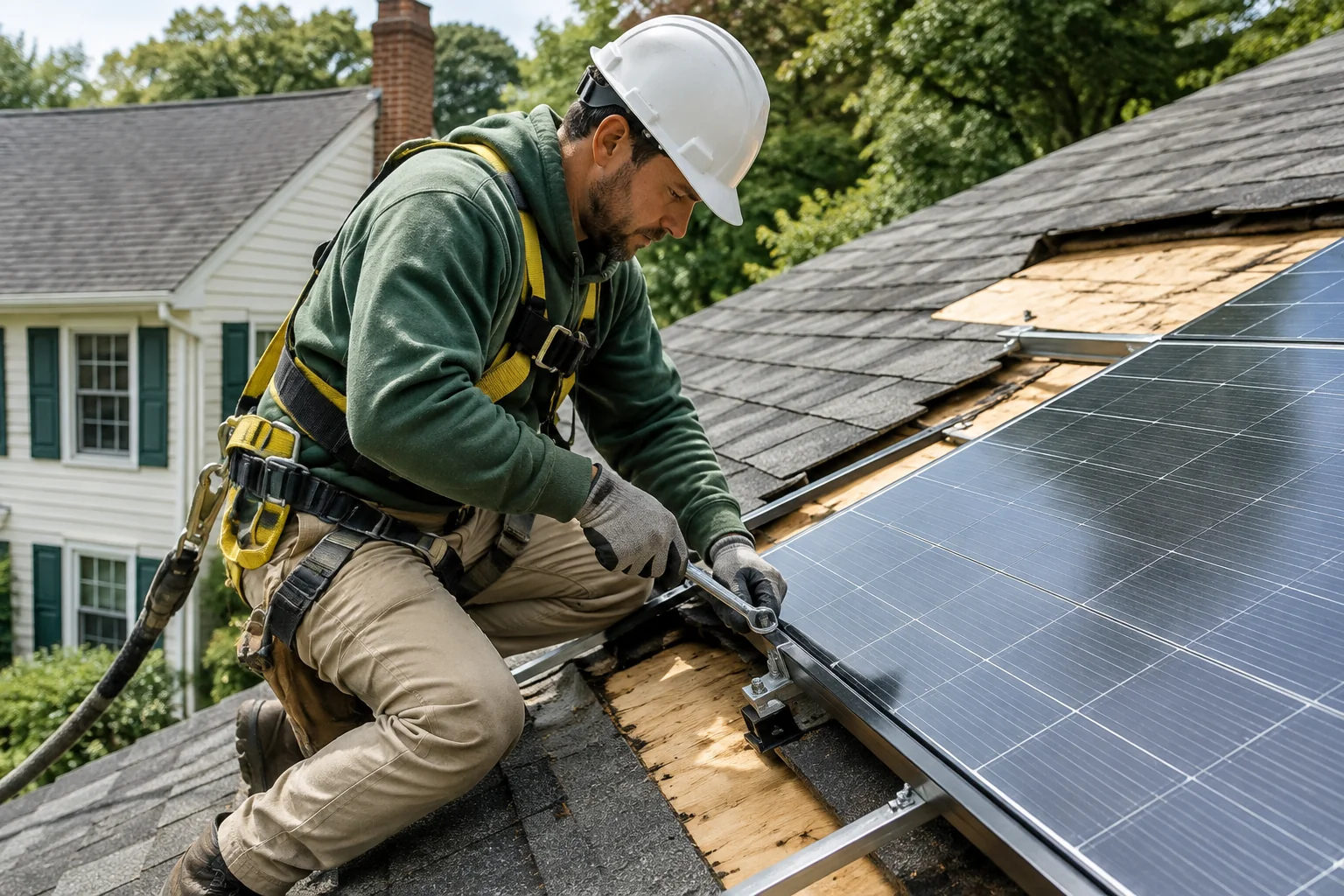
Panels have to come off whenever the roofing under them must be replaced or repaired. That means a full re-roof, a leak found beneath the array, or damaged decking. A small repair away from the array usually does not need removal.
Mounts are bolted through the shingles into the rafters. You cannot lay new shingles around them and expect a watertight result. Flashing at every mount is part of the roof system, so the roof and the array are really one assembly.
If you have not bought panels yet, our guide on when to replace the roof before solar covers that case. This post is for people who already have an array. Not sure the roof needs work? Read the five signs a roof is failing first.
Partial repairs versus full replacement
If a leak sits under a few panels, only those panels and their racking may need to come off. The catch is that the crew often cannot know the extent of decking damage until the first panels are lifted. Plan for scope to grow.
The step-by-step process
The process runs in seven steps: shutdown, labelling, removal, storage, roof work, reinstallation with new flashing, and inspection with utility sign-off. Each step has a handoff, and the handoffs are where most problems start.
1. System shutdown
A licensed electrician turns off the AC disconnect, the DC disconnect and the inverter. Panels still make voltage in daylight, so the crew treats the array as live until wiring is separated. If you have a battery, it is isolated as well.
2. Documentation and labelling
Before anything moves, the crew photographs the layout, string wiring and inverter connections. Each panel and string gets a label. This is what makes reinstallation match the original design and keeps monitoring data meaningful afterward.
3. Removing panels and racking
Panels come off first, then rails and mounts. Microinverters or optimizers, if you have them, are handled with the panels. Crews note any cracked frames, stripped bolts or brittle clips as they go.
4. Safe storage
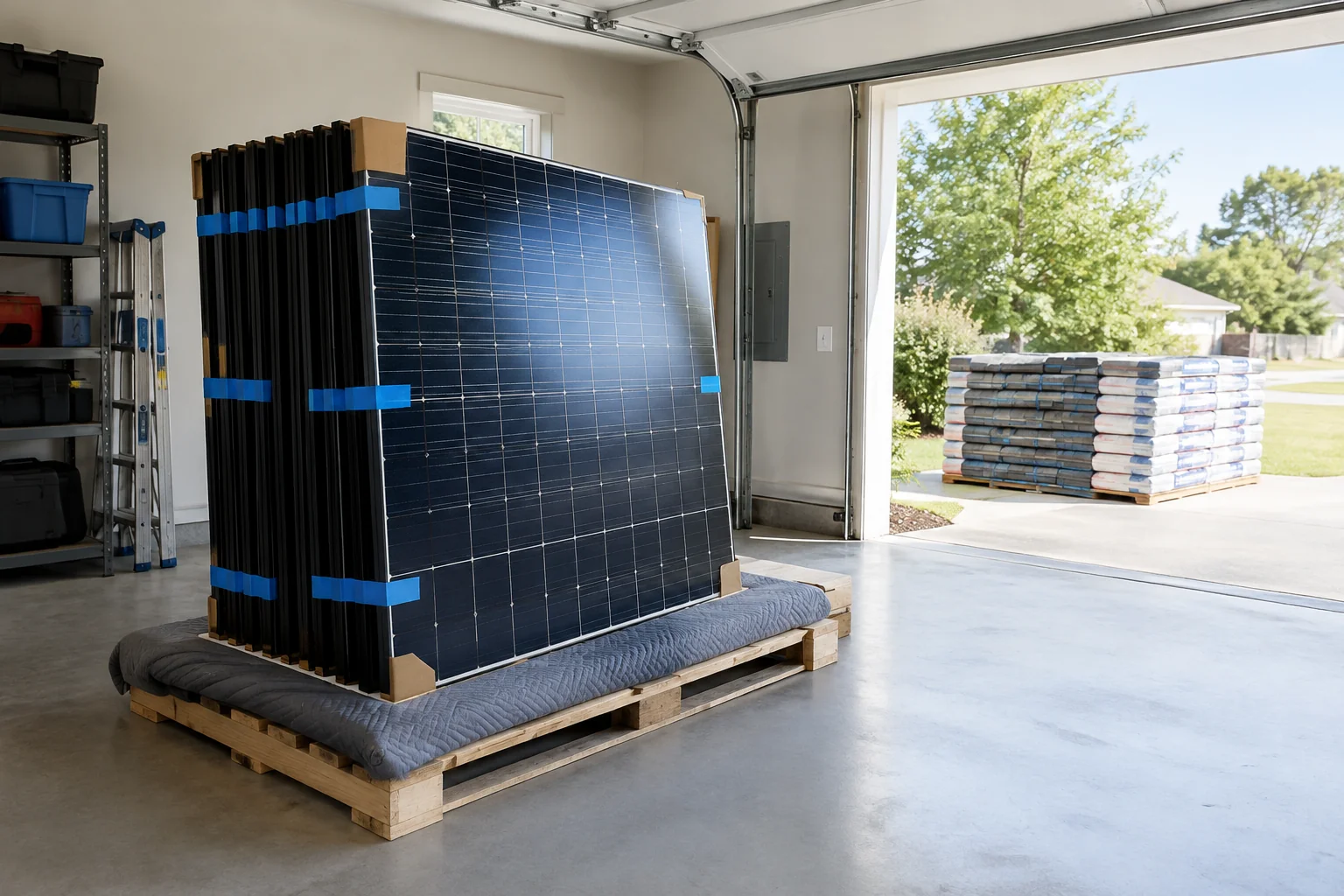
Panels are glass. They should be stored padded, dry and off the ground, ideally in a garage or covered area, away from foot traffic. Stacking flat on top of each other or leaning them on a wall in the wind is how panels crack.
5. Roof work
The roofer strips the old roof, inspects the decking, replaces rot and installs the new roof. This is the stage that sets your schedule, because weather in New England can stop a roof job for days.
6. Reinstalling with new flashing
Once the roof is done, mounts go back on the rafters with new flashing and sealant. Racking, panels and wiring follow, matched to the labels. The crew then tests each string before closing up.
7. Inspection and utility sign-off
Many towns want a permit and inspection for the reinstall. Some utilities also want to confirm the system before it runs again. Guidance from one Florida county shows the principle: a reinstalled system must comply with current building and electrical codes (Seminole County, FL notice). Check your own town's rules; they differ.
What drives solar panel removal cost?
Solar panel removal cost is driven by panel count, racking type, roof pitch and material, permits and inspection, and any parts damaged during removal. More panels and harder roofs mean more labor hours. Get an itemized quote rather than a flat per-panel guess.
We are not printing dollar ranges here, because prices vary by house and by crew. Here is what moves the number.
- Number of panels: labor scales with the count, since each panel is unbolted, handled and remounted.
- Racking type: rail systems, rail-less systems and ballasted mounts take different effort. Old or discontinued racking may not be reusable.
- Roof pitch and material: steep roofs need more safety gear and time. Slate, tile and metal each need their own flashing method.
- Permits and inspection: fees and required paperwork vary by town.
- Damaged parts: brittle clips, corroded bolts, cracked panels or failed microinverters found on the way down add replacement cost.
- Bundling: coordinating the roof and solar in one job usually costs less than hiring two firms separately, because there is less duplicated scheduling and mobilization.
For a general sense of system cost, see our solar installation cost breakdown, and for combined pricing see the solar plus roofing bundle guide.
How does removal affect your warranties?
Removal does not void warranties by itself, but sloppy handling can. Keep records of who removed and reinstalled the system, what was done and when. Always confirm in writing how your panel, inverter, racking, installer and new roof warranties treat a detach and reset.
The U.S. Department of Energy notes that most systems keep at least 80% of their initial output for 25 years, so the panels are usually worth reusing (Department of Energy). The question is protecting them through the move.
Panel and inverter warranties
Manufacturers cover defects, not breakage from handling. Photos before and after removal protect you. Ask the crew to record any panel damage on the day it is found.
Roof warranty
Your new roofer warrants the roof, but many warranties carve out damage from other trades. If the solar crew sets mounts through the new roof, someone must own those penetrations. Ask who warrants the flashing.
Original installer workmanship
If another company installed your panels, their workmanship warranty may be affected when a different crew does the reset. Check the terms. If that installer is gone, our piece on solar maintenance in New England helps you keep the system documented. Teamsun services systems of any brand.
Why one crew for roof and solar matters
One crew handling both roof and solar means a single warranty owner and no finger-pointing. When a leak shows up at a mount, there is only one company to call, and it cannot blame the other trade.
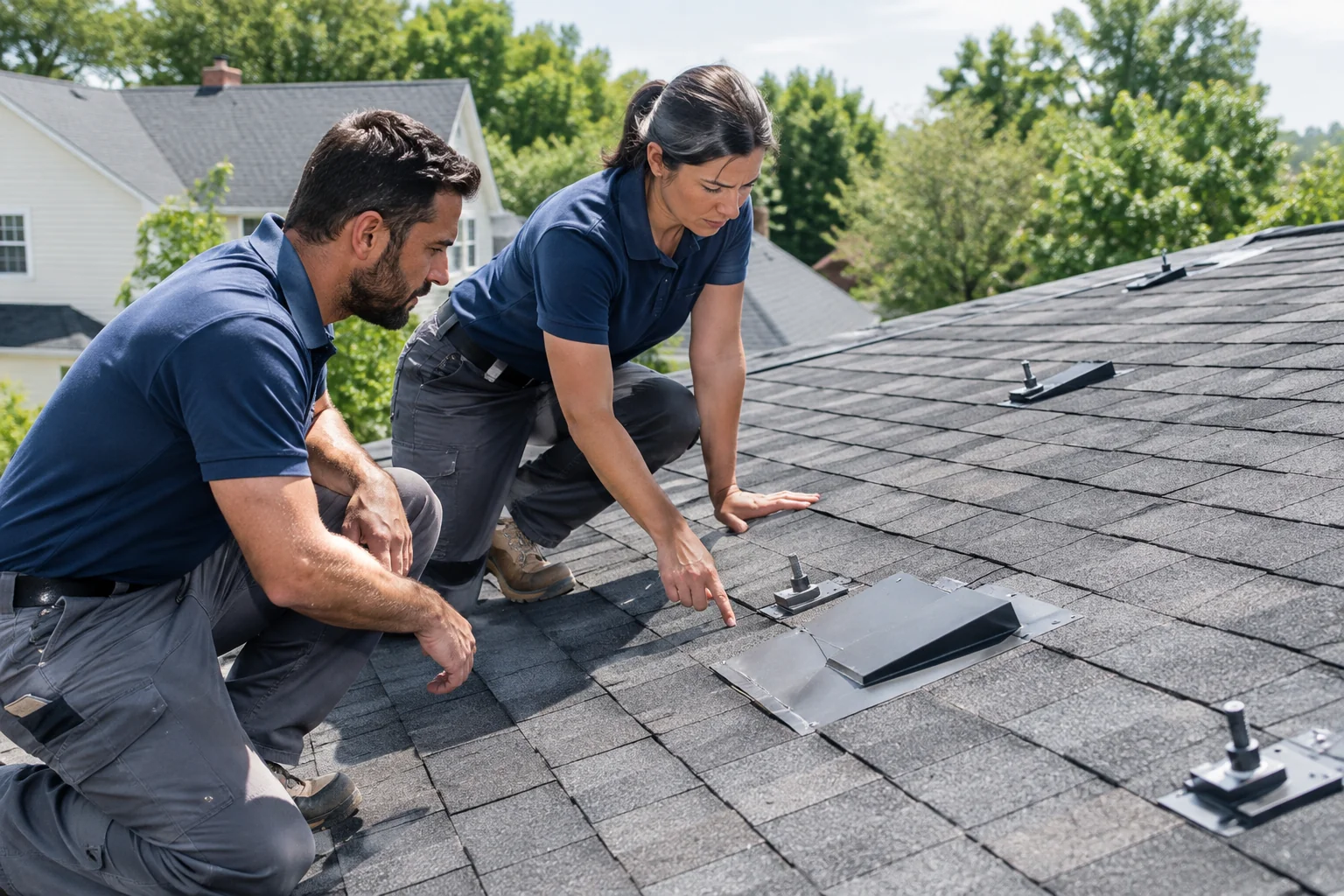
With two firms, the roofer says the solar crew drilled the hole, and the solar crew says the shingles were the problem. You sit in the middle. Teamsun's solar plus roofing bundle runs on in-house W-2 crews with no subcontractors, so the people who flash the mount are on our payroll and accountable for it.
The honest caveat: a bundle is not automatically cheaper or better for every house. If your roofer is a long-time trusted contractor, ask whether they will coordinate with a solar crew and who signs off on the flashing.
Questions to ask before you hire
- Who is licensed to disconnect and reconnect the system, and who is licensed for the roof?
- Are the crews employees or subcontractors?
- How will panels be labelled, stored and protected?
- Who pays if a panel breaks during handling?
- Will mounts and flashing be new, and who warrants them?
- Is the permit and inspection included in the quote?
- What happens if rotten decking is found?
- How long will my system be offline, and what does that cost me in production?
- Will you confirm utility sign-off before calling the job done?
Connecticut, Massachusetts and Rhode Island notes
Across Connecticut, Massachusetts and Rhode Island, winter limits roofing, so many re-roofs are scheduled for spring through fall. Towns set their own permit steps, and the utility may want notice before your system comes back online.
If you are in a net metering or SMART arrangement, ask how downtime affects your credits; our net metering explainer shows how the utility counts production. Whether your specific program pauses or penalizes a short outage is something we cannot answer generally, so ask your utility.
While the array is down, it is also a convenient moment to consider upgrades. If an older inverter or a battery is on your list, read when to upgrade an older system.
FAQ
How long are my panels off the roof?
It depends on the roof size and weather. The solar crew's detach and reinstall are short compared with the roofing work between them. Ask for a written schedule.
Can I do the removal myself?
We advise against it. The system is live, and reconnecting it is licensed electrical work. A DIY detach can also complicate warranties.
Do I need a new inverter?
Not necessarily. Inverters often stay, but the crew should test them. Old units may be worth replacing while access is easy.
Plan your roof and solar job together
If you need to remove and reinstall solar panels, get one itemized plan for the whole job. Request a free quote for a roof-plus-solar detach and reset, or talk to a designer about your array. You can also explore our services or call 203-903-4091.
Recommended Resources
Written by
Dan Katzman
Teamsun
Teamsun writes practical solar guidance to help property owners compare equipment, project scope, costs, and long-term service before making a decision.
Keep going.
Can I Add Solar Panels Without Replacing My Whole Roof?
Can I add solar panels without replacing my whole roof? Learn what inspectors check — shingle age, decking, flashing — to avoid costly mistakes.
Dan Katzman
Teamsun
Need a New Roof? When to Do It Before Solar
Learn when to replace your roof before solar installation, how to check roof age and condition, and how Teamsun bundles solar plus roofing with one crew.
Dan Katzman
Teamsun
5 Signs Your Roof Needs Replacing Before Solar Goes On
Five clear signs your roof needs replacing before solar goes on, from shingle age to flashing, plus a decision rule for Connecticut homeowners.
Dan Katzman
Teamsun