Solar Panel Maintenance Checklist New England Homeowners
A season-by-season solar panel maintenance checklist for CT, MA, and RI homeowners covering snow load, debris, monitoring alerts, and repair calls.
Dan Katzman
Teamsun
A solar panel maintenance checklist for New England homeowners boils down to four moves: clear seasonal debris before it builds up, watch your monitoring app for real drops in output, leave snow removal alone unless ice forms, and call a professional the moment a panel cracks or production stalls for more than a few sunny days. Most systems in Connecticut, Massachusetts, and Rhode Island need far less hands-on attention than owners assume.
Key Takeaways
- Cleaning frequency: Most New England systems only need professional cleaning once or twice a year, not monthly, since rain handles routine soiling on tilted panels.
- Snow is rarely an emergency: Tilted rooftop arrays usually shed snow on their own within a few sunny days; raking panels yourself risks scratching the glass and voiding warranty coverage.
- Monitoring data beats a visual check: A sudden output drop of 20% or more that isn't explained by weather is the clearest sign something needs a technician, not a quick glance from the yard.
- Coastal salt air changes the schedule: Homes near Long Island Sound or Narragansett Bay should inspect connectors and racking hardware more often than inland properties.
- Any-brand service matters: You don't need to track down your original installer for repairs. A local crew that services any brand can handle inspections and fixes even if another company installed your system.
At a Glance: Seasonal Solar Maintenance Checklist
| Season | Primary Task | DIY or Pro? | Frequency |
|---|---|---|---|
| Spring | Inspect mounts after winter snow load, clear debris, check gutters | Visual DIY, pro if damage suspected | Once, after last snowfall |
| Summer | Trim overgrown branches, check for pollen buildup and drainage issues | DIY for trimming, pro for cleaning | Mid-season check |
| Fall | Clear leaves before first freeze, inspect roof flashing, check battery readiness | DIY visual, pro for flashing | Once, before storm season |
| Winter | Monitor snow shedding, watch for ice dams, avoid manual panel clearing | Mostly hands-off; pro only if ice builds | As needed |
| Year-round | Check monitoring app for unexplained production drops | DIY check, pro if anomaly persists | Monthly glance |
| Annual | Professional inspection and cleaning | Professional | Once per year, twice if heavily shaded |
Why New England Weather Puts Extra Stress on Solar Systems
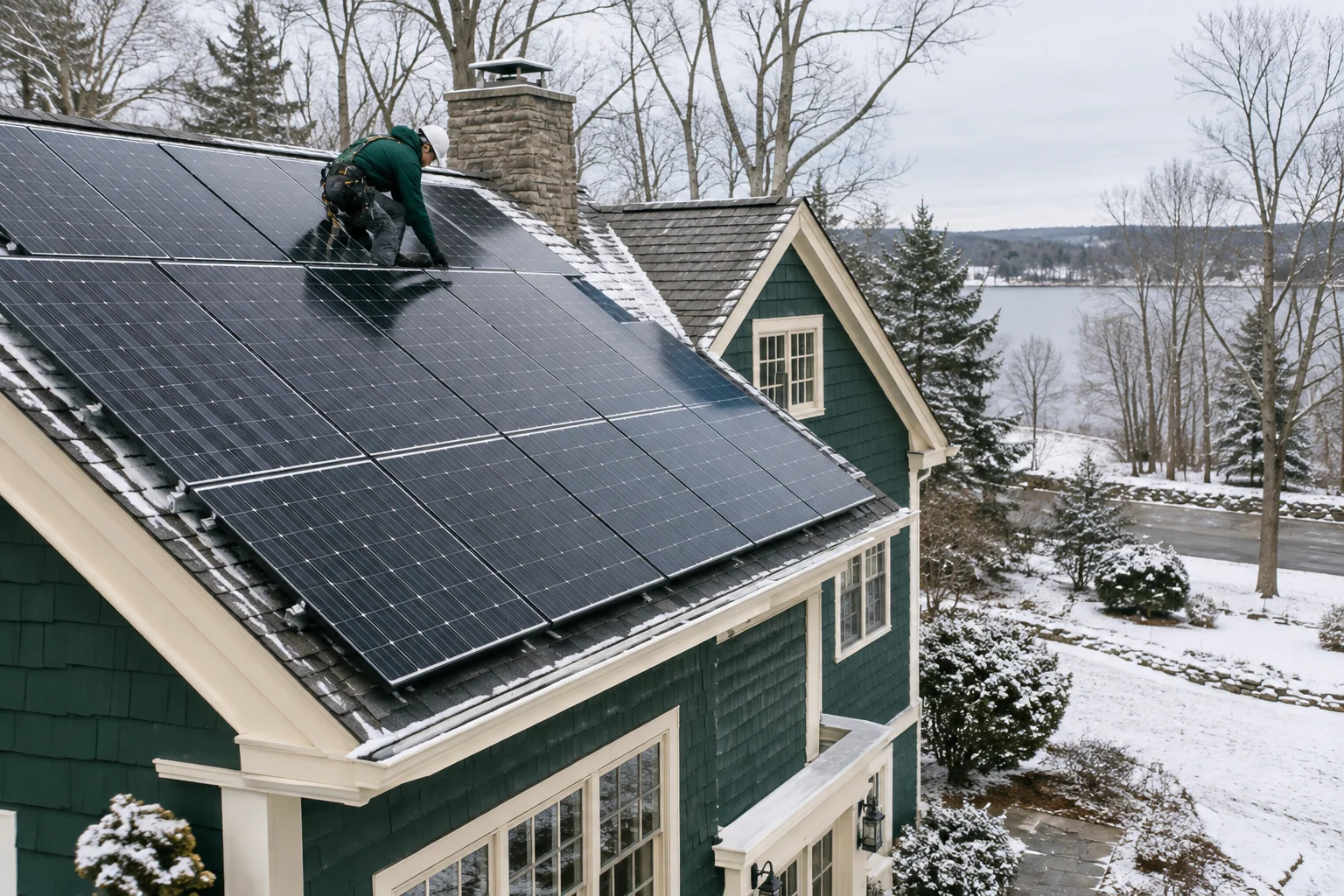
New England doesn't give solar arrays an easy ride. Panels here deal with heavy snow load, coastal salt air along the Connecticut and Rhode Island shoreline, spring pollen, and the kind of nor'easters that strip leaves and branches off trees in a single afternoon. That's a different story than the Pacific Northwest or Southeast, where steady rainfall handles most soiling on its own year-round.
Panels mounted at 10 degrees of tilt or steeper tend to shed dirt well enough that a single professional cleaning once a year is often sufficient in rainy climates, New England included. The region's four distinct seasons mean the maintenance work isn't evenly spread. It clusters around specific weather events: the first thaw, the first hard freeze, and whatever a given winter's storm track brings.
That seasonal clustering is exactly why a checklist built around New England's calendar works better than a generic national one. Homeowners in CT, MA, and RI who understand which season does what to their system end up servicing it less, not more, while still protecting the investment.
Spring: Reset After Winter
Spring is when winter's damage shows up. Once the snow is gone, walk the perimeter of the house and look at the array from ground level. Check for loose flashing, bent racking, or panels that sit at a slightly different angle than their neighbors. Any of those point to stress from heavy snow load over the winter.
Clear debris that built up under the array edges and check that gutters and downspouts near the roofline aren't clogged. Blocked drainage sends water back up under shingles, which becomes a roofing problem long before it becomes a solar problem.
This is also the right moment to compare your monitoring app's spring output against the same month last year. A meaningful gap, not explained by cloud cover, is worth a call. If your roof is older and you're wondering whether it needs attention before the next install cycle, the guide on when to replace a roof before solar walks through the signs.
Summer: Watch for Growth and Heat Stress
Summer's main threat isn't the sun, it's everything growing around the panels. Trees and shrubs that looked harmless in March can shade a third of an array by July. Walk the property and look for new shade lines on the panels during peak sun hours, usually late morning through early afternoon.
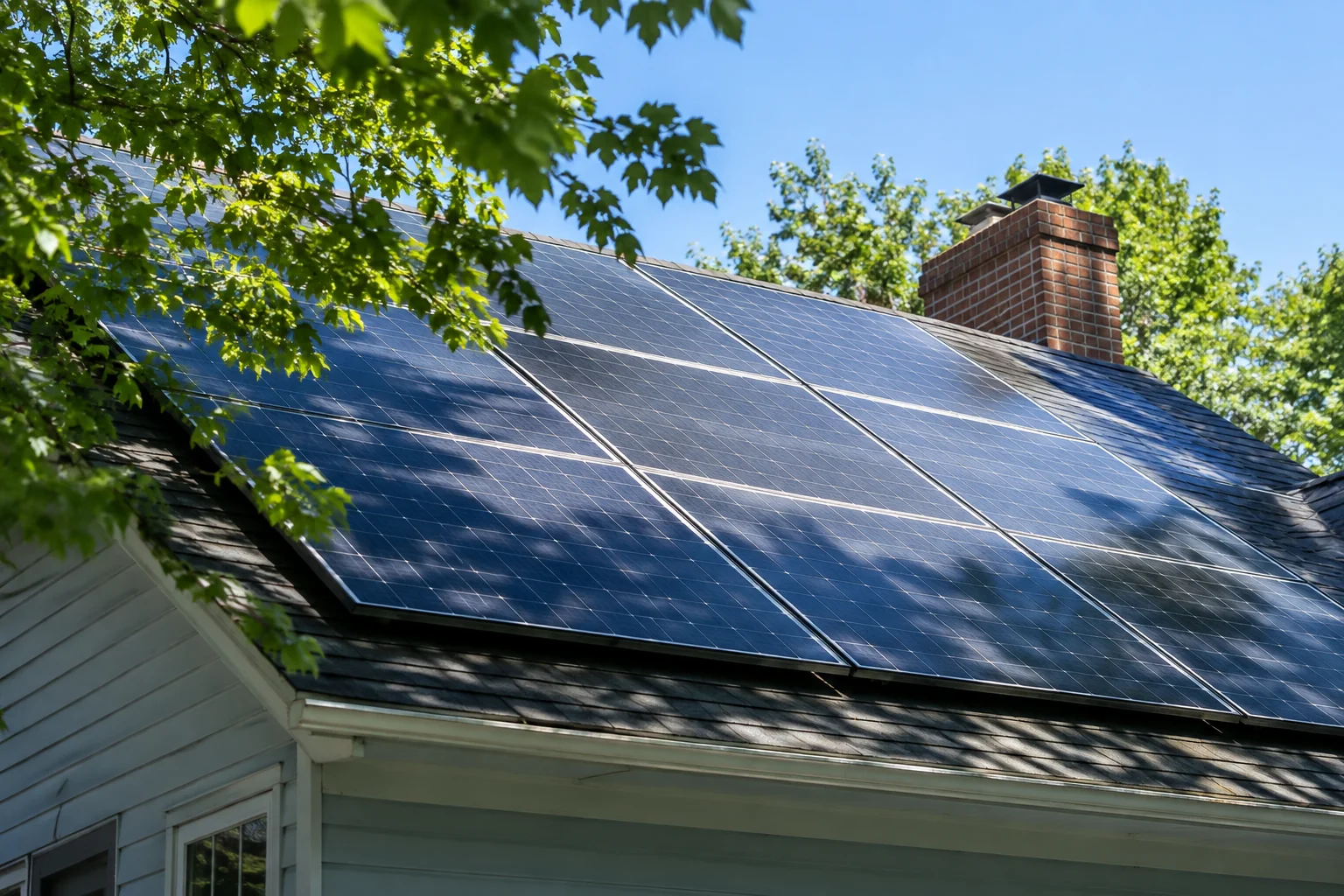
Pollen is the other summer issue, especially in late spring through June. It builds a thin film that reduces output gradually, which is easy to miss without checking your monitoring data directly. Heavy summer storms can also expose drainage problems around the array that didn't show up during drier months.
Inverters run hotter in summer heat, and a unit that's struggling will often throttle output on the hottest days before it throws an outright error. If you notice consistent underperformance specifically on 90-degree afternoons, that's worth flagging to a technician rather than writing off as normal heat loss.
Fall: Prep Before the First Freeze
Fall maintenance is about getting ahead of winter, not reacting to it. Clear leaves and fallen branches off the array and out of the gutters before the first hard freeze locks everything in place. Leaves left under panels trap moisture against the racking hardware.
This is also a sensible time to have a technician check roof penetrations and flashing around the mounts, particularly if your home has gone through a rough storm season. A small gap now becomes a leak once snow sits on the roof for weeks at a time.
If you have battery storage, fall is when you confirm it's actually ready for outage season. Check that backup circuits are configured the way you expect and that the battery is holding a full charge. Homeowners weighing whether to add storage before winter can compare options in this ranking of battery storage for New England winters.
Winter: Manage Snow Load Without Over-Servicing
Winter triggers the most anxious calls from solar owners, and most of them are unnecessary. Rooftop arrays tilted at a typical New England pitch shed snow on their own within a few sunny days in most cases. The dark surface of the panel absorbs heat and loosens the snow layer from underneath, letting it slide off.
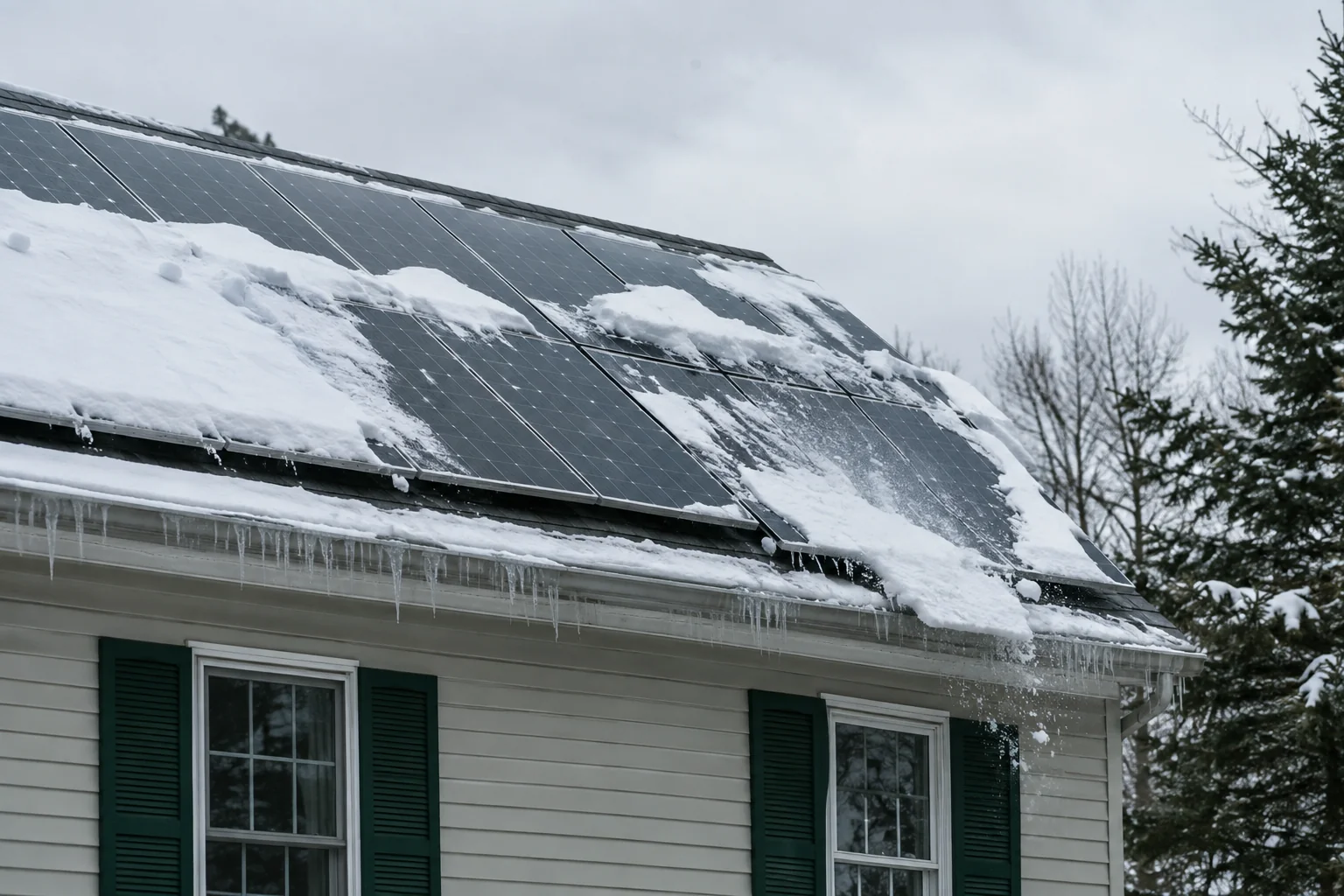
Climbing onto a snow-covered roof to rake or scrape panels is the single most common way homeowners damage their own system. A metal rake scratches the glass surface, and a slip on an icy roof is a far bigger risk than a few days of reduced production. Leave it alone unless you see ice dams forming along the array edge or snow sitting for more than a week with no sign of melting.
Coastal homes in Connecticut and Rhode Island face an added winter factor: salt air from storms blowing in off Long Island Sound or Narragansett Bay accelerates corrosion on exposed connectors and racking hardware faster than inland properties experience. That's a good reason for coastal owners to request a connector check during their annual service visit rather than skip a year.
How Often Should You Actually Clean or Inspect Your Panels?
Most New England homeowners should schedule a professional cleaning once a year, stretching to twice a year only if trees, heavy traffic dust, or coastal salt buildup push soiling higher than average. That matches the general guidance that one cleaning a year is the baseline, with twice a year better for shaded or high-debris properties.
Some services recommend a wider window of every six to twelve months as a starting point, adjusting based on your specific property's tree cover and exposure. There's no single right answer here, and that's the point: a system surrounded by open lawn in a less shaded part of a town needs less attention than one tucked under a stand of oaks.
Over-servicing is a real cost with no real benefit. Paying for quarterly cleanings on a system that sheds dirt fine on its own just adds expense without meaningfully improving output. The smarter move is tying your cleaning schedule to what your monitoring app actually shows, not a calendar reminder set out of habit.
Reading Your Monitoring App: What a Real Alert Looks Like
A genuine problem in your monitoring app looks like a sustained drop in output that weather doesn't explain, not a single cloudy day showing lower numbers. Compare the same week against last year's data, factoring in season and weather, before assuming something is wrong.
Normal seasonal swings are large. Winter days produce a fraction of summer output simply because of shorter daylight and lower sun angle, which is expected and not a fault. The red flag is a drop of 20% or more on a clear, sunny day compared to a similar day in the recent past, especially if it lasts more than 72 hours.
Learning to separate seasonal variation from a real fault takes a bit of practice with the data. The walkthrough on how to read your solar monitoring app data covers the four numbers worth tracking and what normal looks like month by month.
When to Call for Professional Repair vs Handle It Yourself
Call a professional immediately for a cracked panel, persistent inverter error codes, or any unexplained output drop lasting more than a few sunny days. Handle leaf clearing, visual inspections, and gutter checks yourself; leave electrical faults, roof penetrations, and anything requiring ladder access on a steep or icy roof to a licensed technician.
DIY-safe tasks include a visual sweep from the ground, checking your monitoring app weekly, and clearing debris that's easily reachable without climbing on the roof. Everything involving the inverter, wiring, or racking hardware belongs to a professional, both for safety and to avoid voiding a manufacturer warranty.
If your system is older and the maintenance list keeps growing rather than shrinking, it may be a sign the equipment itself is reaching the end of its useful service life rather than just needing a tune-up. The breakdown on when to upgrade an older solar system covers the signs worth watching for.
Maintenance for Systems Installed by Another Company
You don't need to track down your original installer to get a system serviced. A surprising number of New England homeowners assume they're stuck calling whoever installed their panels, even if that company is slow to respond, no longer local, or out of business entirely.
Teamsun services solar systems of any brand and any age, including battery retrofits onto equipment the company didn't originally install. That matters most for homeowners whose original installer used subcontracted crews with no ongoing local presence, a pattern that's common among the larger national solar companies operating in the region.
A maintenance plan is only as good as the technician who shows up when something actually breaks. If you can't get a straight answer about who installs and services your system day to day, that's worth asking before you sign anything.
For homeowners still shopping for an installer and weighing in-house crews against subcontracted labor, the comparison in in-house crew vs subcontractors lays out exactly what that difference means for long-term service.
Frequently Asked Questions
Does snow need to be removed from solar panels in winter?
No, in most cases. Tilted rooftop arrays typically shed snow within a few sunny days as the dark panel surface absorbs heat and loosens the layer underneath. Manual removal risks scratching panels or falling on an icy roof, so it's rarely worth the risk unless ice dams form.
Will regular maintenance void my solar warranty?
Routine DIY tasks like visual inspections and ground-level debris clearing won't affect your warranty. Climbing on the roof to scrape, pressure-wash, or attempt electrical repairs yourself can void coverage, so leave anything beyond basic visual checks to a licensed technician.
How much does professional solar panel cleaning cost in New England?
Costs vary by system size, roof access, and local provider, so ask for a current quote rather than relying on a national average. Most homeowners only need this service once a year unless heavy shading or coastal salt exposure pushes the schedule higher.
A well-maintained system protects the investment you already made, and Teamsun's technicians service panels, inverters, and batteries from any manufacturer, not just the systems the company originally installed.
If your monitoring app is flashing an alert you can't explain, or it's simply been a while since anyone laid eyes on your array, talk to a designer about scheduling an inspection, request a free quote for repair or retrofit work, or call 203-903-4091 to get a technician out before the next storm rolls through. You can also explore the full range of services Teamsun offers across Connecticut, Massachusetts, and Rhode Island.
Recommended Resources
Written by
Dan Katzman
Teamsun
Teamsun writes practical solar guidance to help property owners compare equipment, project scope, costs, and long-term service before making a decision.
Keep going.
Commercial Solar Ground Mount Permitting Checklist for New
A commercial solar ground mount permitting checklist covering zoning, utility interconnection, and CT/MA town-specific permit steps for business owners.
Dan Katzman
Teamsun
The Best Battery Storage Options for New England Winters
Compare FranklinWH, Tesla Powerwall 3, and Enphase IQ 5P on cold-weather performance for CT, MA, RI, VT, NH, and ME winters before storm season hits.
Dan Katzman
Teamsun
EV Charger Installation Cost for Massachusetts Homeowners
What EV charger installation costs Massachusetts homeowners in 2026: Level 2 hardwired pricing, panel upgrades, permits, rebates and solar bundling.
Dan Katzman
Teamsun