Solar Panel Installation Cost Breakdown for 2026
See the real 2026 solar panel installation cost breakdown: equipment, labor, permits, and financing, line by line, so you can compare quotes with confidence.
Dan Katzman
Teamsun
A typical 8kW residential solar system in Connecticut runs $22,000 to $28,000 before incentives, and roughly 55% of that goes to equipment, 20% to labor, and the rest to permitting, design, and financing costs. A real solar panel installation cost breakdown shows you exactly where each dollar lands, so you can tell whether a quote is fair or padded with subcontractor markup before you sign anything.
Key Takeaways
- Equipment is the biggest line item: Tier-1 panels, inverters, and racking typically account for 50-60% of total project cost on a residential job.
- Labor costs vary by crew type: In-house W-2 crews price labor directly, while national installers often bake subcontractor fees into a higher per-watt rate without itemizing it.
- Permitting and interconnection add $800-$2,500: Town permit fees and utility interconnection charges differ across Connecticut, Massachusetts, and Rhode Island.
- The 30% federal tax credit applies to the full system cost, including batteries installed at the same time, which can cut $6,000-$8,000 off an $25,000 project.
- Cost per watt alone doesn't tell the full story: two quotes at $3.20/W can cover very different scopes of work, from panel brand to roof penetration warranty.
Solar Installation Cost at a Glance
| Cost Category | Typical Range (8kW system) | % of Total |
|---|---|---|
| Solar panels (Tier-1) | $8,500 - $10,500 | 34% |
| Inverter(s) | $1,800 - $3,200 | 10% |
| Racking & mounting hardware | $1,200 - $1,800 | 6% |
| Labor (roof + electrical) | $4,500 - $5,800 | 20% |
| Permitting & interconnection | $800 - $2,500 | 7% |
| Design, engineering & overhead | $1,500 - $2,400 | 8% |
| Sales & financing origination | $2,000 - $3,500 | 10% |
| Battery add-on (optional) | $9,000 - $16,000 | varies |
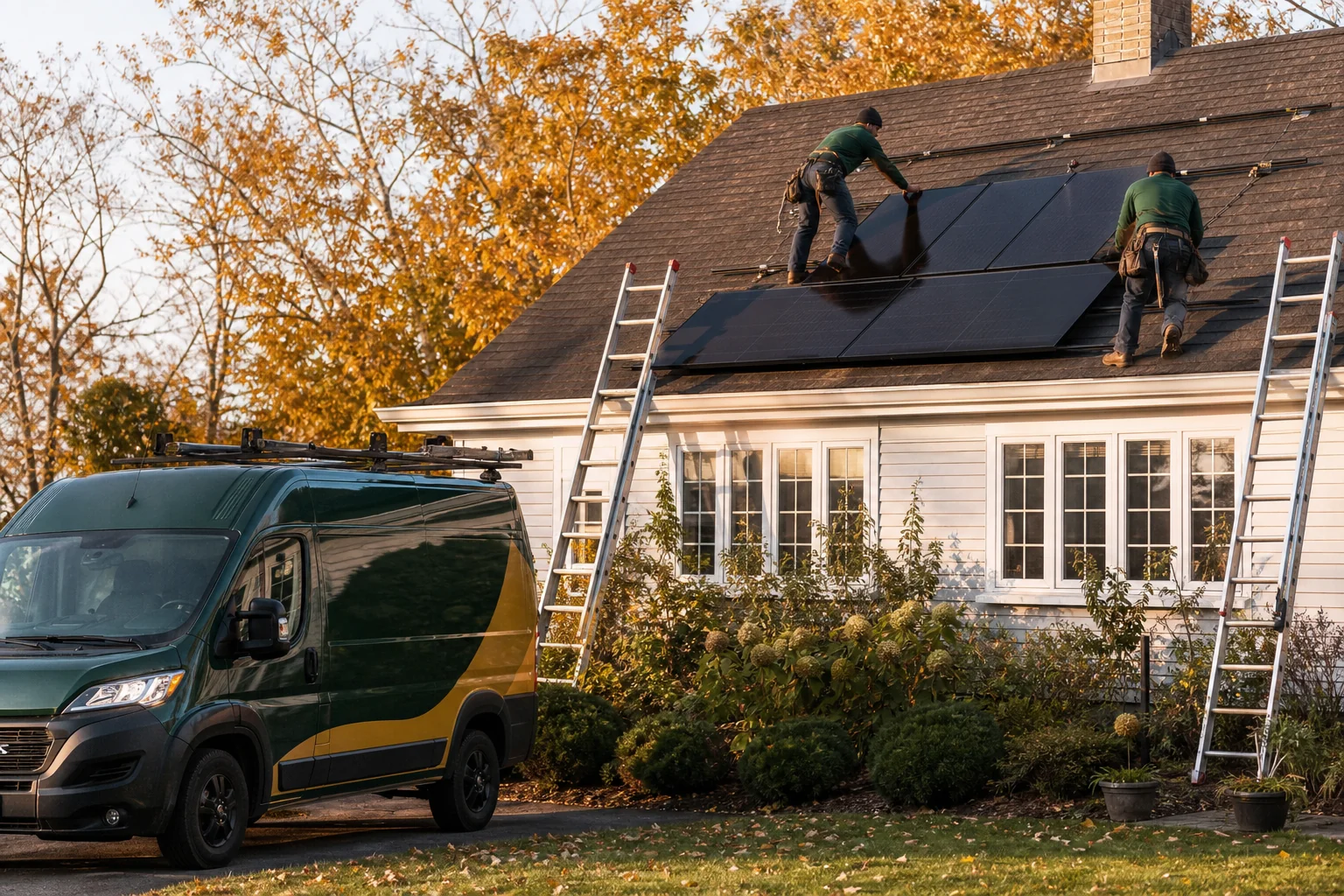
What Actually Makes Up a Solar Panel Installation Cost Breakdown
Every quote you receive, whether it's $18,000 or $32,000, breaks down into four buckets: equipment, labor, permitting and interconnection, and soft costs. Soft costs are where quotes diverge the most. They cover design work, financing origination, sales commissions, and company overhead, and national installers using subcontractor networks often fold an extra layer of markup into this bucket without listing it as a separate line.
Homeowners comparing quotes rarely see these categories laid out side by side. A quote that looks $2,000 cheaper on the surface might use a lower-tier inverter or skip a 25-year workmanship warranty. Reading the questions to ask a solar installer before you sign is a good next step once you understand what's actually inside the number.
1. Equipment Costs: Panels, Inverters, and Racking
Panels themselves run $0.90 to $1.20 per watt for Tier-1 monocrystalline modules, the kind rated for 25-year performance warranties. Cheaper Tier-2 or Tier-3 panels shave a few hundred dollars off a quote but often carry shorter warranties and lower efficiency ratings, which shows up in your production numbers for decades.
Inverters are the second-biggest equipment line. A string inverter costs less upfront, around $1,800-$2,200 for an 8kW system, while microinverters like Enphase IQ run closer to $2,800-$3,200 but offer panel-level monitoring and better performance on partially shaded roofs. Racking and mounting hardware, the rails and clamps that anchor panels to your roof, typically add $1,200-$1,800 and vary by roof type: composite shingle, metal, or tile each require different flashing and mounting approaches.
If you're bundling a battery, Tesla Powerwall and FranklinWH systems price differently based on capacity and stacking options. The Tesla Powerwall vs FranklinWH comparison breaks down which fits different home sizes and backup needs.
2. Labor Costs: Who's On Your Roof and What They Charge
Labor covers the physical mounting work, electrical wiring, and inverter setup, and it's the line item most affected by who's actually doing the job. Teamsun prices labor through in-house W-2 crews, meaning the electrician wiring your panels to the grid is the same company employee who'll answer the phone if something breaks down five years later.
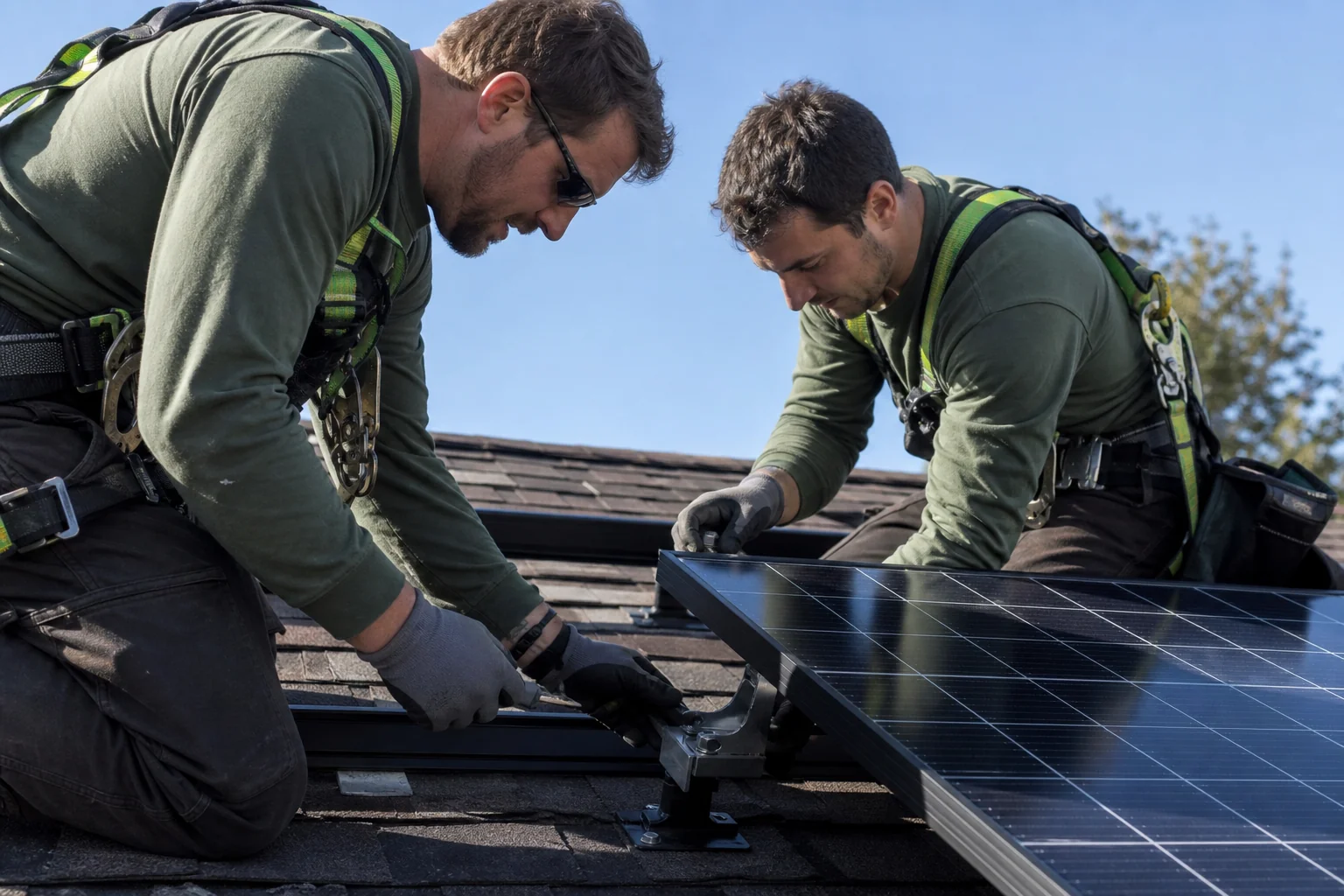
National installers frequently subcontract the physical install to a third-party crew paid a flat per-job fee, then mark up that fee inside your total price without breaking it out separately. That structure can lead to inconsistent workmanship and, worse, no accountability if the subcontractor's business closes or the crew moves on. The full comparison is worth reading in In-House Crew vs Subcontractors: Who Installs Your Solar? before you sign with anyone.
Expect labor to run $4,500-$5,800 on an average residential job, higher if your electrical panel needs an upgrade or your roof requires extra structural bracing.
3. Permitting, Interconnection, and Inspection Fees
Every town in Connecticut, Massachusetts, and Rhode Island charges its own permit fee, typically $150-$500, and requires a licensed electrician's stamp on the application. On top of that, your utility charges an interconnection application fee, usually $100-$300, to review your system design before granting permission to connect to the grid.
Inspection scheduling is the part homeowners underestimate. A delayed town inspection or a utility that's backlogged on interconnection reviews can push your power-on date weeks past what the contract implied. Understanding how these fees and timelines interact is covered in more detail in How Long Does Solar Installation Take From Contract?, and net metering credits, which determine how your utility bill offsets, are explained in How Does Solar Net Metering Work With Your Utility?
4. Soft Costs: Design, Financing, Overhead, and Sales Markup
Design and engineering costs cover the site survey, structural load calculations, and the permit-ready drawings your installer submits to the town. This typically runs $1,000-$1,500 and is non-negotiable, since a poorly engineered design risks a failed inspection.
Financing origination fees depend heavily on which path you choose. A cash purchase has no financing cost at all. A solar loan carries an origination fee, usually rolled into the interest rate, while a Power Purchase Agreement shifts the cost structure entirely, since you're paying per kilowatt-hour produced rather than for the hardware itself. If your credit sits below 700, PPA underwriting at a 620 FICO minimum keeps financing on the table where a traditional loan might not. Both paths are broken down further in How Does Solar PPA Financing Work in 2026?
Sales and marketing overhead is the least transparent line on any quote. National installers with large ad budgets and door-to-door sales teams spread those costs across every signed contract, which is part of why a locally-owned installer with lower customer acquisition costs can often deliver comparable equipment at a lower total price.
How Roof Condition and Add-Ons Change Your Total Cost
A roof with fewer than 10 years of remaining life shouldn't have panels bolted to it. If your roof needs replacement first, bundling that work with your solar install typically saves 10-20% versus hiring two separate contractors, since you avoid paying for scaffolding and mobilization twice. The timing decision is covered thoroughly in Need a New Roof? When to Do It Before Solar.
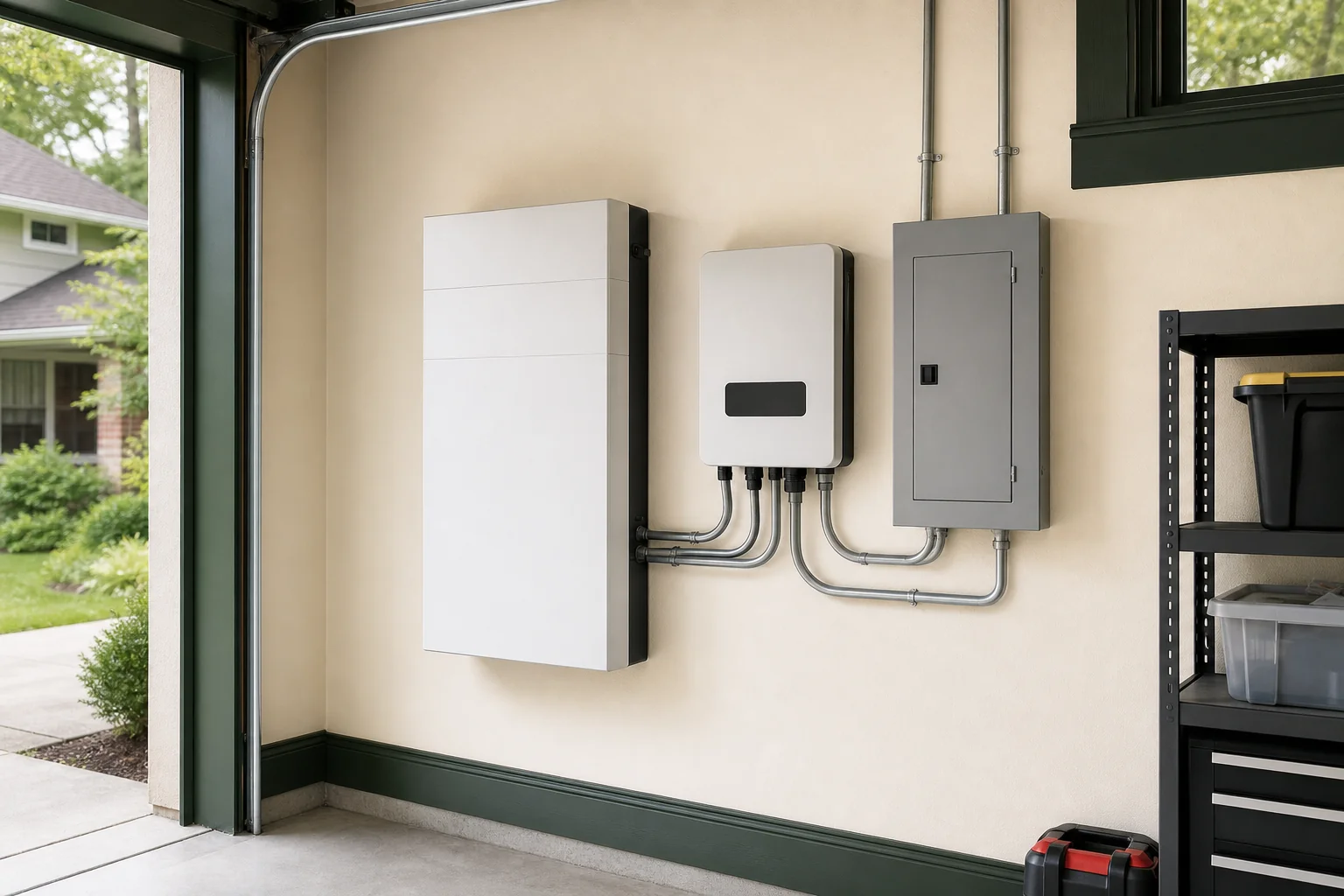
Battery storage is the biggest optional add-on, adding $9,000-$16,000 depending on capacity and brand. If you already have solar and want to add a battery later, retrofit costs differ from a same-time install because of extra wiring and, in some cases, inverter compatibility work. That process is explained fully in How Does a Solar Battery Retrofit Work? An EV charger installed alongside your solar system adds $1,500-$2,500 for a hardwired Level 2 unit, detailed in How to Install a Hardwired EV Charger at Home.
Comparing Quotes: Cost Per Watt vs Total Line-Item Price
Cost per watt is calculated by dividing total system price by system size in watts. An 8,000-watt system quoted at $24,000 comes to $3.00/W. It's a useful shorthand, but two quotes at the same $/W can cover very different scopes. One might include a 25-year workmanship warranty and premium racking; another might use a cheaper mounting system and a shorter labor warranty to hit the same headline number.
Ask each installer to itemize equipment brand and model, labor structure (in-house crew or subcontracted), warranty length on both parts and labor, and what's included in permitting fees. If a quote seems unusually low, the gap is almost always in equipment tier or warranty coverage, not because the installer found a shortcut nobody else knows about.
How the Federal Tax Credit and State Incentives Offset Your Total
The federal solar Investment Tax Credit currently returns 30% of your total system cost as a tax credit, and it applies to batteries installed alongside solar, not just the panels themselves. On a $25,000 project, that's roughly $7,500 back, though the exact benefit depends on your tax liability that year. According to the U.S. Department of Energy's homeowner guide, the credit has no cap on system size for residential installs.
Connecticut, Massachusetts, and Rhode Island each run their own incentive programs on top of the federal credit, and net metering policy affects how much ongoing value your system delivers once it's producing. Filing the paperwork correctly matters just as much as qualifying for the credit in the first place, which is covered step by step in Solar Tax Credit & Rebate Paperwork: 2026 Guide. For a broader look at how the IRS Residential Clean Energy Credit rules apply to your specific filing, check the current IRS guidance before tax season.
Frequently Asked Questions
What is the average solar panel installation cost breakdown for a Connecticut home?
For an 8kW system, expect $22,000-$28,000 before incentives, split roughly 55% equipment, 20% labor, 7% permitting and interconnection, and 18% design, financing, and overhead. Battery storage adds $9,000-$16,000 on top.
Are subcontractor installs actually cheaper?
Not usually. Subcontracted labor lowers the installer's overhead, but that savings rarely passes to the homeowner as a lower price. It more often shows up as inconsistent workmanship or gaps in post-install service.
Does battery storage significantly increase installation cost?
Yes, a battery typically adds 35-60% to your total project cost, but it also qualifies for the same 30% federal tax credit when installed at the same time as your solar system.
How long does it take from signed quote to power-on?
Teamsun averages 47 days from signed contract to power-on across Connecticut, Massachusetts, and Rhode Island installs, though permitting backlogs in some towns can extend that timeline. Details are in How Long Does Solar Installation Take From Contract?
Now that you know where every dollar in a solar quote actually goes, comparing bids gets a lot easier. Teamsun builds every project with in-house W-2 crews and Tier-1 equipment, and prices each line item transparently instead of folding subcontractor markup into a vague total. If you want a real, itemized number for your home or business, request a free quote, talk to a designer about your roof and energy goals, or call 203-903-4091 to walk through your options. You can also explore services to see the full range of solar, battery, and EV charging work Teamsun handles in-house.
Recommended Resources
Written by
Dan Katzman
Teamsun
Teamsun writes practical solar guidance to help property owners compare equipment, project scope, costs, and long-term service before making a decision.
Keep going.
EV Charger Installation Cost for Massachusetts Homeowners
What EV charger installation costs Massachusetts homeowners in 2026: Level 2 hardwired pricing, panel upgrades, permits, rebates and solar bundling.
Dan Katzman
Teamsun
Solar Plus Roofing Bundle: What Does It Cost in 2026?
Learn what a solar plus roofing bundle cost looks like in 2026, what drives the price, and how one contractor for both jobs saves money versus two.
Dan Katzman
Teamsun
Commercial Solar for Small Business Roofs: 2026 Guide
Commercial solar for small business roofs: roof suitability, permitting, interconnection, and financing options for 25kW-500kW rooftop systems in CT, MA, RI.
Dan Katzman
Teamsun