Solar on an Old Roof? What to Do Before You Install
Thinking about solar panels for a home with poor roof condition? Learn how to check roof health first and avoid costly teardowns later.
Dan Katzman
Teamsun
A roof with less than 10 years of usable life left is the single biggest reason homeowners get turned down, or talked out of, a solar installation. Solar panels for a home with poor roof condition aren't automatically off the table, but the roof underneath the array has to outlast the panels bolted to it, or you'll pay to remove and reinstall that system down the road. The fix starts with an honest roof assessment before you sign anything.
Key Takeaways
- 10-15 year rule: If your roof has less than 10-15 years of remaining life, replace it before or during your solar install, not after.
- Teardown cost: Removing and reinstalling an existing solar array to fix a failing roof typically runs $2,000-$5,000 in extra labor.
- Bundling saves money: Combining roofing and solar under one crew avoids paying twice for scaffolding, permitting, and mobilization.
- Panels outlast most roofs: A 25-30 year panel warranty will likely outlive a 20-25 year asphalt shingle roof installed at the same time as an older roof.
- Inspection matters more than a sales pitch: A proper roof inspection, not just a solar site survey, is what actually determines whether you're ready to install.
At a Glance: Roof Condition vs Solar Timing
| Roof Condition | Remaining Life | Recommended Action | Cost Impact |
|---|---|---|---|
| New or recently replaced | 20+ years | Install solar now | No extra cost |
| Good condition, minor wear | 15-20 years | Install solar now, monitor annually | No extra cost |
| Moderate wear, some curling shingles | 10-15 years | Borderline; get a roofing inspection first | May need partial repair |
| Visible curling, granule loss | 5-10 years | Replace roof before or bundled with solar | Bundled install saves 10-20% vs separate jobs |
| Leaks, sagging decking | Under 5 years | Full roof replacement required first | Delays solar timeline by weeks |
| Already has solar, roof failing | Varies | Panel removal and reinstall needed | $2,000-$5,000 in labor |
Why Roof Condition Decides Whether You Can Install Solar at All
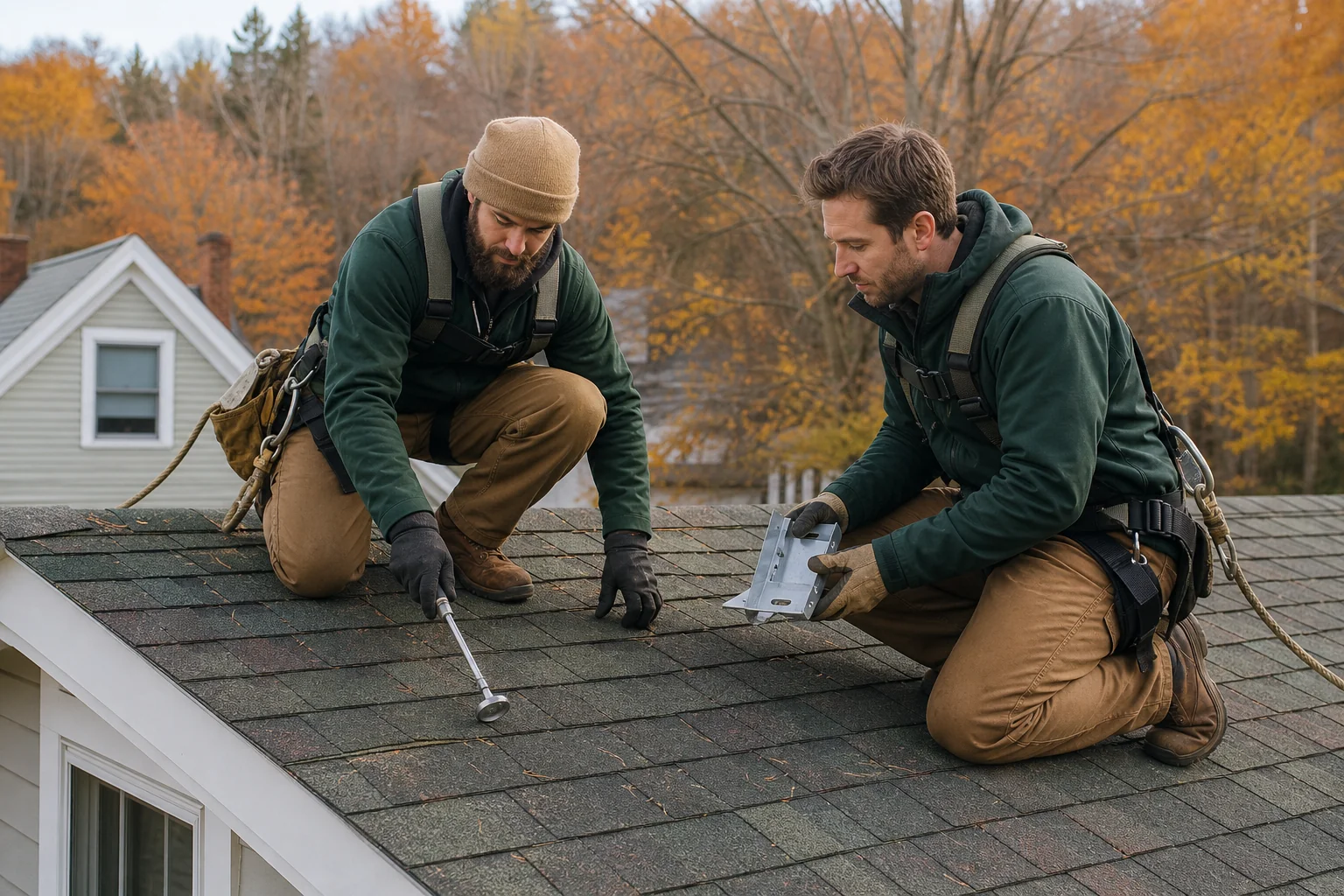
A solar array isn't a light fixture you can move in an afternoon. Once panels, racking, and conduit are mounted, pulling them off means disconnecting the electrical system, storing the panels safely, and paying a crew to put everything back once the new roof is done. Most installers, Teamsun included, will flag a roof that can't reasonably support 25-30 years of panel life and recommend addressing it first.
The math is simple: solar panels typically carry 25-30 year manufacturer warranties, while a standard asphalt shingle roof lasts 20-25 years under good conditions, less if it's already showing wear. Put a new solar system on a 15-year-old roof, and you're looking at a roof replacement mid-way through the panel's useful life, with removal and reinstall costs attached. That's the scenario this guide helps you avoid.
1. Check Your Roof's Age and Material First
Start with a simple question: how old is your roof, and what's it made of? Asphalt shingles, the most common residential roofing material in Connecticut, Massachusetts, and Rhode Island, generally last 20-25 years. Metal roofing can last 40-70 years. Slate and tile often exceed 50 years but come with their own mounting considerations for solar racking.
Subtract your roof's current age from its expected lifespan to get a rough estimate of remaining life. A 12-year-old asphalt roof rated for 22 years has about 10 years left, right at the threshold where a roofing inspection becomes necessary before signing a solar contract.
2. Look for These Warning Signs Before You Sign a Solar Contract
Age alone doesn't tell the whole story. New England weather, freeze-thaw cycles, ice dams, and wind, accelerates wear beyond what a calendar suggests. Walk your property and check for these signs, or ask your installer to check during a site visit:
- Curling or cupping shingles: Edges lifting or curling inward signal the shingle is past its functional life.
- Granule loss: Bare patches on shingles or granules collecting in gutters mean the protective layer is wearing thin.
- Missing or cracked shingles: Gaps expose the underlayment to water intrusion.
- Attic leaks or daylight through boards: Water stains on attic ceilings or visible light gaps point to compromised decking.
- Sagging rooflines: A roof that dips or sags may have structural decking issues that need attention regardless of solar plans.
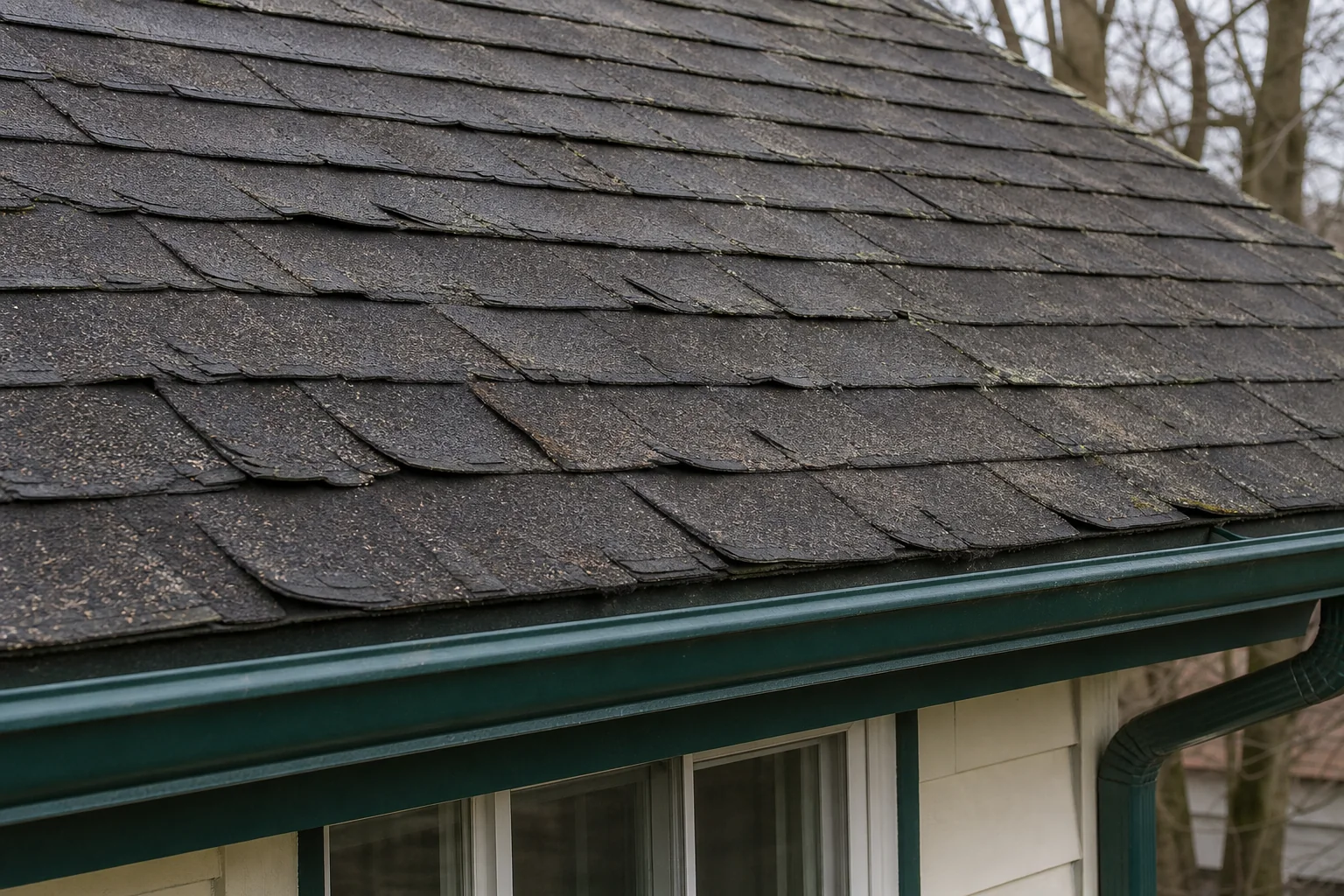
If you see two or more of these signs, treat that as a strong signal to get a roofing evaluation before scheduling solar. This is also relevant if you're worried about pairing solar with a home backup generator, since both systems depend on a stable, well-sealed roof penetration point for wiring and conduit runs.
3. Get a Roof Inspection, Not Just a Solar Site Survey
A solar site survey checks sun exposure, shading, roof pitch, and structural load capacity for panel weight. It is not the same as a roofing inspection, which looks at shingle condition, flashing integrity, decking health, and remaining lifespan. Many national solar companies skip the second step entirely, or subcontract it out to a roofer they've never worked with before.
Ask any installer directly: do you inspect roof condition as part of the solar assessment, and do you have in-house roofing crews or a dedicated partner? Teamsun runs both evaluations together with its own W-2 crews, so the same team that assesses your roof can also handle the reroofing work if it's needed, rather than handing you off to a separate contractor and hoping the two schedules line up. If you want a full rundown of what to ask before signing, our guide on when to replace your roof before solar covers the specific inspection checklist installers use.
4. Decide: Replace First, Bundle, or Install as-is
Once you know your roof's remaining life, the decision usually falls into one of three paths:
- Install as-is: If your roof has 15+ years of remaining life and no active damage, solar can go on now without added risk.
- Bundle roofing and solar together: If your roof has 5-15 years left, replacing it during the same project window avoids a second mobilization later and often costs less than doing the two jobs separately.
- Replace roof first, solar later: If your roof is actively failing (leaks, sagging, structural issues), the roof needs to come first regardless of solar timing.
The 10-15 year threshold isn't arbitrary. It reflects the point where the cost of removing and reinstalling panels ($2,000-$5,000 in labor, per most installer estimates) outweighs the cost of just replacing the roof upfront. Waiting past that point to "deal with it later" usually costs more, not less.
Why a Bundled Solar and Roofing Install Beats Hiring Separate Contractors
Hiring a roofer and a solar installer separately means two site visits, two sets of scaffolding, two permit applications, and two companies that may not talk to each other if something goes wrong. If a leak shows up near a solar mount two years later, you'll spend time figuring out whether it's a roofing defect or an installation error, and each contractor may point at the other.
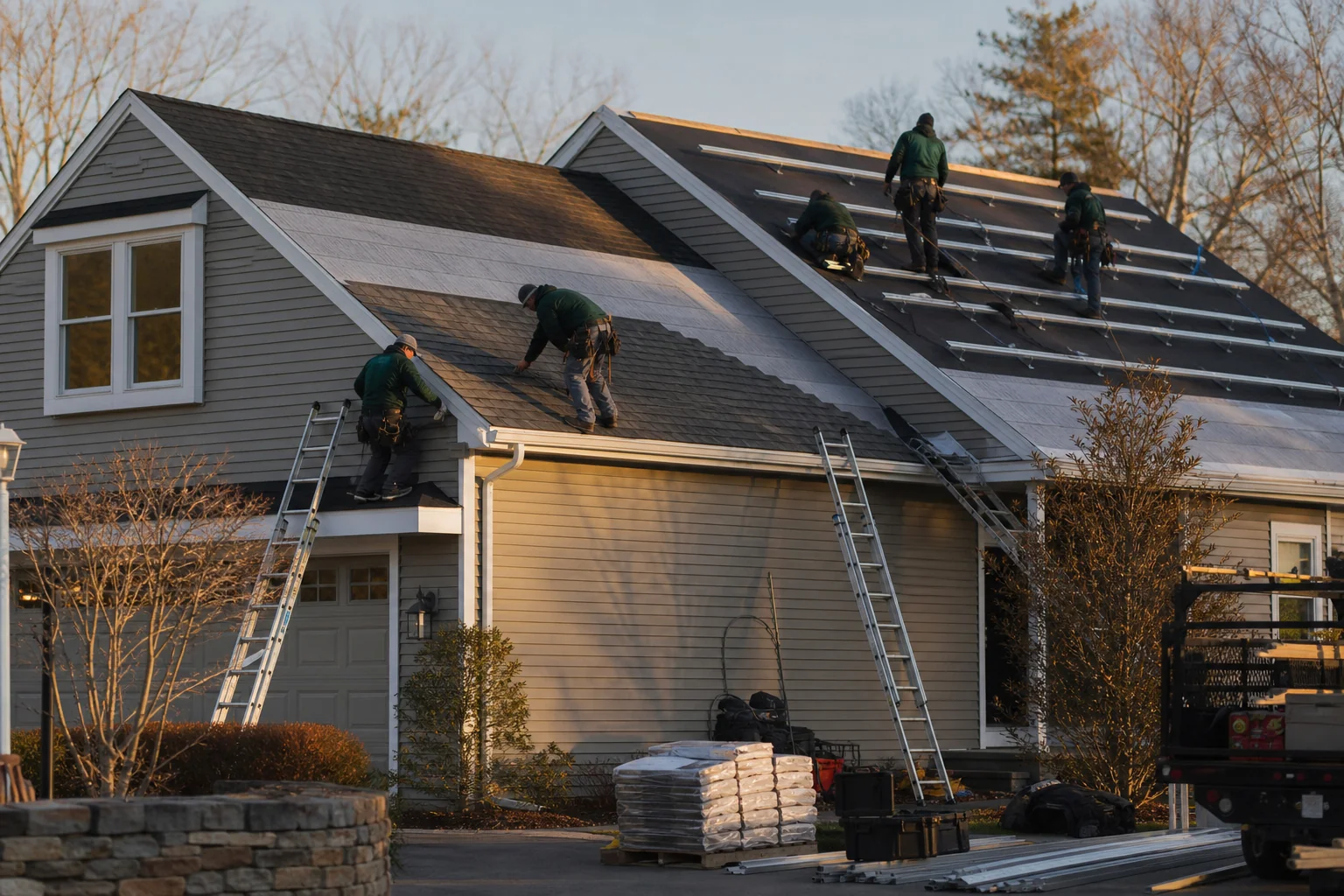
Teamsun runs solar and roofing under one in-house crew across Connecticut, Massachusetts, and Rhode Island, so there's a single point of accountability from the roofing tear-off to the final panel connection. That also means one schedule instead of two, and no gap between "roof done" and "solar crew available." For a detailed cost comparison of bundled versus separate projects, see our breakdown of solar plus roofing bundle costs. If you're also weighing whether a national installer's subcontractor model handles this coordination well, our piece on in-house crews versus subcontractors lays out the practical differences.
5. Ask These Questions Before You Commit to Either Path
Whether you decide to replace, bundle, or install as-is, bring these questions to any installer before signing:
- Who removes and reinstalls the panels if the roof needs work later, and what does that cost?
- Does your roofing warranty stay valid once solar racking is mounted on it?
- Do you inspect roof decking, not just shingles, before approving a solar install?
- Can roofing and solar financing be combined into a single loan or agreement?
- What's your typical timeline for a bundled project versus solar-only?
For a broader list of vetting questions beyond roof condition, our solar installation timeline guide walks through what to expect from contract to power-on, including how a reroofing step affects that schedule.
According to the U.S. Department of Energy, a well-installed solar array should function reliably for 25 years or more, which is exactly why the roof beneath it needs to hold up for the same stretch. The Department of Energy's homeowner's guide to going solar outlines similar structural considerations for rooftop systems. The National Roofing Contractors Association also publishes lifespan guidance by material type, which is useful when estimating your own roof's remaining years; see the National Roofing Contractors Association for material-specific resources.
Frequently Asked Questions
Can I install solar on a 15-year-old roof?
It depends on the material and condition, not just the age. A 15-year-old asphalt roof in good shape with no curling or granule loss might have 5-10 years left, which is borderline. A roofing inspection will tell you whether it's worth replacing now or safe to proceed.
Does solar shorten roof life?
Properly installed panels can actually protect the shingles underneath them from UV and weather exposure. The risk isn't the panels themselves, it's mounting them on a roof that's already near the end of its life without addressing that first.
What happens if my roof fails after solar is installed?
You'll need to pay for panel removal, roof replacement, and panel reinstallation, typically $2,000-$5,000 in added labor beyond the roofing cost itself. This is the exact scenario a pre-install roof inspection is meant to prevent.
Does a roof replacement affect my solar warranty?
It shouldn't, as long as the reinstallation is done correctly by a qualified crew. Ask your installer directly whether their workmanship warranty covers panel removal and reinstallation tied to a roof replacement.
If you're not sure whether your roof can handle a solar install, or whether bundling roofing and solar makes sense for your home, talk to a designer who can walk the roof with you before any contract gets signed. Teamsun's in-house crews handle both the roofing and solar work across Connecticut, Massachusetts, and Rhode Island, so you get one accountable team instead of two contractors pointing fingers later. Request a free quote to get a straight answer on your roof's condition and your solar timeline, or explore the full range of services including bundled solar and roofing. You can also call 203-903-4091 to schedule an inspection before your roof decides the timeline for you.
Recommended Resources
Written by
Dan Katzman
Teamsun
Teamsun writes practical solar guidance to help property owners compare equipment, project scope, costs, and long-term service before making a decision.
Keep going.
Commercial Solar for Warehouse Rooftop Owners
Commercial solar for warehouse rooftop owners: roof load limits, interconnection timelines, and financing for 25kW-500kW systems before you sign a contract.
Dan Katzman
Teamsun
15 Questions to Ask a Solar Installer Before You Sign
The essential questions to ask a solar installer before signing, covering crew type, timelines, financing, and warranty coverage for CT, MA, and RI homeowners.
Dan Katzman
Teamsun
5 Signs Your Roof Needs Replacing Before Solar Goes On
Five clear signs your roof needs replacing before solar goes on, from shingle age to flashing, plus a decision rule for Connecticut homeowners.
Dan Katzman
Teamsun