Solar Installer vs Dealer Network: What's the Difference?
Solar installer vs solar dealer network: learn how national brands subcontract installs, why that affects warranty service, and how to spot the difference.
Dan Katzman
Teamsun
A national solar brand's logo on a truck doesn't tell you who actually bolts panels to your roof. The real solar installer vs solar dealer network question comes down to one thing: does the company that sold you the system also employ the crew that installs and services it, or did they hand your job to an independently owned local dealer operating under license?
Key Takeaways
- Dealer networks are licensing arrangements: Brands like SunPower sell their name to independently owned local dealers who hire their own crews, often as subcontractors rather than employees.
- Accountability splits across three parties: the brand, the dealer, and sometimes a third-party install crew, which means warranty claims can bounce between all three before anyone fixes the problem.
- Workmanship warranties depend on the installer staying in business: a 10-25 year workmanship warranty is worthless if the dealer that issued it closed or lost its brand license.
- W-2 in-house crews keep one company accountable for design, permitting, installation, and service calls for the life of the system.
- Four direct questions before signing reveal which model you're dealing with, regardless of what the sales brochure says.
At a Glance: Solar Installer vs Solar Dealer Network
| Factor | In-House W-2 Installer | Dealer Network Model |
|---|---|---|
| Who employs the install crew | The company you signed with | An independently owned dealer, sometimes a subcontractor beneath the dealer |
| Warranty service contact | Same company, one phone number | Depends on which dealer is still active in your area |
| Crew training consistency | Standardized across all jobs | Varies by dealer, sometimes by crew |
| Risk if a party goes out of business | Low, single entity holds the whole job | Higher, dealer can dissolve or lose brand license |
| Typical install timeline | Often faster, one scheduling system | Can slow down with multiple handoffs |
| Local presence after install | Local office, direct service calls | Varies, brand name may remain but local dealer may not |
What Is a Solar Dealer Network, Exactly?
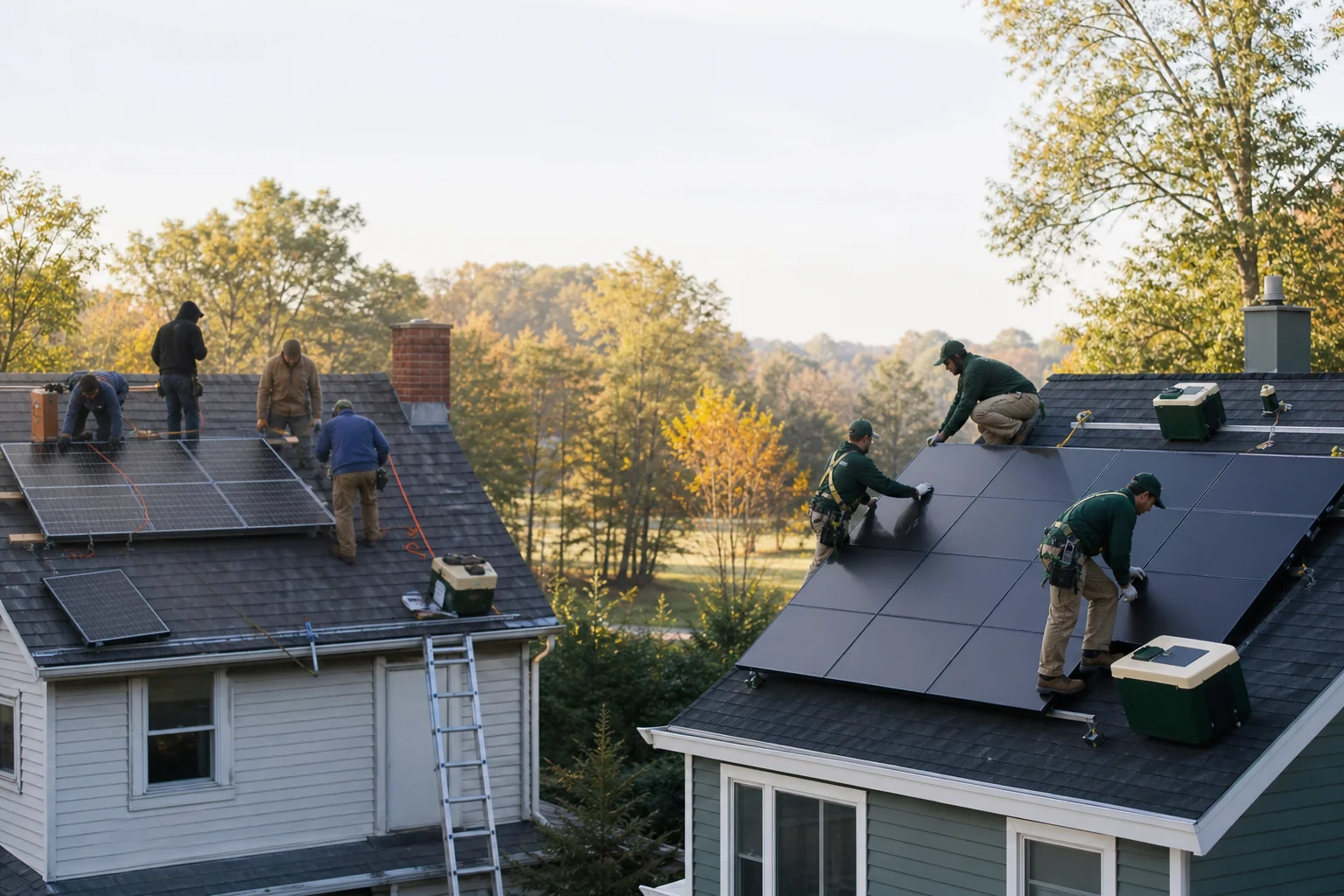
A solar dealer network is a licensing structure. A national brand builds a recognizable name, then sells the right to use that name to independently owned local companies. Those dealers sign customers under the parent brand's logo, financing programs, and marketing materials.
The dealer, not the parent brand, usually handles the sale. Installation gets subcontracted further, sometimes to a crew the dealer employs directly, sometimes to a third-party install company that bids on jobs across several brands in the same week. Your signature ends up on paperwork from a brand you recognize, but the hands on your roof might belong to a crew hired for that one job.
SunPower operated this way for years, selling through a network of independently owned dealers rather than a single employed workforce. Sunrun has used a mix of employed and subcontracted crews depending on the region. Neither structure is disclosed loudly in the sales pitch, because "installed by our certified dealer network" sounds a lot more reassuring than it functions in practice five years later.
What Does a True In-House Installer Do Differently?
An in-house installer employs its design team, permitting staff, install crews, and service technicians directly, typically as W-2 employees rather than 1099 contractors. Teamsun runs this way across Connecticut, Massachusetts, and Rhode Island, with the same company handling a project from the first site visit through every service call afterward.
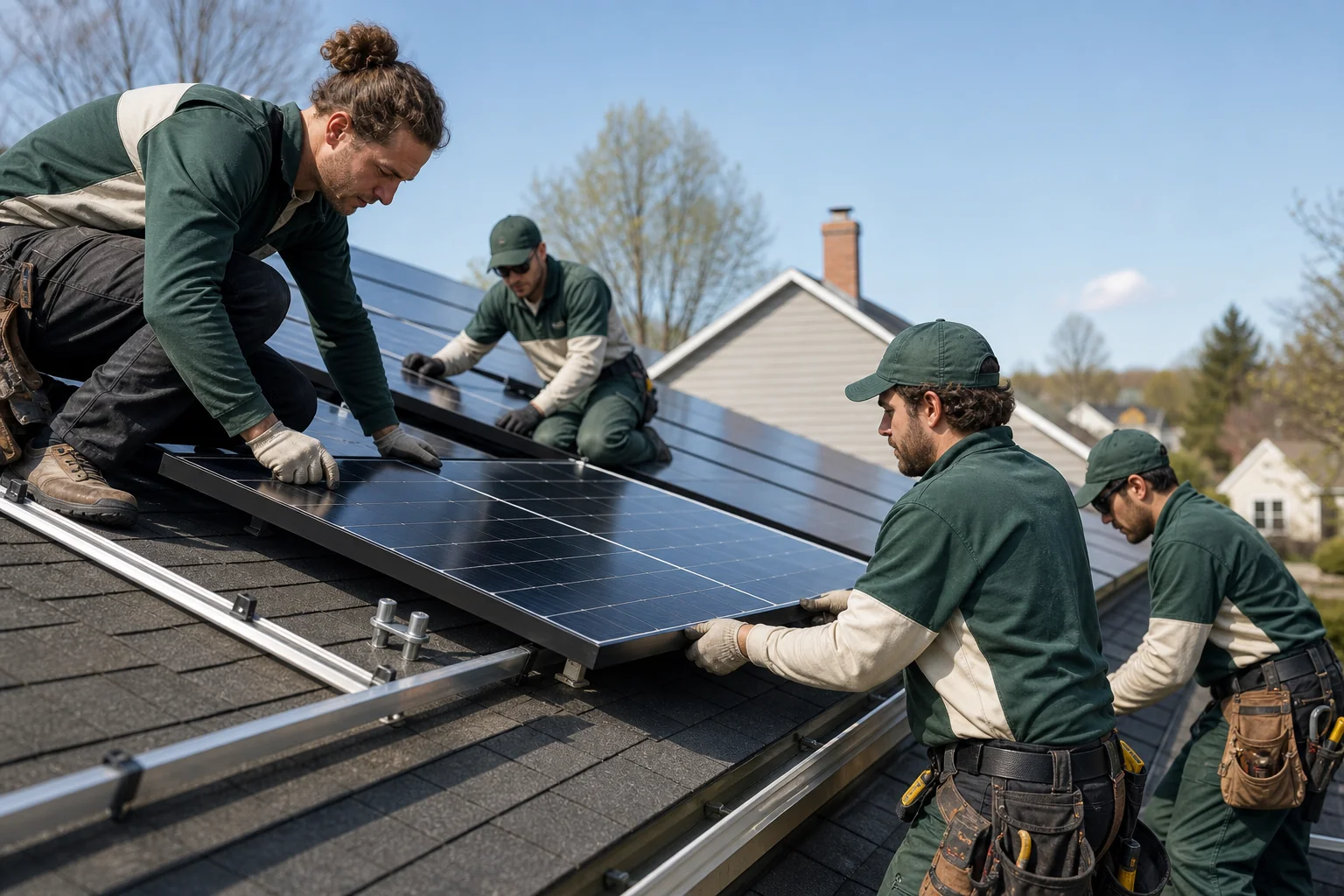
That structure changes what happens when something goes wrong. There's no dealer to track down, no separate install subcontractor to call, and no brand headquarters three states away asking you to explain the problem again to someone new. One company designed the layout, pulled the permits, mounted the racking, and answers the phone when the inverter throws an error code two years later.
It also changes training. A crew that works together every week under one company's standards installs the same way on job 400 as they did on job 40. A subcontracted crew assembled for a single dealer's overflow work doesn't carry that same repetition, and quality shows it in flashing details, conduit runs, and how carefully a roof penetration gets sealed.
Homeowners deciding between a national brand and a local crew can dig deeper in our in-house crew vs subcontractors comparison, which breaks down exactly how that staffing choice shows up in install quality.
Why Does the Difference Matter for Warranty Service?
It matters because a workmanship warranty is only as good as the company standing behind it years later. Equipment warranties from panel and inverter manufacturers survive regardless of who installed the system, but the installer's own workmanship warranty, the part covering roof leaks, mounting failures, and wiring issues, disappears if that installer stops existing.
A dealer network adds a second failure point. Even if the parent brand survives, an individual dealer can close, get acquired, or lose its license to sell under that brand name. When that happens, your workmanship warranty effectively has no one behind it, even though the panels on your roof still carry a manufacturer's logo everyone recognizes.
A warranty is a promise from a company. If that company doesn't exist anymore, or was never the one holding the promise in the first place, the paper it's printed on doesn't help you.
Compare that to a company with a single local office, one employee roster, and years of jobs it can point back to directly. If Teamsun installed your system in 2022, the same office handles your service call in 2027. There's no dealer to have gone out of business in between.
Solar Installer vs Solar Dealer Network: Side-by-Side Comparison
The table below breaks down how each model performs on the factors that actually affect a homeowner five or ten years after signing.
| Category | National Dealer Network | Local In-House Installer |
|---|---|---|
| Sales process | Independent dealer sells under licensed brand name | Same company that installs handles the sale |
| Install crew employment | Often subcontracted, varies by job | W-2 employees, consistent crew |
| Quality control | Set by individual dealer, inconsistent across regions | Standardized company-wide |
| Warranty claim path | Brand, then dealer, then possibly a third install company | One company, one number |
| Business continuity risk | Dealer can close or lose license independent of the brand | Tied to a single company's longevity |
| Service on existing systems from another installer | Rare, dealers often service only their own installs | Some in-house installers, including Teamsun, retrofit and service any brand |
| Marketing reach | National advertising, brand recognition | Local reputation, word of mouth, direct referrals |
How Do You Spot a Dealer Network Before You Sign?
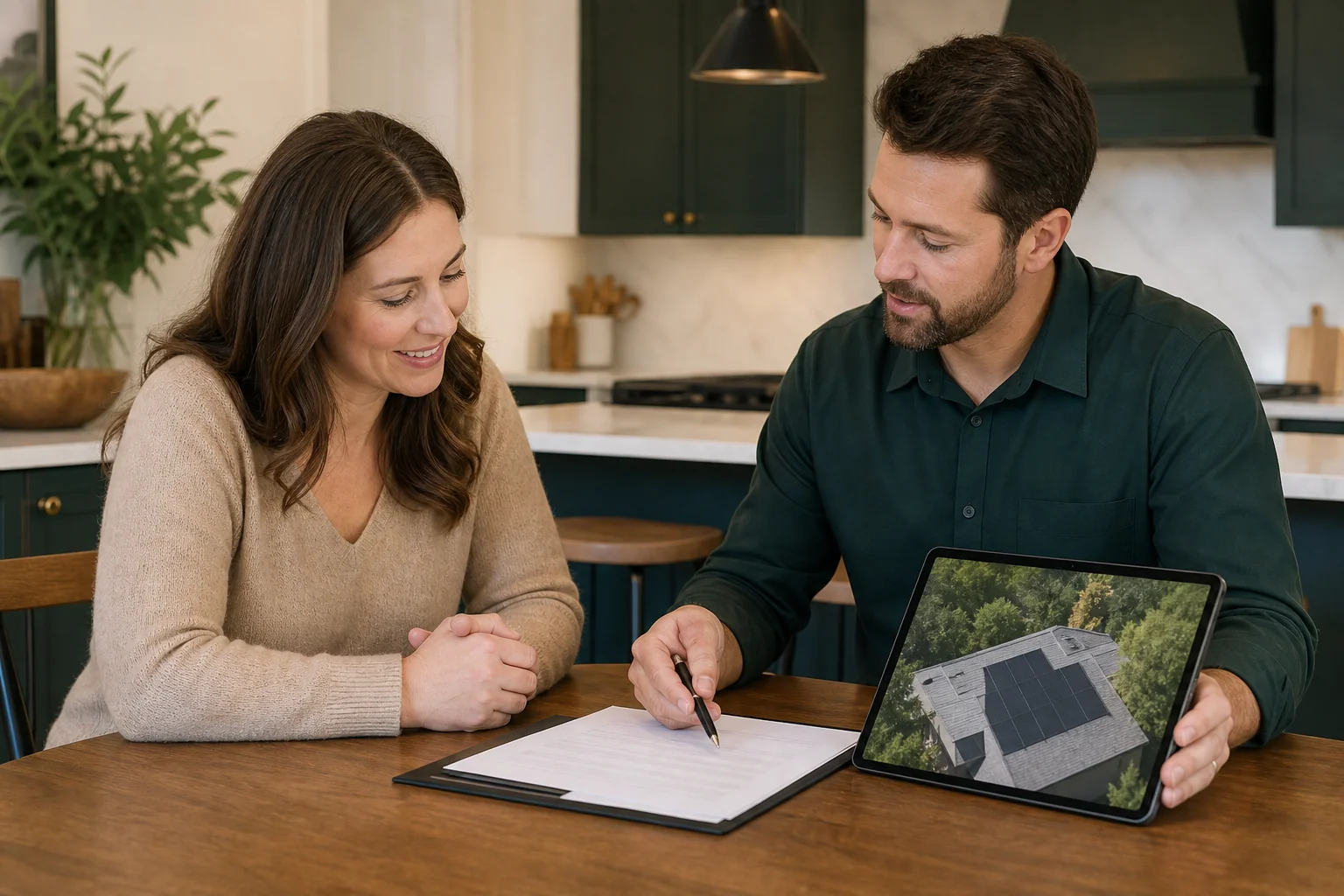
You spot it by asking who physically installs the system, in those words, before you sign anything. A sales rep representing a dealer network will often need to check, hedge, or explain that "our certified partners" handle installation. A direct in-house installer will name the crew or the company outright, because it's the same company sitting across the table from you.
Four questions cut through the branding fast:
- Who is on my install crew, and who employs them? A W-2 answer with a company name matches the seller means one thing; "our network partner in your area" means another.
- Does the company designing my system also install it? Design and install split between two companies is a common seam where accountability gets lost.
- Who do I call for warranty service in year 7? If the answer routes through a national call center rather than a local office, ask what happens if that regional dealer no longer exists.
- How long has this specific local entity been operating? A national brand founded in 2003 tells you nothing about the dealer licensed under that name last year.
Our full questions to ask before signing guide expands this list with financing and permitting questions worth asking in the same conversation. If timing matters, check our breakdown of the solar installation timeline from contract to see how crew structure affects how fast your project actually moves.
Pros and Cons of Each Model
Dealer networks aren't without an argument in their favor. National brand recognition can mean broader financing partnerships and marketing reach that a smaller local company can't match. Some dealers do excellent work and stay in business for decades.
The trade-off is consistency. Quality control gets set locally, dealer by dealer, which means the same brand name can mean a great install in one town and a mediocre one twenty miles away. Accountability also splits three ways when something goes wrong: the brand, the dealer, and any subcontracted crew all have a reason to point at someone else.
In-house W-2 models trade national scale for direct control. Training, materials sourcing, and service response stay standardized because one company controls all of it. The limitation is geographic reach, a local installer serves a specific region rather than nationwide, which is precisely why Teamsun focuses on Connecticut, Massachusetts, and Rhode Island rather than trying to be everywhere at once.
What Questions Should You Ask Before Signing With Either Model?
Ask what happens to your warranty if the entity that installed your system stops existing in five years. This single question forces a straight answer about whether you're protected by a company or by a brand name licensed to a company.
Ask whether the installer will service a system it didn't originally install, especially if you're buying a home with existing solar or considering a battery retrofit down the road. Many dealer-network installers only service their own installs, leaving orphaned systems stranded. Teamsun services and retrofits systems from any original installer, which matters if your dealer ever closes its doors.
If you're weighing a specific national brand against a regional option, our Sunrun vs local solar installer comparison walks through a real case where crew structure, not panel quality, decided the outcome.
FAQ
Is SunPower a dealer network or a direct installer?
SunPower historically sold primarily through a network of independently owned dealers rather than a single employed installation workforce, meaning the crew on your roof reported to a local dealer, not to SunPower directly.
Does a dealer network affect the federal tax credit?
No, the federal solar tax credit applies to the system's cost and ownership structure, not to whether your installer is a dealer network or an in-house crew. Financing structure matters more here than installer type.
Can a local installer service a system originally installed by a dealer network?
Often yes, though it depends on the installer. Companies that specialize in retrofits and multi-brand service, including battery additions, will work on systems installed by another company, but many dealer-network installers limit service to their own original installs.
The clearest way to avoid warranty gaps later is deciding, before you sign anything, whether you want a national dealer network or a company that employs the same crew from design through service. If you're comparing options in Connecticut, Massachusetts, or Rhode Island, request a free quote from a team that installs and services every job with its own W-2 crew. You can also explore services, talk to a designer about your specific roof and usage, or call 203-903-4091 to ask directly who would be on your install crew.
Recommended Resources
Written by
Dan Katzman
Teamsun
Teamsun writes practical solar guidance to help property owners compare equipment, project scope, costs, and long-term service before making a decision.
Keep going.
What to Do When Your Solar Installer Goes Out of Business
Your solar installer went out of business? Here's what still works, what to check first, and how to find a local company that services any brand.
Dan Katzman
Teamsun
15 Questions to Ask a Solar Installer Before You Sign
The essential questions to ask a solar installer before signing, covering crew type, timelines, financing, and warranty coverage for CT, MA, and RI homeowners.
Dan Katzman
Teamsun
5 Mistakes Homeowners Make Choosing an EV Charger Installer
Avoid these 5 mistakes homeowners make choosing an EV charger installer, from skipped permits to unlicensed electricians, before you sign a contract.
Dan Katzman
Teamsun