5 Mistakes Homeowners Make Choosing an EV Charger Installer
Avoid these 5 mistakes homeowners make choosing an EV charger installer, from skipped permits to unlicensed electricians, before you sign a contract.
Dan Katzman
Teamsun
The costliest mistake homeowners make choosing an EV charger installer isn't picking a bad brand of charger. It's hiring someone who never checked whether the home's electrical panel could handle a 240-volt circuit running continuously for hours, then discovering the gap after the wall is already open.
Key Takeaways
- Load calculation comes before any quote: A Level 2 charger is a continuous load under NEC 625, which means the wire, breaker, and panel space get sized at 125% of the charger's rated output, not the raw amperage.
- Licensing is not optional: Level 2 and DC fast charger installs require a permit in every state reviewed by industry compliance guides, and that permit requires a licensed electrical contractor, not a handyman.
- The cheapest quote often hides the real cost: A quote that skips wire gauge, breaker size, and conduit routing details tends to turn into a change order once the electrician actually opens the panel.
- Inspections protect your resale value and your insurance claim: Skipping the permit step can create problems years later when you sell the house or file a claim after an electrical fire.
- Ask who shows up if the charger fails in year three: Subcontracted crews often disappear after the final inspection, leaving warranty claims to a call center instead of the electrician who did the work.
At a Glance: EV Charger Installer Red Flags vs Green Flags
| What to Check | Red Flag | Green Flag |
|---|---|---|
| Licensing | Can't produce a license number on request | Licensed master or journeyman electrician, verifiable with the state board |
| Panel assessment | Quotes a price over the phone with no site visit | Performs a load calculation before quoting |
| Permits | Says permits "aren't needed" for a 240V install | Pulls the permit and schedules the inspection |
| Quote detail | One-line price with no circuit specs | Lists wire gauge, breaker amperage, and conduit run |
| Crew type | Subcontracts the job to a third party | Uses an in-house crew that stands behind the work |
| Sales pressure | Pushes for a same-day signature or full payment upfront | Gives you time to compare and takes a standard deposit |
| Warranty follow-up | No clear answer on who handles a future service call | Names the company and crew who will handle warranty work |
1. Skipping the Panel Capacity Check
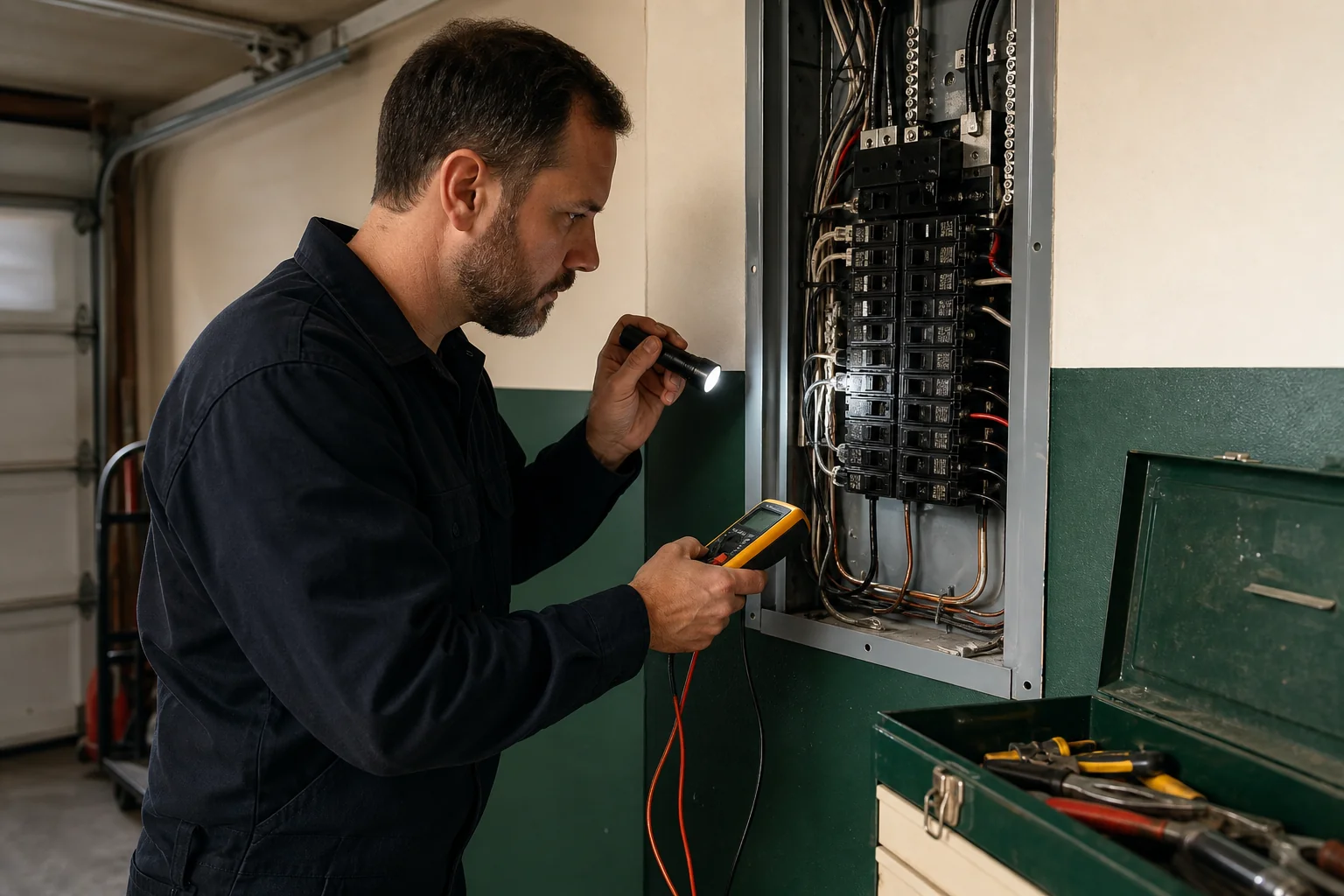
A Level 2 charger isn't a quick draw like a toaster. It pulls current continuously for hours while your car charges overnight, and the National Electrical Code treats that as a continuous load. Under NEC 625, that classification means the wire, breaker, and panel capacity all get calculated at 125% of the charger's rated output current, not the sticker number.
Most residential Level 2 chargers draw 32 amps, which means the circuit has to be rated for 40 amps once that continuous-load math is applied. Whether your panel can absorb that depends on two things: the standard-method load calculation against your existing service, and the physical condition of the panel itself.
An installer who skips this step and quotes a flat price over the phone is guessing. If the panel turns out to be maxed out, you're looking at a panel upgrade that wasn't in the original number, and that conversation should happen before you sign, not after the wall is open.
If you're also weighing solar or a battery alongside the charger, the panel math gets more involved, not less. Teamsun's guide on pairing an EV charger with solar panels walks through how to size both loads on one panel without a second rebuild down the line.
2. Hiring an Unlicensed Electrician or Handyman
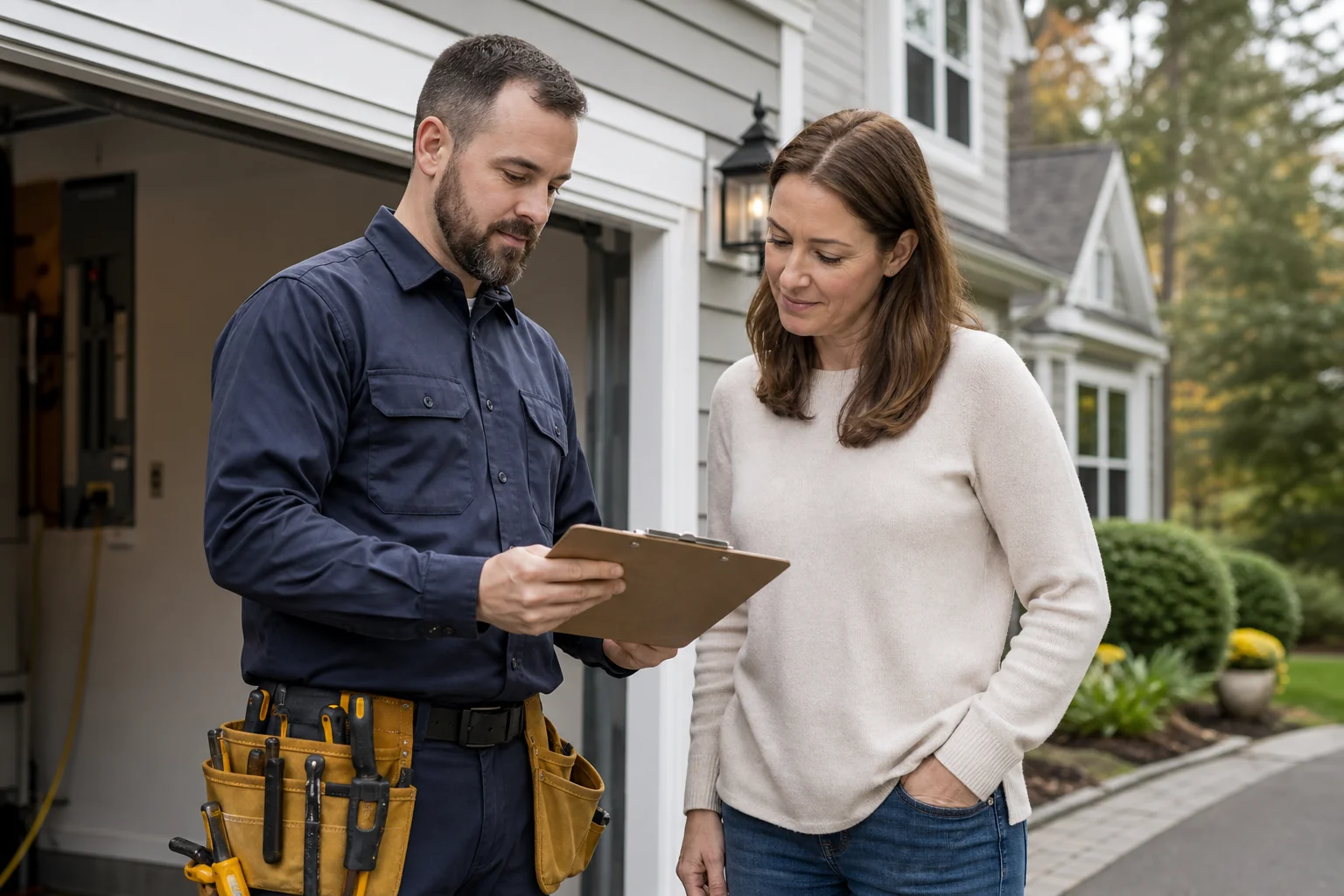
High-voltage work at 240 volts is a genuine fire and shock hazard when it's done wrong, which is exactly why every state that regulates EV charger installs requires a licensed electrical contractor to pull the permit. This isn't a formality you can wave off to save money.
Ask for the license number before anything else, and verify it with your state's licensing board rather than taking it on faith. A master electrician's license is the standard for this kind of work; journeyman-level electricians can perform it too, but typically need to be working under a licensed supervisor on the job.
Confirm insurance coverage in the same conversation. If the installer can't produce proof of liability insurance, any damage to your home during the install becomes your problem to fight over, not theirs. A reputable installer answers both questions without hesitation.
If an installer avoids a direct answer about license numbers or insurance, that hesitation is the answer. Move on to the next quote.
3. Skipping Permits and Inspections
A Level 2 or DC fast charger install requires a permit, with no exceptions across the states reviewed in recent compliance guides. If you're adding any new circuit for the charger, assume a permit applies before anyone tells you otherwise.
Some homeowners get talked into skipping the permit to save time or a fee. That decision comes back around in two ways. First, an insurance company can deny a fire claim tied to unpermitted electrical work. Second, an unpermitted install shows up during a home inspection when you sell, and buyers' lenders don't love surprises.
The inspection itself isn't a hurdle designed to slow you down. It's a second set of eyes confirming the breaker, wire gauge, and grounding were done to code, which protects you long after the installer has moved on to the next job.

4. Choosing the Lowest Quote Without Checking What's Included
A one-line price with no circuit specs attached is not a complete quote. It's a placeholder that turns into a change order the moment the electrician opens your panel and finds something the phone estimate didn't account for.
A complete EV charger installation quote should spell out:
- The wire gauge and breaker amperage based on your specific charger's output
- Whether the panel has room, or whether a subpanel or upgrade is needed
- The conduit run from the panel to the charger location, including any drywall or masonry work
- Permit and inspection fees, itemized rather than folded into a vague "labor" line
- Disposal or relocation of any existing equipment in the way
Watch for pressure tactics too. Requests for full payment upfront, pressure to sign the same day, or reluctance to put the scope in writing are all signs to get a second opinion before committing. Before you sign anything, it's worth reviewing a broader set of questions to ask an installer before you sign, many of which apply just as directly to EV charger contracts as they do to solar.
5. Not Asking Who Services the Charger After Install
A charger that works fine on day one can still throw a fault code or a loose connection two years later. The question that matters at contract time is who shows up when that happens, not who sold you the unit.
National installers and dealer networks frequently subcontract the actual electrical work to a rotating pool of local crews. Once the inspection passes, that subcontractor may never touch your account again, leaving warranty calls routed through a support line with no direct knowledge of your specific install.
Teamsun installs EV chargers with an in-house W-2 crew rather than subcontractors, which means the electrician who ran your circuit is the same one who answers a future service call.
If you're comparing a national brand against a locally owned installer for this decision, the tradeoffs are worth reading in full: see how a national installer compares to a local one on accountability and service response.
Is Hiring a Solar Installer for Your EV Charger a Good Idea?
Yes, if you already have or plan to add solar, hiring one installer for both the panels and the charger avoids a second company re-opening the same electrical panel and re-running load calculations from scratch. It also means one point of contact for warranty and service.
The load math only gets more complicated once solar, battery storage, and an EV charger share the same panel. A charger pulling 40 amps continuously at night can conflict with a battery's charge-discharge schedule if nobody plans for it upfront.
An installer who already understands your solar system's interconnection and your panel's remaining capacity is in a better position to size the charger circuit correctly than a standalone electrician meeting your panel for the first time.
This also matters if you're installing the charger as a standalone project now and solar later. Homeowners who want to install a hardwired EV charger at home without solar still benefit from asking the installer to leave panel capacity for future solar, rather than maxing it out on the charger alone.
Questions to Ask Before You Sign an EV Charger Contract
- Can you show me your electrical contractor license number and insurance certificate?
- Will you perform a load calculation on my panel before finalizing the price?
- Does my state or town require a permit for this install, and will you pull it?
- What wire gauge and breaker size are you specifying, and why?
- Is this job subcontracted, or does your own crew perform the work?
- Who do I call for warranty service two years from now, and is that the same company doing the install?
- If my panel can't support the charger as-is, what are my options and their rough cost range?
- Will the final inspection be scheduled before I make the last payment?
Write the answers down. A verbal promise that isn't in the contract isn't a promise your installer has to keep.
Frequently Asked Questions
How much does a Level 2 EV charger installation cost?
Cost depends heavily on your panel's existing capacity, the distance from the panel to the charger location, and whether a subpanel or upgrade is needed. Ask for a written, itemized quote rather than a single flat number, and request a current quote directly since material and labor costs shift by region and season.
Do I need a permit to install an EV charger in Connecticut?
A Level 2 charger install requires a permit, with compliance guides reporting no exceptions across the states they reviewed. Assume a permit applies any time a new 240-volt circuit is involved, and confirm the requirement with your installer and local building department before work starts.
Can my electrical panel handle both solar and an EV charger?
It depends on your panel's rated capacity, your existing household loads, and whether the charger and solar inverter are sized to share available capacity through code-compliant load management. A proper load calculation, not a guess, is the only way to know for certain. Teamsun's guide on combining solar with other electrical loads covers how installers plan around shared panel capacity.
What happens if my installer skips the permit?
You take on the risk personally. Unpermitted electrical work can complicate an insurance claim, delay a home sale, and in some cases require the work to be redone and re-inspected before it's considered legal.
Choosing the wrong EV charger installer costs more than a bad quote. It costs you a panel upgrade you didn't budget for, a permit problem you discover at closing, or a warranty call nobody answers. Teamsun installs Level 2 chargers in Connecticut, Massachusetts, and Rhode Island with the same in-house, W-2 electricians who handle the load calculation, the permit, and the service call years later.
Request a free quote to get a real load calculation on your panel before you sign anything, or talk to a designer about pairing a charger with solar or battery storage. You can also call 203-903-4091 directly, or explore the full range of services Teamsun offers across New England.
Recommended Resources
Written by
Dan Katzman
Teamsun
Teamsun writes practical solar guidance to help property owners compare equipment, project scope, costs, and long-term service before making a decision.
Keep going.
15 Questions to Ask a Solar Installer Before You Sign
The essential questions to ask a solar installer before signing, covering crew type, timelines, financing, and warranty coverage for CT, MA, and RI homeowners.
Dan Katzman
Teamsun
Do Solar Panels Make Sense for Rental Properties?
Solar panels for rental property owners: how tenant savings, added property value, and financing stack up for landlords in CT, MA, and RI.
Dan Katzman
Teamsun
How to Install a Hardwired EV Charger at Home (2026)
Learn how to install a hardwired EV charger at home in 2026: panel capacity checks, permits, licensed installers, and pairing with solar or battery.
Dan Katzman
Teamsun