Do Solar Panels Make Sense for Rental Properties?
Solar panels for rental property owners: how tenant savings, added property value, and financing stack up for landlords in CT, MA, and RI.
Dan Katzman
Teamsun
A three-unit rental property in Hartford with a master-metered water heater and individually metered apartments will see almost none of its tenant utility savings if the owner installs solar without checking who pays which bill. Solar panels for rental property owners only pay off when the ownership structure, the meter setup, and the lease terms line up with who actually benefits from the power produced. Get that wrong and the array sits on the roof making someone else's electricity cheaper.
Key Takeaways
- Meter configuration decides the winner: master-metered buildings send solar savings straight to the owner's bottom line; individually metered units send them to tenants unless the lease is restructured.
- Appraisal treatment splits by ownership type: an owned system typically adds to assessed value, while a PPA or lease system often gets excluded from a residential appraisal entirely.
- Commercial rentals see the clearest ROI: triple-net leases that pass utility costs to tenants let the owner keep 100% of the solar savings while raising the building's net operating income.
- 620 FICO opens PPA financing to landlords who hold personal credit separate from an LLC's business credit, a common blocker for smaller property owners.
- Roof life has to outlast the lease and the panels: a 25-year solar warranty on a roof with 8 years left forces a costly tear-off and reinstall down the road.
Rental Property Solar at a Glance
| Factor | Single-Family Rental | Small Multi-Family | Small Commercial Building |
|---|---|---|---|
| Typical system size | 5-10 kW | 10-25 kW | 25-500 kW |
| Who usually pays utilities | Tenant | Mixed (owner or tenant) | Tenant (NNN lease) |
| Best financing fit | Loan or PPA | Loan or cash | Loan, PPA, or cash |
| PPA credit minimum | 620 FICO | 620 FICO | Case-by-case underwriting |
| Value impact | Adds to comps if owned | Improves NOI if owner-paid utilities | Improves NOI and cap rate |
| Roof coordination needed | Check remaining roof life | Check remaining roof life | Check remaining roof life |
| Average install timeline | ~47 days | ~47-60 days | 60-120 days |
Why Landlords Are Looking at Solar Now
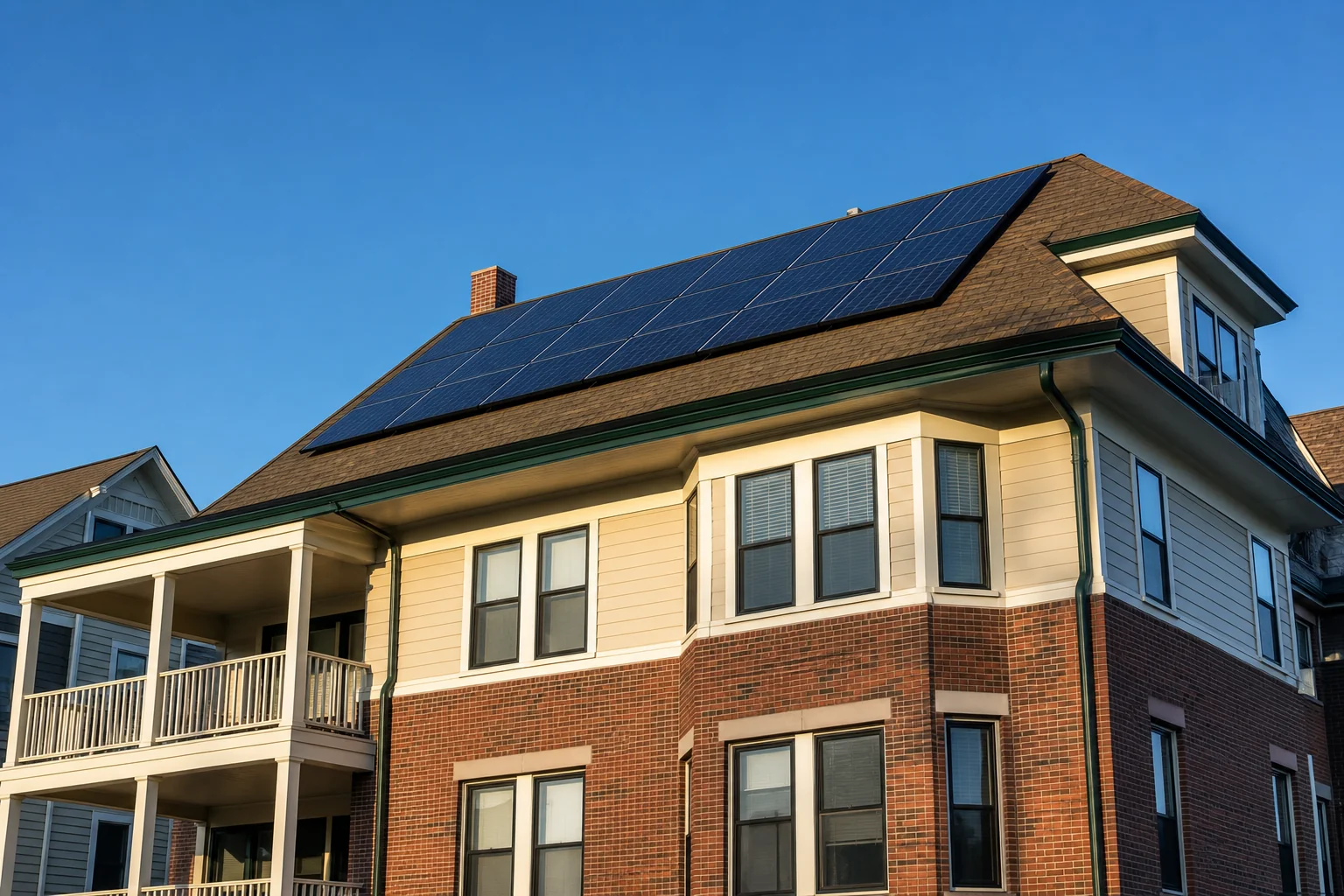
Electric rates in Connecticut, Massachusetts, and Rhode Island have climbed enough that both landlords and tenants notice it on the bill. That pressure is pushing more property owners to ask whether solar panels for rental property owners actually pencil out, or whether the split-incentive problem kills the math before it starts.
The split-incentive problem is old: the person who pays to install solar (the owner) isn't always the person who benefits from lower bills (the tenant). Single-family rentals with individually metered utilities run into this directly. Small multi-family buildings sometimes dodge it because the owner covers common-area or even unit electricity as part of the rent structure.
Commercial leases sidestep the problem more often. A triple-net (NNN) lease already passes utility costs to the tenant, so when the building owner installs solar, the owner captures the savings on shared systems while tenants see lower pass-through charges. That alignment is why commercial solar for small business roofs tends to have a cleaner return than a single-family rental with a tenant paying the electric company directly.
Who Actually Benefits: Owner, Tenant, or Both?
The answer depends on the meter, not the intention. A master-metered building where the owner pays one combined electric bill for the whole property sends 100% of solar production savings to the owner. An individually metered building sends those savings to whichever tenant's unit sits behind that panel's circuit.
Take a 3-unit property in Hartford's West End. If each unit has its own meter and tenants pay their own electric bills, installing solar without restructuring anything mostly benefits the tenants, not the owner who financed the system. Some owners solve this by raising rent modestly to capture part of the value, others install solar only on common-area circuits (hallway lighting, laundry room, exterior lighting) where the owner is already the ratepayer.
Does Solar Actually Raise Rental Property Value?
Yes, but the ownership structure of the system decides how much. An owned solar system on a residential rental typically adds to appraised value the same way it would on an owner-occupied home, because appraisers can point to the equipment as a fixed improvement. A leased system or a PPA often gets excluded from a residential appraisal, since the buyer would be taking over a contract, not an asset.
Commercial buildings are valued differently. Investors and buyers look at net operating income and cap rate, not comparable sales. If a landlord's solar array meaningfully lowers common-area utility costs or shared system costs, that improvement flows straight into NOI. A higher NOI at the same cap rate means a higher building valuation, full stop.
This is one reason small commercial property owners often get a cleaner ROI story than single-family landlords. A strip mall owner who covers shared HVAC and lighting costs sees the solar savings immediately reflected in the number buyers actually price the building against.
Financing a Rental Solar Install: Cash, Loan, or PPA
The financing choice for a rental property usually comes down to whose credit is on the line and who claims the tax benefit. A Power Purchase Agreement, underwritten at a 620 FICO minimum, gives smaller landlords a path when the property is held under an LLC with limited standalone credit history. That threshold matters for owners who'd otherwise get turned away by a straight loan product.
A cash purchase or solar loan lets the owner claim the federal solar tax credit directly, since ownership of the equipment is what makes the credit available. A PPA shifts that credit to whoever owns the system on paper, usually the financing company, in exchange for a lower or no upfront cost to the property owner. Property owners weighing a loan against a PPA should read our breakdown on solar loan vs PPA vs lease before signing anything, since the right structure changes based on how long you plan to hold the property.

Small Commercial Rentals: A Different Calculation
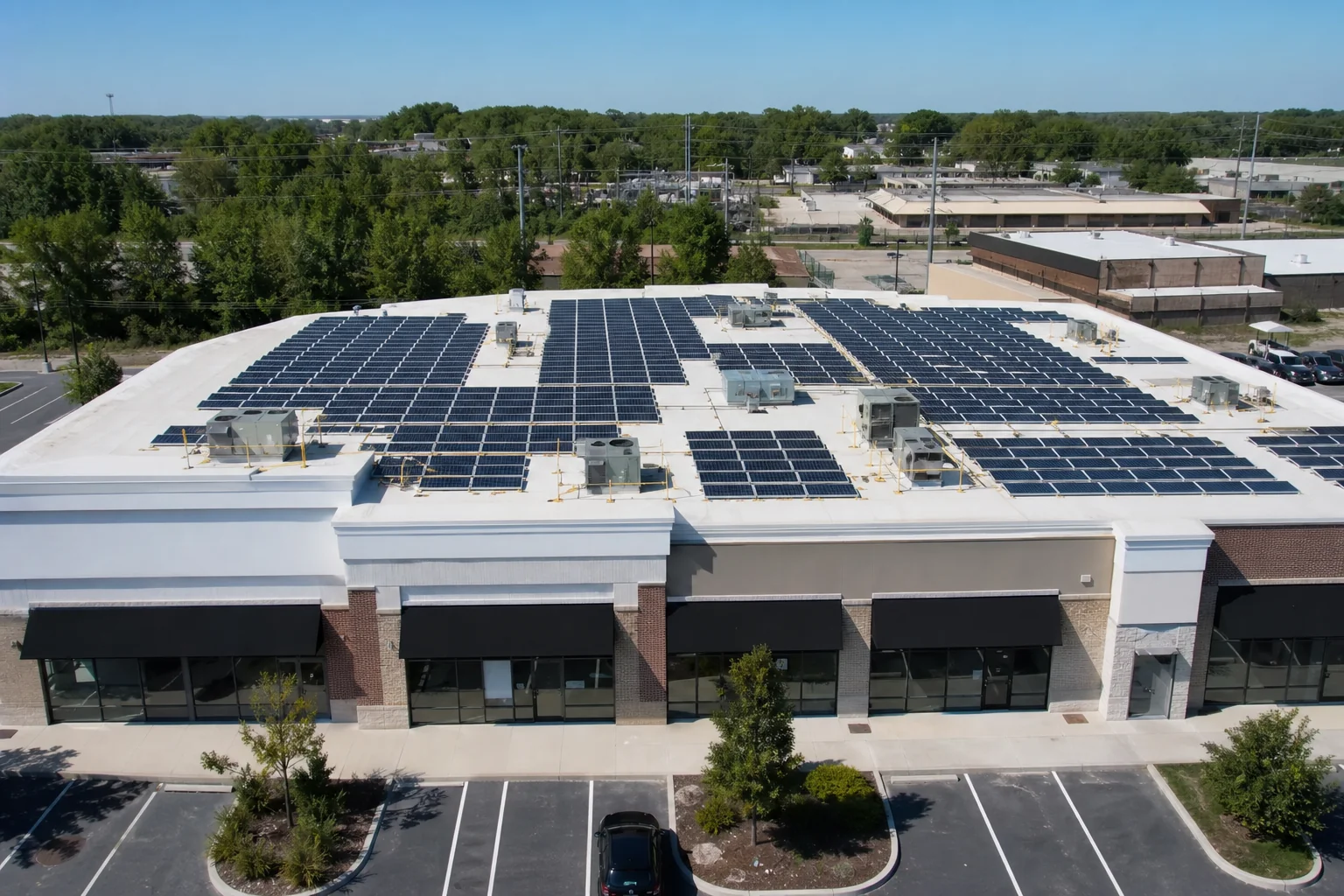
Small commercial buildings, from strip retail centers to mixed-use properties with ground-floor tenants, run a different math than single-family rentals. A 25kW to 500kW rooftop or ground-mount system on a commercial building can offset the shared electric load for parking lot lighting, common HVAC, and building systems, while tenant-metered space stays separate.
Owners running triple-net leases keep the full financial benefit of any reduction in owner-paid utility costs, and tenants often see stabilized or lower common-area maintenance charges as a result. That dual benefit, lower owner overhead and steadier tenant charges, makes commercial solar an easier sell to a property's investment committee or ownership group than a residential rental with individually metered tenants.
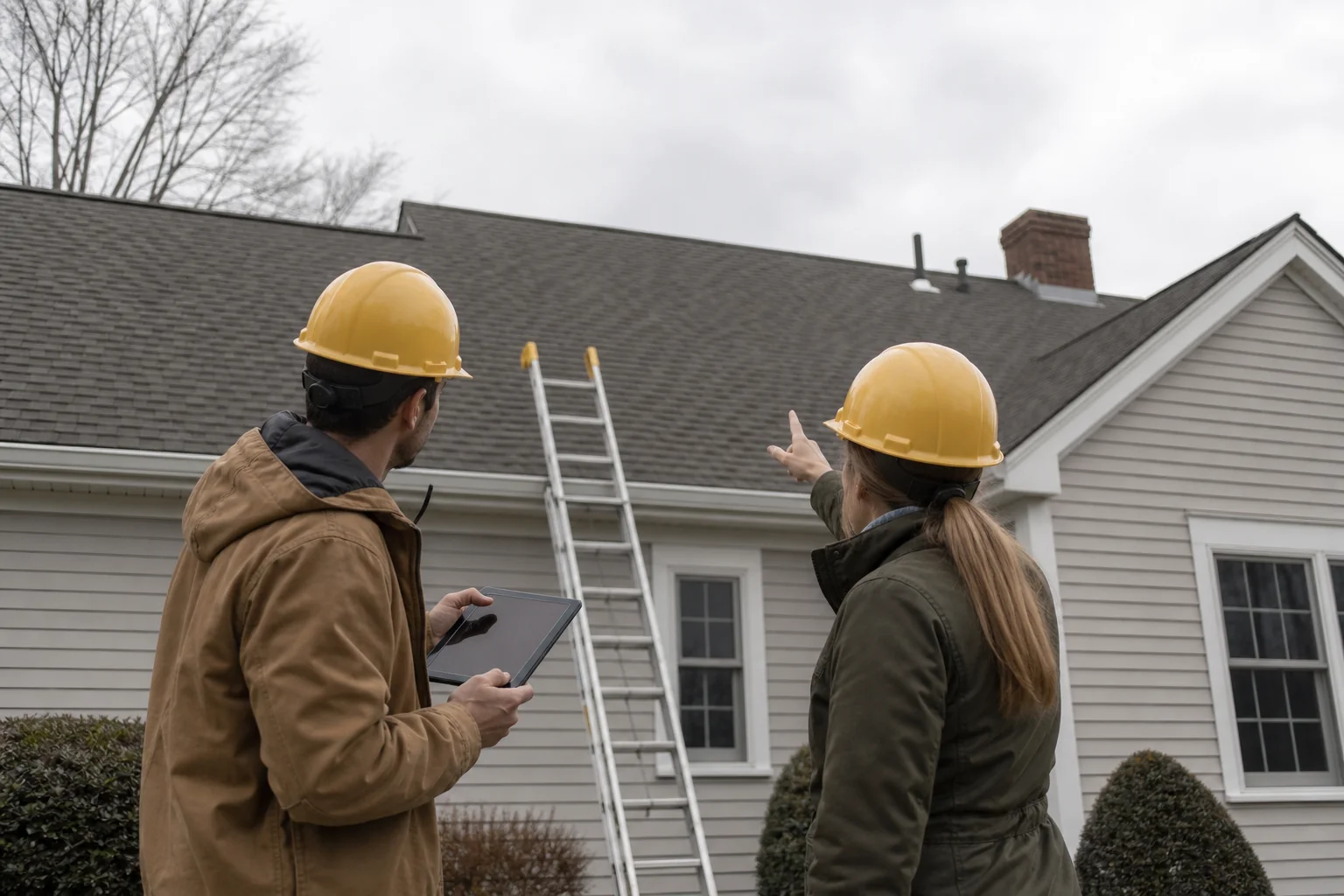
Roof condition matters even more on commercial buildings, since these roofs carry heavier mechanical loads and often have 15-20 year membrane life spans. Before signing a system contract, check whether the roof needs work using the same standard we'd apply to any structure: does it have enough life left to outlast the panels without a costly tear-off and reinstall.
What to Check Before You Install Solar on a Rental Unit
Three things determine whether a rental solar install goes smoothly: roof life, lease terms, and meter configuration. Skipping any one of them turns a straightforward install into a coordination headache mid-project.
- Roof age and remaining life: a roof with fewer years left than the solar warranty forces an expensive removal and reinstall later. Review our guide on when to replace a roof before solar if the property's roof is over 12 years old.
- Lease language on utility responsibility: confirm whether tenants or the owner pays for electricity on the circuits solar would offset, before signing a system contract.
- Interconnection for multi-unit meters: multi-family buildings sometimes need separate interconnection agreements per meter, which affects permitting timelines and design.
- Tenant turnover risk: a property with high turnover benefits more from owner-paid common-area solar than from unit-specific systems tied to a single tenant's usage pattern.
Property owners juggling a roof replacement alongside a solar decision should coordinate both projects together rather than sequentially. A bundled approach, like a combined solar and roofing install, avoids paying for scaffolding and mobilization twice and keeps warranties aligned on one installer.
Frequently Asked Questions
Can landlords claim the federal solar tax credit on a rental property?
Yes, if the owner purchases the system with cash or a loan and the property produces rental income reported on a tax return. The credit applies to owned systems, not to PPA or lease agreements where a third party retains ownership of the equipment.
Do tenants ever pay for solar directly?
Rarely on residential rentals. Tenants typically benefit indirectly through lower utility bills or, on commercial NNN leases, through reduced common-area charges rather than paying a solar bill themselves.
Is solar worth it on a property you plan to sell in 5 years?
It depends on the ownership structure more than the holding period. An owned system typically transfers value to a buyer through comps or NOI, while a PPA or loan balance can complicate a sale unless the buyer assumes the agreement or the owner pays it off at closing.
What size system does a small rental property typically need?
Single-family rentals usually run 5-10 kW, small multi-family buildings 10-25 kW, and small commercial buildings anywhere from 25 kW to 500 kW depending on square footage and shared load. A designer can size the system against 12 months of actual usage data rather than a rough estimate.
Solar on a rental or leased commercial property isn't a one-size answer. The math changes with who pays the electric bill, how the roof is holding up, and whether the owner plans to hold the property for the long haul or sell in a few years. What doesn't change is that getting the meter configuration and financing structure right upfront is what separates a system that pays for itself from one that just sits there.
Teamsun designs residential and commercial systems across Connecticut, Massachusetts, and Rhode Island using in-house W-2 crews, not subcontractors, with an average install timeline of 47 days. If you're weighing solar for a rental unit, a duplex, or a small commercial building with tenants, talk to a designer about how the ownership structure and meter setup on your specific property would work. You can also explore our residential and commercial services, call 203-903-4091, or request a free quote to see what a system sized to your property would actually cost and return.
Recommended Resources
Written by
Dan Katzman
Teamsun
Teamsun writes practical solar guidance to help property owners compare equipment, project scope, costs, and long-term service before making a decision.
Keep going.
5 Mistakes Homeowners Make Choosing an EV Charger Installer
Avoid these 5 mistakes homeowners make choosing an EV charger installer, from skipped permits to unlicensed electricians, before you sign a contract.
Dan Katzman
Teamsun
Can I Add Solar Panels Without Replacing My Whole Roof?
Can I add solar panels without replacing my whole roof? Learn what inspectors check — shingle age, decking, flashing — to avoid costly mistakes.
Dan Katzman
Teamsun
Can Solar Panels Work With Your Home Generator?
Learn how a solar panel system with existing home generator setups can work together, what transfer switch changes are needed, and when a battery skips the generator.
Dan Katzman
Teamsun