Can Solar Panels Work With Your Home Generator?
Learn how a solar panel system with existing home generator setups can work together, what transfer switch changes are needed, and when a battery skips the generator.
Dan Katzman
Teamsun
Yes, a solar panel system with an existing home generator can work together, but not automatically. Your generator's transfer switch usually needs reconfiguring, and without a battery, your solar panels still shut off during a grid outage due to anti-islanding safety rules. Add a battery, and the two systems can share backup duty, cutting generator run-time significantly.
Key Takeaways
- Solar alone won't power your home in an outage: grid-tied solar shuts off automatically for safety unless paired with a battery.
- Your existing transfer switch likely needs reconfiguring: most standby generator ATS units aren't wired to sequence with solar and battery inverters.
- A battery retrofit can shrink generator use to rare events: a properly sized battery covers most short outages, leaving the generator for extended multi-day events or high-draw loads like well pumps.
- Utility interconnection paperwork changes when you add a battery: adding storage to a home with an existing generator often requires re-filing with your utility.
- Keeping the generator isn't wasted money: many CT, MA, and RI homeowners keep it as a fallback for ice storms and multi-day outages while battery handles daily gaps.
At a Glance: Solar, Generator, and Battery Integration
| Setup | Powers home in outage? | Runs on fuel? | Typical outage coverage | Needs new wiring? |
|---|---|---|---|---|
| Generator only (existing) | Yes, while fueled | Yes (gas/propane) | Unlimited with refueling | No changes needed |
| Solar only, no battery | No, shuts off in outage | No | 0 hours during outage | N/A |
| Solar + battery, no generator | Yes, automatically | No | Hours to 1-2 days depending on size | Yes, subpanel or ATS work |
| Solar + battery + existing generator | Yes, layered backup | Only for extended outages | Days to weeks | Yes, ATS resequencing |
| Whole-home generator upgrade (no solar) | Yes, while fueled | Yes | Unlimited with refueling | Possibly, if replacing old unit |
If you already run a portable or standby generator and you're now weighing a solar panel system with an existing home generator, the good news is you don't have to choose one or the other. The two systems just need to be wired to cooperate instead of fight for control of your panel.
1. Understand How Solar, Battery, and Generator Systems Actually Interact
A standard generator setup uses an automatic transfer switch that watches for a utility outage, then starts the generator and switches your home's critical circuits over to it. That switch has one job: choose between utility power and generator power. It was never built with solar in mind.
Solar panels, on the other hand, are designed to sync with the utility grid. When the grid goes down, your inverter detects that and shuts the solar system off within seconds. This is called anti-islanding, and it's a federal safety requirement, not a design flaw. It protects utility line workers from backfeeding a dead line with your panels. So without a battery, your rooftop array does nothing for you during a blackout, even at high noon on a sunny day.
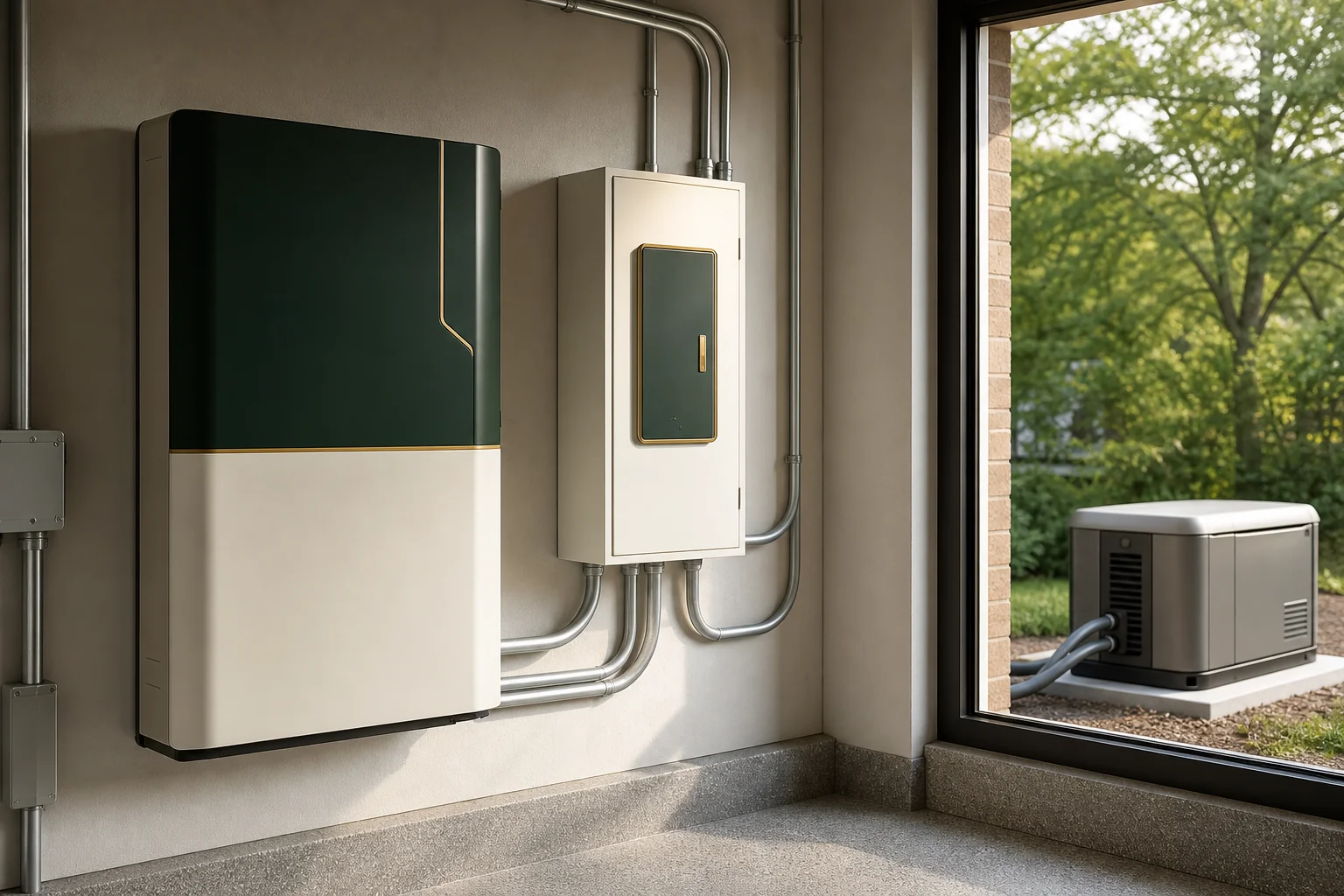
A battery changes the equation. It creates a small "island" of power inside your home's electrical system, separate from the grid, so the inverter can keep running safely once the grid drops out. That's the piece that lets your solar production actually reach your outlets during an outage, and it's also the piece your existing generator's transfer switch usually isn't wired for.
2. Check What Wiring and Transfer Switch Changes You'll Need
Most homes with an existing standby generator have a two-way ATS: utility or generator, nothing else. Bringing solar and battery into that setup typically means one of two paths.
- Load-side battery integration: the battery ties in downstream of the existing ATS on a dedicated subpanel covering circuits you want backed up, like the fridge, well pump, and a few outlets.
- Whole-panel integration: a new smart panel or upgraded ATS lets the battery, generator, and utility all sequence together, so the battery covers short gaps and the generator only kicks in if the battery runs low.
Connecticut, Massachusetts, and Rhode Island towns require an electrical permit and inspection for this kind of work, plus a re-filing with your utility for interconnection approval once a battery is added to an existing solar array. If you're adding solar and battery to a home that already has a generator, expect your installer to run a load calculation on your main panel first, since older 100-amp services sometimes need an upgrade to safely handle three power sources instead of two. Teamsun's crews handle this load analysis and permitting as part of a standard site survey, and the same team that pulls the permit is the one that shows up to install it. For more on that structure, see In-House Crew vs Subcontractors: Who Installs Your Solar?
3. Decide Whether a Battery Retrofit Replaces the Need for the Generator
This is the question most homeowners actually want answered: can a battery make the generator unnecessary? Sometimes, yes. It depends on your loads and how long your outages typically run.
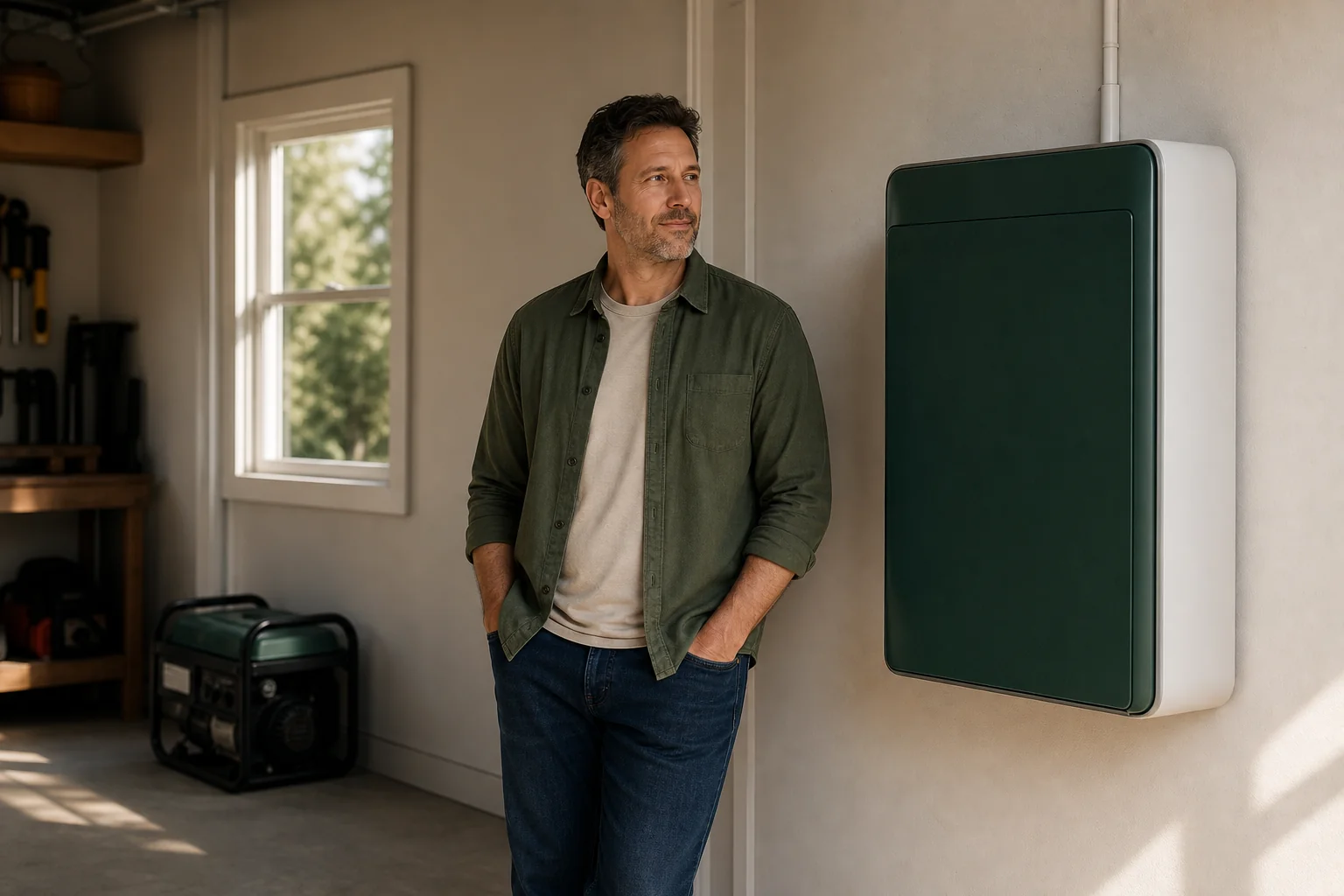
A single battery, like a FranklinWH aPower 2 or Tesla Powerwall 3, stores roughly 13.5 to 15 kWh. That's enough to run essential circuits, refrigeration, lighting, internet, and a sump pump, for a full day or more if paired with solar recharging it during daylight. Stack two or three units, and you can often cover a whole home through a multi-day outage without ever starting the generator.
Where a battery alone falls short: homes with high continuous draws like electric heat pumps in deep winter, large well pumps, or a home office running server equipment around the clock. In those cases, keeping the generator as a secondary layer, one that only fires up if the battery drains below a set threshold, gives you the best of both. You get quiet, fuel-free backup for the vast majority of outages, and a fuel-powered fallback for the rare multi-day event. If you're weighing which battery fits your home's loads, our comparison in Tesla Powerwall vs FranklinWH: Which Battery Wins in 2026? breaks down capacity and stacking options in more detail.
4. Compare Your Three Integration Paths
| Path | Best for | Generator role after upgrade | Relative install complexity |
|---|---|---|---|
| Keep generator, add solar only (no battery) | Homeowners mainly chasing utility bill savings | Unchanged, primary backup | Low, no ATS changes needed |
| Keep generator, add solar + battery | Homeowners wanting quieter, fuel-free backup for most outages | Secondary, kicks in only on extended outages | Moderate, ATS resequencing required |
| Add solar + battery, retire generator | Homes with moderate loads and outages under 2-3 days typically | Removed or sold | Moderate, subpanel/full-panel backup design |
5. Plan the Install Sequence With Your Solar Contractor
The order of operations matters. A contractor should start with a site survey that documents your existing generator's make, model, and transfer switch type, along with your main panel's amperage and available breaker slots. From there, they size the battery against your critical loads and confirm whether your generator's ATS can be reused or needs replacing with a unit rated for three-way sequencing.
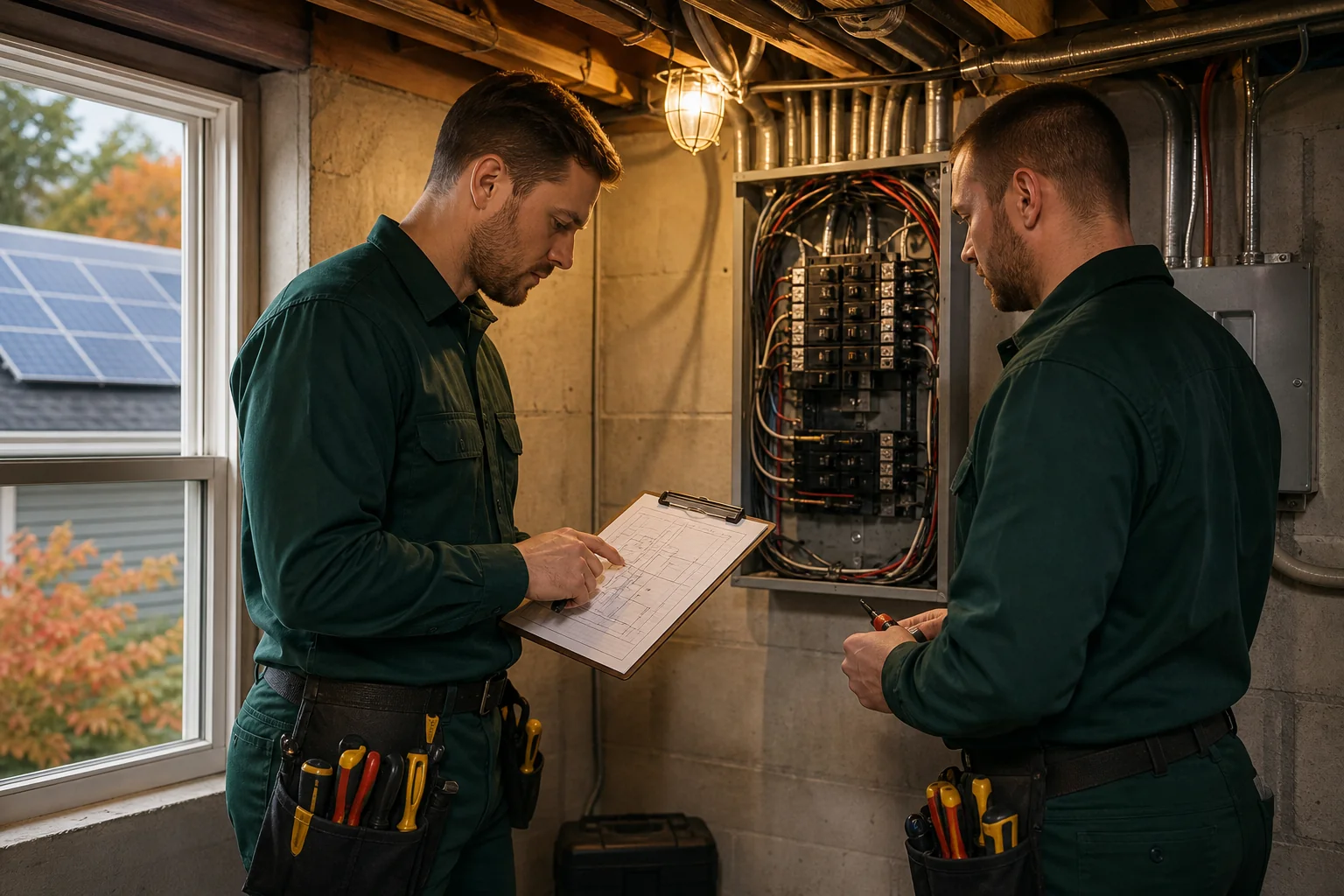
Expect the permitting and inspection steps to mirror a standard install, just with an extra layer for the interconnection amendment. Teamsun's average project runs 47 days from contract to power-on for a typical residential system; adding generator integration can extend that timeline slightly depending on your town's inspection queue, but it doesn't require a separate project. You can see how that timeline generally breaks down in How Long Does Solar Installation Take From Contract?
If you're also considering an EV charger on the same panel, loop that into the same load calculation now rather than adding it later. Details on that process are in How to Install a Hardwired EV Charger at Home (2026).
6. Common Mistakes Homeowners Make Mixing Solar and Generators
- Assuming solar panels alone will power the house during an outage. Without a battery, they won't, regardless of how sunny it is.
- Undersizing the battery against critical loads. A single small battery won't run a well pump and HVAC simultaneously for long; get an actual load calculation instead of guessing.
- Skipping the utility re-filing after adding a battery. Your net metering agreement with the utility often needs an amendment once storage is added to an existing solar array. Our guide on How Does Solar Net Metering Work With Your Utility? covers how those credits function and why the paperwork matters.
- Not telling your installer about the existing generator upfront. This changes the panel design and ATS work, so it should factor into your initial quote, not get discovered mid-install.
If your solar system is already installed and you're now adding storage to work with a generator you've had for years, that's a battery retrofit project regardless of who installed the original panels. Teamsun services and retrofits systems of any brand and any age; see How Does a Solar Battery Retrofit Work? 2026 Guide for the full retrofit process.
FAQ: Solar Panels and Home Generators
Can I keep my existing generator after adding solar panels?
Yes. Solar and a standby generator can coexist on the same home. The generator's transfer switch typically needs to be reconfigured or replaced so it sequences correctly with the new solar and battery inverter, but the generator itself usually stays in place.
Do I need a new transfer switch if I add a battery?
In most cases, yes, if your current switch is a simple two-way utility-or-generator unit. A battery introduces a third power source, and older switches aren't built to sequence three sources safely.
Will adding a generator affect my solar net metering credits?
No, as long as the generator stays electrically isolated from the grid-tied solar circuit through the transfer switch, which is standard practice. Your net metering credits are based on what your solar system exports to the grid, not on generator use.
Does a battery really reduce how often I need the generator?
For most short-duration outages, yes. A properly sized battery, especially paired with solar recharging during the day, can cover the majority of outages in Connecticut, Massachusetts, and Rhode Island without the generator ever starting.
If you're trying to figure out whether your specific generator model, panel capacity, and roof can support a combined system, that's a conversation worth having before you buy anything. Talk to a designer at Teamsun about your setup, or call 203-903-4091 to walk through your panel's load capacity over the phone. You can also browse the full range of options, from battery retrofits to full solar-plus-storage systems, on our services page. Ready to see what a combined solar, battery, and generator setup would look like for your home? Request a free quote and get a real load calculation instead of a guess.
Recommended Resources
Written by
Dan Katzman
Teamsun
Teamsun writes practical solar guidance to help property owners compare equipment, project scope, costs, and long-term service before making a decision.
Keep going.
Solar and Home Backup Generator: Can You Have Both?
Learn how a solar panel system with home generator setups coordinate safely, from transfer switches to automatic switchover, for CT, MA, and RI homes.
Dan Katzman
Teamsun
Can I Add Solar Panels Without Replacing My Whole Roof?
Can I add solar panels without replacing my whole roof? Learn what inspectors check — shingle age, decking, flashing — to avoid costly mistakes.
Dan Katzman
Teamsun
Do Solar Panels Make Sense for Rental Properties?
Solar panels for rental property owners: how tenant savings, added property value, and financing stack up for landlords in CT, MA, and RI.
Dan Katzman
Teamsun