Solar and Home Backup Generator: Can You Have Both?
Learn how a solar panel system with home generator setups coordinate safely, from transfer switches to automatic switchover, for CT, MA, and RI homes.
Dan Katzman
Teamsun
A propane generator and a rooftop solar array can absolutely share the same home, but they don't automatically know how to work together. A solar panel system with home generator already installed needs a transfer switch reconfigured, sometimes a new interconnection point, and often a battery in between so the two systems hand off power cleanly instead of tripping over each other during an outage.
Key Takeaways
- Anti-islanding rules apply: Grid-tied solar shuts off automatically during a power outage unless a battery is paired with it, regardless of whether a generator is also on site.
- Transfer switches decide the source: An automatic transfer switch (ATS) reads which power source is live and routes it to your panel, but older manual switches often need upgrading once solar or battery storage is added.
- Batteries reduce generator runtime: A properly sized battery can cover most short outages (a few hours to a day), leaving the generator to handle multi-day storm events only.
- Some homeowners retire the generator: A FranklinWH or Tesla Powerwall setup sized for whole-home backup can replace propane generators for households without extended off-grid needs.
- Permitting and utility notice still apply: Adding solar or a battery to a home with an existing generator usually requires an updated interconnection application with your utility, even if the generator itself was never permitted.
At a Glance: Solar, Battery, and Generator Setups Compared
| Setup | Works During Grid Outage? | Fuel Dependency | Typical Backup Duration | Transfer Switch Needed? |
|---|---|---|---|---|
| Generator only | Yes | Propane or gas, needs refueling | Days, if fuel supply holds | Yes, manual or automatic |
| Solar only (no battery) | No, shuts off automatically | None | Zero during outage | Not applicable |
| Solar + battery, no generator | Yes | None | Hours to 1-2 days depending on sizing | Not required, battery handles switchover |
| Solar + battery + generator | Yes | Propane, used only as backup | Unlimited, generator extends battery runtime | Yes, integrated ATS |
| Generator + solar, no battery | Generator yes, solar no | Propane | Days, but solar contributes nothing during outage | Yes, reconfigured for solar coexistence |
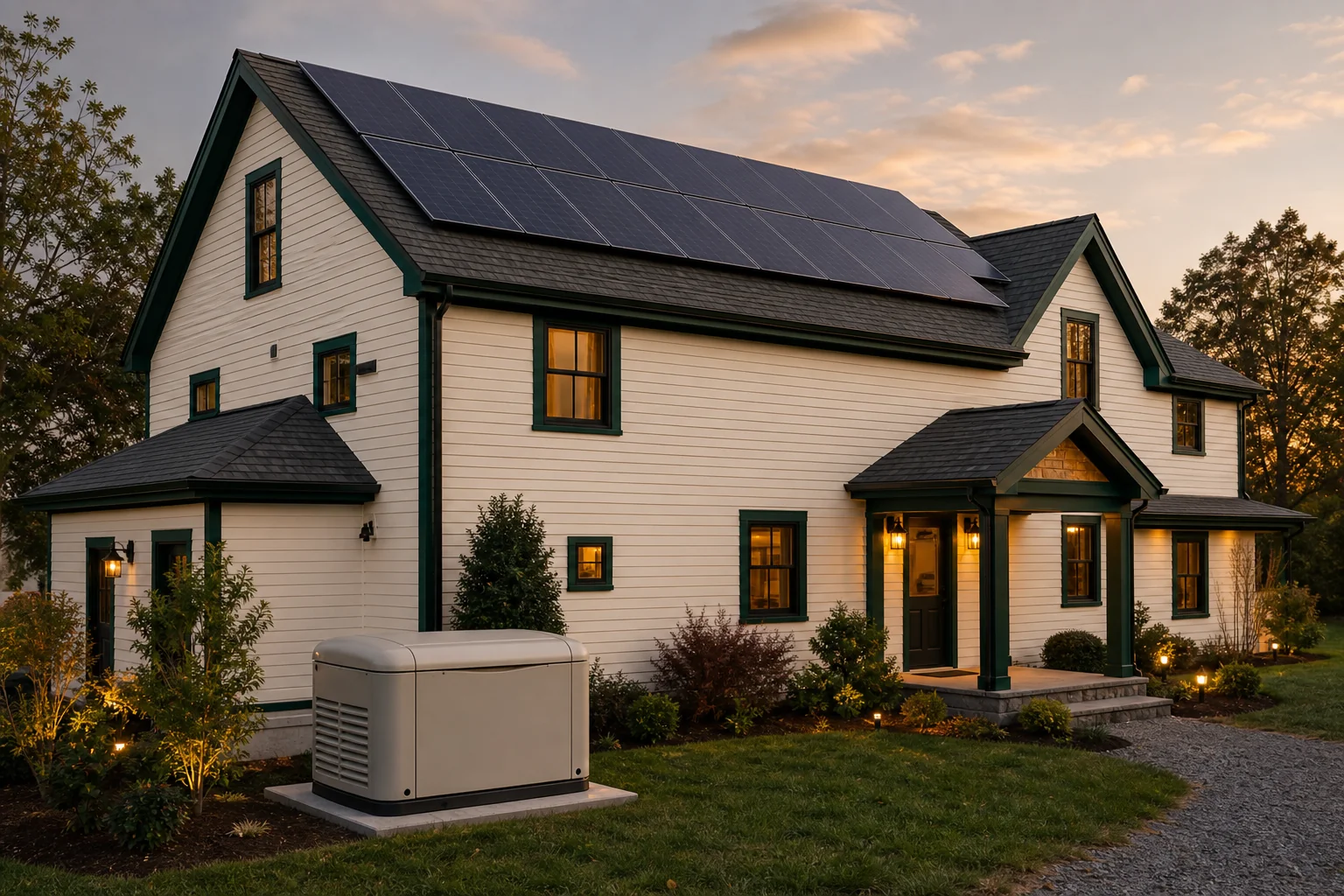
1. How a Generator and Solar System Interact on One Home
Most homeowners assume solar panels will keep producing power the moment the grid goes down. They don't. Utility safety rules require grid-tied solar inverters to shut off during an outage, a protection called anti-islanding that keeps utility linemen from getting shocked by power flowing backward into "dead" lines. That rule applies no matter what backup generator sits in your yard.
A gas or propane home generator typically doesn't recognize the solar array at all unless the two were wired together during installation. It starts up, runs the transfer switch, and powers your panel independently. If your solar was added years after the generator, or vice versa, the two systems may be sitting on the same electrical panel without any coordination logic between them.
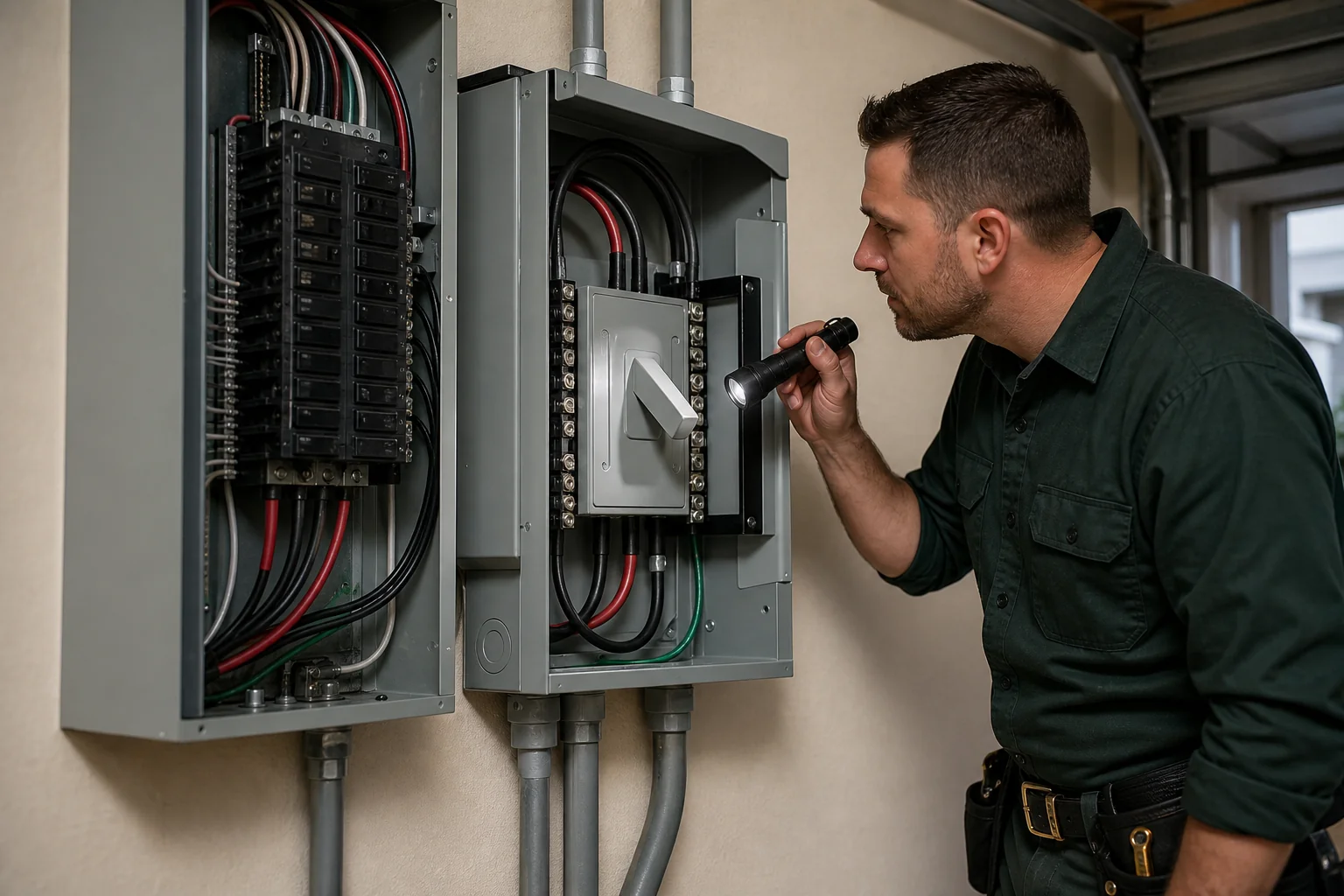
That's the gap Teamsun's technicians close first. Before touching panels or wiring, they map out the existing transfer switch, confirm what circuits the generator already covers, and identify where a battery or a new interconnection point needs to sit so solar production and generator output never compete for the same load simultaneously.
2. Automatic Transfer Switches vs Manual Switchover
An automatic transfer switch (ATS) constantly monitors incoming utility voltage. The moment it drops, the ATS disconnects your home from the grid and starts the generator within seconds, all without you touching anything. Homes with older manual switches require someone to physically flip a lever, which works but leaves a gap of several minutes and a real risk of forgetting a step during a stressful outage.
Adding solar into this picture changes the wiring requirements. The ATS needs to also account for the solar inverter's status, since the inverter has to shut down before the generator engages and the utility disconnects, then safely resume once grid power (or a battery) is confirmed stable. Skipping this step risks backfeed, where solar tries to push power onto a circuit the generator is also feeding, damaging equipment on either side.
Each state handles interconnection paperwork differently. Connecticut, Massachusetts, and Rhode Island utilities all require an updated interconnection application when a generator, battery, or additional solar capacity is added to an existing system, even if nothing about the meter itself changes. Skipping this step can delay your net metering credits or trigger a compliance flag during inspection.
- Confirm your ATS model supports multi-source input (utility, generator, and solar/battery)
- Verify the generator's start-up delay doesn't conflict with battery discharge timing
- Check whether your town requires a separate electrical permit for the switch upgrade
3. Adding Battery Storage to an Existing Generator Setup
Homeowners who already own a generator often ask whether a battery is worth adding on top. The short answer: a battery changes what your generator has to do. Instead of running for eight hours straight during a storm, the battery absorbs the first stretch of the outage silently, and the generator only kicks in once the battery reaches a low state of charge.
This matters for two reasons. Propane and gas generators are loud, and neighbors notice a unit running at 2 a.m. Batteries also cost nothing in fuel per cycle, so shorter, more frequent outages (a tree branch on a line, a brief grid fault) get covered without burning a drop of propane.
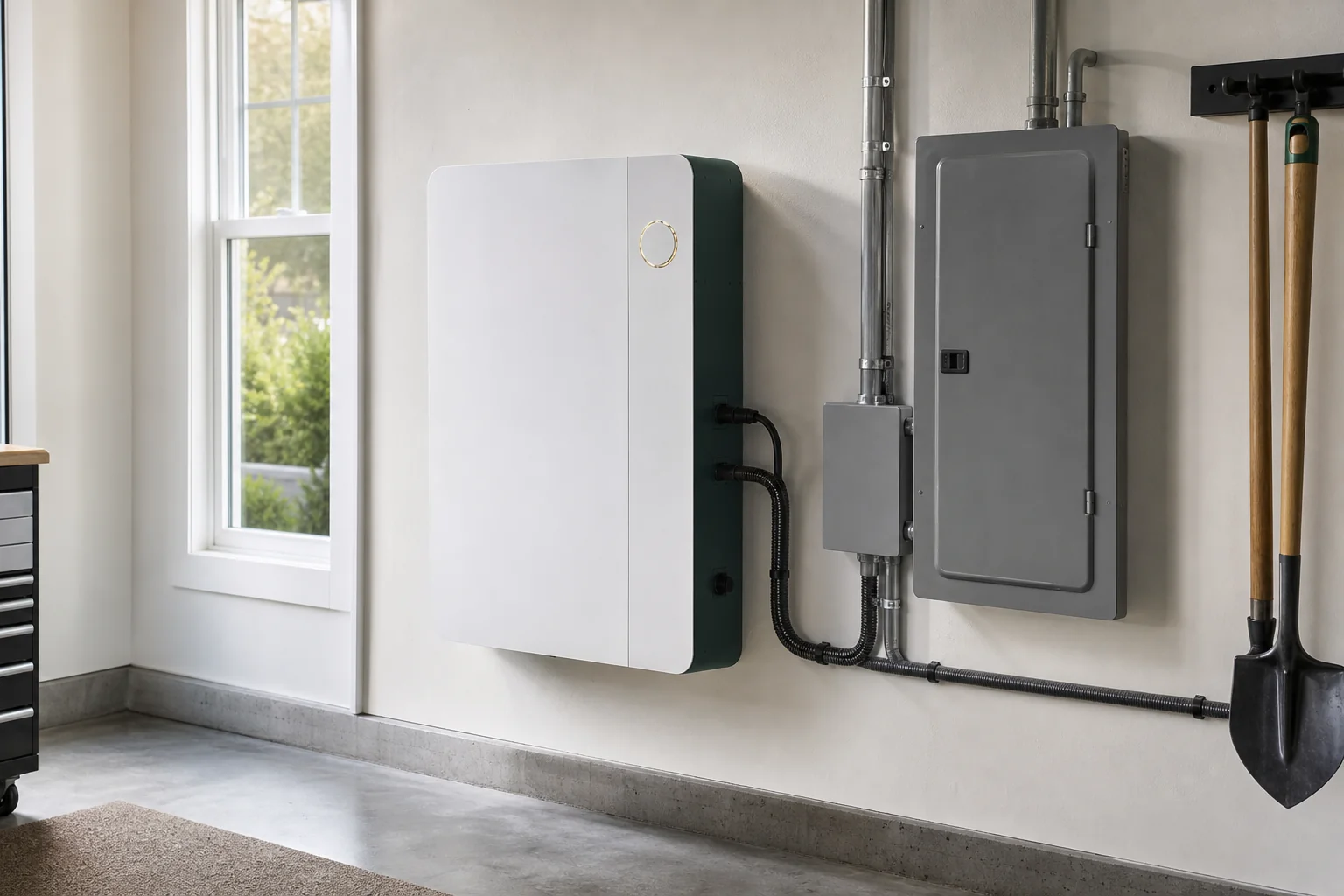
Teamsun retrofits FranklinWH, Tesla Powerwall, and Enphase IQ batteries onto solar systems of any brand, including homes where the original installer is no longer in business. The retrofit process connects to your existing inverter or adds a new one, then routes backup circuits through a dedicated subpanel that the transfer switch can prioritize. For a full walkthrough of that process, see our guide on how a solar battery retrofit works.
One detail worth flagging: not every circuit in your home needs battery backup. Most homeowners choose to back up the refrigerator, well pump, sump pump, and a few outlets rather than the whole house, which keeps battery sizing manageable and cost-effective.
4. When Battery Storage Can Replace the Generator Entirely
Some homeowners install solar and battery storage specifically to get rid of the generator. Whether that works depends on typical outage length in your area and how much power your home draws during an outage. A single Tesla Powerwall 3 stores 13.5 kWh, and a FranklinWH aPower 2 stores 15 kWh, either of which can cover a modest home's essential circuits for roughly a day between solar recharges. See our detailed breakdown in Tesla Powerwall vs FranklinWH.
The math works in your favor if your area sees short, frequent outages rather than multi-day storm events. Southern New England's grid tends to see brief outages from downed branches and squirrels on transformers more often than week-long blackouts, so a well-sized battery paired with daily solar recharge often covers the vast majority of outage events without any generator involvement.
Where the generator still earns its keep: extended nor'easters or ice storms that knock out power for three days or more with limited sun to recharge panels. In those cases, keeping the generator as a secondary backup, rather than the primary system, gives you fuel-based insurance without relying on it for every minor blip.
A battery isn't trying to replace your generator's total runtime. It's trying to eliminate the need to start it in the first place for 90% of outages, so the generator only runs when conditions genuinely demand it.
5. Coordination Scenarios From Real CT, MA, and RI Homes
A homeowner in Enfield, CT had a 22kW propane generator installed in 2019, well before adding solar this year. Teamsun's crew rewired the transfer switch to recognize the new solar inverter's shutdown signal, added a battery, and configured the setup so the battery handles short outages while the generator only engages after eight continuous hours without grid power.
In Providence, RI, a new-construction client skipped the generator altogether. Their system pairs solar with two stacked FranklinWH units sized for whole-home backup, based on the homeowner's decision that propane delivery logistics weren't worth the added complexity for their usage pattern.
A third case in Worcester, MA kept an existing generator as an emergency-only backup after adding solar and battery. The homeowner wanted redundancy for hurricane season specifically, so the generator sits dormant most of the year, tested monthly, while solar and battery handle every day-to-day fluctuation without ever needing propane. All three scenarios required different transfer switch configurations, but none of them required removing existing equipment; every integration built around what the homeowner already owned.
6. Questions to Ask Before Integrating Solar With Your Generator
Before signing a contract for solar, battery, or a retrofit onto an existing generator setup, get clear answers on a few specifics. Vague assurances here tend to surface as costly surprises during permitting or inspection.
- Will my current transfer switch support solar and battery inputs, or does it need replacement?
- What's the expected timeline from signed contract to a fully coordinated, inspected system?
- Which circuits will actually be backed up, and is that based on my real usage data or a generic template?
- Does the installer service generators from other manufacturers, or only their own equipment?
- Will my utility require a new interconnection application, and who handles that paperwork?
For a longer list of questions worth asking any installer, not just around generator integration, review our guide on hardwired EV charger installation and how it relates to panel capacity planning, since generator, solar, and EV charging circuits often compete for the same electrical panel space.
Frequently Asked Questions
Can I keep my existing generator after installing solar?
Yes. Teamsun routinely integrates new solar and battery systems with generators the homeowner already owns, regardless of brand or install year. The transfer switch usually needs reconfiguring, but the generator itself stays in place.
Do I need a new transfer switch for a solar panel system with home generator setups?
Often, yes. Many existing switches only handle two sources (utility and generator). Adding solar or battery typically requires either a switch upgrade or additional wiring to recognize the third source safely.
Will my utility allow both a generator and solar on the same home?
Utilities in Connecticut, Massachusetts, and Rhode Island permit both, but require an updated interconnection application whenever equipment changes. This is separate from any local permit needed for the generator itself.
Does adding a battery mean I can remove my generator?
For some homes, yes, particularly where outages tend to be short. For homes in areas prone to multi-day outages, keeping the generator as secondary backup remains the more resilient choice.
How long does an integrated solar, battery, and generator install take?
Timelines vary based on permitting complexity, but Teamsun's average project across CT, MA, and RI runs 47 days from signed contract to power-on. Read more in our solar installation timeline guide.
Getting a solar panel system with home generator coordination right takes more than stacking new equipment next to old. It takes an installer who actually inspects your existing transfer switch, panel capacity, and generator model before proposing a battery or new solar array. Teamsun's in-house crews handle this kind of integration across Connecticut, Massachusetts, and Rhode Island without subcontractors, and they'll walk your specific setup, generator brand included, before any wiring gets touched. Request a free quote to get a technician out to evaluate your generator and electrical panel, talk to a designer about backup circuit priorities, or call 203-903-4091 to ask questions before committing to anything. You can also explore services to see the full range of battery and retrofit options available for homes that already have a generator on site.
Recommended Resources
Written by
Dan Katzman
Teamsun
Teamsun writes practical solar guidance to help property owners compare equipment, project scope, costs, and long-term service before making a decision.
Keep going.
Can Solar Panels Work With Your Home Generator?
Learn how a solar panel system with existing home generator setups can work together, what transfer switch changes are needed, and when a battery skips the generator.
Dan Katzman
Teamsun
Solar for High Electric Bills: How Much Can You Save?
See real bill-reduction numbers from CT, MA, and RI homeowners who sized solar panels for high electric bill homes, including battery add-on payoffs.
Dan Katzman
Teamsun
Commercial Solar for Warehouse Rooftop Owners
Commercial solar for warehouse rooftop owners: roof load limits, interconnection timelines, and financing for 25kW-500kW systems before you sign a contract.
Dan Katzman
Teamsun