Solar Financing for Small Business Owners With Fair Credit
Solar for small business with sub 700 credit is possible through PPA underwriting. See FICO minimums, required docs, and how Teamsun approves owners.
Dan Katzman
Teamsun
A 640 credit score gets a small business owner rejected by nearly every commercial solar lender in Connecticut, but that same owner can still qualify for a Power Purchase Agreement with a 620 FICO minimum. Solar for small business with sub 700 credit is not a dead end. It means shifting from a loan, which underwrites the owner's personal credit, to a PPA, which underwrites the property, the utility bill history, and the business's ability to pay for electricity it was already buying anyway.
Key Takeaways
- 620 FICO minimum for PPA: Teamsun's Power Purchase Agreement financing accepts scores as low as 620, well below the 680-720 typically required for a commercial solar loan.
- No large capital outlay: A PPA requires $0 upfront, so business owners avoid tying up cash reserves or lines of credit to go solar.
- Underwriting shifts to the property and utility history: Approval leans on time in business, utility payment history, and lease or ownership documents, not just a personal FICO number.
- Ownership tradeoff: A PPA means the business doesn't own the system or claim the federal tax credit directly, unlike a cash purchase or loan.
- System sizing still matters first: Businesses need a load and roof/land assessment before financing decisions make sense, regardless of credit profile.
At a Glance: Commercial Solar Financing by Credit Profile
| Financing Type | Typical FICO Minimum | Upfront Cost | Owns the System? | Claims Tax Credit? |
|---|---|---|---|---|
| Cash purchase | None (credit not checked) | Full system cost | Yes | Yes |
| Commercial solar loan | 680-720+ | $0-10% down, varies by lender | Yes | Yes |
| Power Purchase Agreement (PPA) | 620 | $0 | No, Teamsun or its finance partner owns it | No, passed through in the rate |
| Prepaid lease | Case-by-case | One prepayment, no monthly bill | No | No |

Why Sub-700 FICO Business Owners Get Turned Down for Solar Loans
A commercial solar loan usually requires a personal FICO score in the 680-720 range, plus two years of business financials and sometimes a personal guarantee from the owner. Many small business owners with strong revenue still get denied because the lender is scoring the individual, not the operation.
This trips up business owners more often than homeowners expect. A restaurant owner with three years of steady cash flow can still carry a 650 score from a past medical bill, a divorce, or a slow stretch during a lean season. Traditional lenders treat that number as the deciding factor, even when the business itself is healthy.
Property owners who lease out commercial space run into the same wall. Read more about the specific hurdles facing commercial solar for small business roofs if your building has multiple tenants or a triple-net lease structure, since that adds another layer lenders scrutinize.
The frustrating part is that a denied loan application often has nothing to do with whether solar makes financial sense for the property. It has everything to do with a single number on a credit report.
How Does PPA Underwriting Work for Commercial Solar?
PPA underwriting evaluates the property, the utility payment history, and the electricity contract, not primarily the owner's personal FICO score. That structure allows a 620 minimum instead of the 680-720 a bank demands, because the finance partner owns the equipment and gets paid through a per-kilowatt-hour electricity rate rather than a loan repayment.
Under a PPA, a business pays for the power the panels produce, similar to paying a utility bill, usually at a rate lower than what the utility charges. The finance partner retains ownership of the system and is repaid over the contract term through that electricity rate. Because the collateral is the system itself and the buyer is a functioning business with a track record of paying utility bills, the risk profile looks different to underwriters than an unsecured personal loan does.
Time in business, consistent utility payment history, and the strength of the lease or property ownership documents carry real weight in this evaluation. A business that has paid its electric bill on time for five straight years presents a much lower risk than the same owner's personal credit score alone would suggest.
For a full breakdown of how these agreements are structured, see how solar PPA financing works, which covers rate structures, contract length, and escalator clauses in depth.
Loan vs PPA vs Cash: Comparison for Commercial Solar Buyers
Choosing between a loan, a PPA, and a cash purchase comes down to credit profile, available capital, and whether owning the system and claiming the tax credit outweighs a lower approval bar. The table below breaks down the practical differences.
| Factor | Cash Purchase | Commercial Loan | PPA (620 FICO) |
|---|---|---|---|
| Credit check required | No | Yes, 680-720 typical | Yes, 620 minimum |
| Upfront cost | Full system price | Low or no down payment | $0 |
| Monthly obligation | None after purchase | Fixed loan payment | Variable, tied to production |
| System ownership | Business owns outright | Business owns, lender has lien | Finance partner owns |
| Federal tax credit eligibility | Yes, business claims it | Yes, business claims it | No, passed through in the rate |
| Best for | Businesses with capital reserves | Owners with strong personal credit | Owners with fair credit wanting $0 down |
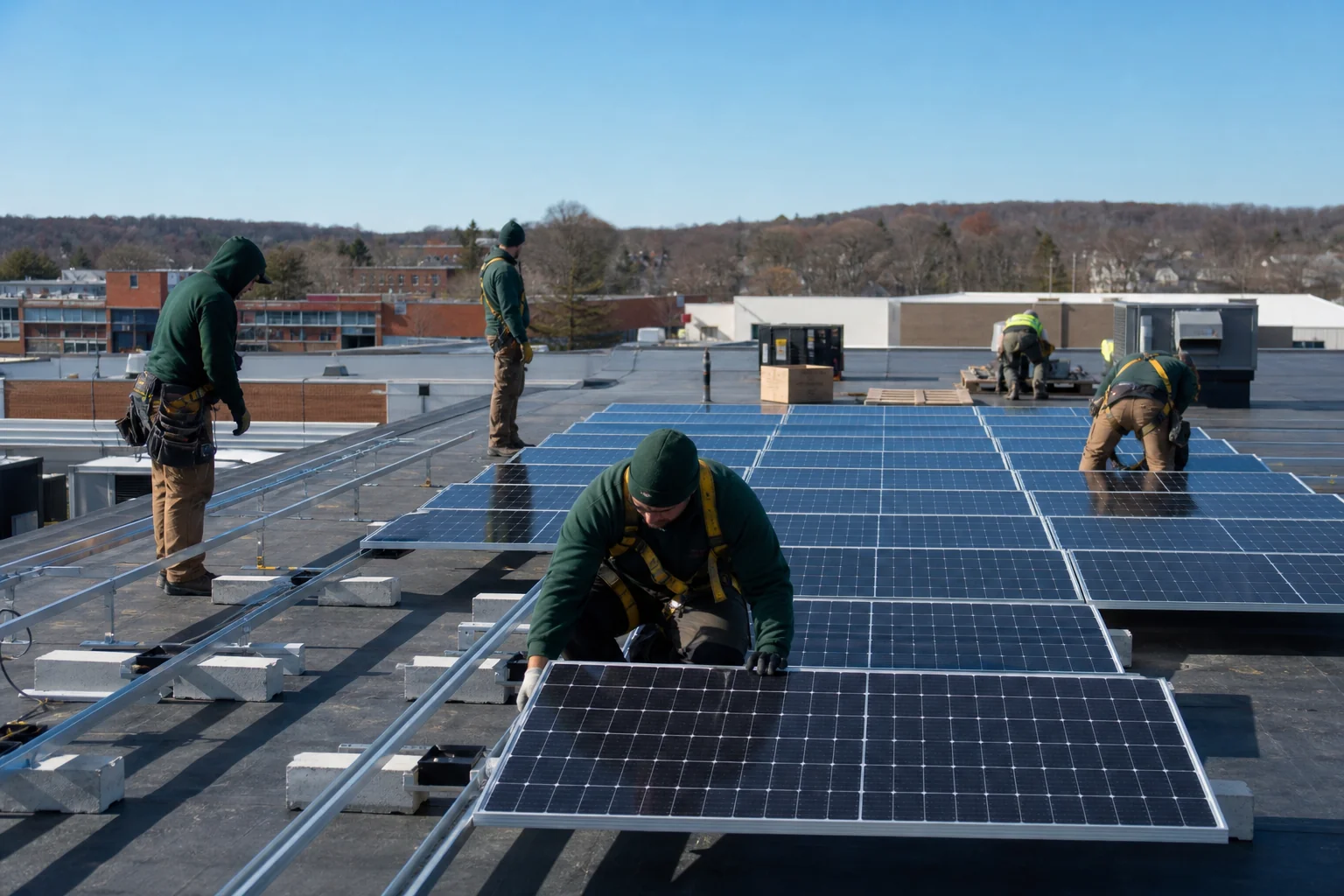
Some owners choose the loan or cash route once their credit improves, then refinance out of a PPA later, though that depends on the contract terms in place at signing. If you're weighing all three options side by side for your specific property, the deeper comparison in solar loan vs PPA vs lease walks through contract length and buyout clauses.
What Documentation Does a Small Business Need to Qualify?
A business typically needs 12-24 months of utility bills, basic entity documents, proof of property ownership or a signed lease with landlord consent, and recent bank statements showing operational cash flow. None of these require a strong personal credit score to produce.
Utility bills matter most because they show the finance partner exactly how much electricity the business consumes and how reliably it pays for it. A year or two of on-time payments does more to support a PPA application than a personal credit score ever will.
Entity documents confirm the business is a legitimate, operating entity, whether an LLC, S-corp, or sole proprietorship. If the property is leased rather than owned, landlord consent becomes a required piece, since the system attaches to the building for the length of the contract term.
- 12-24 months of commercial utility bills
- Business formation documents (articles of incorporation or LLC filing)
- Proof of property ownership, or a signed landlord consent if leasing
- Recent business bank statements (typically 3-6 months)
- Time-in-business verification, usually 2+ years operating history
Owners who lease their commercial space instead of owning it face an extra step, since the landlord has to sign off on a system attached to their roof or land for the contract duration.
Is a PPA a Good Fit for Your Business, or Should You Wait and Improve Credit?
A PPA fits businesses that want to cut their electric bill now without a large loan or cash outlay, and that don't need to claim the federal tax credit directly. Owners planning to sell the property soon, or who specifically want depreciation and tax credit benefits on their books, are usually better served waiting to qualify for a loan.
Ownership carries real financial upside over a long contract term, especially once the system is paid off and producing free electricity. For a business that expects to occupy the property for 15-20 more years and has the cash or credit to buy, ownership wins on total cost.
But waiting has a cost too. Every month spent paying a full utility rate while rebuilding credit is a month of savings left on the table. A PPA locks in a lower rate immediately, and many contracts include options to purchase the system outright partway through the term once the business's financial picture improves.
There's no single right answer here. A landlord planning to sell in three years shouldn't sign a 20-year PPA. A business that's been denied twice by traditional lenders and is bleeding cash to utility rate hikes shouldn't wait another two years hoping a credit score climbs 60 points.
How Teamsun Structures Commercial Solar for Fair-Credit Business Owners
Teamsun designs and installs commercial solar systems from 25kW to 500kW using in-house W-2 crews, no subcontractors, across Connecticut, Massachusetts, and Rhode Island. The 620 FICO PPA path exists specifically because many small business owners with strong operations get shut out by loan underwriting that only looks at a personal score.
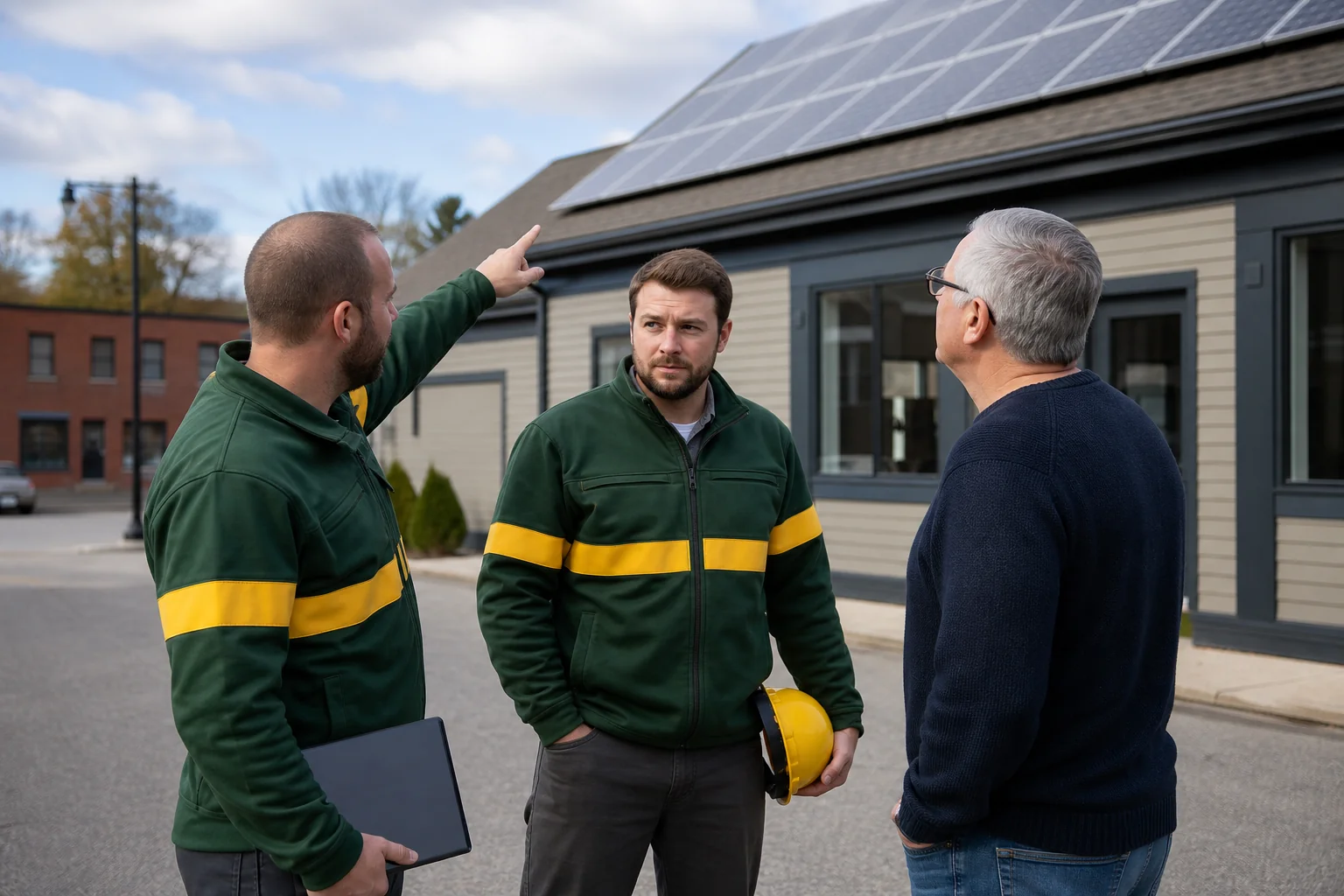
Systems are designed around actual utility usage data, roof or land condition, and whether the building can support a rooftop array or needs a ground mount. For a warehouse, retail strip, or office building deciding between the two, ground mount vs rooftop solar for your business covers the structural and cost tradeoffs specific to commercial properties.
Because crews are employees rather than subcontracted labor, the same team that designs the system also installs and services it afterward. That matters for commercial accounts especially, where downtime on a 200kW array has real revenue consequences if something goes wrong years down the line.
Frequently Asked Questions
Can an LLC with no personal credit history get solar financing?
Yes, if the LLC has at least two years of operating history and a consistent utility payment record, a PPA underwriter typically weighs the business's financials and utility history more heavily than a thin or absent personal credit file.
Does a PPA show up on a personal credit report?
No, a commercial PPA is underwritten and held against the business entity and the property, not the owner's personal credit file, so it does not appear as a personal loan or debt obligation on a personal credit report.
What credit score do I need for a commercial solar loan versus a PPA?
A commercial solar loan typically requires a 680-720+ personal FICO score, while a PPA through Teamsun accepts a 620 minimum because the underwriting weighs the property and utility history more than the owner's personal credit alone.
Will a denied solar loan application hurt my chances with a PPA?
No, a PPA application is evaluated independently using different underwriting criteria, so a prior loan denial based on personal credit does not automatically disqualify a business from PPA approval.
A fair credit score shouldn't be the reason a small business keeps paying full utility rates every month. If your commercial property has a roof or lot that gets good sun exposure, request a free quote and Teamsun will walk through whether a 620 FICO PPA, a loan, or a cash purchase fits your situation best. You can also talk to a designer about your specific building, browse the full range of options on the services page, or call 203-903-4091 to start the conversation today.
Recommended Resources
Written by
Dan Katzman
Teamsun
Teamsun writes practical solar guidance to help property owners compare equipment, project scope, costs, and long-term service before making a decision.
Keep going.
Commercial Solar for Small Business Roofs: 2026 Guide
Commercial solar for small business roofs: roof suitability, permitting, interconnection, and financing options for 25kW-500kW rooftop systems in CT, MA, RI.
Dan Katzman
Teamsun
How Many Solar Panels Does a Small Business Need?
Learn how many solar panels for small business use based on kWh usage, roof size, and budget, plus the 25kW-500kW range Teamsun installs across CT, MA, RI.
Dan Katzman
Teamsun
Commercial Solar for Warehouse Rooftop Owners
Commercial solar for warehouse rooftop owners: roof load limits, interconnection timelines, and financing for 25kW-500kW systems before you sign a contract.
Dan Katzman
Teamsun