How Many Solar Panels Does a Small Business Need?
Learn how many solar panels for small business use based on kWh usage, roof size, and budget, plus the 25kW-500kW range Teamsun installs across CT, MA, RI.
Dan Katzman
Teamsun
Most small businesses in Connecticut need somewhere between 60 and 150 solar panels to cover their electric bill, translating to a 25kW-60kW system for a typical retail space or small office. The real number for how many solar panels for small business operations depends on three things: your annual kWh usage, how much usable roof or land you have, and how much of your bill you actually want to offset.
Key Takeaways
- Start with kWh, not panel count: Pull 12 months of utility bills and divide annual usage by roughly 1,200-1,300 kWh per kW (the typical production factor for CT, MA, and RI) to get your target system size.
- Panel count follows system size: A 100kW system usually needs 180-250 panels, depending on whether you use 400W or 550W commercial modules.
- Roof space is the hard ceiling for rooftop systems: Plan on 70-100 square feet of usable roof per kW, before subtracting HVAC units, skylights, and setback requirements.
- Ground mounts remove the roof limit entirely: If you have open land, capacity scales with acreage instead of rooftop area, often letting businesses install larger systems than their roof alone would allow.
- Teamsun's commercial range runs 25kW to 500kW, covering everything from a single retail unit to a mid-size distribution facility, with in-house crews handling permitting and utility interconnection.
Solar Sizing At a Glance
| Annual Usage | Estimated System Size | Approx. Panel Count | Roof/Land Area Needed |
|---|---|---|---|
| 30,000 kWh | ~25kW | 55-65 panels | 1,750-2,500 sq ft |
| 60,000 kWh | ~48kW | 105-120 panels | 3,400-4,800 sq ft |
| 120,000 kWh | ~95kW | 210-240 panels | 6,650-9,500 sq ft |
| 250,000 kWh | ~200kW | 440-500 panels | 14,000-20,000 sq ft |
| 500,000 kWh | ~400kW | 870-1,000 panels | 28,000-40,000 sq ft |
| 625,000 kWh+ | 500kW (Teamsun's max) | 1,090-1,250 panels | 35,000-50,000 sq ft |
1. Pull Your Utility Bills and Find Your Real Usage
Your electric bill lists monthly kWh consumption, usually somewhere on the second page under "usage history" or "billing summary." Pull 12 consecutive months, not just the highest bill you got in August. Seasonal swings matter: a business with rooftop HVAC or refrigeration can see summer usage spike 30-40% over winter months.
Add all 12 months together to get your annual kWh figure. This single number drives everything else in the sizing process. If your business grew or added equipment mid-year, use the most recent 6 months and annualize that instead, since old bills will undercount your current draw.

If your bills run high because of an aging HVAC system or older refrigeration units, it's worth reading how solar handles high electric bills before you finalize a target size, since efficiency upgrades can shrink the system you actually need.
2. Convert Annual kWh Into a kW System Size
Divide your annual kWh by the production factor for your region. In Connecticut, Massachusetts, and Rhode Island, a well-sited system produces roughly 1,200-1,300 kWh per installed kW per year, accounting for regional sun hours and typical panel efficiency. Southern-facing rooftops with minimal shading land at the higher end; partially shaded or east-west arrays land lower.
Two quick examples:
- A coffee shop using 90,000 kWh a year needs roughly 90,000 ÷ 1,250 = 72kW.
- A light manufacturing shop using 350,000 kWh a year needs roughly 350,000 ÷ 1,250 = 280kW.
This is a starting estimate, not a final design. A site visit accounts for shading, roof orientation, and electrical service capacity, which can shift the number by 10-15% in either direction.
3. Translate kW Into Panel Count
Commercial-grade panels typically run 400W to 550W each. Divide your target kW by the panel wattage to get a panel count range. A 100kW system built with 450W panels needs about 222 panels; the same system with 550W panels needs about 182 panels. Higher-wattage panels mean fewer panels covering the same output, which matters most when roof space is tight.
Panel count also affects racking, wiring runs, and inverter sizing, so it's not purely a math exercise. Tier-1 equipment tends to run at the higher end of the wattage range, which is one reason equipment choice changes the final panel count for the same target kW.
4. Check Whether Your Roof Can Hold That Capacity
Plan on 70-100 square feet of usable roof area per kW of solar, once you subtract rooftop units, skylights, vents, and the fire-code setback most towns in CT, MA, and RI require around roof edges. A 20,000-square-foot warehouse roof, after subtracting equipment and setbacks, might only have 14,000-16,000 usable square feet, capping the array well below what the raw footprint suggests.
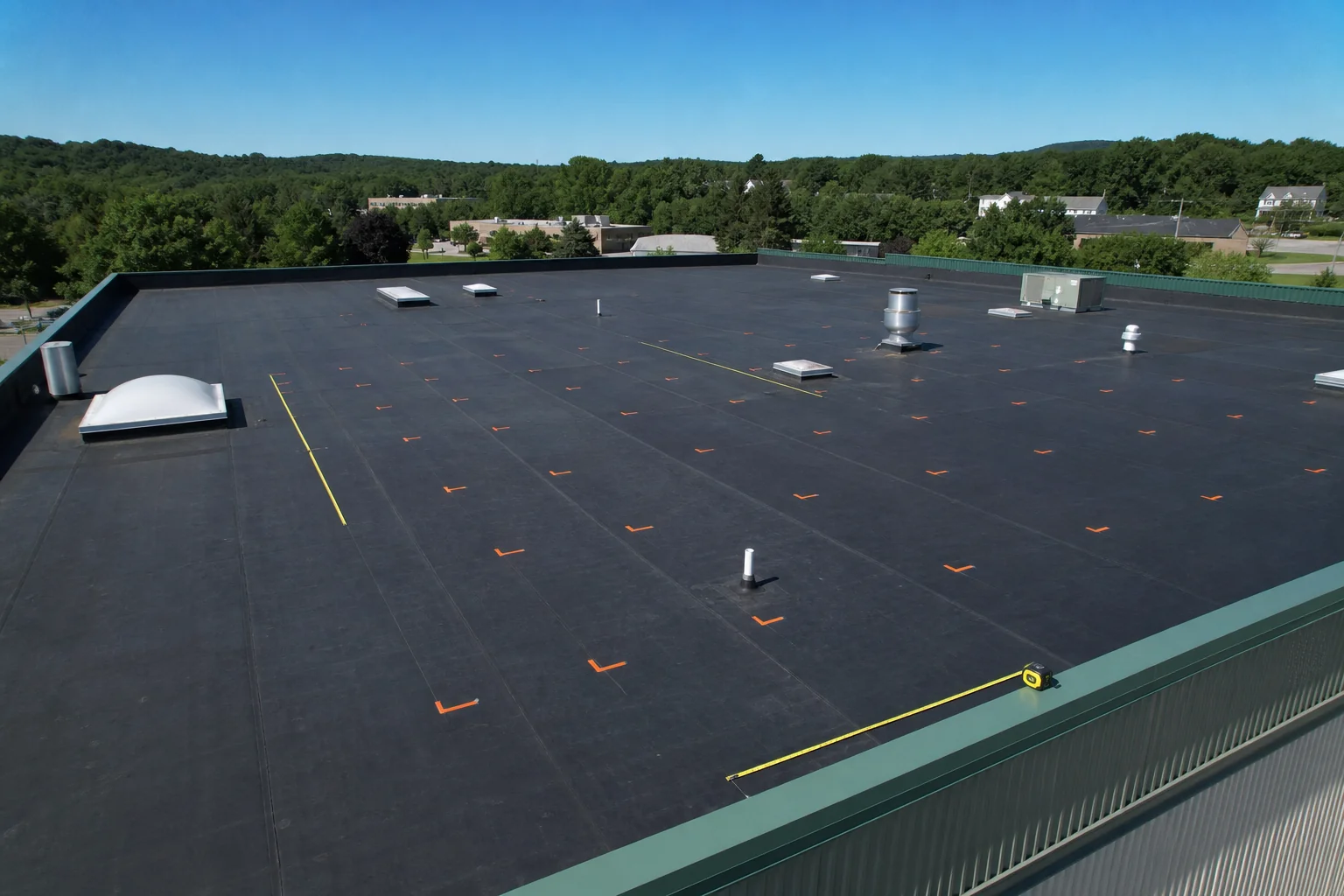
Roof age matters just as much as area. A roof with less than 10 years of remaining life is a poor candidate for a full-size array, since pulling panels to redo roofing later adds real cost and delay. If your roof is questionable, read when to replace a roof before solar before committing to a system size that assumes 25+ years of uninterrupted roof access.
Structural load is the other constraint. Older commercial roofs, especially built-up or single-ply membrane roofs from before 2000, sometimes need a structural engineer's sign-off before adding ballasted or penetrating racking. This is a standard step in commercial permitting, not a red flag, but it does affect timeline.
5. Rooftop vs Ground Mount: How Each Changes Your Ceiling
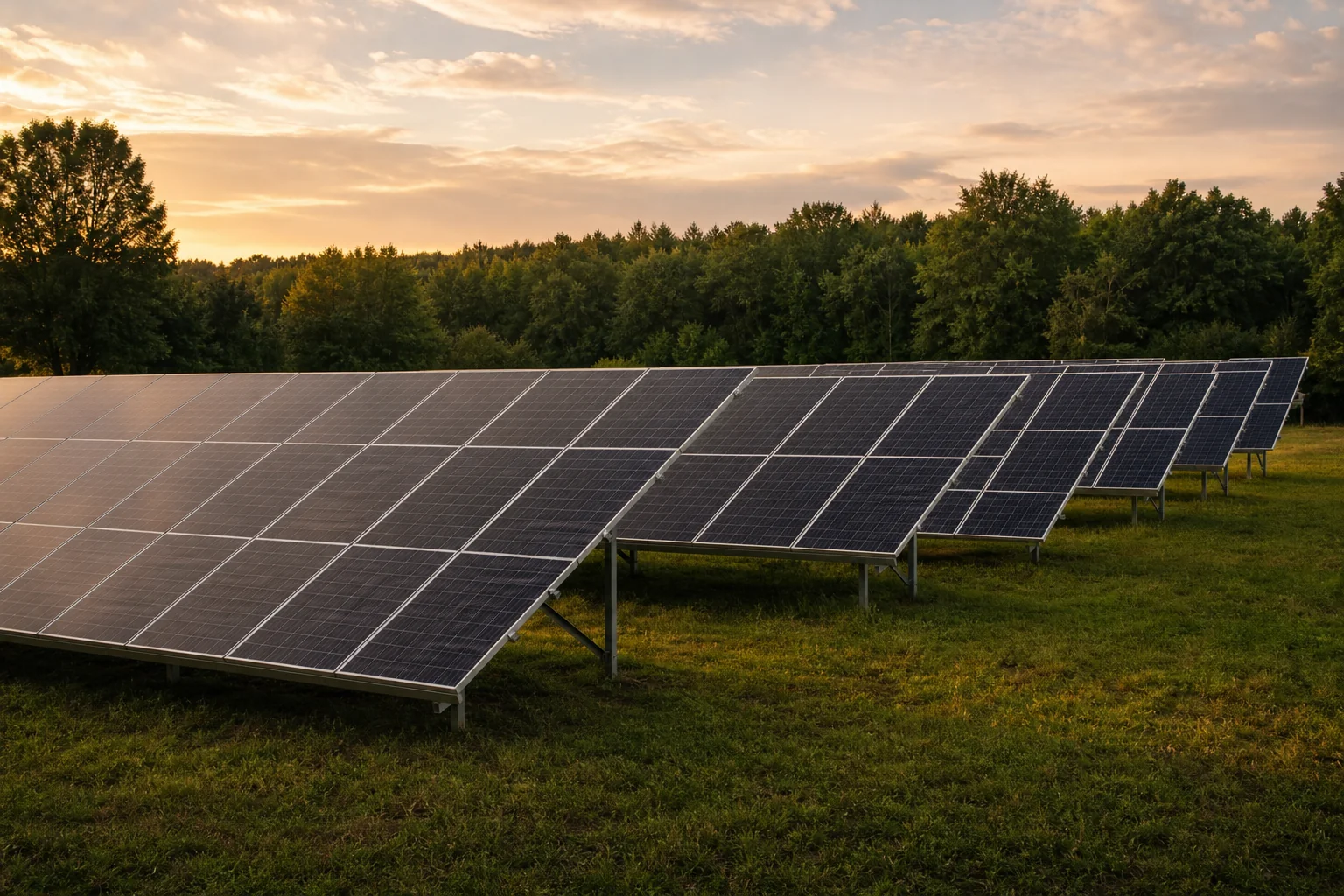
Rooftop systems are capped by usable roof area, full stop. Once every available square foot is covered, the system size is fixed unless you add a carport structure or a second building. Ground mounts work differently: capacity scales with land, not roofline, so a business with two acres of unused field can often install a larger system than its building's roof would ever support.
| Factor | Rooftop | Ground Mount |
|---|---|---|
| Capacity ceiling | Fixed by roof area | Scales with available land |
| Install complexity | Lower (uses existing structure) | Higher (foundations, trenching) |
| Best for | Retail, office, small warehouse | Distribution centers, farms, land-rich sites |
| Roof condition risk | Roof age/life is a factor | Not applicable |
| Typical add-on cost | Lower per kW | Higher per kW, but often larger total system |
For a full breakdown of how each option changes your total build cost and design, see commercial solar for small business roofs, which covers roof-specific sizing considerations in more depth.
6. Where Teamsun's 25kW-500kW Range Fits Small Business Needs
Teamsun installs commercial systems from 25kW up to 500kW across Connecticut, Massachusetts, and Rhode Island, using in-house W-2 crews rather than subcontractors for the full install. Most small retail businesses, single-location offices, and service shops land in the 25kW-100kW range. Light industrial operations, multi-unit strip centers, and distribution facilities typically need 150kW-500kW to offset the bulk of their usage.
The interconnection process, permitting, and utility paperwork scale with system size, and a 400kW system involves more utility review than a 30kW one. Teamsun handles that permitting and utility interconnection directly, which matters most for businesses that don't have an in-house facilities team to chase approvals.
7. Budget Realities That Cap or Expand Your System Size
The system size you calculate from usage isn't always the system size you build. Budget, available financing, and how much of your bill you want offset all pull the final number up or down. Some businesses design for 100% offset; others target 60-70% and let the system pay for itself faster.
Financing structure changes what's feasible upfront versus over time, and it's worth comparing how solar PPA financing works against a loan or lease before locking in a target kW size. Federal tax credit treatment also differs by financing type, so it's worth reviewing the federal solar tax credit paperwork process as part of your budget planning, since that credit can shift how much system you can justify.
Frequently Asked Questions
Can I add more panels later if I undersize my system?
Yes, in most cases, as long as your roof or land has remaining capacity and your inverter has headroom. It's usually cheaper to size correctly upfront than to add a second phase later, since a second phase means a second permitting and interconnection cycle.
Does adding a battery change how many panels I need?
Not directly. Battery storage affects how much of your solar production you can use during an outage or peak-rate period, but it doesn't change the panel count needed to offset your annual usage. It changes what you do with the power once it's generated.
How long does a commercial system take from contract to power-on?
Timelines vary with system size and utility review time, but residential projects with Teamsun average 47 days from contract to power-on. Commercial projects in the 100kW-500kW range typically run longer due to structural review and utility interconnection studies.
What's the difference between designing for my roof versus my usage?
Designing for usage means starting with your kWh and working toward a target kW. Designing for roof means maximizing whatever space you have, regardless of usage. Most businesses should start with usage, then check the roof or land against that number, not the other way around.
Getting the number right the first time saves you a second round of permitting and a second install visit. Teamsun's designers can pull your actual utility usage, walk your roof or property, and hand you a specific kW and panel count instead of a rough estimate. Request a free quote to get that number for your building, or talk to a designer about whether rooftop or ground mount makes more sense for your site. You can also explore the full range of commercial and residential options at Teamsun's services page, or call 203-903-4091 to start with a walkthrough of your last 12 months of bills.
Recommended Resources
Written by
Dan Katzman
Teamsun
Teamsun writes practical solar guidance to help property owners compare equipment, project scope, costs, and long-term service before making a decision.
Keep going.
Can I Add Solar Panels Without Replacing My Whole Roof?
Can I add solar panels without replacing my whole roof? Learn what inspectors check — shingle age, decking, flashing — to avoid costly mistakes.
Dan Katzman
Teamsun
Commercial Solar for Small Business Roofs: 2026 Guide
Commercial solar for small business roofs: roof suitability, permitting, interconnection, and financing options for 25kW-500kW rooftop systems in CT, MA, RI.
Dan Katzman
Teamsun
How Does a Solar Battery Retrofit Work? 2026 Guide
Learn how does a solar battery retrofit work, from compatibility checks to activation. See equipment options, permitting steps, and install-day timelines.
Dan Katzman
Teamsun