Massachusetts SMART Program
The Massachusetts SMART program pays solar owners per kWh produced. See how SMART 3.0 works, how it pairs with net metering, and what your installer files.
Dan Katzman
Teamsun
The Massachusetts SMART program pays solar owners a per-kilowatt-hour incentive on the electricity their system produces, paid by the local utility under a tariff run by the Department of Energy Resources (DOER). Under SMART 3.0, most small residential systems get a flat rate that DOER resets each program year. Larger commercial systems get a formula-based rate.
Key Takeaways
- Paid per kWh: SMART is a production-based incentive, so you are paid for energy your system generates, not for the size of the system on day one.
- Flat rate for small systems: For most systems of 25 kW or less, SMART 3.0 uses a flat rate that DOER sets each year, and the 2026 base rate is $0.03 per kWh.
- Works with net metering: SMART sits on top of your net metering credits. It does not replace them.
- Installer files the paperwork: Your installer handles the utility interconnection and SMART applications, and you sign and supply account details.
- Businesses compare two incentives: A small business should model SMART next to the federal commercial credit, because the federal credit has deadlines that have already started to bite.
Massachusetts SMART Program at a Glance
| Item | What to know |
|---|---|
| Who runs it | Massachusetts DOER, under regulation 225 CMR 20.00 |
| Who pays you | Your electric distribution company: Eversource, National Grid or Unitil |
| Payment basis | Per kWh your system generates |
| Systems 25 kW or smaller | Flat incentive rate; $0.03/kWh base in 2026; legal floor of $0.01/kWh |
| Larger systems | (Base compensation rate + adders) x kWh generated, minus the value of energy |
| 2026 capacity | 600 MW AC available for Program Year 2026, subject to the capacity cap |
| Applications for 2026 | Open since January 1, 2026 |
| Net metering | Still applies; SMART is paid in addition |
What Is the Massachusetts SMART Program?
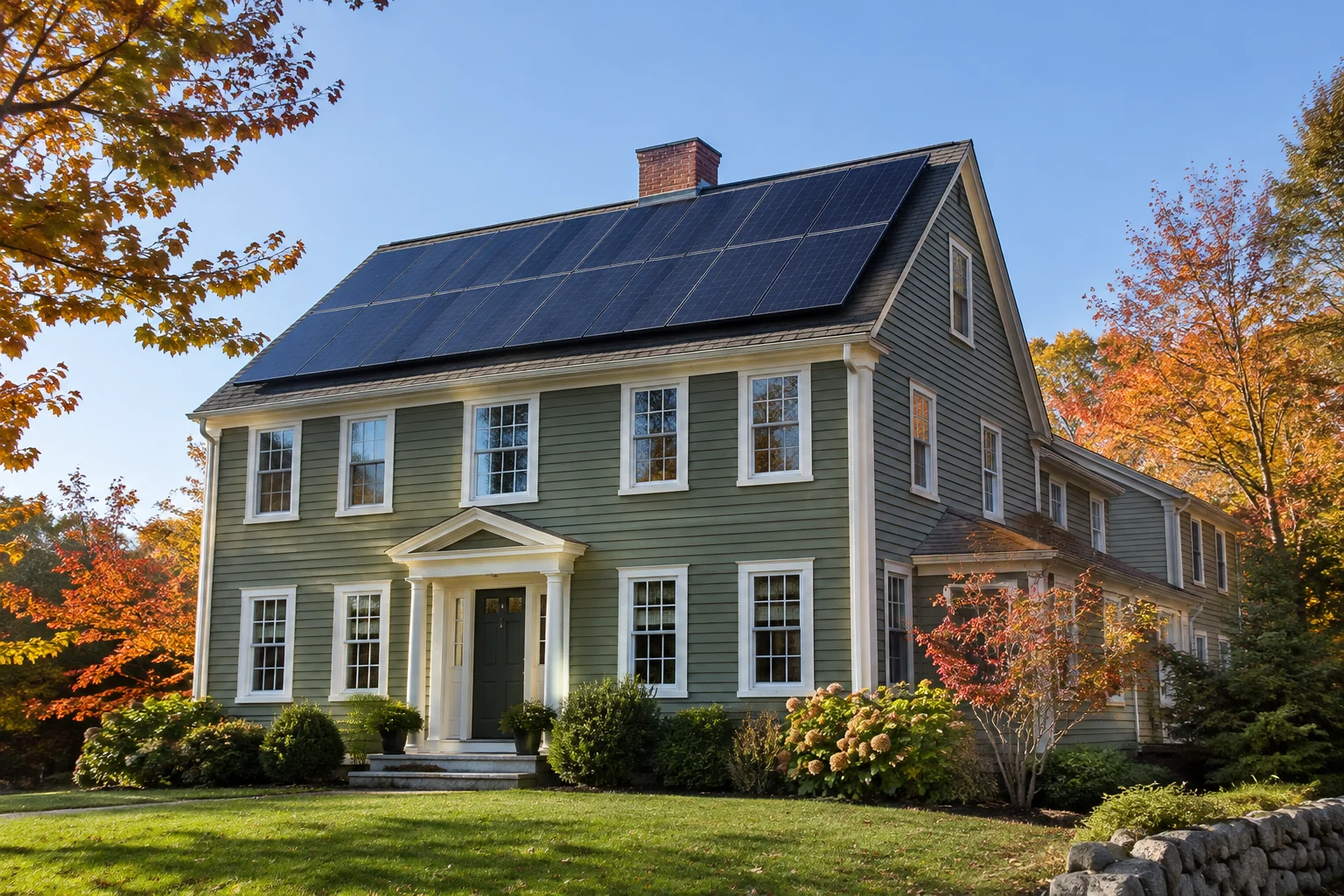
The Solar Massachusetts Renewable Target (SMART) program is a state incentive that pays solar owners a set amount for each kilowatt-hour their system generates. DOER runs it under 225 CMR 20.00, and your local electric utility sends the payments. It covers homes, businesses, and larger projects.
DOER describes SMART as its incentive program established to support the development of solar in Massachusetts, with the regulatory framework set in 225 CMR 20.00. The incentive is tariff-based, meaning it is a published rate schedule rather than a market you have to trade into.
That is the main change from the old system. Before SMART, Massachusetts solar owners earned Solar Renewable Energy Credits (SRECs) and sold them on a market where prices moved. SMART replaced that with a rate you can read in advance. You still do not control the rate, but you know what it is before you sign.
You will see the MA SMART program described with a few terms. "STGU" is a solar tariff generation unit, which is the legal name for a system enrolled in SMART. "EDC" is your electric distribution company. "Program Year" is the period in which DOER sets rates and opens capacity. You do not need to master these, but they appear on forms your installer will hand you.
How Does SMART Pay Solar Owners?
SMART pays a cash incentive for every kilowatt-hour your system produces, sent by your utility as a separate payment from your bill credits. For systems of 25 kW or less, the rate is a flat figure DOER sets each year. For larger systems, the rate is built from a base rate plus adders.
For larger systems, DOER's program overview gives the formula as (Base Compensation Rate + Adders) x total kWh generated, minus the value of energy generated. The base rate reflects the revenue a project needs to be economic. The value of energy is what the project already earns by selling or offsetting power. The incentive covers the gap.
Small systems: the flat rate
For systems under 25 kW, DOER's overview describes the rate as the levelized revenue requirement minus the average residential net metering credit value from the previous year. That is the technical definition. For a homeowner, the practical result is a flat per-kWh number. In 2026 the base rate for most residential systems is $0.03 per kWh, and low-income qualified customers receive a higher rate.
Regulation sets a floor, too. The rules state that the incentive payment for a system of 25 kW or less shall not be less than $0.01/kWh. DOER can adjust the flat rate between program years, so the figure you get depends on the year your application is accepted. Always ask your installer which rate applies to your project.
Larger systems: base rate, adders and value of energy
Commercial systems from 25 kW up to the 500 kW range that Teamsun installs use the formula above. Adders are extra per-kWh amounts for project types DOER wants to encourage, such as low-income property or certain site types.
The value of energy is based on a multi-year average of basic service rates, as DOER's SMART 3.0 presentation for public entities explains. It shows an example of an incentive of $0.17 less $0.15, which leaves $0.02 per kWh.
The takeaway: for larger systems, the SMART payment is the difference between what the project needs and what the power is already worth. If energy values rise, the SMART payment shrinks. Ask your installer to show both numbers in your proposal.
A simple worked example (hypothetical)
Suppose a home system produces 8,000 kWh in a year and qualifies for the 2026 base rate of $0.03 per kWh. The SMART payment would be 8,000 x $0.03 = $240 for that year. Output changes with shading, weather and equipment, so the real number will differ every year.
This is an illustration of the arithmetic only, not a forecast, and we do not promise a payback period for any system. SMART is one piece of the savings. Your bill reduction from net metering is usually larger, and we cover that next.
What Changed Under SMART 3.0?
SMART 3.0 is the redesigned version of the program. It moved to rates that DOER sets annually instead of fixed blocks, introduced a flat incentive for most small residential systems, and widened the low-income property definition. Program Year 2026 applications opened on January 1, 2026.
DOER published its Final Program Year 2026 Annual Report, which states that Program Year 2026 has 600 MW AC of available capacity, subject to the capacity cap. DOER began accepting applications for that year on January 1, 2026.
In its announcement of the redesign, the state said the new program expands the low-income property definition and requires a minimum discount on community solar bill credits for low-income customers. For a homeowner, the bigger practical shifts are these:
- Rates reset each year. Under the earlier program, rates stepped down as capacity blocks filled. Under SMART 3.0, base compensation rates are determined annually, so timing your application matters less than it used to, but the rate on your application date still governs.
- Small systems get one clear number. A flat rate is easier to read than a block table with adders.
- Capacity is capped. If an annual allocation fills, later applicants wait. That is a reason not to stall on a signed quote.
Some details are still moving. DOER can change rates, adders and capacity from one program year to the next, and we do not yet know what Program Year 2027 will look like. We do not state the term length of a SMART contract here, because we could not confirm it from DOER's current pages. Check the program details page or ask your installer to quote it from your actual tariff.
If you read older articles on the MA SMART program, expect block-based rates and 10 or more adders that no longer describe a new application. Treat anything that predates SMART 3.0 as history.
How Does SMART Work Alongside Net Metering?
SMART is paid in addition to net metering. Net metering credits your utility bill for power your system sends to the grid, while SMART pays a separate per-kWh incentive on everything your system generates. You collect both: lower bills from net metering, and an incentive check or credit from SMART.
The two programs are linked in the math. For small systems, the SMART rate is built by subtracting the average residential net metering credit value from the revenue a project needs, as noted earlier. In plain terms, SMART is designed to cover what net metering does not. When net metering credits are high, the SMART rate for small systems tends to be low.
That is why the flat 2026 rate is modest. It is not the main source of savings for most homes. The larger benefit usually comes from the power you stop buying. For a clear walk-through of credits, banking and how your meter reads, see our guide on how solar net metering works with your utility.
One practical point: SMART is measured on generation, so your production meter matters. Your installer sets up the meter and utility paperwork so SMART payments and net metering credits are tracked correctly. If a number looks wrong in your first statements, ask your installer to check the meter data against your monitoring app.
Who Is Eligible for the MA SMART Program?
Most Massachusetts property owners with a grid-connected solar system in Eversource, National Grid or Unitil territory can apply, as long as capacity remains in their utility's allocation. Eligibility depends on system size, location, interconnection approval and the program year you apply in. Your installer confirms this before you sign.
The utilities involved are the ones DOER lists for solar owners: Eversource, National Grid and Unitil. Your address decides which one handles your application. Each utility gets a share of the available capacity, so a block can fill in one territory before another.
Quick eligibility checklist
- Grid-connected system: You need an approved interconnection with your utility.
- Size tier: 25 kW or less gets the flat rate. Above that, the formula applies. Teamsun's commercial work covers 25 kW to 500 kW.
- Open capacity: Your utility's share of the annual allocation must not be full.
- Property type: Low-income qualified households and properties can qualify for a higher rate or adders. Ask for the current definition.
- Paperwork: You will see a customer disclosure form, which 225 CMR 28.00 addresses. Read it before you sign.
Rentals, shared roofs and mixed-use buildings add questions about who owns the system and who gets the payments. Our post on solar for rental properties is worth a look if that is your case. Not every case is settled by a simple rule, so we say so up front instead of guessing.
What Enrollment Steps Does Your Installer Handle?
Your installer usually handles the utility interconnection application, the SMART application, the equipment and meter documentation, and the follow-up after inspection. You supply your utility account details, proof of ownership and signatures. The steps below show the usual order, from first quote to first incentive payment.

- Site review and system design. The installer sizes the system, checks the roof, and confirms which utility serves the address.
- Capacity check. Before you commit, the installer checks whether your utility still has room in the current program year and which rate applies.
- Interconnection application. The installer files with the utility. For many projects, the fee schedule in a DOER workshop deck lists an application fee of $4.50 per kW, with a $300 minimum and a $7,500 maximum. Ask whether that fee is in your quote.
- SMART application. The installer submits through the utility's SMART portal with equipment specs, site details and your customer information.
- Installation and inspection. The crew installs, the local inspector signs off, and the installer sends the final documents to the utility.
- Permission to operate. The utility approves the connection. Our post on interconnection approval timelines covers what to expect.
- Payments begin. After approval, SMART payments are based on the production the meter records.
Timelines vary by utility and project size, and we will not put a date on yours before the utility has reviewed it. Teamsun's own work, from signed contract to power on, averages 47 days for installs. That figure covers our process, not utility review or SMART approval, which sit partly outside our control.
What you do as the owner
- Share a recent utility bill so the account number and name match the application.
- Sign the interconnection and SMART forms promptly. A missing signature is a common cause of delay.
- Keep copies of the disclosure form, signed contract and final approval letter.
- Check the first statements against your monitoring app.
How Should a Small Business Weigh SMART and the Federal Commercial Tax Credit?
A small business should model SMART and the federal commercial credit side by side, because they pay in different ways. SMART is paid per kWh over time, while the federal credit is a one-time tax benefit tied to construction and in-service dates. Check the federal deadlines first, since they can decide the project.
Under current federal law, solar facilities claiming the Section 48E credit must either have begun construction by July 4, 2026, or be placed in service by December 31, 2027, according to an official program page only for SMART; for the federal rule, tax advisers have published summaries of the 48E timeline.
Because July 4, 2026 has passed, the question for a new project is whether construction already started, or whether you can be in service by the end of 2027. Ask your tax adviser to confirm.
A decision rule for business owners
- Confirm federal eligibility first. If your project cannot meet either federal date, build the model without the credit and see if the project still works.
- Treat SMART as steady income, not a headline. It rewards production, so it supports a system sized to your load and your roof.
- Do not stack assumptions. Ask for a proposal that shows net metering savings, SMART income and the federal credit as three separate lines, each labelled with its source and assumptions.
- Ask a tax professional about treatment. How SMART payments and the credit affect your return depends on your business structure.
For the broader picture on the tax side, see our post comparing small business and residential solar tax credits, and for how Massachusetts stacks up against its neighbors, read solar incentives in Massachusetts vs Connecticut vs Rhode Island. If you are sizing a business roof, our commercial solar guide for small business roofs goes deeper. We do not repeat that material here.
How Do You Choose an Installer for SMART Filing?
Choose an installer that files SMART and utility applications itself, shows you the applicable rate in writing, and stays reachable after power-on. Avoid anyone who promises a specific payment total or payback period, because the rate, your production and your utility all change the result.
What to look for
- A written rate and program year. The proposal should name the SMART rate or formula it assumes and the year of application.
- Clear fee lines. Interconnection and application fees should be listed, not buried.
- In-house filing. Ask who submits the paperwork. Teamsun's crews are W-2 employees, not subcontractors, and we handle incentive and rebate filing for our Massachusetts customers.
- Commercial experience. For 25 kW to 500 kW projects, ask how many similar systems the installer has filed.
Red flags
- A guaranteed dollar amount of SMART income over the life of the system.
- Quotes that use old block-based rates from before SMART 3.0.
- Pressure to sign "before the incentive disappears" with no reference to your utility's remaining capacity.
- No answer when you ask who files the application and who you call afterward.
If a check fails, ask for the missing item in writing. If the installer will not provide it, get a second quote. Our guide to solar installation cost shows how to line up line items so a missing fee is easy to spot.
Massachusetts SMART Program FAQ
Is SMART the same as net metering?
No. Net metering credits your bill for power you export to the grid. SMART is a separate incentive paid per kWh your system generates. Most Massachusetts solar owners with grid-connected systems can receive both, and each appears in a different place on your statements.
Is SMART 3.0 still open to new applicants?
Yes, within limits. DOER began accepting Program Year 2026 applications on January 1, 2026, with 600 MW AC of available capacity subject to the cap. Because capacity is allocated by utility, your installer should confirm room in your territory before you sign.
Do I have to apply for SMART myself?
No. Your installer normally prepares and submits the interconnection and SMART applications. You provide account details, proof of ownership and signatures. Ask for copies of everything filed, and for the name of the person who will answer questions after the system is on.
Does SMART change if I add a battery later?
It can. Storage has its own treatment within SMART, and we did not confirm the current rules for this article. Ask your installer to check DOER's current guidance before you add a battery. Our post on how a solar battery retrofit works covers the hardware side.
Next Steps: Get Your SMART Numbers in Writing
The Massachusetts SMART program rewards production, rates reset every program year, and capacity is limited, so the useful move is to get a proposal that shows your utility, your applicable rate and every fee. Teamsun designs, installs and files incentive paperwork for homes and for 25 kW to 500 kW commercial systems in Massachusetts.
Request a free quote and we will show you SMART, net metering and any federal credit as separate lines. You can also talk to a designer about your roof, browse our solar and battery services, or call 203-903-4091 with questions about SMART 3.0 in Massachusetts.
Recommended Resources
Written by
Dan Katzman
Teamsun
Teamsun writes practical solar guidance to help property owners compare equipment, project scope, costs, and long-term service before making a decision.
Keep going.
How Long Does It Take to Get Solar Interconnection
How long does it take to get solar interconnection approval? See real utility timelines for Eversource, National Grid, and more, plus how to avoid delays.
Dan Katzman
Teamsun
Can You Get Solar Panels That Match Your Roof Color?
Solar panels that match roof color: your real options in CT, MA and RI, from all-black panels to low-profile racking, plus HOA and historic district rules.
Dan Katzman
Teamsun
Commercial Solar ROI Payback Period
Commercial solar ROI payback depends on system size, utility rates and incentives. Learn how to estimate break-even in CT, MA and RI before you sign.
Dan Katzman
Teamsun