How Long Does It Take to Get Solar Interconnection
How long does it take to get solar interconnection approval? See real utility timelines for Eversource, National Grid, and more, plus how to avoid delays.
Dan Katzman
Teamsun
Solar interconnection approval, the utility's final sign-off called Permission to Operate (PTO), typically takes three to eight weeks after your panels are physically installed. In Connecticut and Massachusetts, where Eversource and National Grid handle most residential applications, that window usually lands between four and six weeks, though a detailed engineering study can push it much longer.
Key Takeaways
- PTO is separate from your town permit: the building inspector signs off on the install; the utility separately has to approve the grid connection before the system can legally turn on.
- Four weeks is a realistic average: national data puts combined permit-and-interconnection timelines at 25 to 64 days depending on the state, with New England usually toward the faster end.
- A triggered engineering study is the biggest risk: it can add months, not weeks, especially on crowded circuits near the end of a feeder line.
- Your installer's paperwork quality matters more than your utility: incomplete applications are returned and re-queued, adding weeks for a problem that didn't need to exist.
- Battery storage adds a step, not usually delay: most utilities process storage interconnection alongside solar if it's filed as one application.
Solar Interconnection Approval: At a Glance
| Utility / Region | Typical PTO Timeline | Common Trigger for Delay |
|---|---|---|
| Eversource (CT, MA, NH) | 3-6 weeks | Incomplete single-line diagrams, panel upgrade needs |
| National Grid (MA, RI, NY) | 4-6 weeks | Queue volume in dense metro areas |
| PG&E (CA) | 4-8 weeks, sometimes 10-12 | Detailed engineering study on constrained circuits |
| SCE (CA) | 3-6 weeks | Standard review backlog |
| FPL (FL) | 4-6 weeks | Manual document review |
| Duke Energy (NC) | 3-5 weeks | Lower volume of applications |
| National average (all states) | 25-64 days combined permit + interconnection | AHJ and utility process maturity |
Figures reflect typical ranges reported by industry timeline research and state permit data; individual projects vary.

What Interconnection Approval Actually Means
Interconnection approval is the utility's go-ahead to legally connect your solar system to the grid, separate from the local building permit. Your town inspector checks the physical install; the utility checks that your system won't destabilize its grid, then issues Permission to Operate, the document that lets you flip the switch.
A lot of homeowners assume the inspector's sign-off is the finish line. It isn't. Flip the breaker before PTO arrives and you're violating your interconnection agreement, which can mean a fine or a forced shutdown. The gap between inspection and PTO is exactly where most of the frustration homeowners feel comes from, because the panels are sitting there, finished, generating nothing.
That's a different clock than your overall installation timeline from contract to power-on, which includes design, permitting, and physical install before interconnection even starts.
How Long Does Solar Interconnection Approval Take in New England?
In Connecticut and Massachusetts, most residential interconnection approvals through Eversource close out in three to six weeks after the physical install passes inspection. Eversource is New England's largest energy delivery company, serving close to 4 million customers across Connecticut, Massachusetts, and New Hampshire, which means its interconnection desk processes a high volume of residential applications on a fairly standardized workflow.
National Grid, which serves parts of Massachusetts and Rhode Island along with a large New York territory, runs a similar four-to-six-week window for most straightforward residential systems. National Grid describes itself as serving more than 20 million people across New York and Massachusetts, and its interconnection queue in denser metro corridors, particularly around Boston and Providence, tends to run slower than rural circuits simply because of volume.
Rhode Island homeowners working with National Grid should expect timelines on the higher end of that range, especially during spring and fall when installation volume spikes statewide. If you're comparing what each state actually pays back and how fast, our breakdown of solar incentives across Massachusetts, Connecticut, and Rhode Island covers the financial side of that same regional gap.
The Four Stages of the Interconnection Process
Interconnection approval moves through four distinct gates, and knowing which one you're in tells you what's actually happening with your application.
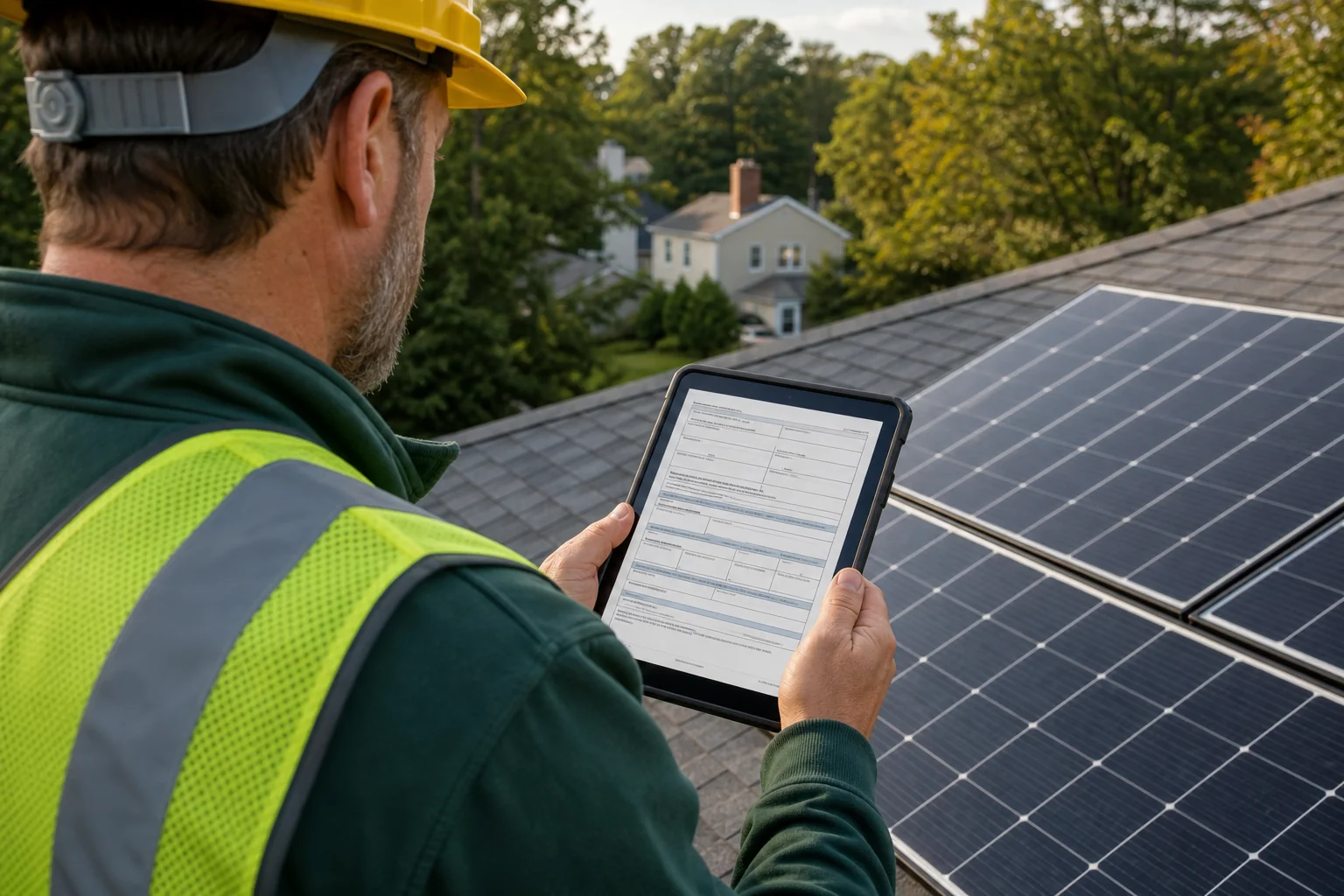
- Application submittal. Your installer files a completed interconnection application with single-line diagrams, equipment specs, and site details directly with the utility, not the town.
- Engineering screen or formal study. The utility checks whether your system trips any thresholds requiring deeper review. Most residential systems clear a basic screen in days; systems on constrained circuits can get kicked into a formal study lasting weeks or months.
- Interconnection agreement. Once cleared, you and the utility sign an agreement defining the terms of the grid connection. This is largely administrative but still requires signatures and processing time.
- Permission to Operate. The utility confirms the meter is set (often a bidirectional net meter) and issues final written authorization to energize the system.
This four-gate structure holds across most US utility territories, though the time spent at each gate swings widely depending on where you live and how clean your installer's paperwork is.
Why Timelines Vary So Much by State and Utility
Interconnection timelines vary by state mainly because each utility runs its own review queue, staffing level, and document standard, not because the physics of connecting a solar system changes. A homeowner in one utility's territory can wait three weeks while someone forty miles away, served by a different utility, waits twice as long for an identical system.
| State / Metro Area | Reported Timeline Range | Primary Driver |
|---|---|---|
| New York City + Long Island | 16-22 weeks | Historic plan review, interconnection queue volume |
| Southern California (LA + Bay Area) | 14-20 weeks | Multi-jurisdiction permitting, net metering paperwork |
| Colorado / New Jersey | Up to 60+ days | Combined permit and interconnection backlog |
| New York State (overall) | Around 25 days | Streamlined statewide process |
| Connecticut / Massachusetts (typical) | 3-6 weeks | Standard residential queue, Eversource/National Grid |
These figures track with national research showing combined permit-and-interconnection timelines ranging from about 25 to 64 days across states, and other analysis pegging slower metro markets at 16 weeks or more once historic district review or a crowded interconnection queue is involved. New England sits comfortably in the faster tier, but "faster tier" still means weeks, not days.
What Causes Interconnection Delays
Most delays trace back to one of four causes, and three of them are entirely within your installer's control.
Incomplete or inaccurate applications top the list. A missing single-line diagram or an equipment spec sheet that doesn't match what's physically on your roof gets the whole application bounced back to the end of the queue. That's not a utility problem, it's a paperwork problem, and it's avoidable.
Electrical panel capacity is the next biggest one. If your main panel can't handle the added solar breaker without exceeding code limits, you need a panel upgrade before the utility will even review your application, adding real time to the front end of the process.
Triggered engineering studies happen when your system size or your local circuit's existing solar saturation crosses a utility's screening threshold. On a crowded feeder, even a modest residential system can get flagged for a full study that takes months instead of weeks.
Utility backlog during peak installation seasons, typically spring and early fall, slows every application in the queue regardless of how clean the paperwork is. There's no way around this one except building it into your expectations upfront.
How to Avoid Getting Stuck Waiting on PTO
Avoid interconnection delays by confirming panel capacity before install day, choosing an installer who files complete applications the first time, and asking upfront whether your specific circuit has a history of triggering detailed studies. Each of those is something you can check before signing a contract, not after.
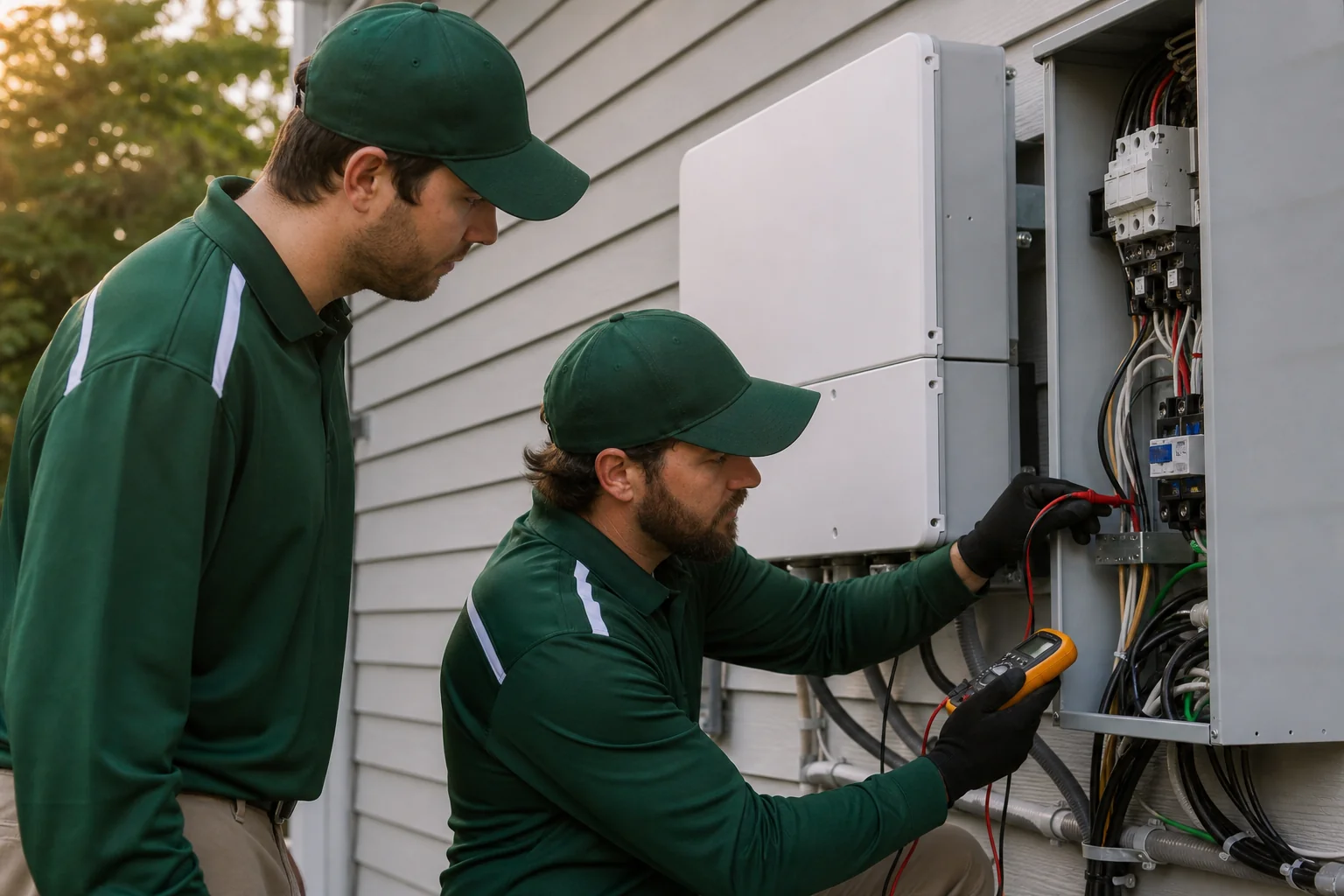
Ask your installer directly how they handle application accuracy. A crew that designs, permits, and installs the system in-house, rather than handing the paperwork to a subcontractor who's never seen the roof, tends to catch mismatches between the as-built system and the filed diagrams before the utility does.
That's one reason Teamsun uses in-house W-2 crews instead of subcontractors across the full install, so the same team that designs your system is the one standing behind the paperwork that gets filed with Eversource or National Grid.
Before your install even starts, ask whether your main panel has room for the new solar breaker. A 100-amp panel in an older Connecticut home often needs an upgrade to 200 amps before a utility will clear the interconnection, and catching that during the design phase, rather than after inspection, keeps it off your critical path.
This matters even more if you're pairing solar with an EV charger or a battery retrofit, both of which add load to that same panel.
Finally, ask what happens if your circuit triggers a study. A straight answer here, with a real range instead of a vague "it depends," tells you whether your installer has actually navigated this utility's process before or is guessing along with you.
Solar Interconnection Approval FAQ
Can I turn my solar system on before PTO arrives?
No. Energizing your system before the utility issues Permission to Operate violates your interconnection agreement and can trigger a fine or a forced shutdown. Wait for written PTO, even if your inspection passed and the system looks ready to go.
Does adding battery storage slow down interconnection approval?
Not usually, if it's filed as part of the same application. Most utilities, including Eversource and National Grid, review solar-plus-storage systems together rather than as two separate applications, so adding a battery rarely adds a separate delay on its own.
What happens right after PTO is issued?
Your utility sets or confirms your bidirectional meter, and your system is cleared to energize and start generating. From that point, net metering credits and billing adjustments typically take effect on your next billing cycle, which is worth understanding through our guide on how solar net metering works with your utility.
Why did my neighbor get PTO faster than me with a similar system?
Different circuits, different queues, and different application quality all play a role. Even two homes on the same street can be served by different parts of the same utility's distribution network, each with its own backlog and study history.
A homeowner forty miles from another on the same utility's territory can see a three-week wait versus a ten-week wait for an identical system, simply because the utility, not the installer or the equipment, determines most of the timeline.
None of this is fully predictable. Even a utility with a strong track record can hit a slow month if a storm diverts engineering staff to outage response instead of interconnection review, and there's no installer who can promise around that.
If you're trying to figure out where your project fits on this timeline, whether you're still deciding between financing options or ready to get your system designed and filed correctly the first time, request a free quote and we'll walk you through what Eversource or National Grid approval looks like for your specific address.
You can also talk to a designer about your panel capacity and circuit history before you sign anything, explore our full services, or call us directly at 203-903-4091 to get a straight answer on what your timeline really looks like.
Recommended Resources
Written by
Dan Katzman
Teamsun
Teamsun writes practical solar guidance to help property owners compare equipment, project scope, costs, and long-term service before making a decision.
Keep going.
How Long Does Solar Installation Take From Contract?
See the full solar panel installation timeline from contract to power-on, step by step, and why Teamsun's in-house crews average just 47 days.
Dan Katzman
Teamsun
How Does a Solar Battery Retrofit Work? 2026 Guide
Learn how does a solar battery retrofit work, from compatibility checks to activation. See equipment options, permitting steps, and install-day timelines.
Dan Katzman
Teamsun
How Many Solar Panels Does a Small Business Need?
Learn how many solar panels for small business use based on kWh usage, roof size, and budget, plus the 25kW-500kW range Teamsun installs across CT, MA, RI.
Dan Katzman
Teamsun