How Long Does Solar Installation Take From Contract?
See the full solar panel installation timeline from contract to power-on, step by step, and why Teamsun's in-house crews average just 47 days.
Dan Katzman
Teamsun
Most homeowners who sign with Teamsun flip the switch on their solar system in 47 days, start to finish. That number comes from tracking real installs across Connecticut, Massachusetts, and Rhode Island, not a marketing estimate. The solar panel installation timeline from contract to power-on depends mostly on two things: how fast your town processes permits, and whether the crew installing your panels works for the company you signed with or for a subcontractor three steps removed.
Key Takeaways
- 47-day average: Teamsun's in-house crew model completes contract-to-power-on in roughly 47 days, compared to 60-120+ days common with national installers using subcontractor networks.
- Permitting is the longest single phase: Local building department review typically takes 10-25 days depending on your CT, MA, or RI municipality.
- Utility interconnection runs in parallel: Filing with Eversource, National Grid, or United Illuminating alongside permitting, rather than after, saves 2-3 weeks.
- Install day itself is fast: Most residential rooftop systems go up in 1-3 days once permits and equipment are in hand.
- Add-ons extend the clock: A roof replacement, battery retrofit, or EV charger bundled into the project typically adds 1-3 weeks to the base timeline.
Solar Installation Timeline at a Glance
| Phase | Typical Timeframe | Who's Involved |
|---|---|---|
| Contract signing & site verification | Days 1-5 | Homeowner, project coordinator |
| System design & engineering | Days 3-10 (overlaps above) | Design/engineering team |
| Town permitting | Days 10-25 | Local building department |
| Utility interconnection application | Days 15-30 (parallel) | Utility (Eversource, National Grid, UI) |
| Install day | Days 30-40 | In-house install crew |
| Final inspection & permission to operate | Days 40-47 | Town inspector, utility |
| Total average | ~47 days | All parties |

1. Signing the Contract and Site Verification (Days 1-5)
Once you sign, the clock starts with a final site visit. A technician confirms roof measurements, checks for shading obstacles, and verifies your electrical panel can handle the new system. This step catches problems early, before permits get filed on numbers that turn out to be wrong.
If your roof needs work first, this is also when that gets flagged. Teamsun covers this in detail in Need a New Roof? When to Do It Before Solar, but the short version: a roof with under 10-15 years of life left should get replaced before panels go up, not after. Bundling a solar plus roofing bundle cost project adds time upfront but avoids a much costlier teardown later.
Financing paperwork also gets finalized here, whether that's a cash purchase, loan, prepaid lease, or a PPA. Homeowners with sub-700 credit scores sometimes assume this step will stall their project, but PPA underwriting at a 620 FICO minimum keeps most applications moving without delay.
2. System Design and Engineering (Days 3-10)
While site verification wraps up, the design team builds your system layout: panel placement, wiring diagrams, and structural calculations stamped by a licensed engineer. Towns require these stamped drawings before they'll even open a permit review, so getting this phase moving fast matters more than most homeowners realize.
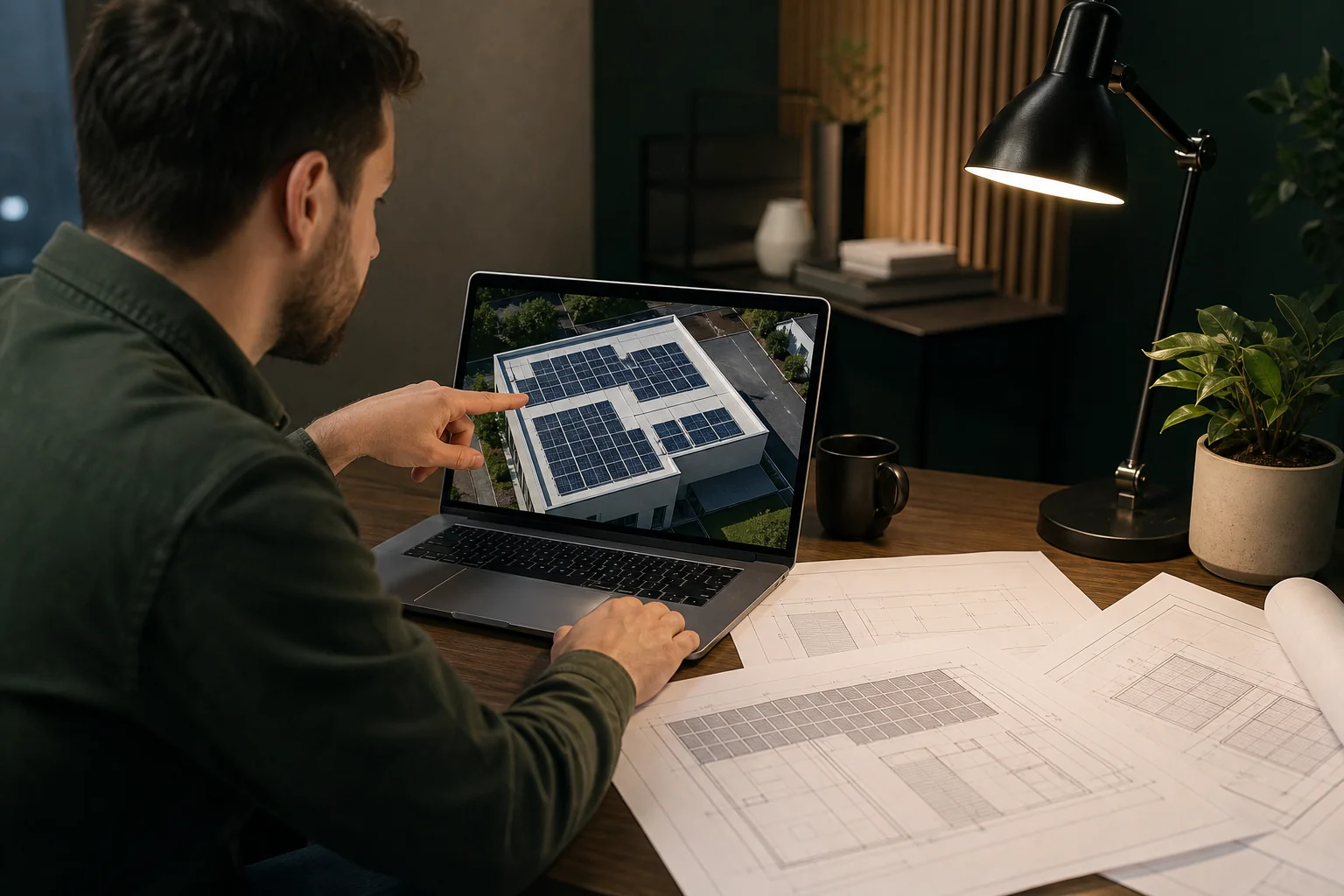
Equipment gets locked in here too. Tier-1 panel selection, inverter type, and (if you're adding one) battery model choice all get finalized. If you're deciding between battery brands, Tesla Powerwall vs FranklinWH: Which Battery Wins in 2026? breaks down the tradeoffs before this step locks your design.
3. Permitting With Your Town (Days 10-25)
This is where most solar timelines actually stretch. Each town in Connecticut, Massachusetts, and Rhode Island runs its own building department with its own review speed. Some smaller towns turn around a residential solar permit in a week. Others, especially cities with high permit volume, take three weeks or more.
If your project includes a battery retrofit or an EV charger, expect a separate electrical permit on top of the solar permit. That's covered step by step in How to Install a Hardwired EV Charger at Home (2026), and it's worth planning for if you're bundling projects to save on labor scheduling.
National installers often lose time here not because of the town, but because their subcontracted permit-runners are juggling submissions for multiple companies across multiple states. An in-house team that only files for its own local jobs moves faster because there's no queue to wait behind.
4. Utility Interconnection Application (Days 15-30, Runs Parallel)
Your solar system can't legally send power back to the grid until your utility approves an interconnection agreement. In Connecticut that's typically Eversource or United Illuminating; in Massachusetts and Rhode Island it's often National Grid. This application should be filed as soon as your design is finalized, running alongside the town permit process rather than waiting for it to finish.
Net metering credits, which pay you for excess power your panels send to the grid, get set up as part of this application. If you want the mechanics of how those credits work, How Does Solar Net Metering Work With Your Utility? covers it in full. The key point for timeline purposes: overlapping this with permitting instead of doing it afterward is one of the biggest reasons the 47-day average is possible at all.
5. Install Day (Days 30-40)
Once the town permit clears and equipment is on-site, install day happens fast. A standard residential rooftop system typically takes 1-3 days for a crew to mount racking, install panels, run wiring, and set the inverter. Adding a battery or EV charger to the same project adds roughly a half day to a full day of additional work, but it's usually done during the same visit rather than requiring a second trip.
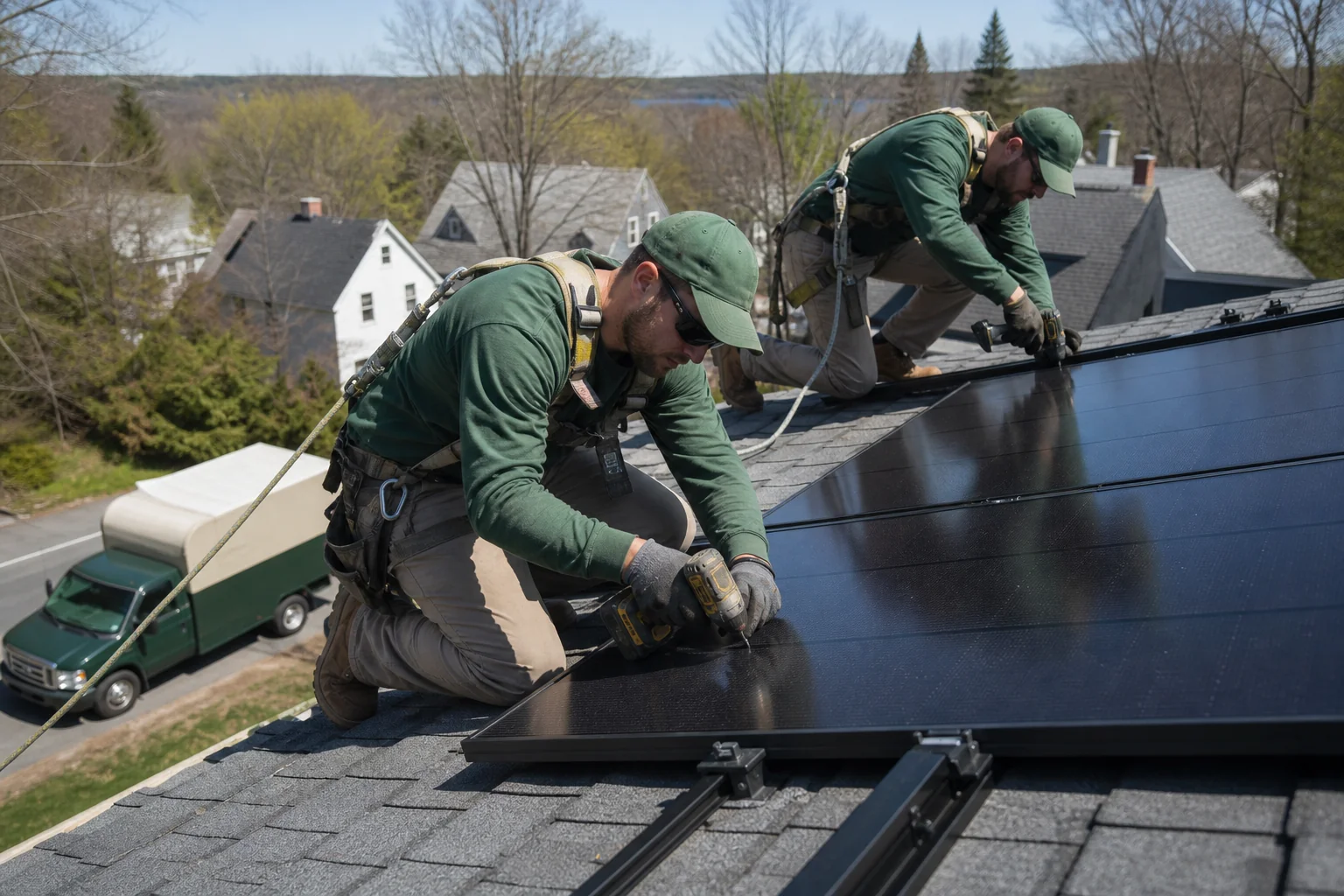
This is where the crew model matters most. An in-house W-2 crew that installed your neighbor's system last month knows the local roof types, the local inspectors, and the local utility's quirks. A subcontracted crew hired through a national dealer network might be installing in your town for the first time, working off documentation prepared by people they've never spoken to. That disconnect is where mistakes and callbacks happen, and callbacks add days or weeks.
6. Final Inspection and Permission to Operate (Days 40-47)
After install day, a town electrical inspector visits to confirm the system meets code. Once that passes, your utility issues Permission to Operate (PTO), the formal approval that lets your system legally send power to the grid and start earning net metering credits.
This is also when your monitoring app gets activated, so you can watch production in real time from day one. PTO timing varies by utility workload, but it's usually the shortest phase in the whole process once the inspection is done, often just a few business days.
Why National Installers Take Longer
The gap between a 47-day timeline and a 90-day timeline usually isn't about equipment or engineering quality. It's about who's actually doing the work and how many hand-offs exist between the sales contract and the crew on your roof.
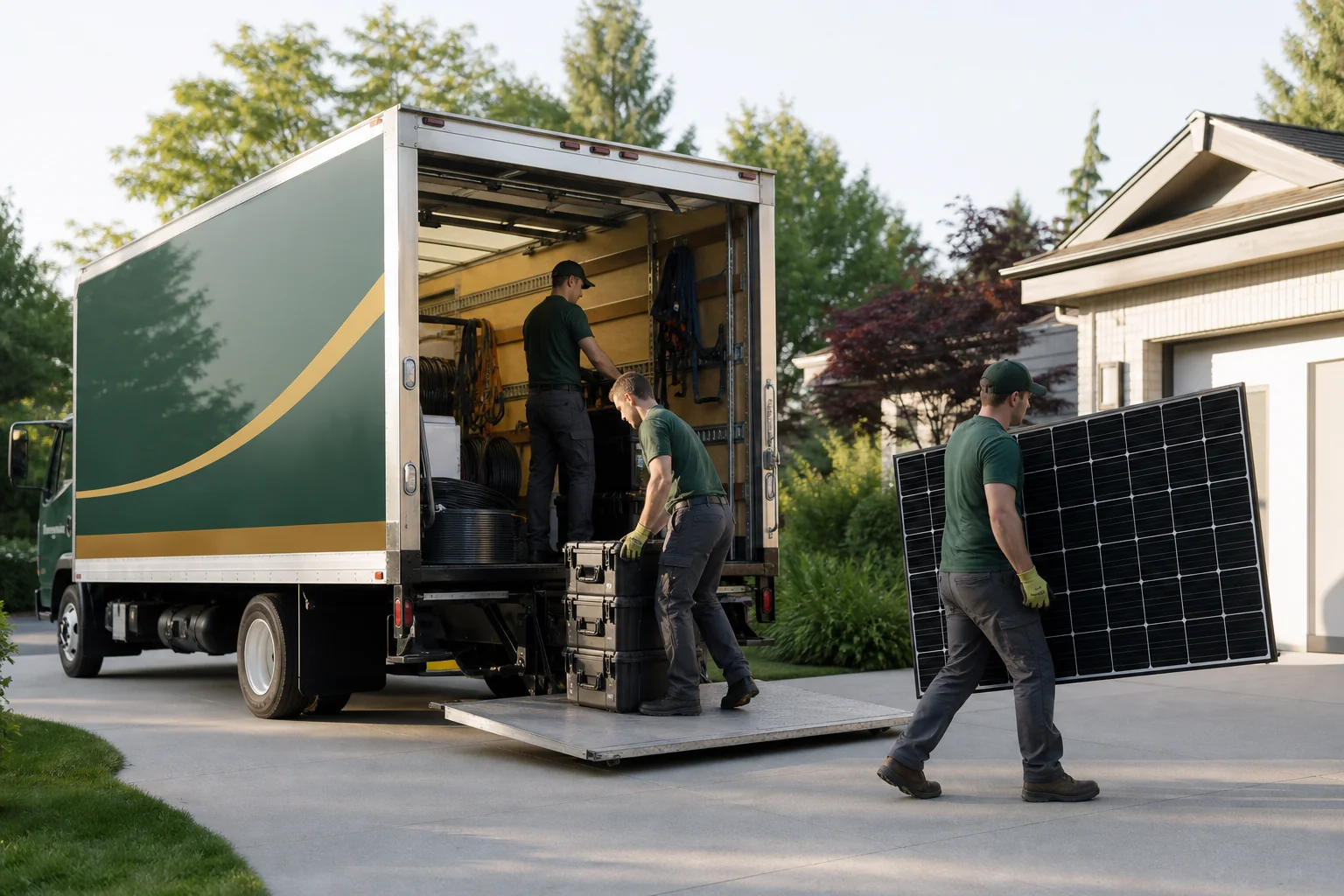
National installers and dealer networks often sell the job in one office, hand design off to a regional team, and then subcontract the physical install to a local crew that's booked across several competing brands at once. Every hand-off adds scheduling lag. Teamsun's model, explained in more depth in In-House Crew vs Subcontractors: Who Installs Your Solar?, keeps design, permitting, and installation under one roof with W-2 employees who answer to the same company you signed with. If you're weighing Sunrun vs local solar installer options directly, timeline reliability is one of the clearest differences to compare.
What Can Extend Your Timeline
A few situations reliably push the 47-day average out further, and it's worth knowing them before you sign:
- Roof replacement needed first: Adds the roofing contractor's own schedule on top of the solar timeline, though bundling both with one company reduces the coordination gap.
- Battery retrofit onto an existing system: If you already have solar from another company and want to add storage, the process starts with a compatibility check, detailed in How Does a Solar Battery Retrofit Work? 2026 Guide, which can add a week for older or unusual inverter setups.
- Commercial-scale interconnection: Systems above 25kW for small businesses often trigger a more detailed utility review, sometimes with a supplemental review study.
- Financing paperwork delays: Loan applications with incomplete documentation can stall a project by 1-2 weeks; PPA and cash purchases tend to move fastest.
- HOA approval requirements: Some neighborhoods require a separate architectural review before permitting can even start.
How to Keep Your Installation on Schedule
You have more control over your timeline than most homeowners assume. A few habits keep a project moving at or ahead of average:
- Respond to document requests within 24-48 hours. Loan paperwork, HOA forms, and utility signature requests are the most common source of self-inflicted delays.
- Confirm your roof's condition before signing. Ask your installer directly whether your roof will pass inspection as-is, so you're not surprised mid-project.
- Ask for the installer's actual average timeline, not a best-case estimate. A company that can cite a real number, like 47 days, is tracking its own performance. One that only says "it depends" usually isn't.
- Choose a company with an in-house crew. Fewer hand-offs between design, permitting, and install means fewer places for your project to sit in a queue.
- Bundle add-ons like EV chargers or batteries into the original permit filing rather than adding them after PTO, which would require starting a second permit process from scratch.
Frequently Asked Questions
Can I speed up the permitting process myself?
Not directly, since only your installer can submit engineering-stamped drawings to your town. What you can do is respond fast to any information requests from your installer or the town, since delays there often trace back to missing paperwork rather than the review itself.
Does adding a battery slow down my install?
It adds a separate electrical permit and typically a half day to a full day on install day, but it rarely changes your overall timeline by more than a few days if it's included in the original design and permit filing.
What happens if my utility takes longer than expected on interconnection?
This varies by provider and by how much solar capacity has already been approved in your area. Filing early, as soon as your design is finalized, is the best way to avoid this becoming a bottleneck, since it lets the utility review run in parallel with town permitting instead of after it.
Is the 47-day average the same for commercial solar?
Commercial systems, generally 25kW to 500kW, often take longer due to more detailed utility interconnection studies and larger equipment lead times. If you're sizing a system for a business, Commercial Solar for Small Business Roofs: 2026 Guide covers realistic timelines for that scale separately.
What if I need a new roof before my solar goes up?
Coordinating a roof replacement adds time, but doing it before solar installation is almost always cheaper than removing and reinstalling panels later. A bundled solar and roofing project keeps both timelines aligned under one schedule instead of two separate contractors working independently.
A knowledgeable installer should be able to tell you, in plain numbers, how long your specific project will take and why. If they can't, that's a sign the timeline isn't really in their control.
If you're weighing a solar contract right now and want a realistic timeline instead of a sales estimate, request a free quote from Teamsun's design team and get a project schedule built around your actual roof, town, and utility, not a national average. You can also talk to a designer about bundling a battery or EV charger into your install, browse the full range of services offered across Connecticut, Massachusetts, and Rhode Island, or call 203-903-4091 to ask what your specific timeline would look like from contract to power-on.
Recommended Resources
Written by
Dan Katzman
Teamsun
Teamsun writes practical solar guidance to help property owners compare equipment, project scope, costs, and long-term service before making a decision.
Keep going.
How Long Does It Take to Get Solar Interconnection
How long does it take to get solar interconnection approval? See real utility timelines for Eversource, National Grid, and more, plus how to avoid delays.
Dan Katzman
Teamsun
How Does a Solar Battery Retrofit Work? 2026 Guide
Learn how does a solar battery retrofit work, from compatibility checks to activation. See equipment options, permitting steps, and install-day timelines.
Dan Katzman
Teamsun
How Many Solar Panels Does a Small Business Need?
Learn how many solar panels for small business use based on kWh usage, roof size, and budget, plus the 25kW-500kW range Teamsun installs across CT, MA, RI.
Dan Katzman
Teamsun