Commercial Solar ROI Payback Period
Commercial solar ROI payback depends on system size, utility rates and incentives. Learn how to estimate break-even in CT, MA and RI before you sign.
Dan Katzman
Teamsun
Commercial solar ROI payback commonly lands between about 3 and 7 years for a taxable business that stacks the federal tax credit with depreciation, and longer for a tax-exempt owner or a building with low electric rates. Three things set your number: installed cost per watt, what your utility charges you, and which incentives you can claim. This guide shows how to estimate break-even before you sign, for Connecticut, Massachusetts and Rhode Island properties.
Key Takeaways
- Payback is a range, not a promise: a taxable business using the tax credit and depreciation often sees roughly 3 to 7 years; cash savings alone take longer. Our worked example below lands near 8 years before tax benefits and about 6 after.
- Utility rate beats everything else: in our example, moving the rate from 15 to 25 cents per kWh swings payback from about 8.4 years to about 4.9 years.
- Timing now matters: a new commercial project must be placed in service by December 31, 2027 to earn the 48E federal credit, and commercial builds often take several months.
- Estimate before you sign: six inputs (cost, production, rate, incentives, tax position, upkeep) give you a break-even year you can test against any installer's proposal.
Commercial Solar Payback at a Glance
| Driver | What to use | How it moves payback |
|---|---|---|
| Installed cost | Roughly $2.50 to $3.50 per watt for 25kW to 100kW; $1.50 to $3.50 per watt quoted for 100kW to 1MW before incentives | Lower cost per watt shortens payback; larger systems usually cost less per watt |
| Utility rate | Your all-in cents per kWh, plus demand charges | Higher rates and higher demand charges shorten payback |
| Federal credit | 30% ITC (Section 48E) for qualifying projects placed in service by Dec 31, 2027 | Cuts the net cost by nearly a third |
| Depreciation | 5-year MACRS on a basis reduced by half the credit | Cuts tax bills for profitable owners; no value without tax liability |
| State programs | Connecticut, Massachusetts SMART, Rhode Island programs; terms change | Adds production payments or credits, varies by state and size |
| Ownership model | Cash, loan, PPA or lease | PPA and lease owners keep the incentives; you get a lower rate instead |
| Upkeep | Inverter replacement, monitoring, insurance | Small drag on savings, larger if inverters fail early |
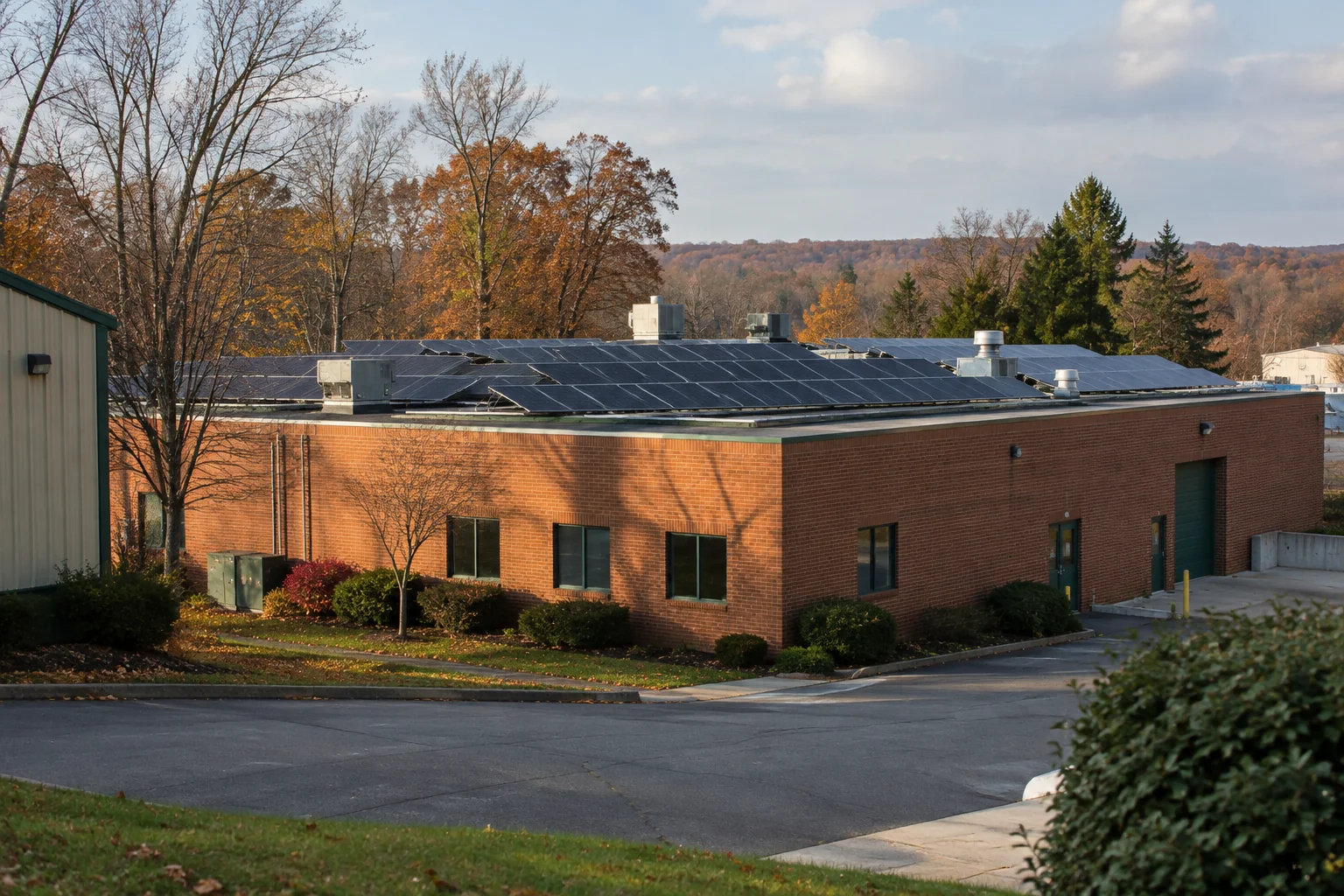
What Is Commercial Solar ROI and How Is Payback Measured?
Commercial solar ROI is the return your business earns on the money spent on a system. Payback period is the year your cumulative savings equal what you paid. A 7-year payback means the system has covered its own cost by year seven, and every year after that is net savings.
People mix up three measures, so pin them down before comparing proposals:
- Simple payback: net system cost divided by yearly savings. Fast to calculate, ignores taxes and the time value of money.
- Tax-adjusted payback: the same math after subtracting the tax credit and the value of depreciation. This is the number a profitable business should care about.
- Return on investment: total savings over the system's life, compared with cost. The U.S. Department of Energy's simple PV economic calculations guide also describes a savings-to-investment ratio, the share of your outlay recovered by generation after counting upkeep.
One caution on published numbers. Payback figures vary widely by building and utility. A federal study of commercial solar break-even conditions across 1,355 utilities found that in the cash purchase with 30% credit scenario it modeled, most utilities did not reach break-even at the costs and rates of that time. That study is old, and equipment costs and rates have moved, but it shows why a national average tells you little about your roof.
Why Does System Size Change Your Payback Period?
System size changes payback because cost per watt falls as systems grow, while your savings depend on how much of your own load the system covers. A 25kW system carries higher fixed costs per watt than a 250kW one, but an oversized system earns less per kWh if the extra power is exported cheaply.
Cost per watt by size band
Market estimates for small commercial systems of 25kW to 100kW run roughly $2.50 to $3.50 per watt installed in 2026. Published estimates for 100kW to 1MW systems span about $1.50 to $3.50 per watt before incentives, a wide gap that reflects roof type, racking, structural work and electrical upgrades.
Those ranges are market data, not our quotes. Your cost per watt comes from a site visit, because a flat membrane roof, a standing seam roof and a ground mount each price differently. Our guide to how many solar panels a small business needs shows how to size a system from your usage first.
Match the system to your load, not your roof
The largest array that fits your roof is not always the fastest payback. Power you use on site offsets the full retail rate. Power you export is usually credited at a different rate. A system sized to 80% to 100% of your annual use, with daytime consumption high enough to absorb most output, tends to pay back faster than one sized to the roof edge.
Building type matters too. Researchers at the national labs found that system economics vary by about 30% on average by building type, with buildings that have large rooftop area and steady daytime load doing better. A warehouse, a machine shop and a medical office on the same street can see different results.
How Do Utility Rates and Demand Charges Set the Timeline?
Utility rates set payback because every kWh your panels produce replaces a kWh you would have bought. Higher rates mean larger yearly savings from the same system. Demand charges, billed on your peak kilowatt draw, can add savings if solar lowers that peak, but solar only trims them when production overlaps with your peak.
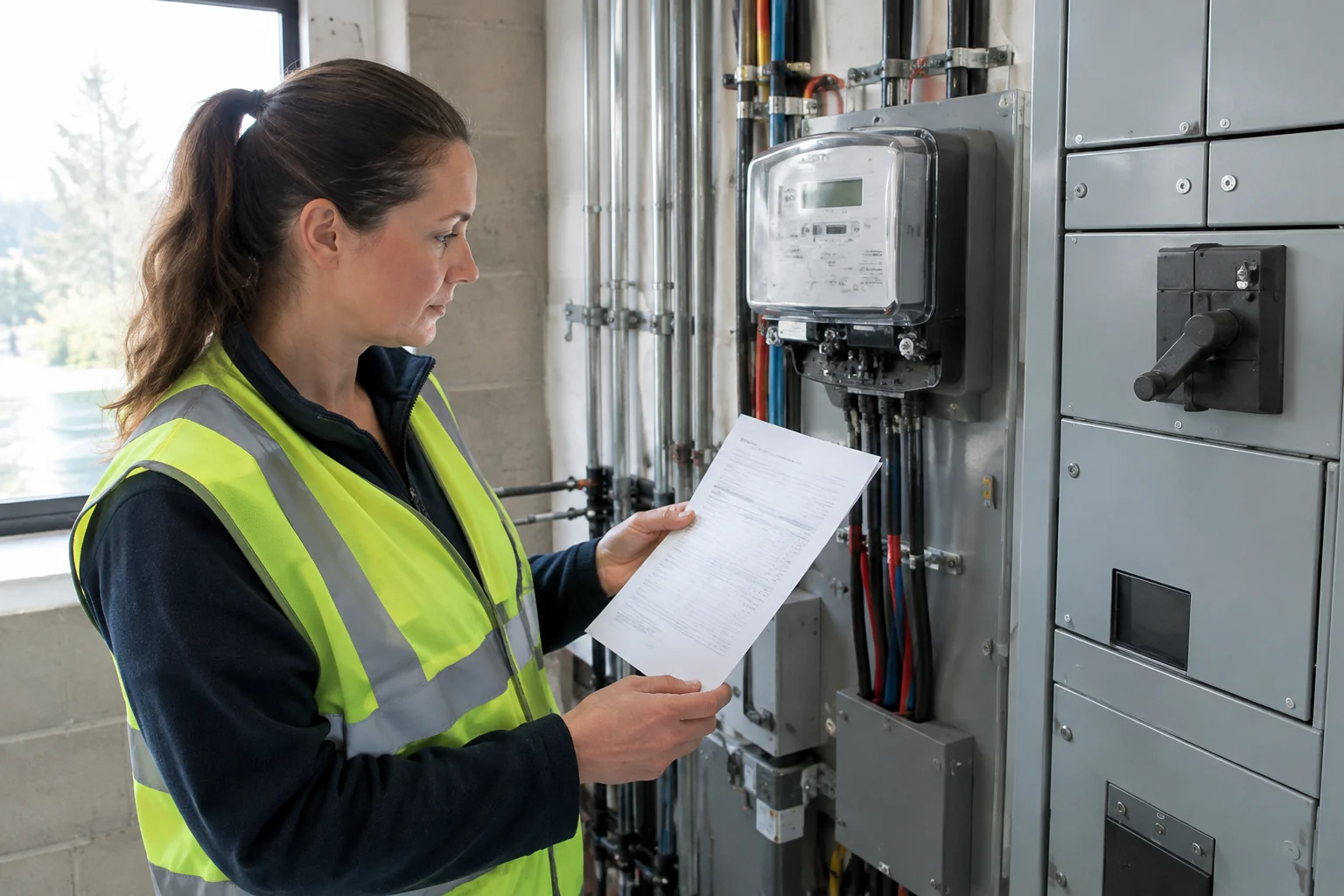
The U.S. Department of Energy's on-site commercial solar decision guide frames the value of a system as its ability to offset energy and demand charges or secure stable electricity pricing. Read your own bill for both lines before you look at any proposal.
What to pull from your bill
- Your rate class: small general service and large general service price energy and demand differently. Ask your utility, such as Eversource in much of Connecticut and Massachusetts, which class you are on.
- Energy charge per kWh, all components: add supply, delivery and surcharges. Use the total, since solar offsets most of it.
- Monthly peak demand in kW: if demand charges are a large share of your bill, ask the installer to model your interval data. Solar helps on sunny afternoons; it does not help a 6 a.m. startup peak.
- Twelve months of kWh use: seasonal swings tell you how much of the output you will use on site.
Two things to expect from rates. First, a higher rate shortens payback, so Connecticut, Massachusetts and Rhode Island buildings with high delivery charges tend to compare well with regions with cheap power. Second, rates change, and a model that assumes steady annual increases can flatter the result. Ask any installer to show payback at today's rate with no escalation, then with escalation.
How Do the Federal ITC and State Incentives Change the Math?
The federal investment tax credit cuts a qualifying commercial system's net cost by 30%, and depreciation lowers your tax bill further. State programs add production payments, credits or net metering value on top. For a taxable business these incentives can shorten payback by several years compared with cash savings alone.
The federal credit and its deadline
The Section 48E credit is 30% for qualifying projects. Under the law enacted July 4, 2025, projects that began construction after July 4, 2026 must be placed in service by December 31, 2027 to earn it. That date has passed for starting construction, so essentially every new project now faces the end-of-2027 in-service deadline.
Commercial builds commonly take several months from contract to power-on, covering design, permits, utility interconnection and equipment delivery. That makes timing a payback variable of its own. A project that slips past the deadline loses the credit and can add years to break-even. Check the rules with your tax advisor, since qualifying details turn on how and when construction starts.
Depreciation
Profitable owners can usually depreciate solar equipment over five years through MACRS, on a basis reduced by half the credit. That is real tax value only if you owe tax. A nonprofit, a tax-exempt owner or a business with losses may get little from it. If you use a PPA or lease, the third-party owner claims it instead, and you see the benefit as a lower electric rate.
State programs in CT, MA and RI
Connecticut lawmakers voted in May 2026 to extend rooftop solar incentives through 2035, but program rates and rules have been revised in recent years, so confirm the current commercial terms before you model savings. Massachusetts pays through SMART and net metering, and Rhode Island has its own programs. Our comparison of solar incentives in Massachusetts, Connecticut and Rhode Island shows how each state pays back.
One thing is not settled: how long state-level incentive terms will hold at current levels. Model payback with and without them. If the project only pencils out with a state payment you cannot confirm in writing, treat that as a warning.
How to Estimate Break-Even Before You Sign: 6 Steps
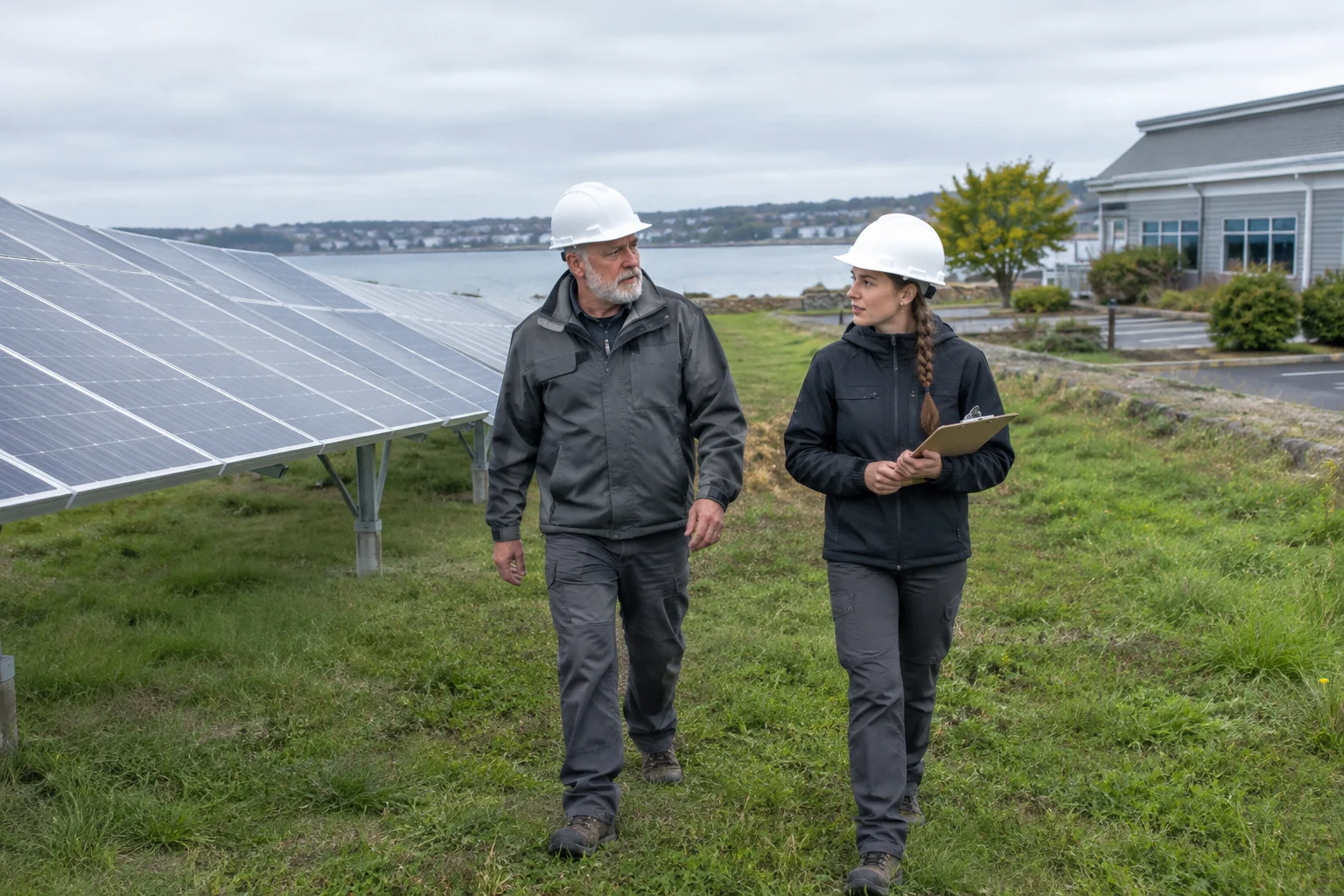
To estimate break-even, subtract incentives from installed cost, then divide by yearly net savings. Use your own bill for the savings, production from a site-specific model, and your actual tax position for the credit and depreciation. Test the result at three utility rates before signing anything.
Step 1: Get the installed price in dollars per watt
Take the proposal's total price and divide by system size in watts. A 100kW system priced at $275,000 is $2.75 per watt. Compare that against the size-band ranges above. Pass mark: the price includes permitting, interconnection fees, structural review, and the inverter. Walk away if the proposal lists only panels and racking.
Step 2: Confirm yearly production
Ask for kWh per year per kW, with the shading analysis and tilt assumptions listed. Check that the model includes yearly degradation. Pass mark: the installer can show the production assumption and explain it. A number with no assumptions behind it is a sales figure.
Step 3: Value each kWh at your real rate
Multiply production by your all-in energy rate. Count only the share you use on site at full retail, and value exports at the rate your program actually credits. Pass mark: the proposal's rate matches the cents per kWh on your own bill. Fail: the proposal assumes a rate higher than your bill shows, or escalation of several percent a year with no basis.
Step 4: Subtract incentives you can actually claim
Apply the 30% credit if the project qualifies and you can use it. Add state payments only if the program is open to your system size and terms are confirmed in writing. If you are tax-exempt, ask about direct pay or a PPA instead. Our breakdown of commercial solar financing covers who keeps the incentives in each structure.
Step 5: Add depreciation value if you owe tax
Take the system cost, subtract half the credit, and multiply by your tax rate to estimate the nominal tax savings from five-year depreciation. Pass mark: your accountant confirms you have enough taxable income to use it. If not, drop it from your payback and treat any benefit as upside.
Step 6: Subtract upkeep and divide
Subtract yearly costs such as monitoring, insurance and cleaning from yearly savings. Divide the net cost by that figure. Then run it three ways: at today's rate, at a rate 20% lower, and at a rate 20% higher. Pass mark: you are comfortable with the lower-rate case. If the project only works at the higher rate, ask for a smaller system or a different structure.
Worked example: a hypothetical 100kW Connecticut roof
This example is hypothetical. It uses assumptions, not a real customer or a quote. Suppose a profitable Connecticut business installs a 100kW rooftop system at $2.75 per watt, producing about 120,000 kWh a year, with yearly upkeep of $1,000 and a 21% federal tax rate.
| Line | Amount |
|---|---|
| Installed cost (100,000 W x $2.75) | $275,000 |
| 30% federal credit | -$82,500 |
| Net cost after credit | $192,500 |
| Yearly savings at $0.20 per kWh (120,000 kWh) | $24,000 |
| Less upkeep | -$1,000 |
| Net yearly savings | $23,000 |
| Simple payback after credit ($192,500 / $23,000) | about 8.4 years |
| Depreciation basis ($275,000 minus half the credit) | $233,750 |
| Nominal tax value at 21% | about $49,100 |
| Net cost after credit and depreciation | about $143,400 |
| Tax-adjusted payback ($143,400 / $23,000) | about 6.2 years |
Now test the rate. At $0.15 per kWh, savings fall to $17,000 net and tax-adjusted payback stretches to about 8.4 years. At $0.25, net savings rise to $29,000 and payback shortens to about 4.9 years. Same roof, same system, a three-and-a-half-year spread, driven by the rate alone.
This simple model ignores state taxes, inflation in rates, panel degradation and inverter replacement. Treat it as a screening tool. A real proposal should show you a year-by-year cash flow that you can check line by line.
What Can Push Payback Out Longer?
Payback stretches when the roof needs work first, when interconnection takes longer than planned, when a project misses a credit deadline, or when financing costs eat into savings. Shading and low daytime load also cut savings. Each is checkable before you sign.
- Roof condition: panels last decades, so an aging roof may need replacing first or the panels removed and reinstalled later. See our guide on solar on an old roof.
- Interconnection delays: utility approval can add weeks or months, and a system that cannot run cannot save you money.
- Loan interest: financing costs lengthen payback compared with cash. A PPA lowers upfront cost but shifts incentives to the owner of the system.
- Shading and orientation: a shade study should be part of every commercial proposal.
- Equipment replacement: inverters often need replacing within the life of the panels, so the model should include it.
What Should You Ask Any Installer About Timeline and Accountability?
Ask who does the work, how long each phase takes, what happens if the project misses a deadline, and what the proposal assumes about production and rates. Written answers matter more than verbal ones, because payback depends on the system being installed and running by a set date.
- Who installs it? Ask whether the crew is the installer's own employees or subcontractors. We use in-house W-2 crews, so one company answers for the work from design to service.
- What is the timeline, phase by phase? Ask for design, permitting, interconnection, install and inspection dates. Our company-wide average is 47 days on install timelines; commercial projects depend on size and utility approval, so expect a site-specific schedule.
- What happens if the credit deadline is at risk? The installer should explain who bears the risk in writing.
- What production is guaranteed? Ask for the number, the assumptions and the remedy if output falls short.
- Who services the system for 25 years? Ask where the crew is based and whether they work on other brands.
- Is the license current? In Connecticut, you can check electrician and contractor credentials with the state's license lookup tool, and the state's solar buyer's guide lists scams to watch for.
If an installer will not put production, timeline and rate assumptions in the contract, treat that as a reason to keep looking. For a wider list of questions, see our walkthrough of how long solar installation takes from contract. It covers the residential side of the same process.
Frequently Asked Questions
Is the solar tax credit still available in 2026?
Yes, for commercial projects that qualify. The 30% Section 48E credit still applies, but projects that began construction after July 4, 2026 must be placed in service by December 31, 2027. Confirm your project's status with a tax advisor, since the start-of-construction rules decide eligibility.
Does solar make sense for a manufacturing facility?
It can, particularly when the plant runs daytime shifts, because on-site use offsets the full retail rate. Large roof area and steady load help. Heavy demand charges set by early or overnight peaks help less, so model your interval data first.
Can I install solar during a roof replacement?
Yes, and it is often the cheapest time, because the roofer and solar crew can coordinate flashing, penetrations and warranties. If the roof is new but needs repair later, panels must come off and go back on. Check the roof's remaining life before you set the system size.
Do PPAs and leases have a payback period?
Not in the usual sense. With a PPA or lease you pay little or nothing upfront, and savings begin at once if the rate is below your utility's. The third-party owner keeps the tax credit and depreciation. Read our guide on how solar PPA financing works for the trade-offs.
Get Your Break-Even Number Before You Sign
A payback estimate is only useful if it uses your bill, your roof and your tax position. If you own a commercial property in Connecticut, Massachusetts or Rhode Island and want a 25kW to 500kW system modeled on your real usage, request a free quote and we will show you the cash flow line by line.
You can also talk to a designer about roof and ground-mount options, explore our services, or call 203-903-4091. With the federal credit deadline set for the end of 2027, the sooner you have a number, the more time your project has.
Recommended Resources
Written by
Dan Katzman
Teamsun
Teamsun writes practical solar guidance to help property owners compare equipment, project scope, costs, and long-term service before making a decision.
Keep going.
How Long Does It Take to Get Solar Interconnection
How long does it take to get solar interconnection approval? See real utility timelines for Eversource, National Grid, and more, plus how to avoid delays.
Dan Katzman
Teamsun
How Long Does Solar Installation Take From Contract?
See the full solar panel installation timeline from contract to power-on, step by step, and why Teamsun's in-house crews average just 47 days.
Dan Katzman
Teamsun
Commercial EV Charger Installation
Commercial EV charger installation checklist for CT, MA and RI businesses: charger level, load calcs, permits, parking, networking and solar pairing.
Dan Katzman
Teamsun