How Does Solar PPA Financing Work in 2026?
Learn how solar PPA financing works in 2026, from rate calculations to 620 FICO underwriting, and see how it stacks up against loans and cash purchases.
Dan Katzman
Teamsun
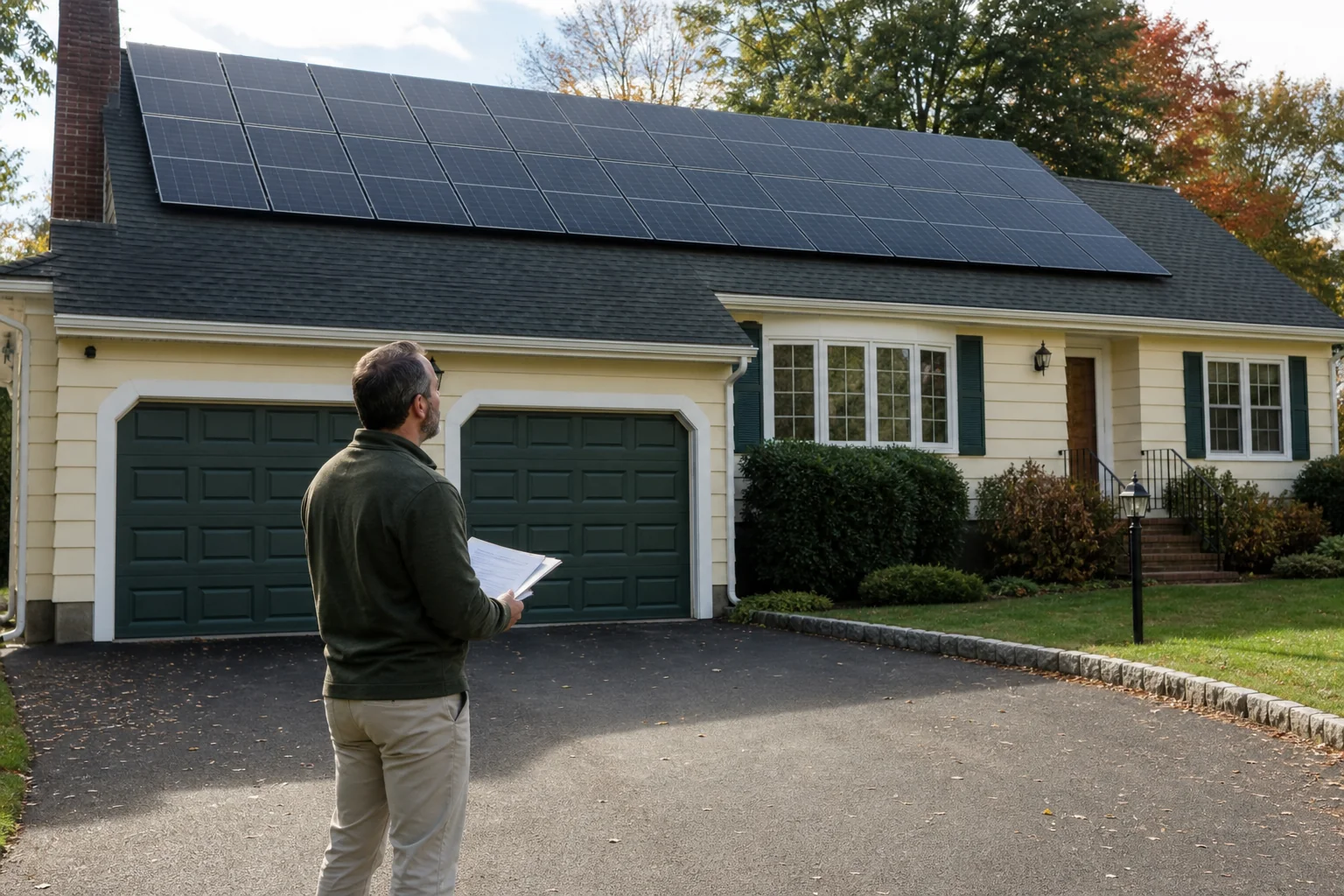
A solar PPA lets you put panels on your roof for $0 upfront, then charges you a per-kilowatt-hour rate for the electricity those panels produce, usually below what your utility charges. Understanding how solar PPA financing works starts with one idea: you're not buying equipment, you're buying power, and a third-party company owns and maintains the system for the life of the contract.
Key Takeaways
- No loan, no purchase: A PPA sells you the electricity your rooftop system generates at a fixed or slowly escalating rate, typically 1-3% per year, instead of financing equipment you own.
- 620 FICO minimum: Teamsun underwrites PPAs at a 620 credit floor, well below the 650-700+ most solar loan products require, opening solar to homeowners who get turned away elsewhere.
- Zero maintenance cost to you: The PPA provider owns the equipment, so repairs, monitoring, and inverter replacement are their responsibility, not yours.
- No federal tax credit for the homeowner: The system owner (the PPA company) claims the 30% federal Investment Tax Credit, which is part of why your per-kWh rate can start below utility pricing.
- Contract terms run 20-25 years: At the end, you can renew, buy the system at fair market value, or have it removed at no cost.
Solar PPA Financing at a Glance
| Feature | Solar PPA | Solar Loan | Cash Purchase |
|---|---|---|---|
| Upfront cost | $0 | $0 (financed) | Full system cost |
| Credit minimum | 620 FICO | 650-700+ typical | None |
| Who owns the system | Third-party financier | Homeowner | Homeowner |
| Payment structure | Per-kWh rate w/ annual escalator | Fixed monthly loan payment | One-time payment |
| Federal tax credit eligibility | No (goes to system owner) | Yes, homeowner claims it | Yes, homeowner claims it |
| Maintenance responsibility | PPA provider | Homeowner | Homeowner |
| Typical contract length | 20-25 years | 10-25 years | N/A |
| Home equity impact | No added equity from system | Adds home value over time | Adds home value immediately |

1. What a Solar PPA Actually Is
A power purchase agreement separates the panels from the power. A financing company buys and installs the solar system on your roof, and you agree to purchase the electricity it produces at an agreed rate. You never own the hardware. Instead, you sign a contract that looks a lot like your utility bill, except the rate usually starts lower and the source is the sun instead of the grid.
This structure matters most for cost. There's no down payment, no loan origination fee, and no equipment to insure separately. Your existing utility relationship stays intact for any electricity you still pull from the grid, but every kilowatt-hour your panels generate gets billed by the PPA provider instead.
Teamsun designs and installs PPA systems the same way it builds owned systems: in-house W-2 crews, Tier-1 panels, and the same 47-day average install timeline from contract to power-on. The financing structure changes who owns the equipment, not who's on your roof.
2. How Your PPA Rate Gets Calculated
Your rate depends on three inputs: expected system production, your local utility's current per-kWh price, and the annual escalator built into the contract. A designer runs a production estimate based on your roof's orientation, shading, and panel count, then sets a starting rate that undercuts your utility's current price, often by 10-20%.
The escalator, usually 1-3% a year, accounts for the fact that utility rates in Connecticut, Massachusetts, and Rhode Island have historically climbed faster than that. Over a 20-year term, this gap is where most of your savings come from. If your system underproduces against its guarantee in a given year, most PPA contracts include a true-up credit so you're not billed for power you never received.
Homeowners weighing a PPA against a fixed-rate loan payment should compare the projected first-year PPA rate against their current utility rate, not against a hypothetical future rate. A designer at Teamsun can run both scenarios side by side before you sign anything.
3. How the 620 FICO Minimum Underwriting Works
The credit floor on a PPA comes from the third-party financier backing the contract, not from the installer. Because the financier owns the hardware and is the one collecting monthly payments, they set the credit threshold based on their own risk tolerance. Teamsun's PPA partners currently underwrite at a 620 FICO minimum, a stark contrast to solar loan products that frequently require 650, 680, or even 700+ to qualify at a competitive rate.

A 620 score sits in the "fair credit" range under most scoring models, well below what many national installers will even consider. Approval isn't based on the score alone. Underwriters also weigh income stability, existing debt load, and sometimes utility payment history. This combination lets homeowners who've had a rough credit stretch, medical debt, or a recent life event still access rooftop solar without waiting years to rebuild a score.
This is the core reason PPAs function as a practical path for solar financing for bad credit homeowners: the underwriting model was built around monthly power payments, not a traditional installment loan risk profile.
4. The Step-by-Step PPA Process From Signing to Power-On
- Site assessment: A designer evaluates roof condition, shading, and panel layout, and builds a production estimate specific to your home.
- Credit application: You submit a soft-pull credit application to the PPA financier; approval at 620+ FICO typically comes back within a day or two.
- Design and contract signing: You review the final system design, starting rate, escalator, and contract length before signing.
- Permitting and utility interconnection: Teamsun handles town permitting and utility paperwork required to connect your system to the grid.
- Installation: In-house crews install the system, generally within the same average 47-day window as an owned system.
- Activation and first billing cycle: Once the utility grants permission to operate, your system goes live and your first PPA billing cycle begins based on actual production.
If your roof needs work before any of this can happen, get that resolved first. See when to replace a roof before installing solar for guidance on timing that decision correctly.
5. Solar PPA vs Loan vs Cash: Side-by-Side Comparison
Choosing between a PPA, a loan, and a cash purchase comes down to your credit profile, your appetite for upfront cost, and whether you want to claim the federal tax credit yourself.
| Factor | PPA | Solar Loan | Cash |
|---|---|---|---|
| Best for credit under 650 | Yes | Rarely | N/A (no credit check) |
| Long-term cost over 25 years | Moderate | Lowest (after payoff) | Lowest overall |
| Increases home resale value | Limited/varies | Yes, once paid off | Yes, immediately |
| Requires transferring contract on home sale | Yes | Loan payoff or transfer | No |
| System repairs and monitoring included | Yes, by provider | No, owner's responsibility | No, owner's responsibility |
For a deeper breakdown of monthly cost structures across all three paths, see Solar Loan vs PPA vs Lease: Which Fits You.
6. Who a PPA Makes the Most Sense For
A PPA fits homeowners whose credit sits below the threshold most solar loans require, or who simply don't want to take on debt to go solar. It also works well for homeowners who don't have enough tax liability to use the federal credit efficiently, since the PPA provider claims that credit instead and passes savings through the lower starting rate.
A loan or cash purchase makes more sense if you plan to stay in the home long-term, want to build equity through ownership, and qualify for lender rates above the PPA credit floor. If you're deciding between a bundled roof-and-solar project versus a standalone system, review what a solar plus roofing bundle costs before comparing financing paths, since bundling can shift which option makes the most financial sense.
7. What Happens at the End of a PPA Term
Most PPA contracts run 20 to 25 years. When the term ends, you typically have three options: renew the agreement at a new rate, buy the system outright at its fair market value (which drops significantly after depreciation), or have the provider remove the equipment at no cost to you.
If you sell your home before the contract ends, the PPA transfers to the new owner, or you can buy out the system before closing. Either path requires disclosure during the sale process, so keep your contract documents accessible. Homeowners who already have an aging system, whether financed as a PPA or otherwise, and are wondering about performance decline should look at how a battery retrofit works to pair storage with an existing array.
FAQ: Solar PPA Financing Questions
Does a PPA affect home resale value?
It can complicate a sale slightly since the new buyer must either assume the contract or you must buy out the system before closing. Most buyers accept a transfer once they see the lower electricity rate it locks in.
Can you switch from a PPA to ownership later?
Yes. Most contracts include a buyout option at various points during the term, letting you convert to full ownership once the price drops enough to make sense.
Does Teamsun service PPA systems long term?
Yes. Teamsun's in-house crews handle installation and ongoing service for PPA systems the same way they do for owned systems, unlike installers that rely on subcontractors and disappear after the sale. See how that structure compares in In-House Crew vs Subcontractors.
How does a PPA compare to going with a national provider?
Underwriting thresholds and rate structures vary by company. See Sunrun vs Local Solar Installer for a direct comparison of financing terms and install accountability.
According to the U.S. Department of Energy's homeowner solar guide, third-party ownership models like PPAs remain one of the most common ways households access solar without upfront capital. The Consumer Financial Protection Bureau also outlines how FICO score ranges affect financing access broadly, which explains why a 620 floor opens doors that many lenders keep closed.
If you've been told your credit disqualifies you from solar, or you'd rather skip a loan altogether, a PPA might be the more practical path onto your roof. Request a free quote to see your actual production estimate and starting rate, or talk to a designer about whether a PPA, loan, or cash purchase fits your situation best. You can also call 203-903-4091 or explore Teamsun's full range of services across Connecticut, Massachusetts, and Rhode Island.
Recommended Resources
Written by
Dan Katzman
Teamsun
Teamsun writes practical solar guidance to help property owners compare equipment, project scope, costs, and long-term service before making a decision.
Keep going.
How Does a Solar Battery Retrofit Work? 2026 Guide
Learn how does a solar battery retrofit work, from compatibility checks to activation. See equipment options, permitting steps, and install-day timelines.
Dan Katzman
Teamsun
How Long Does It Take to Get Solar Interconnection
How long does it take to get solar interconnection approval? See real utility timelines for Eversource, National Grid, and more, plus how to avoid delays.
Dan Katzman
Teamsun
How Long Does Solar Installation Take From Contract?
See the full solar panel installation timeline from contract to power-on, step by step, and why Teamsun's in-house crews average just 47 days.
Dan Katzman
Teamsun