FranklinWH Battery Cost: What Goes Into an aPower 2
FranklinWH battery cost explained line by line: aPower 2, aGate, labor, permits, and CT incentives. A guide for CT, MA and RI homeowners reading a quote.
Dan Katzman
Teamsun
FranklinWH battery cost for a Connecticut, Massachusetts or Rhode Island home is built from several lines, not one price. Published 2026 market estimates put the aPower 2 hardware at about $9,000 to $12,000 per unit and the required aGate controller at about $3,000 to $4,000, before installation labor, electrical upgrades, permits and incentives.
Key Takeaways
- Hardware is only part of the bill: one aPower 2 plus an aGate controller lands in the low-to-mid teens of thousands before labor, panel work and permits, so a quote that shows a single lump sum is hard to check.
- Battery count drives the total most: each extra aPower 2 adds hardware cost, so size the system to the loads you must keep running, not to the biggest number a salesperson offers.
- Electrical work is the wild card: an older main panel, a long conduit run or a service upgrade can add real money, and town permit fees differ.
- Existing solar of any brand is fine: a retrofit is priced the same way, with extra lines for interconnection and any inverter compatibility work.
- Connecticut incentives changed in 2026: new Energy Storage Solutions participants enroll under a new framework from April 1, 2026, so confirm current levels on the program site before you count on any rebate.
FranklinWH Battery Cost at a Glance
| Quote line | What it covers | Typical published estimate (2026) |
|---|---|---|
| aPower 2 battery | 15 kWh unit; you buy one or more | About $9,000 to $12,000 per unit |
| aGate controller | Required for every FranklinWH system | About $3,000 to $4,000 |
| Generator module | Only if you connect a generator | Ask for a written line item |
| Installation labor | Mounting, wiring, commissioning | Varies by site and crew |
| Electrical upgrades | Panel, subpanel, service, conduit | Varies widely by house |
| Permits and inspection | Town electrical permit, utility interconnection | Varies by town and utility |
| Incentives | Connecticut Energy Storage Solutions and utility programs | Check the program site for current levels |
How Much Does a FranklinWH Battery Cost?
A single-battery FranklinWH system has commonly been estimated at roughly $12,000 to $16,000 in hardware alone: about $9,000 to $12,000 for one aPower 2 and $3,000 to $4,000 for the aGate controller. Labor, electrical work, permits and inspection are added on top, and incentives reduce the net.
Those hardware ranges are published 2026 retail market estimates for the aPower 2 and the aGate, not figures from any state program, and they are not Teamsun's price. Connecticut's incentive program exists to offset them. We do not quote a flat price over the internet because the same battery can cost very different amounts to install in two houses on the same street.
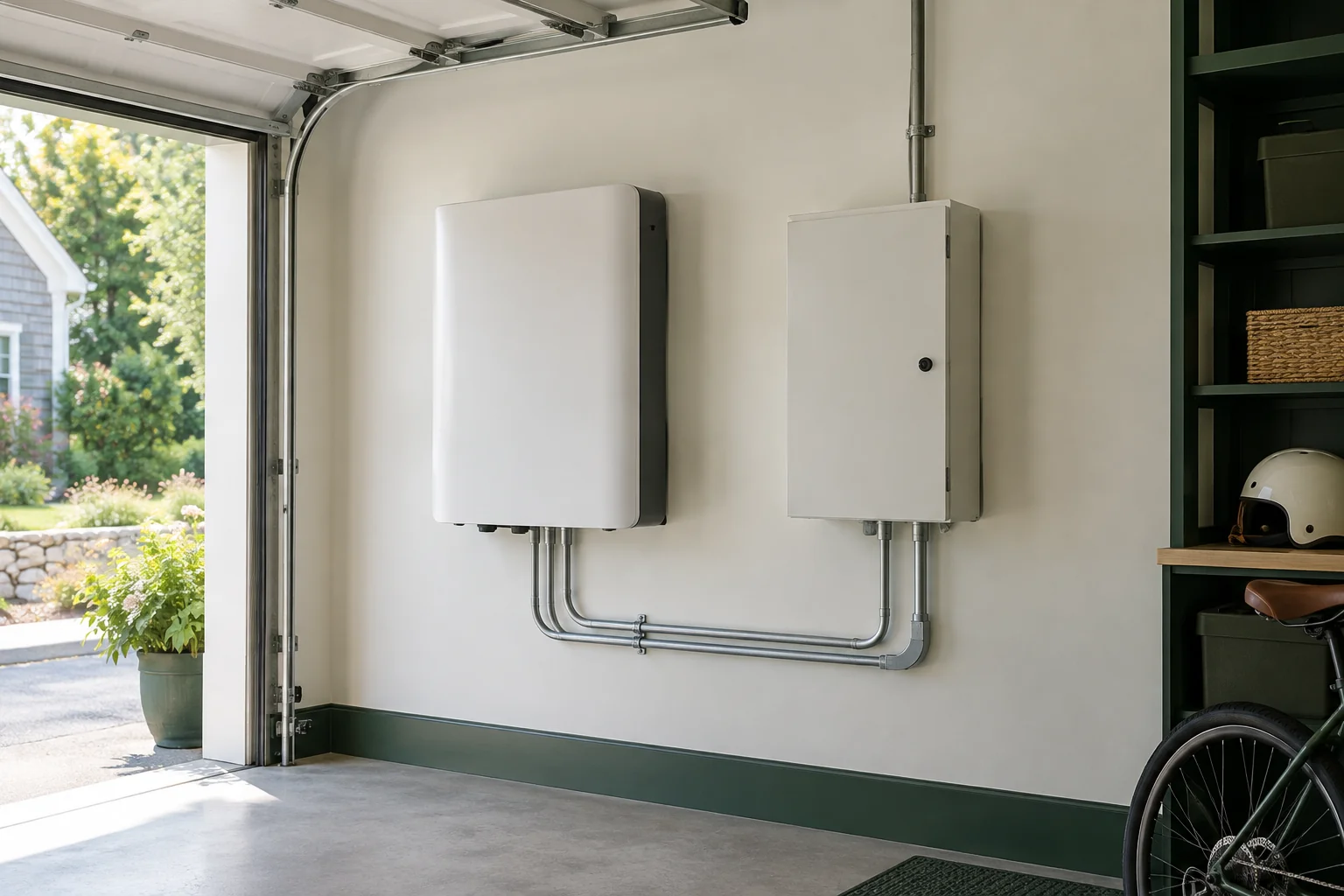
One public record gives a sense of scale for real jobs. A Trumbull, Connecticut residential electrical permit listing from March 2025 shows installation and wiring of two FranklinWH batteries with a declared job value of $35,000. A declared permit value is what the applicant wrote on the form, not an invoice, but it shows a two-battery job can sit well above the hardware math.
Why the range is so wide
Four things move the number: how many batteries you install, whether the controller sits at the service entrance or farther away, how much electrical work the house needs, and whether solar is new or already on the roof. Everything else is smaller.
That is why we ask homeowners to compare quotes line by line. Our guide on Tesla Powerwall vs FranklinWH covers how the two systems differ, so this post stays on what a FranklinWH quote contains.
1. The aPower 2 Battery Line
The aPower 2 is FranklinWH's second-generation home battery, rated at 15 kWh of capacity per unit. It stores energy from solar, the grid, a generator or an EV, according to the manufacturer's product page. This is the largest hardware line on any FranklinWH quote.
Ask for two numbers written out separately: total kWh and continuous kW. Capacity (kWh) tells you how long the battery lasts. Continuous power (kW) tells you how much you can run at once. Two units double both, so confirm the quote states the result, not just the unit count.
Prices for the aPower 2 itself have been published at about $9,000 to $12,000 per unit in 2026 market estimates. The spread reflects distributor pricing, shipping, and what the installer bundles into the line. If one quote is far below the rest, find out what was left out.
2. The aGate Controller and Optional Generator Module
The aGate is the controller that manages the battery, the grid connection, solar and the home's loads. Every FranklinWH system needs one, and published 2026 estimates put it at about $3,000 to $4,000. It is not an optional upgrade, so a quote that omits it is incomplete.
Where the aGate goes
Placement matters for cost. The cleanest install puts the controller at or near the service entrance. If your meter is outside and the panel is in a far corner of the basement, conduit and labor go up. Ask the installer where it will mount and why.
When you need the generator module
Skip the generator module unless you own a portable or standby generator you want tied into the system. Plenty of New England homes keep a generator for long winter outages, and FranklinWH can accept one as an input. If that is you, get the module and its wiring as its own written line. If not, it should not appear. Our posts on solar panels and home generators explain the tradeoffs.
3. How Many Batteries Does Your Home Need?
Most homes that want only essential circuits, such as the refrigerator, lights, internet and a heating system blower, can start with one aPower 2. Whole-home backup with electric heat, well pumps, dryers or an EV usually needs two or more units. Count your loads before you count batteries.
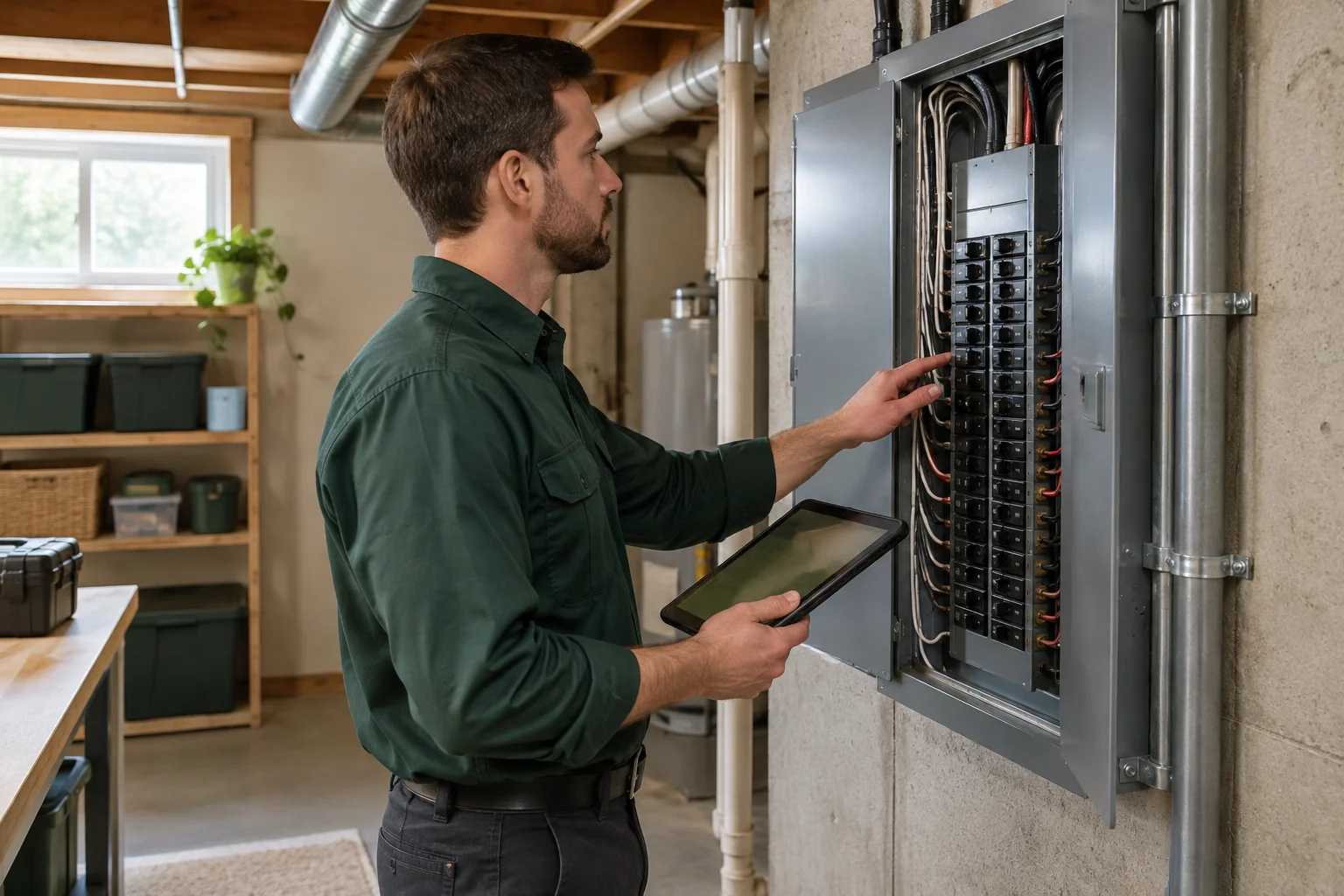
Here is the method we use on a site visit. It works with any battery brand.
- List what must stay on. Refrigerator, freezer, furnace or boiler controls, well pump, sump pump, medical equipment, internet, lights.
- Find the biggest motor. A well pump, central air compressor or heat pump draws a surge when it starts. That surge sets how much continuous power you need.
- Decide how long you want to ride out an outage. A full day, three days, or "until the lights come back" are different designs.
- Check your solar. With panels that recharge the battery in daylight, a smaller battery can stretch much farther than one without solar.
A hypothetical worked example
Suppose a home uses 30 kWh a day on a normal day, but its essential circuits use about 10 kWh a day. One 15 kWh aPower 2 would run those essentials for around a day and a half with no sun. It would run the whole house at normal use for about half a day. These are illustrative numbers, not a design.
Using the published hardware estimates, that home's one-unit hardware lands near $12,000 to $16,000 (one aPower 2 plus the aGate). Two units for whole-home backup would land near $21,000 to $28,000 in hardware alone, before labor and electrical work. The second battery adds the most when you size for convenience instead of need.
Our view: if your essentials fit on one battery, start there. Choose two only if a well pump, electric heat or a long outage plan demands it. Whether to buy a second unit later is a fair question; the system is designed to grow, but confirm how your installer would wire that expansion before you buy the first one.
4. Installation Labor, Electrical Upgrades, Permits and Inspection
Installation labor, electrical upgrades, permits and inspection together are the part of a quote that varies most from house to house. They depend on your panel, your service size, your town and your utility, not on the battery brand. Insist on each as its own line.
Labor
Labor covers mounting the battery and controller, running conduit, landing the wires, programming and commissioning. Teamsun uses an in-house W-2 crew, so the people who quote your job are the people who install it. Subcontracted jobs often add a middleman margin that does not show on the quote.
Electrical upgrades
Common upgrades include a new or relocated subpanel for backed-up circuits, a main panel replacement when the old one has no space or is not rated for the new loads, and sometimes a service upgrade. A panel with no open breaker slots is the most common surprise. If a quote says "electrical as needed", ask for the cap.
Permits and inspection
The town issues an electrical permit, and the local inspector signs off when the work is done. Batteries also go through the utility interconnection process. According to the Connecticut PURA's residential FAQs, batteries must go through interconnection even where no new solar is added.
Permit fees and timelines differ town to town, so no one can give you a single statewide number. Also check your electrician: Connecticut's eLicense lookup lets you verify a license number before anyone touches your panel.
5. Adding FranklinWH to Existing Solar of Any Brand
You can add a FranklinWH battery to existing solar from almost any brand. The battery sits on your home's electrical system and works alongside your current inverter, so you do not have to replace panels you already own. The price adds interconnection and compatibility lines, and sometimes a monitoring or inverter change.
Teamsun retrofits batteries onto systems we did not install, so we start with a site check of your inverter, your panel and your existing utility agreement. If you want the retrofit mechanics, read how a solar battery retrofit works. For ranges across battery types, see our battery retrofit cost guide for an old solar system.
What changes on the quote for a retrofit
- No new solar equipment: you skip panels and racking lines, so the quote is shorter.
- Interconnection paperwork: the utility still reviews the battery.
- Inverter check: ask who confirms compatibility and who pays if something needs swapping.
- Warranty on old equipment: a retrofit does not restart your panel warranty, so ask how the installer handles a fault that could be either system.
Connecticut's program has a specific rule here. The state FAQ says storage added to an installed system does not need a Renewable Energy Solutions application if no additional solar generation is being added, and the storage must be located behind the meter. Your installer should know which path applies.
6. How Incentives Change the Net Cost in Connecticut
Connecticut's Energy Storage Solutions program pays homeowners who enroll a battery, which lowers the net cost. The program's structure changed for new participants on April 1, 2026, so the amount you receive depends on when you enroll. Always confirm current levels on the program site before relying on any figure.

The program is run through PURA, and its official Energy Storage Solutions page lists the current rules. The state's residential fact sheet describes the program as a way to help Eversource and United Illuminating customers install home storage.
For context, a January 2024 PURA announcement raised the maximum residential upfront incentive from $7,500 to $16,000. That upfront model is the old structure. From April 1, 2026, CT Green Bank says new participants move to a smaller enrollment incentive plus performance payments over ten years tied to active dispatch.
What the new structure looks like
Published program summaries for 2026 list an enrollment incentive of $30 per kWh of nameplate capacity for standard residential customers, with higher amounts in some grid-edge locations. They also list 10-year performance payments per kW-year, with higher rates for underserved and low-income households. Treat these as a starting point and verify them.
As a hypothetical, one 15 kWh unit at $30 per kWh would earn an enrollment payment of about $450, and two units about $900. The larger value is in the ten years of performance payments, which require your battery to take part in dispatch. Read the participation terms: it means the program can use your battery's stored energy at set times.
Massachusetts and Rhode Island
Massachusetts and Rhode Island homeowners should ask their utility about current battery programs, because offers there change and differ by utility territory. We do not quote them here without a current source. Tell us your town and utility and we will check what applies before you sign. Federal tax rules have also shifted, so confirm what applies to your situation; our solar tax credit and rebate paperwork guide is a good place to start.
7. How to Read Your Quote: A Line-by-Line Checklist
Read a FranklinWH quote by checking that every cost has its own line: unit count, kWh and kW, aGate and placement, generator module, labor, electrical work, permits, interconnection and incentives. A single lump sum, or the phrase "electrical as needed", means you cannot compare bids fairly.
Use these pass-or-walk-away checks.
- Unit count and totals. Pass: number of aPower 2 units, total kWh and continuous kW all written out. Walk away: only "FranklinWH system" with no numbers.
- Controller. Pass: aGate listed with its mounting location. Walk away: no controller line, since every system needs one.
- Generator module. Pass: present only if you own a generator. Walk away: added by default.
- Electrical scope. Pass: panel and subpanel work described, with a stated cap or a change-order rule. Walk away: open-ended "as needed" wording.
- Permits and inspection. Pass: town permit, inspection and utility interconnection are handled by the installer and listed. Walk away: you are told to file them yourself.
- Incentives. Pass: shown as a separate line with the program name and a note to verify. Walk away: a rebate baked silently into the price, or a guaranteed amount with no program reference.
- Who does the work. Pass: named crew type and a local service number. Walk away: no answer about subcontractors.
If a check fails, ask for a revised written quote before you sign anything. Our guide on why solar quotes differ between neighbors shows why two honest bids can still differ, and what to ask about each difference.
FAQ
Is the aGate controller included in the aPower 2 price?
No. The aGate is a separate piece of hardware that every FranklinWH system needs, and published 2026 estimates list it separately at about $3,000 to $4,000. A quote should show the aGate on its own line, with the place it will be mounted.
Do I need a FranklinWH battery to add solar later?
No. You can install the battery first and add solar later, or add the battery to solar you already own. Tell your installer your plan up front, because wiring and the Connecticut program path can change depending on whether new solar generation is added.
Can Teamsun install FranklinWH on another company's solar?
Yes. Teamsun installs FranklinWH, Tesla Powerwall and Enphase IQ batteries and retrofits batteries onto existing systems of any brand. A site visit confirms your inverter, panel capacity and utility requirements before we write a line-by-line quote.
Will the Connecticut incentive cover the whole battery?
No. The Energy Storage Solutions program lowers the net cost but does not pay for the whole system. Enrollment and performance payments depend on program rules in effect when you enroll, so confirm the current levels on the PURA program site before you budget.
Get a Line-by-Line FranklinWH Quote
The fastest way to learn your own FranklinWH battery cost is a site visit that checks your panel, your solar and your outage needs. Our in-house crew writes the quote with every line separate, so you can compare it with any other bid. Request a free quote for your home in Connecticut, Massachusetts or Rhode Island.
If you want to talk through battery count first, talk to a designer or call 203-903-4091. You can also explore our services to see the battery, solar and EV charger work we handle with our own crews.
Recommended Resources
Written by
Dan Katzman
Teamsun
Teamsun writes practical solar guidance to help property owners compare equipment, project scope, costs, and long-term service before making a decision.
Keep going.
Battery retrofit cost for old solar system
Battery retrofit cost for old solar system owners in CT, MA & RI: real 2026 price ranges by inverter type, battery brand, and panel condition.
Dan Katzman
Teamsun
EV Charger Installation Cost for Massachusetts Homeowners
What EV charger installation costs Massachusetts homeowners in 2026: Level 2 hardwired pricing, panel upgrades, permits, rebates and solar bundling.
Dan Katzman
Teamsun
Solar Panel Installation Cost Breakdown for 2026
See the real 2026 solar panel installation cost breakdown: equipment, labor, permits, and financing, line by line, so you can compare quotes with confidence.
Dan Katzman
Teamsun