Enphase vs Tesla Battery: IQ Battery or Powerwall for a New
Enphase vs Tesla battery for Connecticut, Massachusetts and Rhode Island homes: compare IQ Battery and Powerwall on backup, cold, warranty and solar fit.
Dan Katzman
Teamsun
For a Connecticut, Massachusetts or Rhode Island home, the Enphase vs Tesla battery choice comes down to size and solar fit. A Tesla Powerwall 3 is one high-output unit (published at 13.5 kWh usable and 11.5 kW continuous). An Enphase IQ Battery 5P is a modular 5.0 kWh, 3.84 kW block you stack. Big loads favor Tesla; Enphase microinverter homes and phased budgets favor Enphase.
Key Takeaways
- Design: Powerwall 3 is one large unit; IQ Battery 5P is a small AC-coupled module you add to as your needs grow.
- Backup power: One Powerwall 3 can start and run far more at once than one IQ Battery 5P, so whole-home backup is easier with Tesla; Enphase usually means a protected critical-loads setup.
- Solar fit: Homes with Enphase microinverters usually fit IQ Batteries most naturally; other solar systems can take either brand, and we retrofit both.
- Incentives: Rhode Island's storage rebate applies to both brands; the federal homeowner credit has ended for systems placed in service after 2025.
- Decision rule: Size the battery to your outage loads first, then pick the brand. Both are sound products; the wrong size is the costly mistake.
Enphase vs Tesla Battery at a Glance
| Factor | Enphase IQ Battery 5P | Tesla Powerwall 3 |
|---|---|---|
| Design | Modular, all-in-one AC-coupled unit | Single high-output unit |
| Usable capacity per unit | 5.0 kWh | 13.5 kWh |
| Continuous power per unit | 3.84 kW | 11.5 kW |
| How you add capacity | Stack more modules | Add another Powerwall |
| Best solar match | Enphase microinverter systems | New systems and larger loads |
| Typical backup scope | Critical loads, grows with units | Larger or near whole-home loads |
| Warranty and app | Enphase App; term and retained capacity on the 5P datasheet | Tesla app; term and retained capacity on the Powerwall 3 datasheet |
Specs above are the published figures for these two models. Confirm them against the current manufacturer datasheet before you sign, because both companies update products.
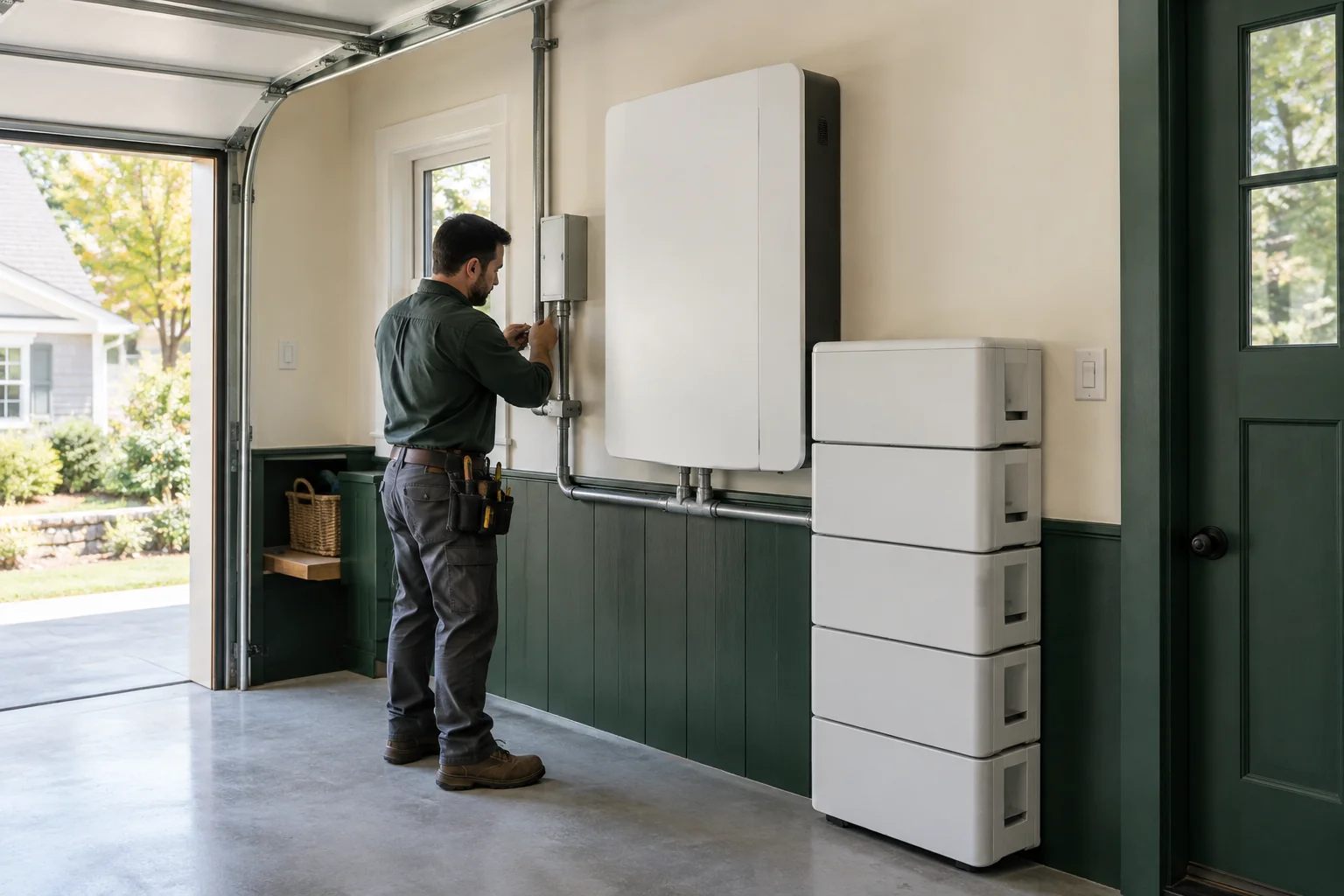
How Do the Enphase IQ Battery and Tesla Powerwall Differ in Design?
The Enphase IQ Battery is a modular unit built to be stacked, while the Tesla Powerwall is a single, larger, higher-output unit. Enphase scales by adding small blocks. Tesla scales by adding whole Powerwalls. That difference drives price steps, wall space, and how much you can run at once.
Modular Enphase units
The IQ Battery 5P is described as an all-in-one AC-coupled battery energy storage system. The City of Columbus smart city site notes that Enphase's storage connects to the AC side of a solar system. In practice, you buy only the capacity you need today and add modules later.
The trade-off is power. Each 5P block adds a modest 3.84 kW of continuous output, so heavy loads need more blocks than their kWh alone would suggest.
One high-output Powerwall
The Powerwall 3 packs 13.5 kWh and 11.5 kW into one wall unit. One box, one set of conduit, one mounting spot. For a house with a heat pump, an electric range or an EV charger, that output headroom is the main draw.
The trade-off is granularity. If you only need a few hours of backup for a fridge, lights and Wi-Fi, 13.5 kWh may be more battery than you want to pay for.
What AC-coupled means for you
The Building America Solution Center explains that AC-coupled batteries have a built-in inverter, so they can work as an all-in-one solution. That is why AC-coupled batteries suit retrofits. They connect without redesigning the solar array, which is the heart of how a solar battery retrofit works.
What Will Each Battery Actually Run in an Outage?
One Powerwall 3 holds about 13.5 kWh and delivers up to 11.5 kW, so it runs more appliances for longer than a single IQ Battery 5P at 5.0 kWh and 3.84 kW. Real runtime depends on what you power, the hour, and whether your panels are producing.
A worked example with simple math
Here is a hypothetical home, not a customer. Say it keeps a fridge, lights, internet, a furnace blower and a few outlets on, averaging 1 kW over a winter night. Runtime is kWh divided by kW.
- One Powerwall 3: 13.5 kWh at 1 kW is roughly 13 hours before accounting for losses.
- One IQ Battery 5P: 5.0 kWh at 1 kW is roughly 5 hours.
- Three IQ Battery 5P units: 15 kWh at 1 kW is roughly 15 hours, with 11.5 kW of combined output.
Add a 3 kW load such as a well pump cycling or an EV charger, and runtime drops fast on any battery. In daylight, solar can recharge the battery during an outage if the system is set up for that.
Power matters as much as capacity
Capacity is how long you can run. Power is how much can run at once. A single 5P tops out at 3.84 kW, so a large motor load may need several units, or a smaller protected-load plan. Our ranking of battery storage options for New England winters covers how long winter outages stress each approach.
Whole-Home vs Partial Backup
Whole-home backup powers nearly every circuit, while partial backup powers a chosen set of critical circuits through a protected-loads panel. Most New England homes do well with partial backup. Whole-home needs higher continuous output and more capacity, which is where a Powerwall, or several Enphase units, comes in.
Build the list in four steps:
- Walk your panel and mark each circuit as must-run, nice-to-run or skip.
- Find each must-run appliance's running watts on its nameplate or manual.
- Convert watts to kW and add the ones that run at the same time to get your peak.
- Compare that peak with 3.84 kW per 5P and 11.5 kW per Powerwall 3.
Typical must-runs are the refrigerator, furnace or boiler controls, circulator pumps, a well pump if you have one, sump pump, lights, Wi-Fi and medical equipment.
Heavy electric loads decide the rest. Electric dryers, ranges, central air and EV chargers are what push a home toward whole-home sizing. If you can live without them for a few days, partial backup saves money.
The decision rule we use: if your must-run list peaks under about 4 kW, a few IQ Battery 5P units can cover it. If the list includes several large loads at once, one or two Powerwall 3 units is usually simpler. Your electrician will confirm with a load calculation.
Which Battery Fits Your Existing Solar System?
If your system already uses Enphase microinverters, the IQ Battery is the most natural match because it sits in the same ecosystem. A Powerwall can also work with existing solar, and either brand can be retrofitted. The right pick depends on your inverter type, panel location and load.

Homes with Enphase microinverters
An Enphase system already uses Enphase monitoring and a gateway, so adding IQ Batteries keeps one app and one manufacturer. That is the main appeal. It also lets you start with a small battery and add more later without redesigning anything.
Homes with string inverters or other brands
Because AC-coupled batteries bring their own inverter, they can attach to many existing systems. A Powerwall is a common choice here when you want more output than a small module gives. We retrofit batteries onto systems of any brand, and our guide to battery retrofits walks the process.
Older or odd systems need a site check first. Inverter age, panel capacity, utility interconnection and the main panel rating all affect what can be added.
Homes without solar
The Rhode Island Office of Energy Resources states that battery storage can be installed as a standalone system without solar panels. Pairing with solar adds benefits, such as storing excess generation, but a battery alone can still provide backup.
Installation Location and Cold-Weather Notes
Install either battery where it stays out of extreme cold and heat, typically an attached garage, basement or protected exterior wall. Both brands publish operating temperature ranges that cover below-freezing weather, but batteries still deliver best at moderate temperatures. Location choice matters more than brand in a New England winter.
- Attached garage: The most common spot. It is usually more moderate than outdoors, but an unheated garage in a Connecticut January can still get very cold.
- Basement or utility room: Stable temperatures, but check egress, clearances and local fire-code rules for the room.
- Exterior wall: Allowed for both brands, but plan for snow drift, ice and shade, and keep clear of vents and meters.
Modular Enphase units can be split across a wall or arranged to fit tight spaces. A Powerwall needs one larger clear wall area. Municipal rules differ across Connecticut, Massachusetts and Rhode Island towns, so your installer should confirm clearances with the local building and fire officials before permitting.
Cold also reduces the energy a battery can deliver for a time. Check each datasheet for the stated operating range of your model rather than relying on a general rule.
How Do Warranties Compare Between Enphase and Tesla?
Both manufacturers publish battery warranties covering a term in years plus a retained-capacity or throughput condition, and the terms differ by model and region. Read the datasheet for your exact model, such as IQ Battery 5P or Powerwall 3, and compare term, capacity at end of term, and any energy throughput limits.
We are not quoting warranty years or retained-capacity percentages here because they change with product revisions, and we could not verify current figures for this post. Ask for the datasheet and warranty PDF for the model on your quote. Do the same for the newer Enphase IQ Battery 10C, which shoppers often see compared with the 5P and Powerwall 3.
Solar integration also differs. Powerwall 3 is published with 11.5 kW continuous output, and Enphase batteries are AC-coupled and tie into an Enphase system. Ask your installer how each option connects to your existing inverters. For cold, the Powerwall 3 is published at -4°F to 122°F operating range; confirm the 5P and 10C ranges on their datasheets.
Use this checklist when you compare:
- Term: How many years does the battery warranty run?
- Retained capacity: What percentage of capacity is guaranteed at the end?
- Throughput limit: Is there a cap on lifetime energy cycled?
- Labor: Who covers removal and reinstall if a unit fails?
- Installer coverage: What does the installer warrant on workmanship, separate from the maker?
If a quote does not name the model and warranty document, walk away until it does.
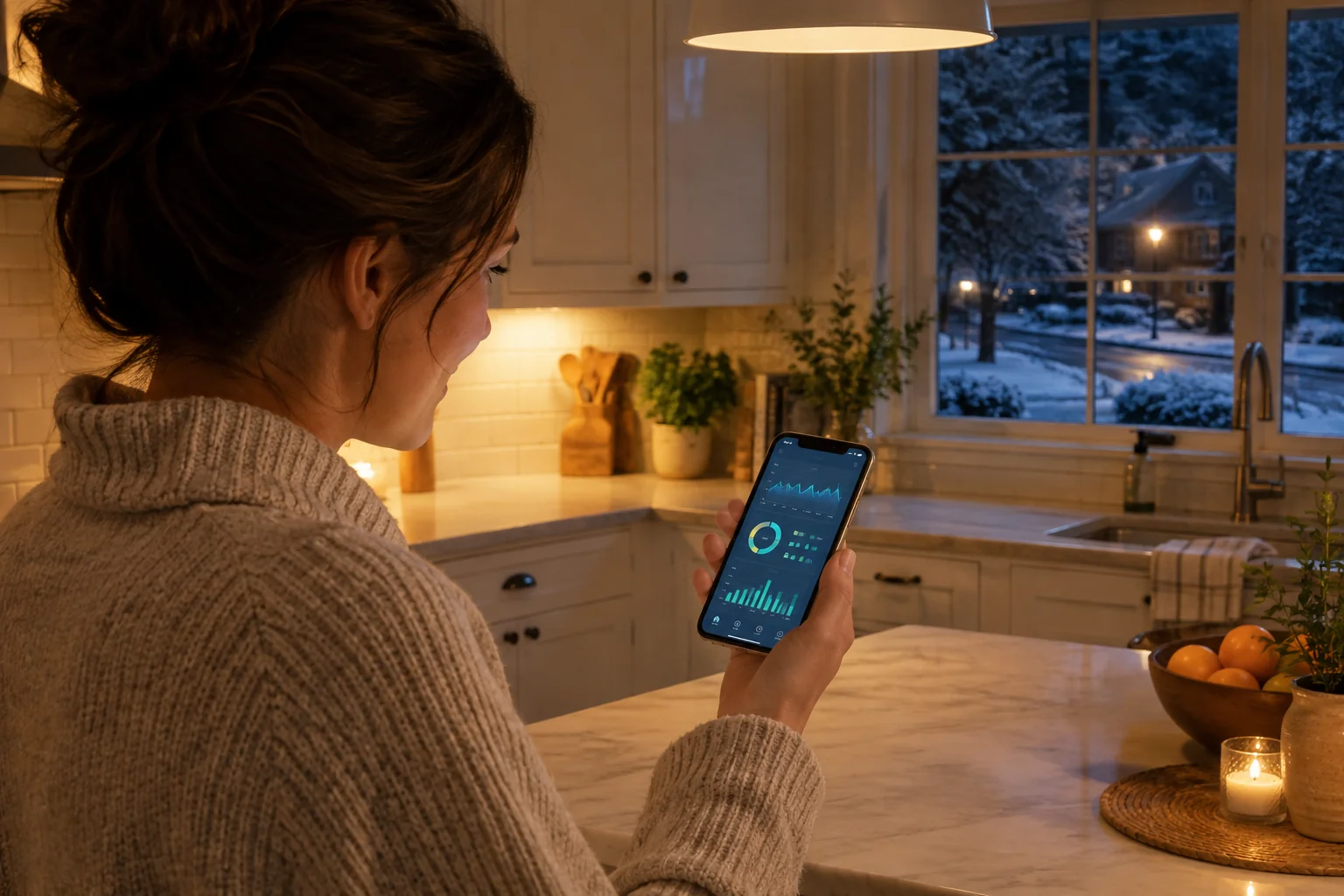
Monitoring Apps: Enphase App vs Tesla App
Both batteries come with a smartphone app showing solar production, home use, battery charge and backup status. The Enphase App suits homes already on Enphase microinverters because panel-level data sits alongside the battery. The Tesla app is simple and centered on the battery and home energy flows.
The difference you will notice is detail. Enphase shows panel-by-panel production if you have microinverters, which helps spot a shaded or failing panel. Tesla keeps the view at the system level. Neither is wrong; it depends on how much you like to dig.
Whichever you pick, learn to read it. Our guide on solar and battery services covers monitoring setup, and once the system is live we help you interpret the data.
Incentives That Apply to Both Batteries
Incentives depend on your state and how you pay, not on the battery brand. The federal homeowner credit for clean energy property ended for systems placed in service after December 31, 2025. State and utility programs now matter more, and Rhode Island's storage rebate is the clearest example.
Rhode Island's Energy Storage Rebate, run by the Office of Energy Resources, has been published at $250 per kWh up to $8,000 for residential projects, with higher levels for income-eligible households. Rules and funding change, so confirm current terms at the state site before you plan around it.
Because the rebate pays per kWh, size matters. Using the published $250 per kWh: one 13.5 kWh Powerwall 3 is 13.5 × $250 = $3,375. Three 5.0 kWh IQ Battery 5P units are 15 kWh × $250 = $3,750. Both sit under the $8,000 cap, so the rebate does not tilt toward either brand.
Connecticut and Massachusetts have their own storage and utility programs, and they change often. Our tax credit and rebate paperwork guide explains what to collect for each. Leased and PPA systems follow different ownership rules, so ask us before assuming either way.
One open question: program funding can run out mid-year. We cannot promise any rebate will still be open when your install date arrives.
Which Homes Suit Each Battery?
Choose the Powerwall for larger loads, near whole-home backup and a single compact install. Choose the Enphase IQ Battery for Enphase microinverter homes, smaller critical-load plans, tight spaces and phased spending. If you are unsure, size the loads first; the brand often chooses itself.
A Powerwall tends to fit when
- You want to run central air, a heat pump, an electric range or an EV charger during an outage.
- Your home has one clear wall area and you prefer one unit.
- You are installing new solar and want the battery designed in from day one.
An Enphase IQ Battery tends to fit when
- You already have Enphase microinverters and want one app and ecosystem.
- Your must-run list is modest and you want to add capacity later.
- Your space is awkward and modules can be placed in more than one spot.
What we would actually do
For a typical Connecticut home with oil or gas heat and a modest critical-load list, we lean toward Enphase when the roof already has Enphase panels, and Powerwall when electric loads dominate. Do otherwise if your quote shows a clear cost or space advantage for the other.
FranklinWH is a third option we also install. Our Tesla Powerwall vs FranklinWH comparison covers it without repeating this post.
Quick Reference to Save or Share
- Powerwall 3: 13.5 kWh, 11.5 kW, one big unit.
- IQ Battery 5P: 5.0 kWh, 3.84 kW, stack to size.
- Enphase solar already? Start with IQ Battery.
- Running big electric loads? Start with Powerwall.
- Always: Size to your outage list, then pick the brand.
Frequently Asked Questions
Can I add an Enphase battery to a non-Enphase solar system?
Often yes. AC-coupled batteries carry their own inverter, so they can connect to many existing systems. Compatibility depends on your solar inverter, panel capacity and utility rules. We check these during a site visit before recommending a brand, so you are not guessing from a spec sheet.
Can a Powerwall work with Enphase microinverters?
It can be installed on a home with Enphase microinverters in many setups, but the design and controls need to be planned together. Ask your installer to show how the system will behave during an outage, including how solar will recharge the battery while the grid is down.
Which battery is better in New England cold?
Neither wins on brand alone. Both publish operating temperature ranges, and placement inside a garage or basement matters more than the logo. Check the datasheet for your exact model, and avoid mounting in a spot that sees heavy snow drift or deep cold.
Do I need whole-home backup?
Most homes do not. A protected-loads panel covering heat controls, refrigeration, lights, Wi-Fi and pumps is often enough, and it costs less. Whole-home makes sense when large electric loads must run through outages or when anyone relies on powered medical equipment.
Get a Battery Quote From a Local Crew
Choosing between an Enphase IQ Battery and a Powerwall is easier with your own load list in front of you. Teamsun installs Enphase IQ, Tesla Powerwall and FranklinWH batteries with our in-house crews, and we retrofit batteries onto existing systems of any brand across Connecticut, Massachusetts and Rhode Island.
Request a free quote and we will size the battery to your outage loads. If you would rather talk it through first, talk to a designer, call 203-903-4091, or see everything we install on our services page.
Recommended Resources
Written by
Dan Katzman
Teamsun
Teamsun writes practical solar guidance to help property owners compare equipment, project scope, costs, and long-term service before making a decision.
Keep going.
Battery Backup vs Generator
Battery backup vs generator for Connecticut, Massachusetts and Rhode Island homes: cost factors, fuel vs recharging, noise, upkeep and when to run both.
Dan Katzman
Teamsun
Tesla Powerwall vs FranklinWH: Which Battery Wins in 2026?
Tesla Powerwall vs FranklinWH battery: compare capacity, backup power, warranty, and cost to find the right storage system for your CT, MA, or RI home.
Dan Katzman
Teamsun
The Best Battery Storage Options for New England Winters
Compare FranklinWH, Tesla Powerwall 3, and Enphase IQ 5P on cold-weather performance for CT, MA, RI, VT, NH, and ME winters before storm season hits.
Dan Katzman
Teamsun