Tesla Powerwall vs FranklinWH: Which Battery Wins in 2026?
Tesla Powerwall vs FranklinWH battery: compare capacity, backup power, warranty, and cost to find the right storage system for your CT, MA, or RI home.
Dan Katzman
Teamsun
A Tesla Powerwall 3 stores 13.5 kWh and can power an entire home's circuits during an outage, while a single FranklinWH aPower 2 stores 15 kWh and lets you stack multiple units for whole-home coverage on larger houses. The tesla powerwall vs franklinwh battery decision usually comes down to three things: how many circuits you need backed up, whether you're retrofitting onto an existing solar system, and how each brand's warranty holds up over a New England winter.
Key Takeaways
- Capacity: Powerwall 3 offers 13.5 kWh per unit; FranklinWH's aPower 2 offers 15 kWh per unit and stacks up to five units for 75 kWh of storage.
- Backup power: Both support whole-home backup, but FranklinWH's Smart Circuit modules give more granular control over which loads run first during an outage.
- Warranty: Both brands offer 10-year warranties, but Tesla guarantees 70% capacity retention while FranklinWH guarantees a cycle-based threshold, which matters for daily solar users.
- Retrofits: FranklinWH is built to pair with panels and inverters from almost any manufacturer, making it the easier retrofit choice for homes with an existing non-Tesla solar system.
- Cost: Both qualify for the 30% federal solar tax credit when installed with or added to a solar system, but installed cost varies based on panel count, subpanel work, and site conditions.
Tesla Powerwall vs FranklinWH at a Glance
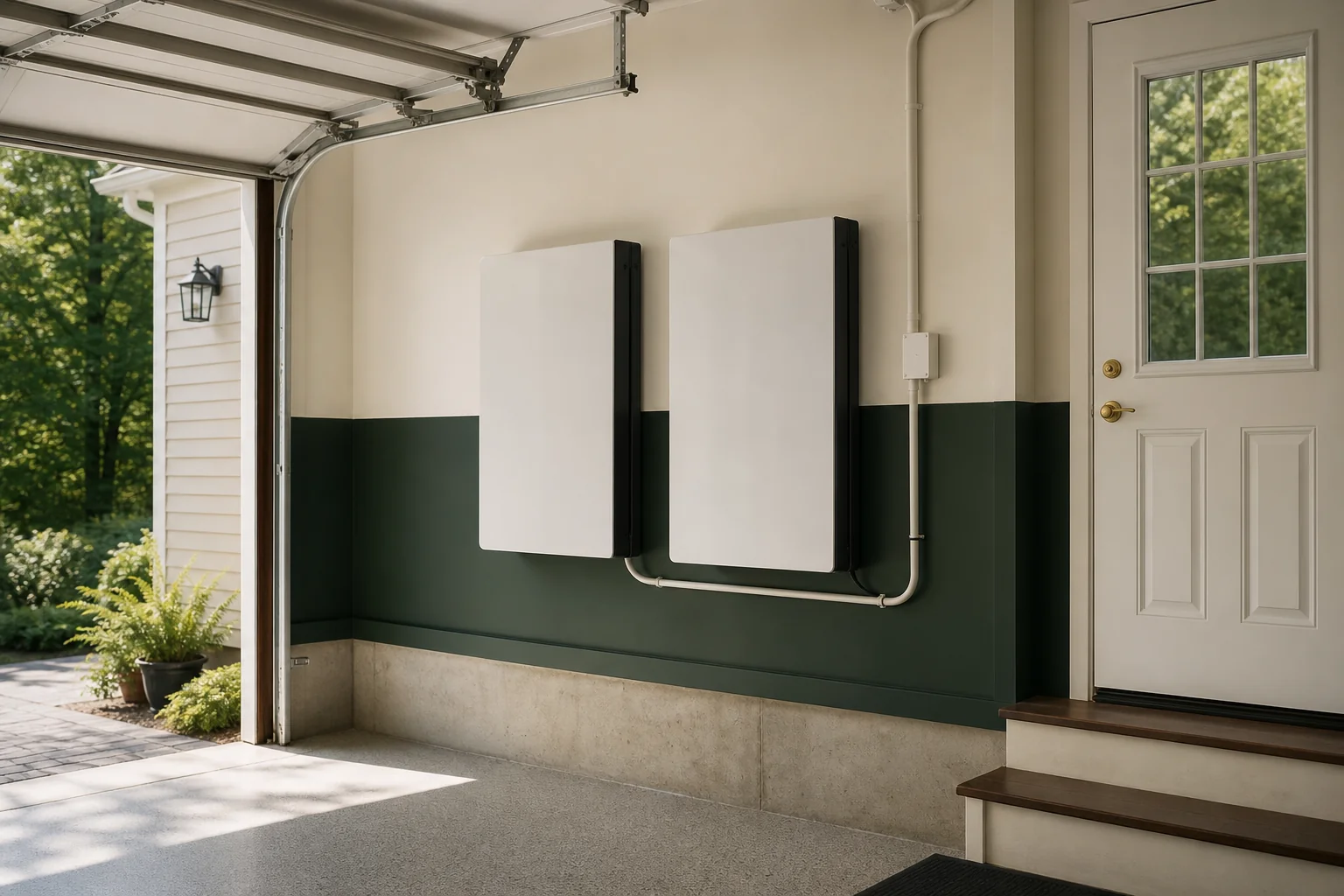
| Spec | Tesla Powerwall 3 | FranklinWH aPower 2 |
|---|---|---|
| Usable capacity | 13.5 kWh | 15 kWh |
| Continuous power output | 11.5 kW | 10 kW (up to 15kW peak per unit) |
| Max stackable units | 4 (54 kWh total) | 5 (75 kWh total) |
| Built-in solar inverter | Yes | No (works with existing inverter) |
| Warranty length | 10 years | 10 years |
| Best for | New Tesla-integrated installs | Retrofits onto any existing brand |
| App-based load management | Circuit-level backup switch | Smart Circuit modules, per-appliance control |
Capacity and Power Output Compared
The Powerwall 3 packs 13.5 kWh of usable storage and a built-in solar inverter rated at 11.5 kW continuous output, which is enough to run a well pump, HVAC system, and kitchen appliances at the same time. Tesla designed the Powerwall 3 to handle the entire home's electrical panel without a separate backup gateway box, simplifying the equipment list on new installs.
FranklinWH's aPower 2 edges it out on raw capacity, at 15 kWh per unit, and it's built as a modular add-on rather than an all-in-one system. Homes that need more than one battery to cover heavy loads, like an electric range plus central air, can stack up to five aPower 2 units for 75 kWh total. That's meaningful headroom for larger New England homes running electric heat pumps through a cold snap.
If your household draws under 30 kWh per day, a single unit from either brand likely covers your needs. Homes over 3,000 square feet, or those planning to add an EV charger, should size up. Our guide on installing a hardwired EV charger at home covers how charging load factors into battery sizing.
Backup Performance During an Outage

Both systems switch to backup power automatically within milliseconds of a grid outage, so most homeowners won't even notice the lights flicker. The real difference shows up in how each system decides what stays powered.
Tesla's app lets you designate a full backup panel or select specific circuits, but the granularity is coarser than FranklinWH's approach. FranklinWH's Smart Circuit modules attach to individual breakers and let you prioritize loads in real time, right down to shutting off a hot tub circuit while keeping the refrigerator and sump pump running. For homes on wells, this circuit-level control can be the difference between a dry basement and a flooded one during a multi-day outage.
Cold weather matters too. Connecticut, Massachusetts, and Rhode Island winters regularly dip below freezing, and lithium batteries lose some usable capacity in extreme cold if they're installed outdoors without a garage or basement location. Both Tesla and FranklinWH batteries include internal thermal management, but we still recommend indoor or semi-conditioned mounting locations whenever the site allows it. Pairing either battery with a solar battery retrofit onto an existing generator setup gives extra redundancy for extended outages.
Warranty and Long-Term Reliability
Tesla backs the Powerwall 3 with a 10-year warranty that guarantees at least 70% capacity retention through unlimited cycles over that period. FranklinWH also offers a 10-year warranty, structured around a cycle count with a similar capacity retention guarantee. In practice, both brands hold up well for daily solar users who cycle their battery once per day.
The practical difference is service history. Tesla has installed Powerwalls in hundreds of thousands of U.S. homes since 2015, giving it a longer track record, according to data tracked by the U.S. Energy Information Administration on residential storage adoption. FranklinWH is newer to the U.S. market but has grown quickly since its 2022 launch, backed by a manufacturing partnership focused specifically on solar-plus-storage retrofits. Neither brand's warranty terms should be treated as a guess; ask your installer for the manufacturer's current documentation before signing, since warranty terms can be updated by either company.
Cost Comparison: Upfront and Long-Term
Installed battery costs vary by home size, electrical panel condition, and whether the battery is bundled with a new solar array or added to an existing one. Rather than quote a number that could be outdated by the time you read this, we'll point you to the factors that actually move the price: the number of battery units needed, whether a subpanel or backup gateway is required, and local permitting fees in your town.
Both battery systems qualify for the 30% federal Residential Clean Energy Credit when installed alongside or connected to a solar system, per the IRS residential clean energy credit guidelines. That credit applies to the full installed cost, including labor, not just equipment. If you're unsure how to document the credit on your taxes, our guide to net metering and utility credits touches on how storage interacts with your utility bill savings.
One cost factor people overlook: FranklinWH's modular design means you can start with one unit and add more later as your budget allows, without replacing existing equipment. Tesla's Powerwall 3 can also be stacked after the fact, but because it includes a built-in inverter, adding units later sometimes requires additional configuration work depending on your existing solar setup.
New Installs vs Retrofits: Which Battery Fits Your Situation
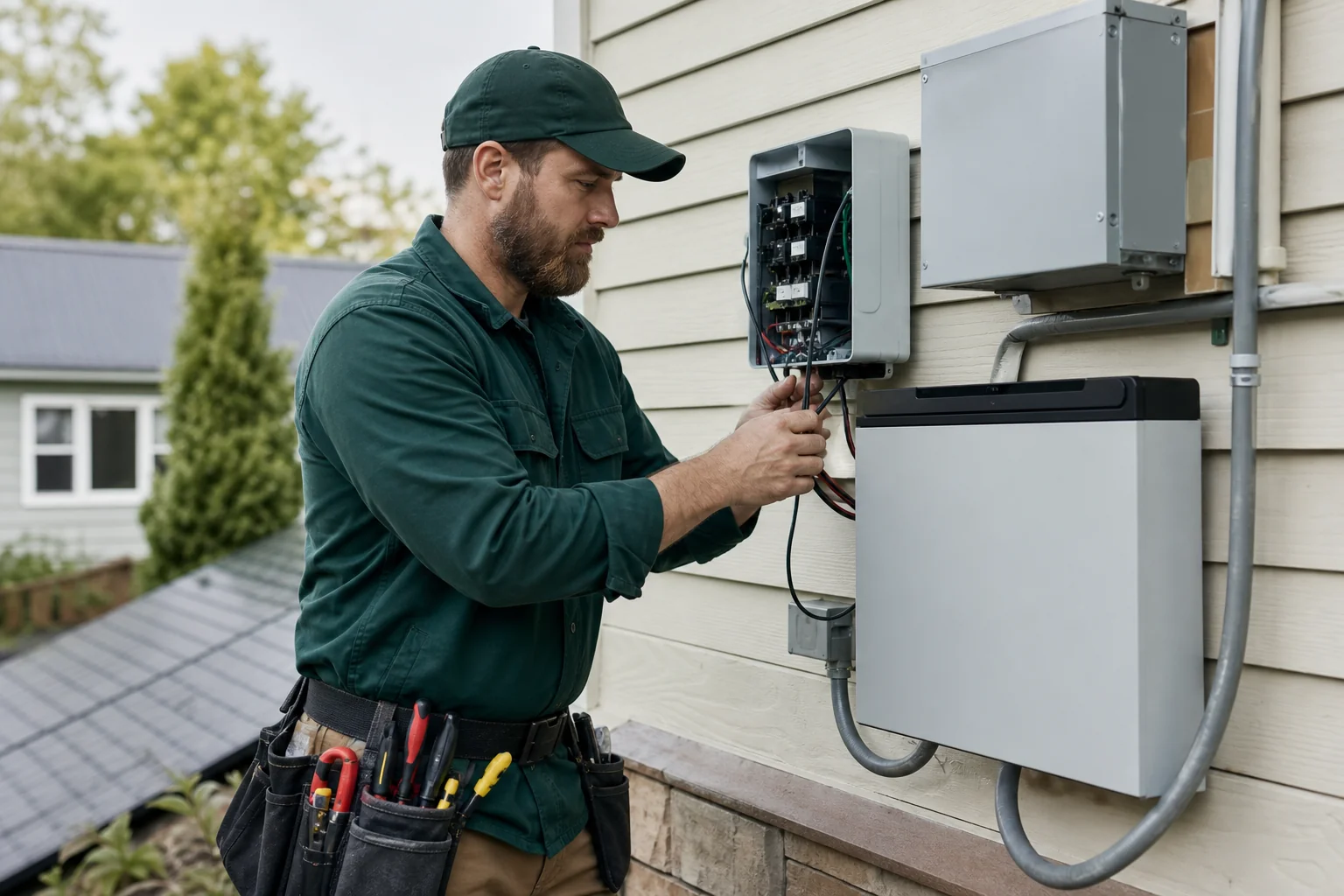
If you're installing solar and battery storage together for the first time, the Powerwall 3's all-in-one inverter design simplifies the install and reduces the number of separate components on your wall. It's a clean choice when you're not locked into any existing equipment brand.
Retrofits tell a different story. FranklinWH was built specifically to work with solar inverters from other manufacturers, which makes it the more flexible pick if you already have panels from a company that's no longer in business, or one that doesn't service your area. This matters more than most homeowners realize: plenty of installers will only add a battery if the existing panels came from their own supply chain. Teamsun services and retrofits battery storage onto systems regardless of who installed the original panels, using in-house W-2 crews rather than subcontractors, so accountability doesn't disappear after the sale.
If your existing solar system is more than eight years old, it's worth checking whether the inverter itself needs attention before adding a battery. Our post on how a solar battery retrofit works walks through the AC-coupling and DC-coupling paths, including what an inspection typically finds on older systems.
Which Battery Should You Choose?

Choose the Tesla Powerwall 3 if you're installing new solar and battery together, want a single integrated inverter-battery unit, and don't need circuit-by-circuit load prioritization during outages.
Choose FranklinWH if you already have solar panels from another brand, want the flexibility to add battery capacity in stages, or need fine-grained control over which appliances draw power first during a multi-day outage. Homes with well pumps, medical equipment, or home offices that can't afford downtime often lean FranklinWH for that reason.
Either way, the equipment brand matters less than the installer behind it. A battery that's undersized for your home, or wired without proper backup circuit planning, won't perform the way the spec sheet promises. That's true whether you already know which brand you want or you're still weighing options.
Frequently Asked Questions
Can I add a second battery later if I only install one now?
Yes, both Tesla Powerwall and FranklinWH support adding units after the initial install, though the process is generally simpler with FranklinWH's modular design since it doesn't require reconfiguring a built-in inverter.
Will either battery work with solar panels installed by a different company?
FranklinWH is designed for broad compatibility with third-party inverters and panels, making it the easier retrofit path. Tesla Powerwall 3 can also be added to existing systems, but compatibility depends on your current inverter, so a site evaluation is necessary either way.
How long does a battery installation take once I sign a contract?
A standalone battery add-on typically takes a few weeks from site survey to power-on, faster than a full new solar installation, which averages 47 days from contract to activation for Teamsun customers in Connecticut, Massachusetts, and Rhode Island.
Which battery handles a New England winter power outage better?
Both perform well when mounted in a garage, basement, or conditioned space. Performance differences during outages come down more to correct load prioritization and battery sizing for your home's heating system than to brand alone.
Whether you're leaning toward the Powerwall 3 for a new system or FranklinWH for a retrofit onto panels someone else installed, the right answer depends on your home's electrical setup, not a generic spec sheet. Talk to a designer at Teamsun to walk through your home's backup priorities, or request a free quote to see what battery sizing makes sense for your address. You can also browse our full battery storage and solar services or call 203-903-4091 to speak with our team directly.
Written by
Dan Katzman
Teamsun
Teamsun writes practical solar guidance to help property owners compare equipment, project scope, costs, and long-term service before making a decision.
Keep going.
When Should You Upgrade an Older Solar System?
Signs it's time for a solar system upgrade for older panels, from declining output to inverter age. Learn what Teamsun checks before recommending changes.
Dan Katzman
Teamsun
Sunrun vs Local Solar Installer: Which Is Better in 2026?
Sunrun vs local solar installer: compare install crews, timelines, service accountability, and financing to pick the right fit for your CT, MA, or RI home.
Dan Katzman
Teamsun