Sunrun vs Local Solar Installer: Which Is Better in 2026?
Sunrun vs local solar installer: compare install crews, timelines, service accountability, and financing to pick the right fit for your CT, MA, or RI home.
Dan Katzman
Teamsun
A homeowner in Bristol, CT recently called Teamsun after her Sunrun panels went dark and the local sales rep who signed her up had left the company two years earlier. That's the real difference behind Sunrun vs local solar installer: it's not about panel quality, it's about who answers the phone once the truck leaves your driveway. Both models can put working solar on your roof. They differ sharply in who's on the ladder, how fast you get to power-on, and what happens in year six.
Key Takeaways
- Crew ownership: Sunrun typically dispatches subcontracted dealer crews, while Teamsun uses in-house W-2 installers for every job in CT, MA, and RI.
- Timeline: Teamsun averages 47 days from contract to power-on; national installers routing work through regional dealers often run longer due to permitting queues and crew scheduling layers.
- Service accountability: Local installers with a permanent regional presence are easier to reach for repairs, retrofits, and warranty claims years after install than a national call center.
- Financing access: Sunrun leans heavily on its own lease and PPA products; Teamsun offers cash, loan, PPA underwritten to a 620 FICO minimum, and prepaid lease options.
- Multi-brand service: Local installers like Teamsun will retrofit batteries and repair systems originally installed by any company, including Sunrun, SunPower, and Trinity Solar.
At a Glance: Sunrun vs Local Solar Installer
| Factor | Sunrun (National) | Local Installer (e.g., Teamsun) |
|---|---|---|
| Install crew | Often subcontracted dealer network | In-house W-2 employees |
| Average timeline | Varies by region, multiple layers of scheduling | 47 days, contract to power-on |
| Service area presence | Regional offices, can shift or consolidate | Fixed local footprint (CT, MA, RI) |
| Financing options | Company-owned lease and PPA focus | Cash, loan, PPA (620 FICO min), prepaid lease |
| Retrofit/repair on other brands | Limited outside own install base | Services any brand, any age system |
| Equipment brands | Proprietary and select partner hardware | Tier-1 options including FranklinWH, Tesla Powerwall, Enphase IQ |
| Commercial installs | Primarily residential focus | 25kW-500kW commercial, ground mount and rooftop |
Who Actually Installs Your Panels: Crew Models Compared
National solar companies scale by signing up local dealers and subcontractors rather than hiring every installer directly. Sunrun's growth model has relied on this dealer network structure for years, which means the crew on your roof may work for a third-party contractor, not Sunrun itself. That structure can change year to year as dealer relationships shift.
Teamsun runs the opposite model: every installer is a W-2 employee, trained on the same standards, using the same equipment across every job site in Connecticut, Massachusetts, and Rhode Island. If a workmanship issue surfaces, there's one crew and one company accountable, not a subcontractor who may no longer hold the contract. Our in-house crew vs subcontractor breakdown covers exactly how this affects install quality and long-term accountability.
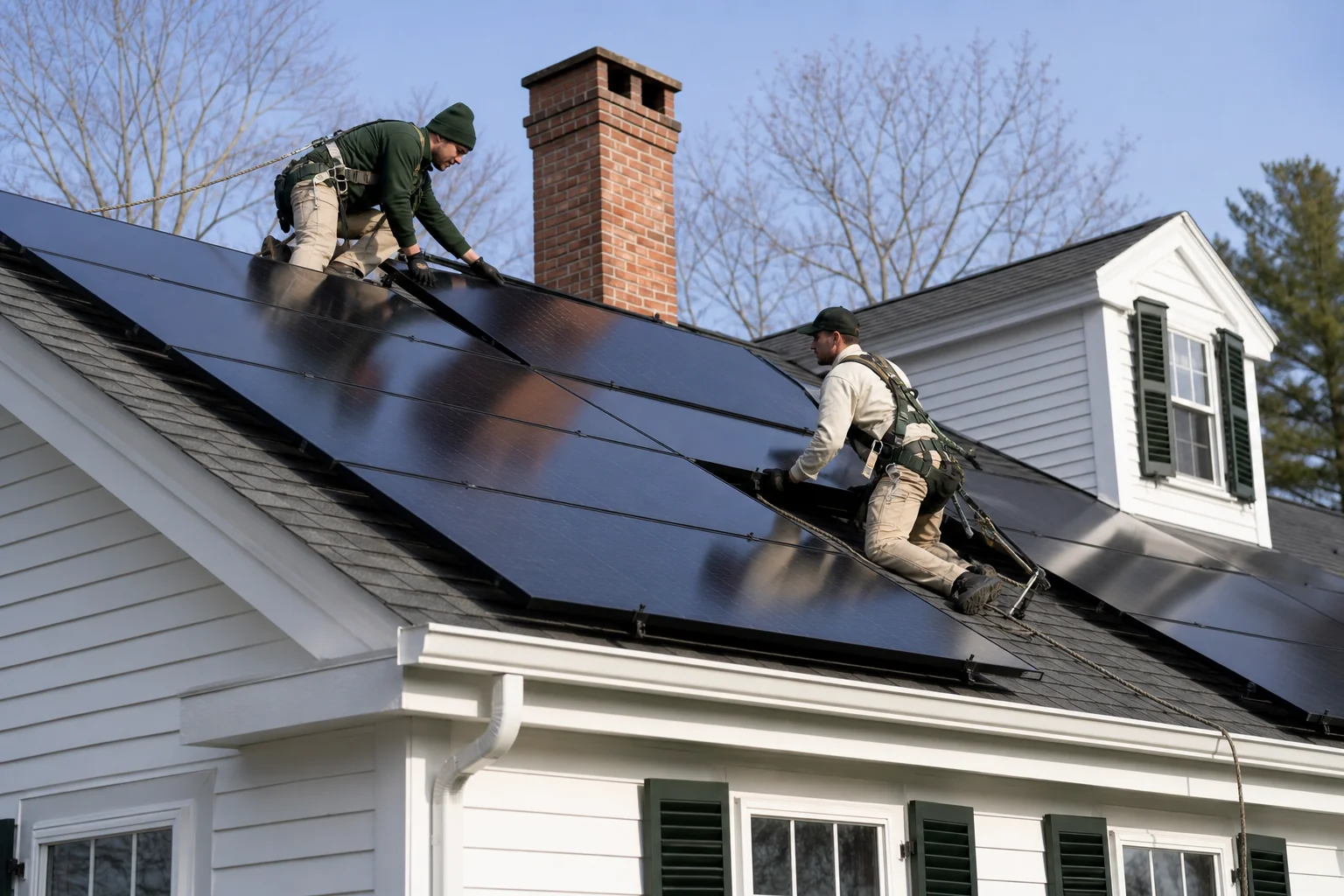
This distinction matters most when something goes wrong after year one. A subcontractor paid a flat fee per install has little incentive to revisit a job once it's signed off. A W-2 crew tied to the same company's reputation has a different set of incentives entirely.
Install Timeline: National Queue vs Local Scheduling
Timeline is where scale can work against a homeowner. National installers route permitting, engineering, and install scheduling through multiple internal departments and, in some markets, through dealer partners handling their own local backlog. That layered process can stretch weeks or months beyond the initial sales estimate.
Teamsun tracks its own install data closely: the average project moves from signed contract to power-on in 47 days. That number holds because permitting, design, and crew scheduling all sit inside one company with no handoff between a sales entity and an install entity. If you want the full breakdown of what happens at each stage, read our guide on how long solar installation takes from contract.
Ask any installer, national or local, for their average timeline in writing before you sign. A vague answer is a warning sign regardless of which company is standing in front of you.
Service After the Sale: Who Picks Up the Phone in Year 6?
Solar systems are designed to run for 25 years or more, but the company that sold you the system may not exist in that form a decade from now. National solar companies have restructured, sold off service divisions, or closed regional offices during industry downturns, leaving homeowners searching for anyone willing to service their panels.
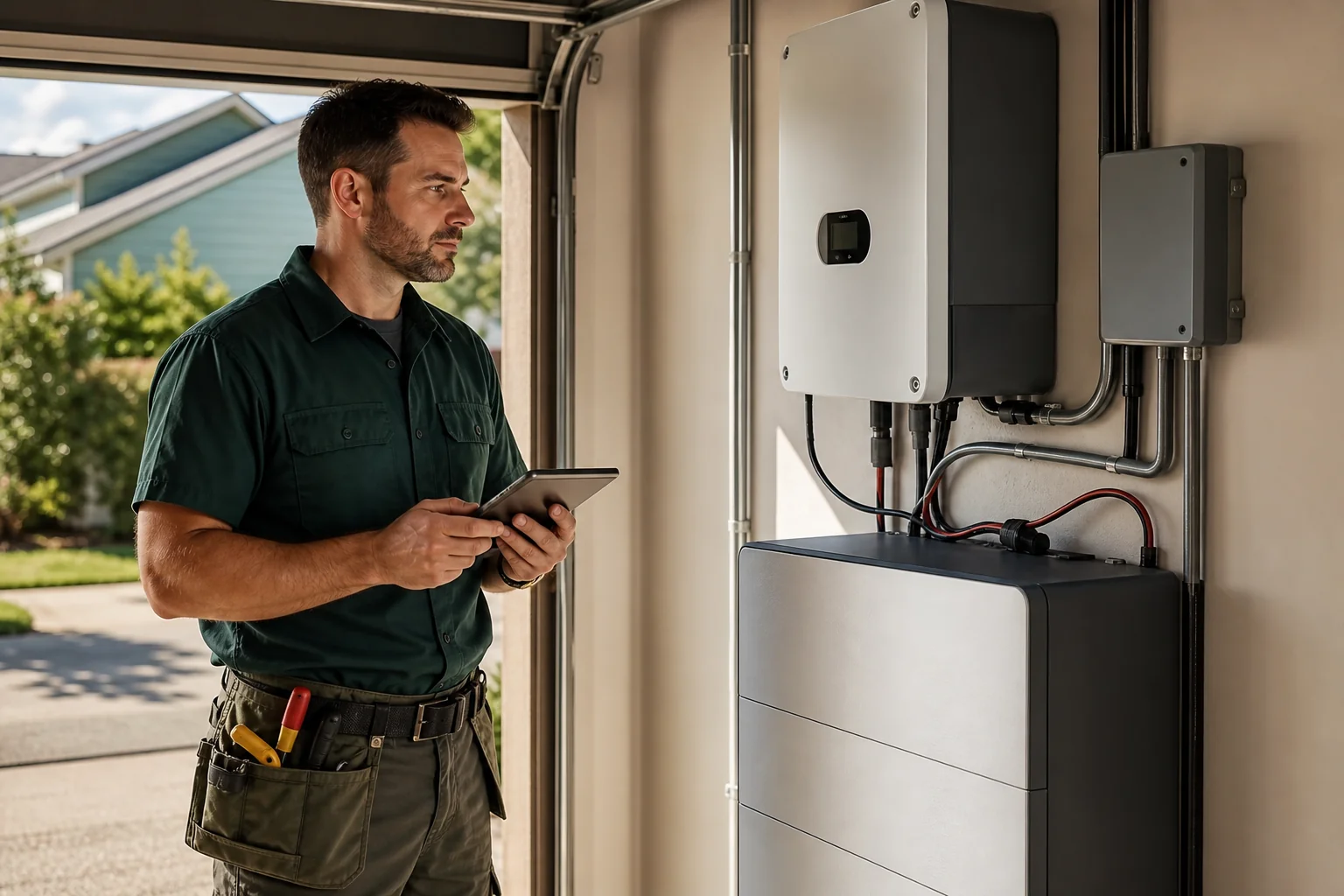
Local installers with a fixed regional footprint don't have that same exit risk baked into their business model. Teamsun services systems it installed and systems installed by other companies, including battery retrofits onto any existing solar array regardless of brand or age. If your current system is acting up and the original installer is unreachable, our guide on how to find a repair company for any brand walks through what to check first.
Battery retrofits are one of the clearest tests of long-term service commitment. Adding storage to an existing solar system requires an installer willing to work with equipment they didn't originally spec. See our battery retrofit guide for how that process runs from site survey to activation.
Financing Flexibility: Loans, PPAs, and Leases Side by Side
Sunrun built much of its national growth on company-owned lease and power purchase agreement products, which lower the barrier to entry but tie the homeowner into that specific financing structure and its terms. That model works well for some homeowners and poorly for others who'd rather own the system outright or shop multiple lenders.
Local installers can offer a broader financing menu because they aren't required to funnel every deal through a single in-house financing arm. Teamsun offers cash purchase, solar loans, a PPA underwritten to a 620 FICO minimum, and a prepaid lease option, giving homeowners with less-than-perfect credit a path that many national and regional competitors won't approve. Compare structures in detail in our solar loan vs PPA vs lease comparison.
If your credit score has kept other installers from approving you, ask directly what FICO minimum a company underwrites to before assuming solar isn't an option. A 620 minimum opens the door for a large share of homeowners who get turned away elsewhere.
Equipment and Warranty Considerations
Both national and local installers can install Tier-1 solar panels, the classification used by the U.S. Department of Energy's homeowner solar guide to describe manufacturers with strong bankability and track records. The bigger differentiator is battery brand choice and how flexible the installer is about matching equipment to your home's actual needs rather than a single company-preferred product line.
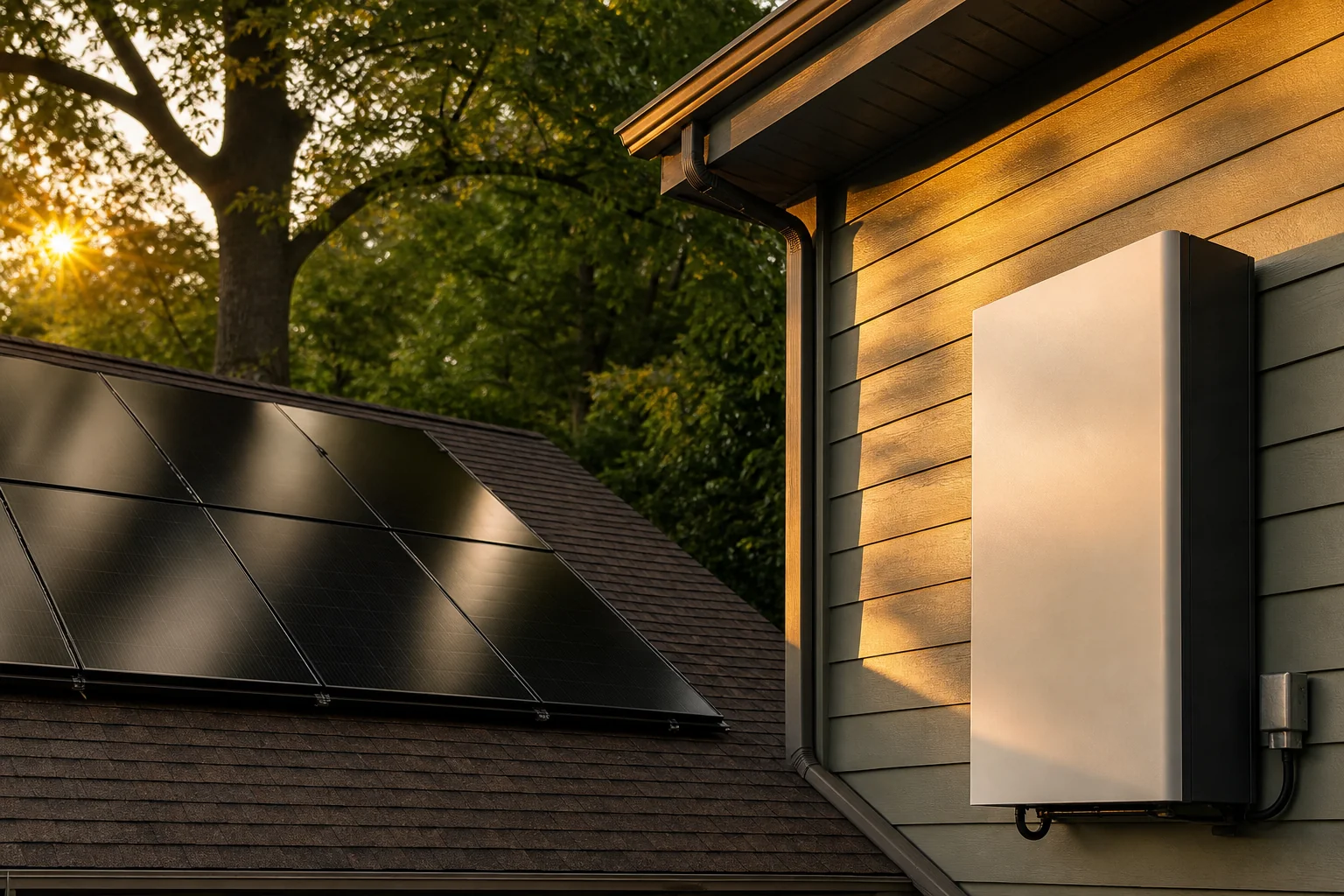
Teamsun installs FranklinWH, Tesla Powerwall, and Enphase IQ batteries depending on backup priorities and budget, a comparison detailed in our Tesla Powerwall vs FranklinWH breakdown. Ask any installer whether their warranty covers workmanship separately from the manufacturer's equipment warranty, and get the answer in writing. Manufacturer warranties (typically 25 years on panels) don't cover a poor roof penetration seal or wiring error, which is where the installer's own workmanship warranty matters.
Commercial and Multi-Service Needs: Where Local Installers Fill Gaps
National residential solar companies generally don't compete for small commercial roofs in the 25kW-500kW range, leaving a gap for business owners who want the same accountability standards applied to a warehouse or retail roof. Teamsun handles ground mount and rooftop commercial installs across that range; see our commercial solar guide for small business roofs for sizing and permitting details.
Local installers are also more likely to bundle adjacent projects that a national installer would refer out to a third party: solar plus roofing replacement handled by one crew (see our solar plus roofing bundle cost breakdown), or a hardwired EV charger installed alongside a new solar system in a single visit, covered in our EV charger installation guide. Fewer contractors touching your project usually means fewer scheduling conflicts and fewer places for accountability to slip.
How to Decide: Questions to Ask Before You Sign
- Will the crew installing my panels be direct employees or subcontractors, and can you confirm that in writing?
- What is your average timeline from signed contract to permission-to-operate, based on actual project data?
- Who do I call for service or repairs five years from now, and does that team still exist locally?
- What FICO score do you underwrite loans and PPAs to, and what happens if I don't qualify for one product?
- Will you service or retrofit a system if I switch installers later, or if my original installer is unreachable?
Sunrun's scale, national brand recognition, and standardized process appeal to homeowners who want a household name and a single point of sale. Local installers like Teamsun win on accountability: one crew, one company, and a fixed local presence that doesn't disappear when the market shifts. The right answer for sunrun vs local solar installer depends on how much you weigh long-term service certainty against national brand familiarity.
Frequently Asked Questions
Is Sunrun a good solar company?
Sunrun is one of the largest residential solar installers in the country, with a wide service footprint and established lease and PPA products. Whether it's the right fit depends on how comfortable you are with a dealer-based install model and a national customer service structure versus a locally-owned alternative.
Does Sunrun use subcontractors?
Sunrun has historically grown through a dealer network, meaning many installs are handled by third-party contractors operating under the Sunrun brand rather than direct company employees. Always ask any installer, including Sunrun, to confirm crew employment status in writing before signing.
Can a local installer service or repair a Sunrun system?
Yes. Installers like Teamsun service and retrofit systems originally installed by any company, including Sunrun, SunPower, and Trinity Solar, as long as the equipment is accessible and documented. Our repair guide for any brand covers what to check before calling a new installer.
Which is cheaper, Sunrun or a local installer?
Pricing varies by system size, equipment selection, and financing structure rather than by company size alone. Request itemized quotes from both a national and a local installer for the same system specs to make an accurate comparison, and ask about current promotions directly rather than assuming a set discount.
If you're weighing Sunrun vs local solar installer options in Connecticut, Massachusetts, or Rhode Island, talk to a team that installs, services, and stands behind every job with its own crew. Request a free quote to see real numbers for your roof, talk to a designer about crew scheduling and equipment options, or explore Teamsun's full service list. You can also call 203-903-4091 to ask questions before you commit to any installer, local or national.
Recommended Resources
Written by
Dan Katzman
Teamsun
Teamsun writes practical solar guidance to help property owners compare equipment, project scope, costs, and long-term service before making a decision.
Keep going.
Sunrun vs SunPower vs Local Installer Comparison
Sunrun vs SunPower vs local installer comparison: install speed, warranty accountability, and service response, broken down for Connecticut homeowners comparing quotes.
Dan Katzman
Teamsun
Solar Loan vs PPA vs Lease: Which Fits You in 2026?
Compare solar loan vs PPA vs lease on ownership, tax credit eligibility, monthly cost, and credit score requirements to pick the right fit for 2026.
Dan Katzman
Teamsun
Tesla Powerwall vs FranklinWH: Which Battery Wins in 2026?
Tesla Powerwall vs FranklinWH battery: compare capacity, backup power, warranty, and cost to find the right storage system for your CT, MA, or RI home.
Dan Katzman
Teamsun