Sunrun vs SunPower vs Local Installer Comparison
Sunrun vs SunPower vs local installer comparison: install speed, warranty accountability, and service response, broken down for Connecticut homeowners comparing quotes.
Dan Katzman
Teamsun
A national lease company, a bankrupt-and-restructured panel brand, and a local in-house crew will all quote the same roof differently. In a sunrun vs sunpower vs local installer comparison, the real differences aren't panel specs. They're who owns the install crew, how fast the job actually happens, and who answers the phone in year six when something breaks.
Key Takeaways
- Ownership model drives everything else: Sunrun runs a no-upfront-cost subscription model nationwide, while a local installer like Teamsun uses in-house W-2 crews instead of subcontracted labor.
- SunPower's brand changed hands: SunPower's residential business and equipment line moved under Complete Solaria, which now markets panels through a national dealer network rather than a single unified installer.
- Timelines vary by weeks, not days: Industry data puts full installs anywhere from about 33 days permit-to-inspection on the fast end up to 4-6 months on the slow end, depending on utility and permitting backlog.
- Accountability tracks the W-2 line: When a subcontractor installs your system, your warranty call routes through the parent company first, then down to whichever crew is still under contract in your area.
- Service-after-the-sale is the differentiator most homeowners skip researching until something fails, at which point crew turnover and subcontractor churn become very real problems.
At a Glance: Sunrun vs SunPower vs Local Installer
| Factor | Sunrun | SunPower (now Complete Solaria network) | Local In-House Installer |
|---|---|---|---|
| Business model | No-upfront-cost subscription (lease/PPA) | Panel brand sold through national dealer network | Direct install, cash/loan/PPA, owns the crew |
| Install crew | Mix of company crews and subcontractors by region | Independent dealers, not a single crew | W-2 employees, same company start to finish |
| Typical timeline | Varies by region and backlog | Varies by dealer | Faster where permitting load is lower and crew is fixed |
| Warranty contact | Sunrun corporate, routed by region | Dealer first, then manufacturer | Same local office that installed it |
| Services other brands' systems | Limited | Dealer-dependent | Yes, including battery retrofits on any brand |
| Financing floor | Credit-based, varies | Dealer-dependent | PPA underwriting available down to 620 FICO |
How Sunrun's Lease and PPA Model Works
Sunrun's model works well if you want solar with no upfront cost and don't mind the company owning the equipment. The tradeoff is less control over hardware choice and who physically installs it.

Sunrun describes itself as America's largest provider of residential battery storage, solar, and home-to-grid power plants, built around a no-upfront-cost subscription model it pioneered starting in 2007. That scale is real, and for a homeowner who wants zero money down and doesn't plan to ever buy the system outright, a lease or PPA removes a lot of upfront decision-making.
What it doesn't remove is variability in who shows up on install day. Sunrun operates across a wide service footprint, and the crew assigned to your roof depends on which installation partner covers your zip code that quarter. That's not a flaw unique to Sunrun. It's how most national subscription models scale: by stitching together regional capacity rather than hiring one fixed crew per market.
If you're weighing a Sunrun quote against a smaller company, our Sunrun vs local solar installer breakdown goes deeper into how their lease terms compare line by line.
What SunPower Actually Offers in 2026
SunPower's residential brand and equipment now operate under Complete Solaria's corporate structure, following the original SunPower entity's 2024 financial restructuring. The panels are sold through a national network of independent dealers rather than one company that designs, sells, and installs under a single roof.
Complete Solaria describes its SunPower-branded offering as an end-to-end solution delivered through a national network aimed at homeowners and small-to-medium businesses looking to cut energy bills. That's the official framing. What it means practically is that your experience with "SunPower" depends heavily on which dealer in your area sells and installs it, since the parent brand doesn't run one fixed install crew nationwide.
That dealer-network structure is worth understanding before you sign, because warranty support and service response can differ from one SunPower dealer to the next, even under the same brand name. For a side-by-side look at ownership structures, see our guide on solar installer vs dealer network differences.
Why Panel Brand Isn't the Whole Story
A premium panel on a poorly supervised install still underperforms. The crew that mounts the racking, runs the conduit, and commissions the inverter matters as much as the panel datasheet, because workmanship issues cause more early-life problems than panel defects.
What a Local, In-House Installer Changes
A local installer that employs its own crew changes who you call when something goes wrong: the same company that sold you the system, not a subcontractor that may no longer hold the contract in your area.
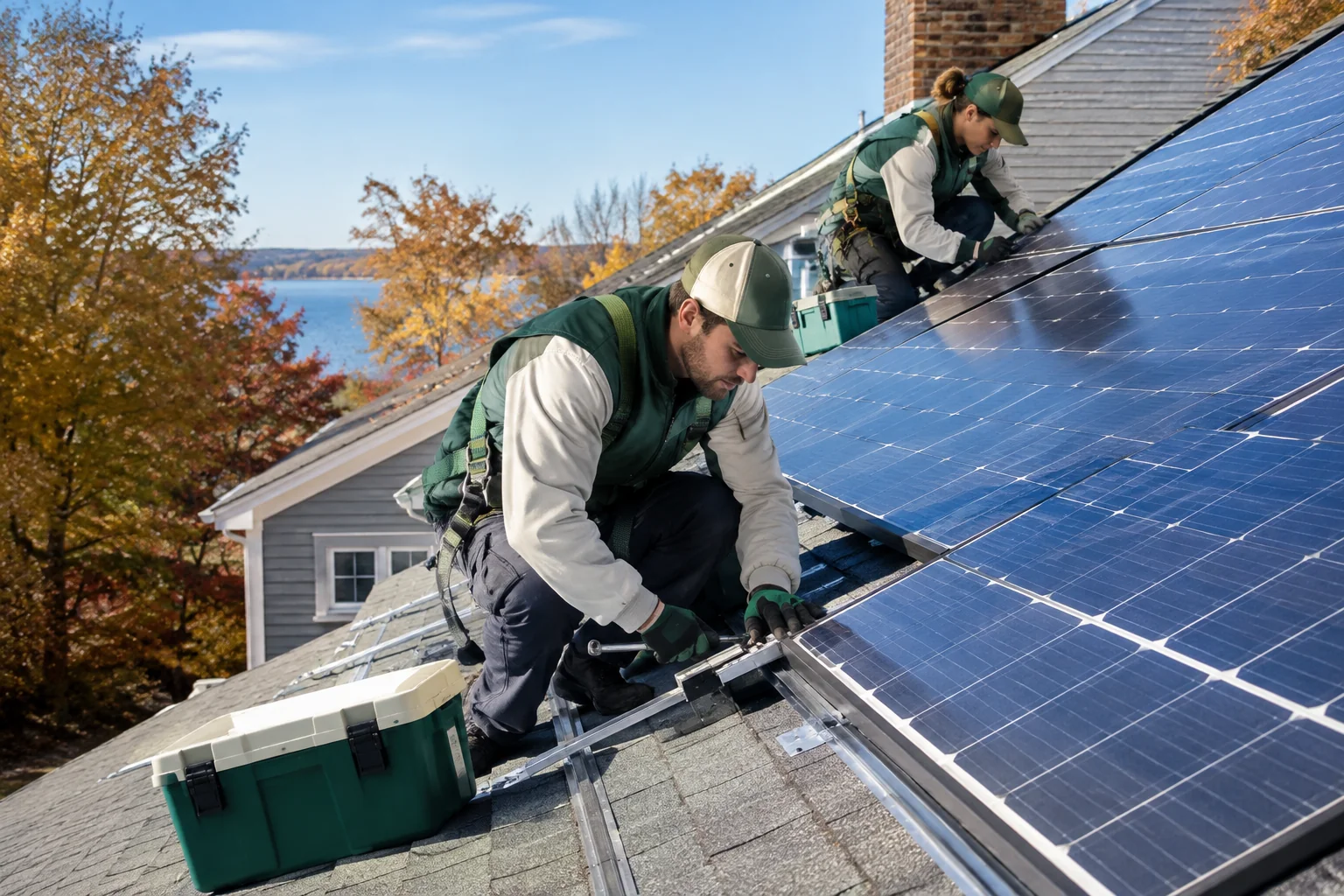
Teamsun, for example, uses in-house W-2 crews across Connecticut, Massachusetts, and Rhode Island rather than subcontracted labor. That matters for a specific reason: when a subcontractor finishes a job and moves to the next installer that hired them, the accountability chain for your warranty gets longer. You're calling a corporate office that then has to track down whoever actually touched your roof.
With a fixed, local crew, the person troubleshooting a production drop two years later is often the same company, sometimes the same technician, who installed the system. That continuity shows up most clearly in small things: knowing your specific roof pitch, your utility's interconnection quirks, or which inverter model they put on your house without pulling a file first.
It's also why a local installer can reasonably offer to service equipment from other brands. Teamsun services and retrofits batteries on systems installed by any company, something a dealer network built around one panel brand typically won't prioritize. Read more in our battery retrofit guide.
Install Speed: Contract to Power-On
Install speed from contract to power-on typically runs 33 days on the fast end for permit-to-inspection timing, up to four to six months on the slow end, depending on your utility and local permitting backlog.
The on-roof work itself is almost never the bottleneck. Industry data shows the physical install takes just one to three days on the roof, regardless of which company you hire. The real variable is everything around it: permit review, material delivery scheduling, and utility interconnection approval.
National data on full project timelines varies by source. Some trackers report a 33-day median from permit to inspection under newer streamlined permitting software, while other analyses put the realistic median closer to four to six months when utility approval delays are factored in. The gap between those numbers usually comes down to how much of the paperwork the installer front-loads before signing.
A company running its own crew can schedule permitting, material delivery, and installation back-to-back because it isn't waiting on a third-party subcontractor's separate calendar. That's one reason Teamsun targets a 47-day average from contract to power-on in its Connecticut, Massachusetts, and Rhode Island service area. For the full breakdown of what affects your specific timeline, see our 2026 cost and timeline guide.
Warranty Accountability: Who Actually Answers the Phone
Warranty accountability comes down to one question: does the company that sold you the system still employ the people who can fix it? With a national dealer network, that answer can change if the original dealer closes or gets replaced.
A workmanship warranty is only as good as the entity standing behind it in year eight or year fifteen. If your installer subcontracted the job, your paper warranty may list the manufacturer, but the labor warranty for things like roof penetration leaks or mounting failures often traces back to whichever subcontractor did the physical work.
If that company exits the market, you're left filing a claim with a corporate office that has to locate records from a contractor it no longer works with.
This isn't hypothetical. Our guide on what to do when your solar installer goes out of business walks through exactly that scenario, and it's a question worth asking any installer directly before you sign. We cover the full list in 15 questions to ask a solar installer before you sign.
Why In-House Crews Simplify This
With an in-house crew, the workmanship warranty and the installer are the same entity for the life of the system, as long as the company stays in business. There's no subcontractor handoff to track down.
Service Response After the Sale
Service response after the sale is where national-scale models and local installers diverge most, because a company without a fixed local crew has to dispatch whoever's available in your region, not whoever installed your specific system.
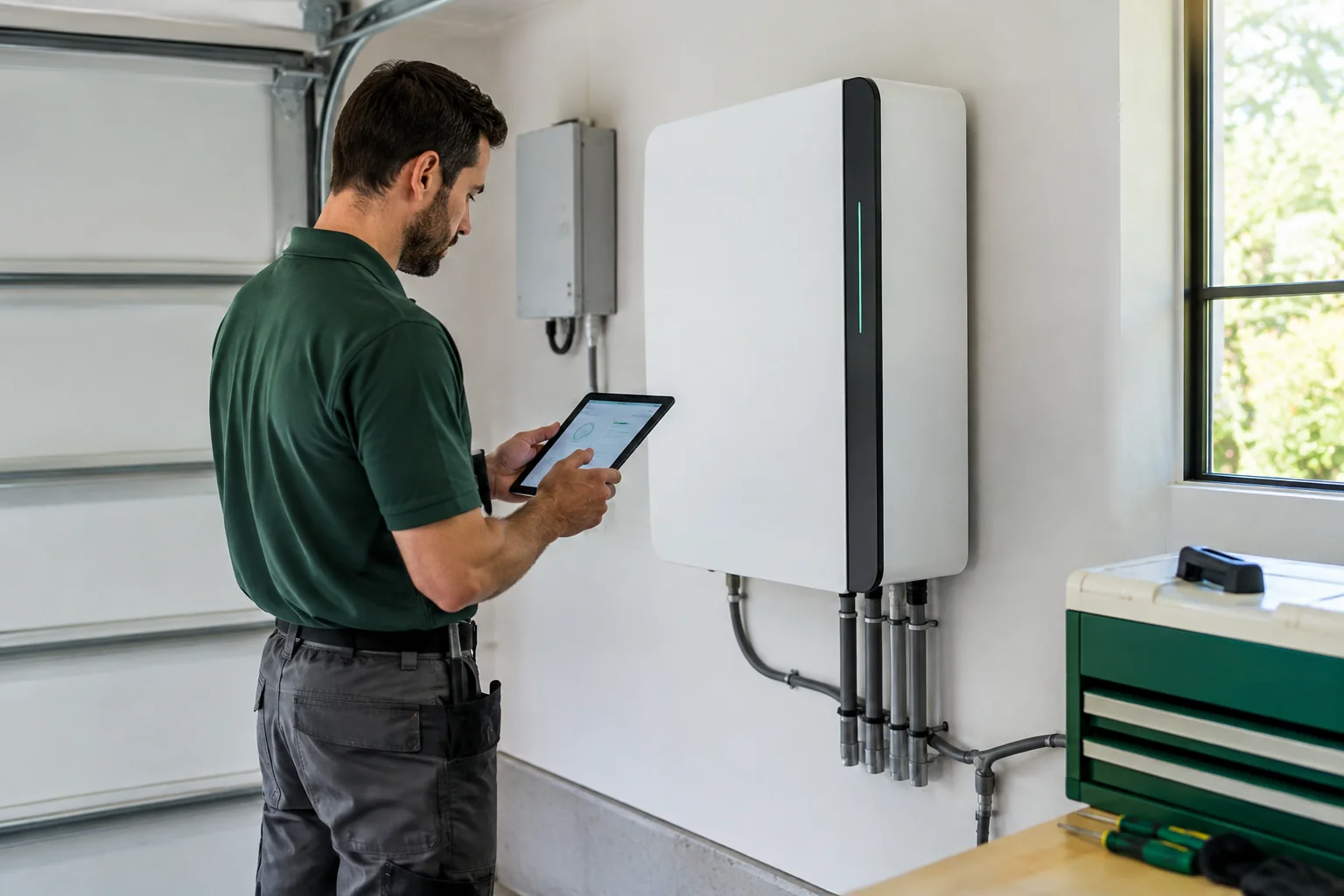
If your inverter throws an error or your battery stops charging correctly, the speed of resolution depends on local staffing, not brand size. A company with technicians stationed across Connecticut, Massachusetts, and Rhode Island can typically schedule a service call faster than a national brand routing the request through a regional dispatch queue.
This also applies to existing systems from other companies. If you already have solar installed by Sunrun, SunPower's dealer network, or Trinity Solar and want a battery retrofit or system upgrade, a local installer that services any brand can usually respond faster than going back to the original seller, especially if that seller's regional footprint has shifted. See our guide on Tesla Powerwall vs FranklinWH battery options if you're considering a retrofit.
Sunrun vs SunPower vs Local Installer: Side-by-Side Comparison Table
Beyond the quick-glance table above, here's how the three options compare on the specific factors homeowners ask about most when reviewing multiple quotes.
| Criteria | Sunrun | SunPower (Complete Solaria network) | Teamsun (local, in-house) |
|---|---|---|---|
| Ownership structure | Public national company, lease/PPA owns equipment | Panel brand under dealer network | Privately owned local company |
| Financing options | Lease, PPA, loan (credit-dependent) | Dealer-dependent financing | Cash, loan, PPA (620 FICO minimum), prepaid lease |
| Services other brands' equipment | Not a primary focus | Dealer-dependent | Yes, any brand including battery retrofits |
| Commercial solar (25kW-500kW) | Primarily residential focus | Dealer-dependent | Yes, rooftop and ground mount |
| EV charger installation | Limited availability | Dealer-dependent | Yes, Level-2 hardwired |
| Solar + roofing bundle | Not standard | Not standard | Yes, coordinated install |
Which One Actually Fits You?
The right choice depends less on brand reputation and more on what you're optimizing for: zero upfront cost, premium panel branding, or long-term local accountability.
If you want solar with no upfront investment and don't plan to ever own the hardware, Sunrun's lease and PPA structure removes the financing decision entirely. You trade ownership for simplicity, and that's a reasonable trade for some households.
If panel brand recognition and efficiency specs matter most to you, and you're comfortable researching which specific dealer in your area sells SunPower-branded equipment, that path still works, but do that dealer-level homework first. Don't assume the parent brand name guarantees uniform install quality.
If you want one company, one crew, and one phone number from contract through year fifteen, a local in-house installer is built for that. It also tends to matter more if you already have a system from another company and need a system upgrade or retrofit down the line, since a local company servicing any brand doesn't require you to track down your original installer.
Homeowners with credit below 700 FICO also tend to have more flexibility with a local PPA underwritten at a 620 minimum than with some national programs. If financing is the sticking point in your decision, that's worth a direct conversation before you rule anything out.
FAQ
Can I switch from Sunrun or SunPower to a local installer later?
Yes, but what transfers depends on your contract type. A leased or PPA system stays owned by the original company unless you buy it out, while a cash-purchased or loan-financed system can typically be serviced, upgraded, or retrofitted by any qualified local installer.
Will a local installer service a system that Sunrun or SunPower originally installed?
Many will, though coverage depends on the installer. Teamsun, for example, services and retrofits batteries on systems from any brand, which is useful if your original installer's regional presence has changed since your install date.
Does a faster install timeline mean lower quality?
Not inherently. A faster timeline usually reflects an installer that front-loads permitting and schedules its own fixed crew back-to-back, rather than waiting on a subcontractor's separate calendar. What matters more is whether the inspection and utility interconnection steps are handled correctly, not just quickly.
If you're comparing quotes from Sunrun, SunPower's dealer network, and a local option across Connecticut, the fastest way to see where you actually stand is to request a free quote and compare it line by line against what you've already received.
You can also talk to a designer about your specific roof, credit situation, or existing system before you sign anything, or call 203-903-4091 directly. For a full look at what's included, explore our services across solar, battery storage, and EV charging.
Recommended Resources
Written by
Dan Katzman
Teamsun
Teamsun writes practical solar guidance to help property owners compare equipment, project scope, costs, and long-term service before making a decision.
Keep going.
Sunrun vs Local Solar Installer: Which Is Better in 2026?
Sunrun vs local solar installer: compare install crews, timelines, service accountability, and financing to pick the right fit for your CT, MA, or RI home.
Dan Katzman
Teamsun
Solar Loan vs PPA vs Lease: Which Fits You in 2026?
Compare solar loan vs PPA vs lease on ownership, tax credit eligibility, monthly cost, and credit score requirements to pick the right fit for 2026.
Dan Katzman
Teamsun
Solar and Home Backup Generator: Can You Have Both?
Learn how a solar panel system with home generator setups coordinate safely, from transfer switches to automatic switchover, for CT, MA, and RI homes.
Dan Katzman
Teamsun