Commercial Solar Financing
Commercial solar financing compared: cash, loans, PPAs and leases for 25kW to 500kW systems in CT, MA and RI. See who owns the system and claims incentives.
Dan Katzman
Teamsun
Commercial solar financing comes in four main forms: a cash purchase, a commercial solar loan, a power purchase agreement (PPA), and a lease. Cash and loans make your business the owner, so you claim the incentives. PPAs and leases make a third party the owner. For 25kW to 500kW systems in Connecticut, Massachusetts and Rhode Island, ownership drives most of the difference between offers.
Key Takeaways
- Ownership decides incentives: the owner of the system claims the federal commercial credit and depreciation, so cash and loan buyers keep them and PPA or lease customers do not.
- Cash is simplest, a loan is flexible: cash usually costs least per watt but needs a large check; a commercial solar loan spreads that cost while you still own the system.
- PPAs and leases lower the upfront bill: you pay for power or equipment instead of buying, and the owner handles incentives and, in most contracts, maintenance.
- Compare total cost, not the first number: add every payment over the full term, including escalators, fees and the end-of-term buyout or removal.
- Check dates before you sign: federal credit deadlines are time-limited, so confirm the rules in force with a tax advisor.
Commercial Solar Financing at a Glance
| Option | Who owns the system | Who claims credit and depreciation | Upfront cost | At the end of the term |
|---|---|---|---|---|
| Cash purchase | Your business | Your business | Full system cost | You keep the system; no contract ends |
| Commercial solar loan | Your business | Your business | Down payment, if the lender requires one | Loan is paid off; you own the system outright |
| PPA | Third-party owner | Third-party owner | Typically little or none | Renew, buy the system or have it removed, per contract |
| Monthly lease | Leasing company | Leasing company | Typically little or none | Renew, buy or return, per contract |
| Prepaid lease | Leasing company | Leasing company | One lump payment for the term | Renew, buy or return, per contract |
What Are Your Commercial Solar Financing Options?
Your four main options are cash, a commercial solar loan, a PPA and a lease. Cash and loans mean your business owns the system and keeps the incentives. A PPA charges you per kilowatt-hour for power a third party produces. A lease charges a fixed amount for the equipment, either monthly or prepaid.
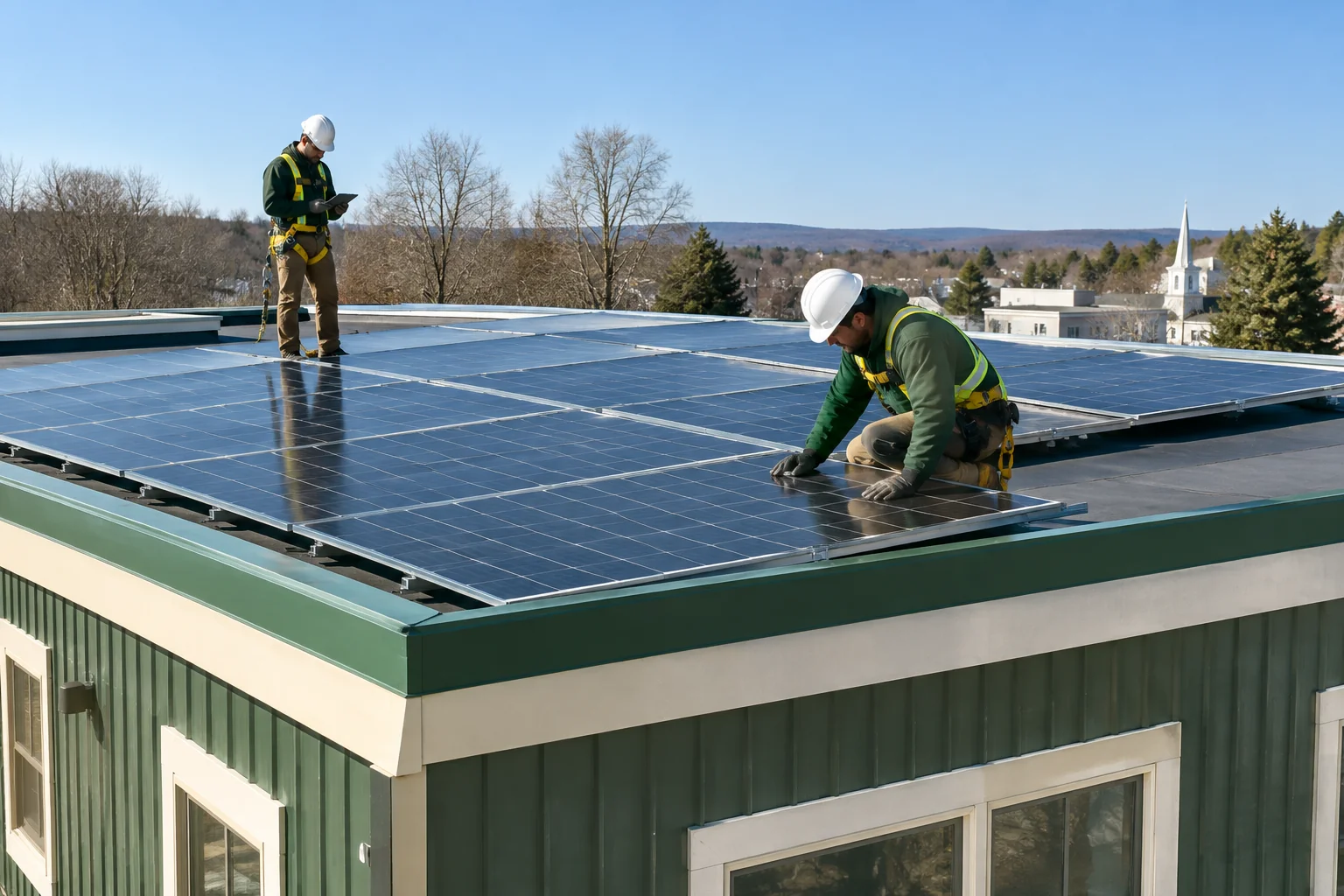
A Connecticut state handout on solar for facilities lists the same menu: self-financing with cash, or a solar PPA where a third party owns the system, among other options. We install commercial systems from 25kW to 500kW, on ground mounts and rooftops, and our payment options cover cash, loan, PPA and prepaid lease.
The offers look so different because they answer different questions. One is "what does the system cost?" Another is "what does a kilowatt-hour cost?" A third is "what is the monthly payment?" You cannot line them up until you convert them to one measure, which we cover below.
Cash Purchase: Most Control, Biggest Check
Paying cash means no lender, no contract term and no escalator. You own the system from day one, claim the incentives you qualify for, and keep all the savings. You also carry the maintenance and repair responsibility.
An NREL financing summary hosted by the EPA lists the trade-offs plainly. Direct ownership is less complex and likely the lowest cost per watt, but it needs a large initial outlay, ongoing maintenance and the ability to use the tax incentives.
That last point matters for small firms. A tax credit helps only if you have enough tax liability to use it. A business with thin taxable income may find a cash purchase less attractive than the sticker price suggests.
Commercial Solar Loan: Own It Without Paying All Upfront
A commercial solar loan lets you buy the system and pay for it over time. Your business is still the owner, so the same incentive eligibility applies as with cash. Terms, down payments and whether the loan is secured vary by lender, so get written quotes from more than one.
State programs may help. Connecticut has CT Green Bank, a green bank that describes financing green solutions for homes and businesses. Commercial PACE-style programs, where a town or state offers them, repay through a property assessment instead of a conventional loan. Availability changes and differs by municipality, so confirm what is open to your project before you count on it.
If your credit is not perfect, a loan is still possible. We covered that in solar financing for small business owners with fair credit.
Check the lender, too. Connecticut's Department of Banking publishes a list of commercial financing providers and brokers registered in the state, and points to the NMLS Consumer Access site for verification. If a broker is pitching you a solar loan, look them up first.
PPA: Pay for Power, Not the System
In a PPA, a third party installs and owns the system on your roof or land. You agree to buy the electricity it produces at a set rate per kilowatt-hour. The rate is usually lower than the utility rate at the start, and many contracts raise it each year through an escalator.
The escalator is the line to read twice. A low starting rate with a high annual escalator can cost more over 20 years than a higher flat rate. Ask for the year-by-year rate schedule in writing.
We underwrite PPAs from a 620 FICO minimum. For a deeper walkthrough, see how solar PPA financing works.
Lease and Prepaid Lease: Fixed Payments for the Equipment
A lease is a fixed payment for the use of the equipment, and you buy the electricity from your utility as usual. The leasing company owns the system and typically claims the incentives. Ask who maintains it and who insures it, because contracts differ.
A prepaid lease works the same way but you pay for the whole term at the start. That removes the monthly bill and the escalator question, though it ties up more cash than a PPA or monthly lease. A lump payment also means you should check what happens if you sell the building before the term ends.
Who Owns the System and Who Claims the Tax Credit and Depreciation?
The party that owns the system claims the federal commercial tax credit and depreciation. With cash or a loan, that is your business. With a PPA or lease, it is the third-party owner, who usually reflects the value in your rate or payment. Eligibility depends on your tax position, so confirm it with a tax advisor.
The federal rules are time-limited, so check them before you pick a structure. Current guidance says a solar project that did not begin construction by July 4, 2026 must be placed in service by December 31, 2027 to qualify for the Section 48E commercial credit. With that date in mind, schedule matters as much as price.
Illustrative example only, with made-up numbers: suppose a PPA starts at a rate of 10 and rises every year, while a flat offer is 12. The PPA looks cheaper in year one, but after enough annual increases it passes 12 and can cost more over 20 years.
Add up all 20 years for each offer before you decide. For a loan, add every payment, fee and down payment, then subtract the incentives you can use. Do the same for cash, using the system price plus maintenance. This puts all four options on one total.
Depreciation rules also changed for solar projects in recent legislation, and the right treatment depends on when construction starts. We do not give tax advice, so we will not quote a percentage here. Ask your CPA which rules apply to your project date and entity type.
Here is how ownership plays out for a typical business:
- Cash or loan: you claim the credit and depreciation if your tax situation lets you use them, and you carry the system on your books.
- PPA or lease: the owner claims them. Your benefit is a lower rate or payment, not a tax deduction.
- Nonprofits and tax-exempt owners: they usually cannot use a tax credit directly, which is one reason third-party ownership exists. Ask your advisor how the rules apply to you.
Utility and property tax incentives can sit on top of the federal rules. A U.S. Department of Energy lab guide, the On-Site Commercial Solar PV Decision Guide, notes that utilities offer incentives and that property tax incentives can include exemptions, abatements and credits. Ask us and your accountant which apply in your town.
What Do Lenders Review Before Approving a Commercial Solar Loan?
Lenders review your business's credit, time in operation, financial statements, tax returns, existing debt and cash flow, plus the project itself: the proposal, system size, site control and roof or land condition. Strong cash flow and clean paperwork usually mean better terms. Missing documents mean delays.

Use this checklist before you apply. For each item, we note what a lender wants to see and what should make you pause.
- Business and owner credit: a solid payment history is the goal. Recent late payments, collections or liens are a red flag; fix or explain them first.
- Financial statements and tax returns: usually the last two years, plus current-year figures. Profit and cash flow should comfortably cover the new payment. If they barely do, shrink the system or extend the term.
- Existing debt: the lender checks whether a new payment fits alongside current loans. Heavy existing debt may push you toward a PPA or lease.
- Proposal and site control: a signed, detailed proposal and proof that you own the building or have landlord consent. If you rent, get written landlord approval before you spend time on loan applications.
- Roof or land condition: the roof should outlast the loan. See our guide to commercial solar for small business roofs for what to check.
If a lender wants unusual fees up front or will not give written terms, walk away. A good lender gives the full rate, term, fees and payoff terms in writing.
How Do You Compare Commercial Solar Offers Side by Side?
Compare offers by calculating the total cost of energy over the full term, including every payment, escalator, fee and buyout, then adjusting for who claims incentives. Put each offer on one sheet with the same system size, term and production assumptions. Mismatched assumptions are why offers look so different.
The table below shows what to pull from each proposal and what a good or bad answer looks like. We deliberately do not put dollar figures in it, because your numbers depend on your site, utility and tax position.
| Item to compare | Cash | Loan | PPA | Lease |
|---|---|---|---|---|
| Total cost over the term | System price, plus maintenance you pay | All payments plus fees plus down payment | Sum of every year's rate times expected production | Sum of all payments, or the prepaid amount |
| Term length | None | Match to roof life and cash flow | Read the full term; know the exit rules | Read the full term; know the exit rules |
| Escalator | None | Fixed rate loans have none; check variable rates | Ask for a year-by-year schedule | Ask whether payments rise each year |
| Incentives | You claim, if you can use them | You claim, if you can use them | Owner claims; confirm how it lowers your rate | Owner claims; confirm how it lowers your payment |
| Maintenance and repairs | You | You | Usually the owner; confirm in writing | Confirm in writing |
| End-of-term options | You own it | You own it after payoff | Renew, buy or remove | Renew, buy or return |
Four checks separate a clear offer from a risky one:
- Escalator: an escalator that rises faster than you expect utility rates to rise erodes the savings. Treat a vague answer as a walk-away signal.
- End of term: the buyout price should be defined in the contract, or a clear method for setting it. "Fair market value" with no method is open-ended.
- Removal terms: know who pays if the system must come off the roof, and who handles roof work during the term.
- Production guarantee: for PPAs and leases, ask what happens if the system produces less than promised.
Our 47-day average install timeline is for the build itself, so also ask every installer for a date range from signed contract to power-on and what could delay it.
Which Option Fits Which Business?
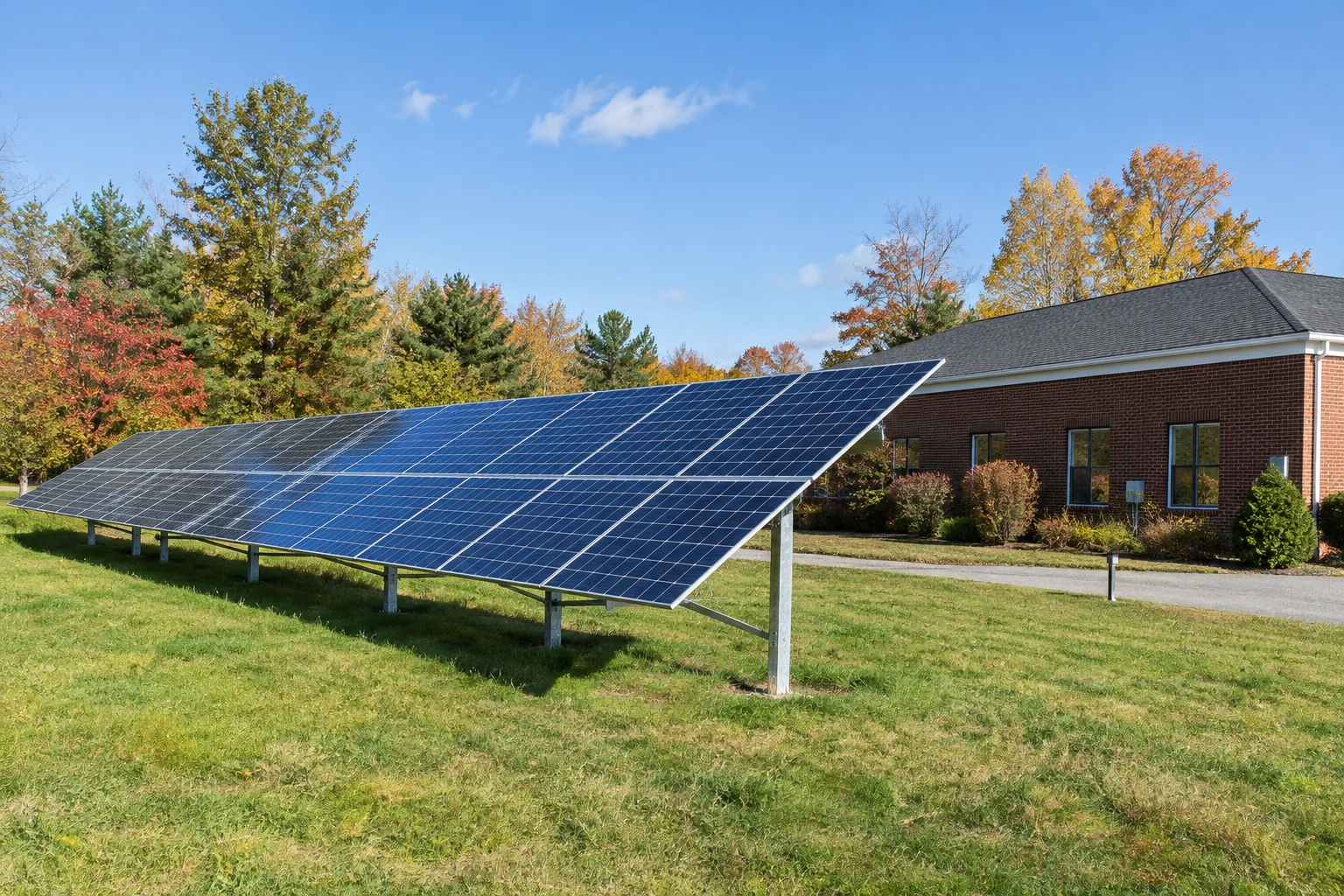
Choose cash if you have capital and enough tax liability to use the incentives. Choose a loan if you want ownership with a smaller upfront cost. Choose a PPA if you want little upfront spending and no maintenance. Choose a lease if you want fixed payments or want to prepay. Your tax position, roof and property ownership decide.
Here is what we would do in common situations:
- Profitable owner-occupied business with cash on hand: price a cash purchase and a loan side by side. Owning tends to keep the most value, as long as you can use the tax benefits.
- Profitable business that wants to keep cash for operations: a commercial solar loan. Keep the term inside the roof's remaining life.
- Business with low taxable income, or a nonprofit: a PPA or lease is worth a serious look, because the owner can use incentives you cannot. Scrutinise the escalator.
- Tenant: you need landlord consent for any structure, and a PPA or lease is often easier to document than a purchase. Our post on solar for rental properties covers the landlord side.
If you want ownership benefits, your construction schedule matters more than usual, so start the conversation early.
Connecticut, Massachusetts and Rhode Island: Local Checks
All three states have utility interconnection steps, local permitting and different state programs. These are the items to confirm before you rely on any proposal:
- Connecticut: ask what CT Green Bank currently offers for commercial solar and whether your town has a commercial PACE-style program.
- Massachusetts: ask whether your project qualifies for the SMART program and how the payment works for your system size.
- Rhode Island: ask your installer which state and utility programs currently apply to a commercial project.
- All three: confirm net metering terms with your utility, because the savings in any offer depend on them.
We work across all three states with in-house crews, not subcontractors, so one team handles design, permitting and utility interconnection. Browse our solar services for what we install.
Frequently Asked Questions
Can a small business get commercial solar financing with fair credit?
Yes, often. Lenders weigh business cash flow, time in operation and existing debt alongside credit scores. A PPA is another route, and our PPA underwriting starts at a 620 FICO minimum. Options and terms will differ from those for stronger credit, so compare more than one written offer.
Does a PPA count as debt?
It depends on the contract terms and how your accountant reads the accounting rules, so do not assume a PPA stays off your books. Send the draft contract to your CPA before you sign, and ask the same question of any lease.
What happens at the end of a PPA or lease?
The contract decides. Typical choices are renewing, buying the system or having it removed. Read the buyout method, the removal terms and who pays for each before you sign, because these clauses are where offers differ most.
Does the roof need to be replaced before financing solar?
The roof should outlast the term of your loan, PPA or lease. If it will not, replace or repair it first, or plan for removal and reinstall costs later. A lender or system owner may inspect the roof before approving a project.
Next Step: Get Real Numbers for Your Building
The right commercial solar financing depends on your roof or land, your tax position and your cash flow, so a generic rate will not help you. We can size a 25kW to 500kW system, then price it as cash, loan, PPA and prepaid lease so you compare like with like.
Request a free quote for your building, or talk to a designer about which structure fits. You can also call 203-903-4091. Bring your proposals from other installers, and we will help you line them up on total cost, term, escalator and end-of-term options.
Recommended Resources
Written by
Dan Katzman
Teamsun
Teamsun writes practical solar guidance to help property owners compare equipment, project scope, costs, and long-term service before making a decision.
Keep going.
Commercial EV Charger Installation
Commercial EV charger installation checklist for CT, MA and RI businesses: charger level, load calcs, permits, parking, networking and solar pairing.
Dan Katzman
Teamsun
Commercial Solar for Small Business Roofs: 2026 Guide
Commercial solar for small business roofs: roof suitability, permitting, interconnection, and financing options for 25kW-500kW rooftop systems in CT, MA, RI.
Dan Katzman
Teamsun
Commercial Solar for Warehouse Rooftop Owners
Commercial solar for warehouse rooftop owners: roof load limits, interconnection timelines, and financing for 25kW-500kW systems before you sign a contract.
Dan Katzman
Teamsun