Battery Storage vs More Solar Panels
Battery storage or more solar panels? Compare outage protection, self-consumption and net metering in CT, MA and RI to decide where your next dollar goes.
Dan Katzman
Teamsun
For most Connecticut, Massachusetts and Rhode Island homeowners, the next dollar goes to battery storage if outages worry you or your utility pays little for exported power, and to more solar panels if your roof has room and your bills are still high. Panels cut your bill. A battery keeps the lights on. Rarely does one upgrade do both.
Key Takeaways
- Outages decide it: A grid-tied system with no battery shuts off when the grid goes down, so extra panels add zero outage protection. Only storage does.
- Net metering sets the value of a battery: Where exported power earns close to full retail credit, the grid works like a free battery and storage pays back slowly on bills alone.
- Panels win on pure bill savings: If your array is undersized for your usage and your roof has room, more panels lower the bill every day. A battery does not create energy.
- Retrofits are normal: You can add a battery to an existing system of any brand, though how it connects depends on your inverter.
- Check the program first: State storage incentives change. Connecticut moved to a new framework on April 1, 2026, and Rhode Island's storage program supports batteries paired with solar.
Battery Storage vs More Panels at a Glance
| Factor | Battery storage | More solar panels |
|---|---|---|
| Power during an outage | Yes, for the circuits it is wired to back up | No, a grid-tied array shuts down with the grid |
| Lower electric bill | Indirect; shifts solar use to evenings and avoids low export credits | Direct; produces more kilowatt-hours to offset usage |
| Value under full net metering | Smaller, because the grid already banks your surplus | Strong, if the extra output offsets real usage |
| Value under weak export rates | Stronger, because stored energy beats selling cheap | Weaker, because surplus earns less |
| Roof space needed | None; wall space in a garage or basement | Yes; needs usable, unshaded roof |
| Add to an existing system | Yes, retrofit onto most systems | Possible, but limited by inverter and panel capacity |
| Best fit | Outage-prone homes, medical or work-from-home loads, weak export rates | Undersized arrays, rising usage, strong net metering |
What Does Battery Storage Do That More Panels Cannot?
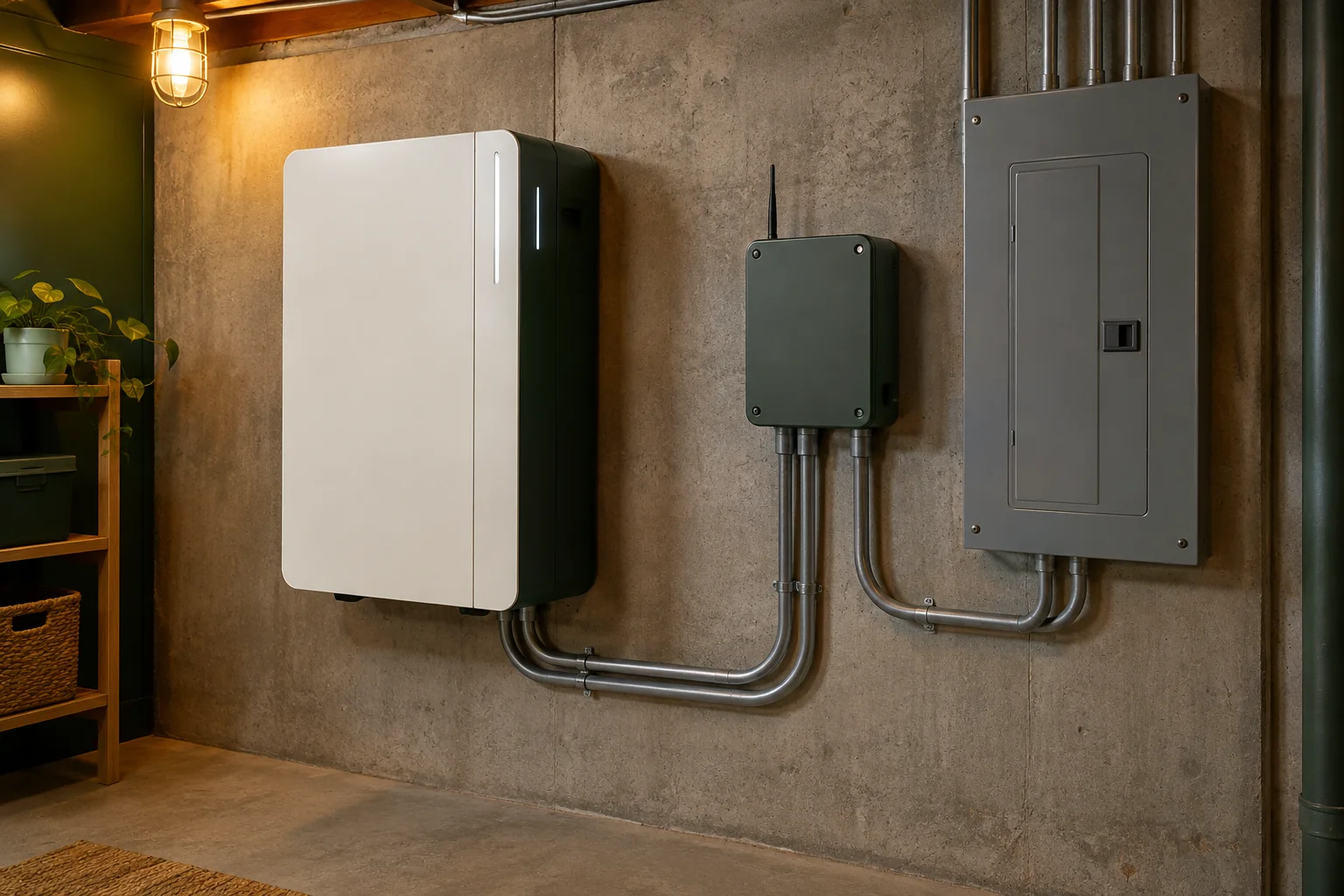
Battery storage keeps power flowing to your home when the grid fails. A standard grid-tied solar array shuts off during an outage for safety, no matter how many panels you own. A battery stores solar energy, isolates your home from the grid, and runs your chosen circuits until power returns.
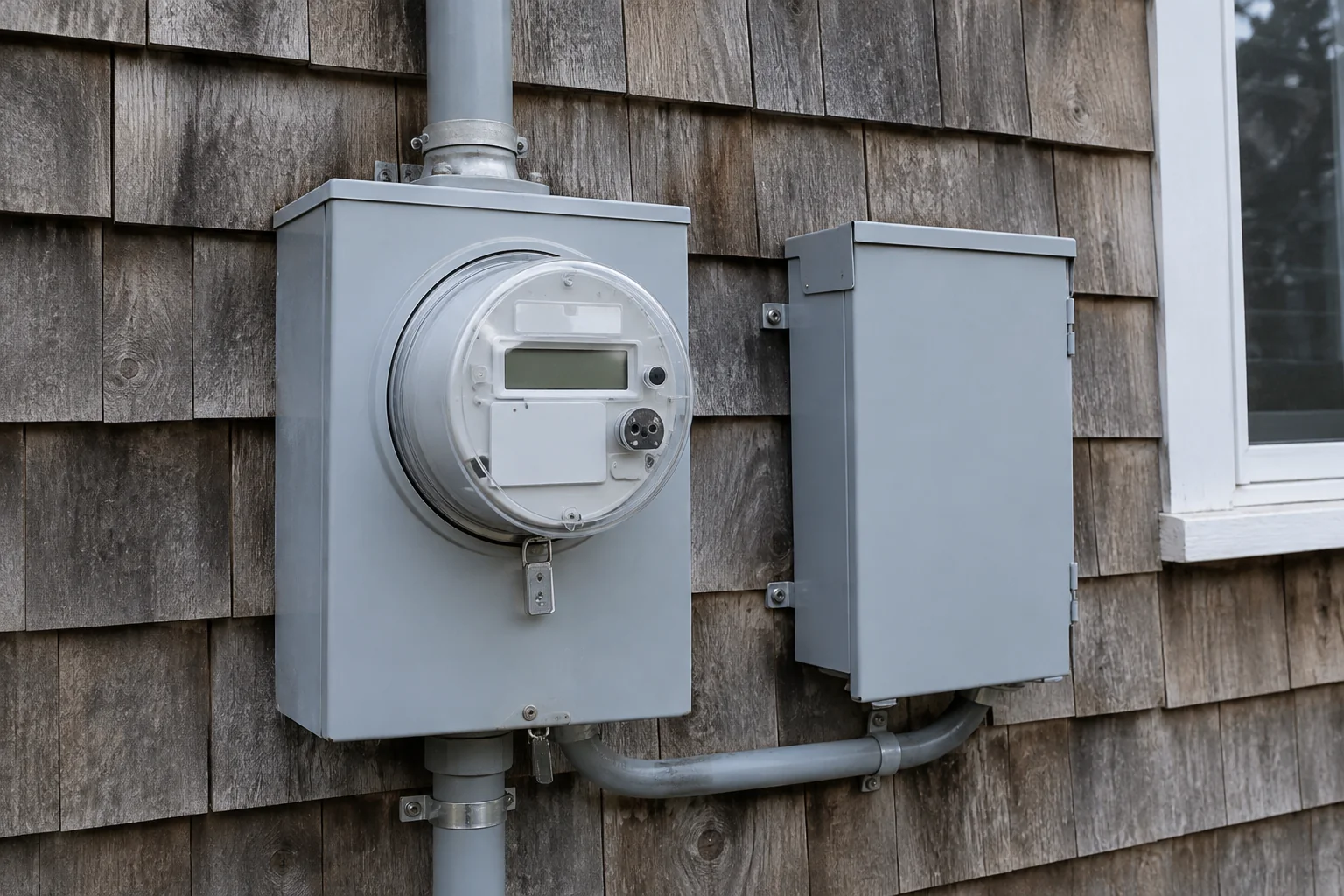
That shutdown is by design. Utility crews need to know the lines are dead, so grid-tied inverters stop exporting the moment the grid drops. The Rhode Island Office of Energy Resources' going-solar guide notes the National Electric Code requires an external shut-off so the utility can disconnect the system when workers repair lines. A battery system adds a switch that separates your home from the grid, which is how it can keep running safely.
What a battery actually backs up
A battery does not run everything forever. Its size, measured in kilowatt-hours, sets how long it lasts. Its power rating, in kilowatts, sets how many things can run at once. A well pump, an electric dryer and a central air compressor each draw a lot at startup.
Most installs wire the battery to a backup subpanel holding the essentials: refrigerator, lights, internet, a furnace blower or boiler pump, outlets for phones and a laptop. Whole-home backup is possible, but it usually means more batteries. We size it by listing your loads before we quote, not after.
Why New England outages favor storage
Nor'easters, ice storms and summer thunderstorms cause multi-hour and sometimes multi-day outages across all three states. In winter, solar output is low and snow can cover panels, so a battery will not stay full forever on a bad week.
For short and medium outages, though, a battery recharged by the sun each day carries a home through. For longer ones, some homeowners keep a generator too. We cover that pairing in our guide on combining solar panels with battery backup.
Be honest with yourself about the value of backup. If your power rarely fails and nobody at home depends on electricity for health or work, the outage argument weakens. If you run a home office, store insulin, or rely on a sump pump, it gets much stronger.
What Do More Solar Panels Do That a Battery Cannot?
More solar panels produce more electricity, and a battery only stores what panels already make. If your array covers just part of your annual usage, extra panels reduce the energy you buy from the utility every sunny hour. A battery adds no new kilowatt-hours; it moves existing ones to a better time of day.
This is the most common misunderstanding we hear. A battery feels like an energy upgrade, but it is a timing and resilience upgrade. Round trip, a battery loses a small share of what goes in as heat. If your system is too small for your usage, the battery just stores a shortage.
When panels are the better buy
Panels usually come first in four cases:
- Your array covers well under your usage. Your monitoring app or utility bill shows you still buy a large share of your power.
- Your usage is growing. A heat pump, an EV or a home addition raises demand. Our post on reading your solar monitoring app data shows how to see the gap.
- You have unshaded roof space and a strong net metering deal. Every extra kilowatt-hour you export earns credit.
- Outages are rare and nobody depends on power. Resilience is a nice extra, not a need.
The limits of adding panels
Adding to an existing array is not always simple. Your inverter may be at its limit, the roof may be near its end of life, or the utility may cap system size relative to your usage. In Rhode Island, net metering credits are limited to 125 percent of on-site consumption.
In Massachusetts, net metering facilities generally top out at 60 kW for most technologies, which is not a constraint for homes but matters for larger buildings. Ask for a roof and inverter check before assuming you can just add panels.
How Do Net Metering Rules Change the Math in CT, MA and RI?
Net metering decides how much a battery earns on your bill. Where your utility credits exported solar at or near the retail rate, the grid acts as a free battery and storage saves less money. Where credits are lower than what you pay for power, storing your own solar and using it at night is worth more.

Under classic net metering, the meter runs backward when you export, and you draw those credits down at night. Your own solar power gets used later at no loss in value, which is why a battery on a fully net-metered home is mostly a backup purchase.
The PNNL consumer's guide to rooftop solar and home energy storage describes how a utility buys excess energy from rooftop solar, and in some states from a battery too, and that the terms vary by state.
For a plain-language walkthrough of credits and billing cycles, see how solar net metering works with your utility.
State by state: what to check
| State | What we know | What to confirm before buying |
|---|---|---|
| Connecticut | Storage incentives run through a state Energy Storage Solutions program, which adopted a new performance-based structure effective April 1, 2026. | Your current export tariff and the live incentive schedule for your utility and income tier. |
| Massachusetts | Net metering rules were revised in regulations effective December 20, 2024. Systems up to 60 kW can net meter. | Whether your utility is investor-owned or municipal, since municipal utilities set their own terms, and how SMART payments apply to you. |
| Rhode Island | Net metering credits cover generation up to 125 percent of on-site consumption. A 2025 law bars utilities from limiting a site's eligibility in certain ways. | Whether your battery qualifies for the state's storage program, which supports batteries paired with solar and not stand-alone projects. |
Treat that table as a starting point. Tariffs get revised, and your own utility bill is the final word. Connecticut's residential solar compensation for new customers differs from the old one-for-one retail credit, so confirm what applies to your project date.
Storage incentives are a moving target
Connecticut's Energy Storage Solutions Program has changed more than once. The program launched with upfront residential incentives, and an April 1, 2026 reset moved it to a framework with an enrollment payment plus performance payments tied to how your battery serves the grid. Older figures you find online may be out of date.
In Rhode Island, a filing to the state utility commission noted that the program can only be paired with PV and cannot support stand-alone battery projects, and that one incentive was hard for customers to understand (Rhode Island PUC storage filing). Rules and payment levels may have moved since. We check the current schedule at quote time and put the incentive in writing, so you are not guessing.
What is still unsettled is how much utilities will pay for battery performance in the long run. Those programs are young, and a payment that looks good this year may be adjusted. We would not justify a battery purchase on incentive income alone.
Side-by-Side on One Budget: An Illustrative Example
Here is a labelled hypothetical, not a customer case, using round energy numbers instead of prices, since your quotes will set the dollars. Suppose a Connecticut home uses 30 kWh a day, and an existing array makes about 20 kWh a day on average. Your essentials during an outage draw roughly 10 kWh a day.
Option A: spend the budget on more panels
If the roof can take another few panels, the array might rise to about 26 kWh a day. You buy 4 kWh less from the utility every day, on average. During an outage, you still have no power, because the array is grid-tied. Under full net metering, that extra production earns credit you spend in the dark months.
Option B: spend the budget on a battery
With a battery of about 10 kWh usable, the same home runs its essentials through an outage and recharges from solar the next day. On a normal day, with credit near retail, the bill barely changes. The battery's job is the 3 a.m. blackout, not the monthly statement.
Reading the result
Option A moves the bill. Option B moves your risk. If your export credit is weak, Option B also starts to move the bill, since stored solar offsets power you would otherwise buy at the full rate. If you can afford both over time, put the one that fixes your biggest pain first. Our post on solar panel installation costs in 2026 gives you the price side of the comparison.
Which Upgrade Should Come First? A Decision Rule
Choose battery storage first if outages hurt you, someone at home depends on power, or your export credit is below retail. Choose more panels first if your array is clearly undersized, your usage is rising, you have open roof space, and your net metering credit is close to retail. When both apply, start with the battery.
That last line is our opinion, with a reason. A battery protects you from an event you cannot schedule, and it can be added later without touching the roof. Panels can usually wait until a roof replacement or a bigger load makes them make sense. Someone with a heat pump going in next year should flip that order.
Choose a battery first if
- You lost power for more than a few hours at least once in the last two years.
- Someone relies on medical equipment, a sump pump or a well pump.
- You work from home and an outage costs you income.
- Your utility pays you noticeably less for exports than you pay for imports.
Choose more panels first if
- Your monitoring data shows you still buy most of your power.
- You are adding an EV, a heat pump or an addition. Our guide on pairing an EV charger with solar panels covers that load.
- Your roof is sound and has unshaded space.
- Your net metering credit is at or near retail and outages are rare.
When to do neither yet
If your roof is near the end of its life, fix the roof first. Adding panels to an aging roof means removing and reinstalling them later. A battery does not need the roof, so it can be the smarter spend while you plan the roofing work. Our walkthrough on when to replace your roof before solar explains the timing.
Can You Add a Battery to Solar Panels You Already Own?
Yes. A battery can be retrofitted onto most existing solar systems, whatever company installed them. The method depends on your inverter. An AC-coupled battery has its own inverter and works with most systems. A DC-coupled one ties into the panels' inverter and often requires a compatible hybrid inverter.
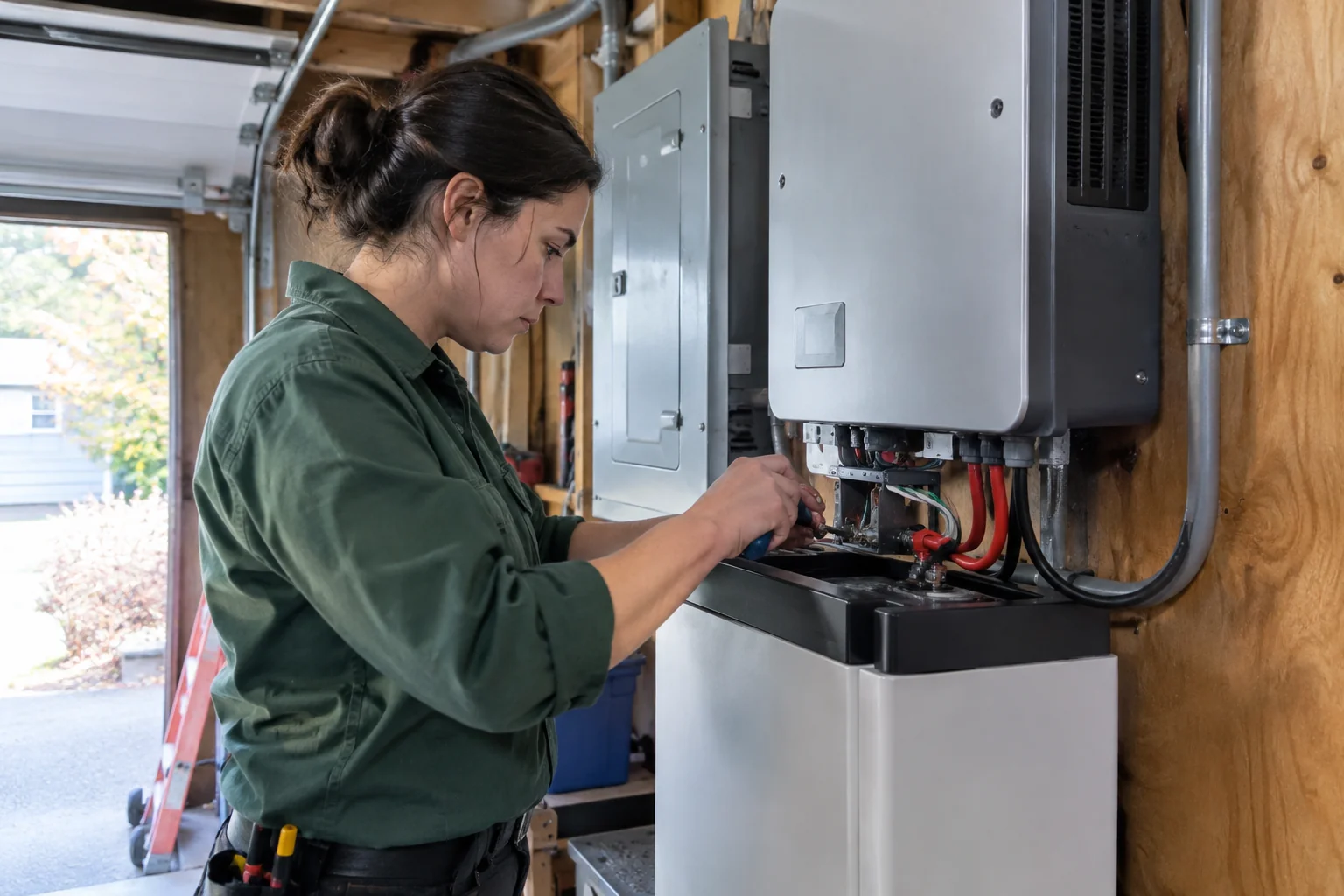
Many homeowners assume only the original installer can add a battery. That is not true, and it is a common reason people stay stuck with a system that cannot back up their home. We service and retrofit systems from any brand, and we install FranklinWH, Tesla Powerwall and Enphase IQ batteries. Our solar battery retrofit guide walks through the process step by step.
What we check on an existing system
- Inverter type and age. Microinverters, string inverters and hybrid inverters each point to a different battery approach.
- Main panel capacity. A crowded or older panel may need work before a backup subpanel fits.
- Warranty status. Confirm that adding a battery does not void coverage on your current equipment.
- Utility interconnection. A battery changes how your system connects to the grid, so it needs a utility application and a permit.
Our crews are in-house W-2 employees, not subcontractors, so the person who designs your retrofit works for the same company that answers the phone later. Average install time from contract to power-on is 47 days across our projects.
Checklist Before You Spend a Dollar
Run through these checks before you choose. Each has a pass mark that points to one upgrade or the other.
- Pull 12 months of utility bills. If you still buy a large share of your power, panels move up. If your system roughly zeroes out your bill, a battery moves up.
- Read your tariff. Look for how exports are credited. Near-retail credit means a battery saves little on bills. Lower credit means a battery saves more.
- List outage loads. Add up what you must run and for how many hours. If the total is beyond what one battery covers, plan for expansion or a generator.
- Inspect your roof. If it needs work within a few years, fix it before adding panels. Walk away from panel expansion until then.
- Confirm your inverter. Know its make, age and capacity. That tells you whether a retrofit is simple or needs new hardware.
- Get the incentive in writing. Ask your installer which state storage program applies, what the current schedule pays, and what you must do to stay enrolled.
- Compare two quotes in one table. Same rows for equipment, usable kWh, kW output, warranty and what is backed up.
If a quote bundles a battery without telling you which circuits it backs up, or how many kilowatt-hours are usable, treat that as a failed check and ask again. A price without those details is not a real proposal.
Frequently Asked Questions
Do I need a battery if I have net metering?
No. Net metering keeps your bill low without a battery, because the grid banks your surplus. You need a battery only for outage protection, or if your utility credits exports below the retail rate. Many homeowners with strong net metering still add one for backup power.
Will a battery pay for itself?
Often not on bill savings alone under full net metering. Payback improves with weak export credit, high rates, or incentive payments. Many buyers treat backup power as the main benefit and any savings as a bonus. We would not promise a payback period without your tariff and quote in hand.
Can a battery run my whole house?
It can, but it depends on size and power rating. One battery usually covers essentials. Heavy loads like central air, electric heat and well pumps need higher power output or several batteries. We list your loads first and design the backup panel around them.
Can I add panels and a battery at the same time?
Yes. Installing both together can save on permitting and labor, and the system is designed as a unit. If budget forces a choice, install the battery-ready inverter and wiring now, then add the second piece later without redoing the electrical work.
Does a battery work during a multi-day outage?
Yes, if the sun recharges it. In sunny weather, a battery with solar can cycle daily and carry essentials for days. In a winter storm with snow-covered panels, it drains and does not refill. Plan loads accordingly, or pair with a generator.
Next Step: Price Both Options on Your Own House
The right answer depends on your bills, your roof, your inverter and your tariff, and we can check all four. Request a free quote and we will price battery storage and added panels side by side. If you would rather talk through your numbers first, talk to a designer, call 203-903-4091, or explore our services for new systems, retrofits and service on any brand.
Recommended Resources
Written by
Dan Katzman
Teamsun
Teamsun writes practical solar guidance to help property owners compare equipment, project scope, costs, and long-term service before making a decision.
Keep going.
How to Combine Solar Panels With Battery Backup (2026)
Learn how solar panel installation with home battery backup works, from wiring to outage performance to sizing a battery for true energy independence.
Dan Katzman
Teamsun
The Best Battery Storage Options for New England Winters
Compare FranklinWH, Tesla Powerwall 3, and Enphase IQ 5P on cold-weather performance for CT, MA, RI, VT, NH, and ME winters before storm season hits.
Dan Katzman
Teamsun
Can Solar Panels Be Installed During a New England Winter?
Solar panel installation during winter is possible in CT, MA and RI. See how crews handle snow and ice, and how a winter start affects your time to power-on.
Dan Katzman
Teamsun