Can Solar Panels Be Installed During a New England Winter?
Solar panel installation during winter is possible in CT, MA and RI. See how crews handle snow and ice, and how a winter start affects your time to power-on.
Dan Katzman
Teamsun
Yes, solar panel installation during winter is routine for Connecticut, Massachusetts and Rhode Island homes. Crews install through the cold months, and the roof work itself usually takes only a few days. The longer parts of the job, such as engineering, permits and utility approval, happen at a desk. Snow and ice can move a roof day, but they rarely move your power-on date by months.
Key takeaways
- Winter installs work: the roof stage is a small slice of the timeline, so a January or February signing does not mean a January or February roof date.
- Paperwork sets the pace: site survey, engineering, municipal permit and utility interconnection take the most calendar time, and none of them care about snow.
- Safety decides roof days: a crew will not work on an icy or snow-covered roof, so weather delays are measured in days, not seasons.
- Signing early helps: a homeowner who signs in winter is in the queue before the spring rush, with the permit work already done when the weather turns.
- Roof condition is the real gate: a roof that needs replacing should be handled first, in any season.
Winter solar installation at a glance
| Phase | Does winter slow it? | What to expect |
|---|---|---|
| Site visit and survey | Slightly | Roof, panel and attic checks can be done in cold weather; a snow-covered roof may need a second look once it clears. |
| Engineering and design | No | Done from the office, using survey data and photos. |
| Municipal permit | No | Set by your town's review queue, not by the weather. |
| Utility interconnection application | No | Set by the utility's review queue. |
| Roof install (racking, panels, wiring) | Yes | A few days of work, scheduled around snow, ice and high wind. |
| Inspection and utility approval | Slightly | Electrical work stays accessible until the inspector signs off. |
| Power-on | Indirectly | Follows approval; Teamsun's average from contract to power-on is 47 days. |
Why do homeowners think solar has to wait for spring?
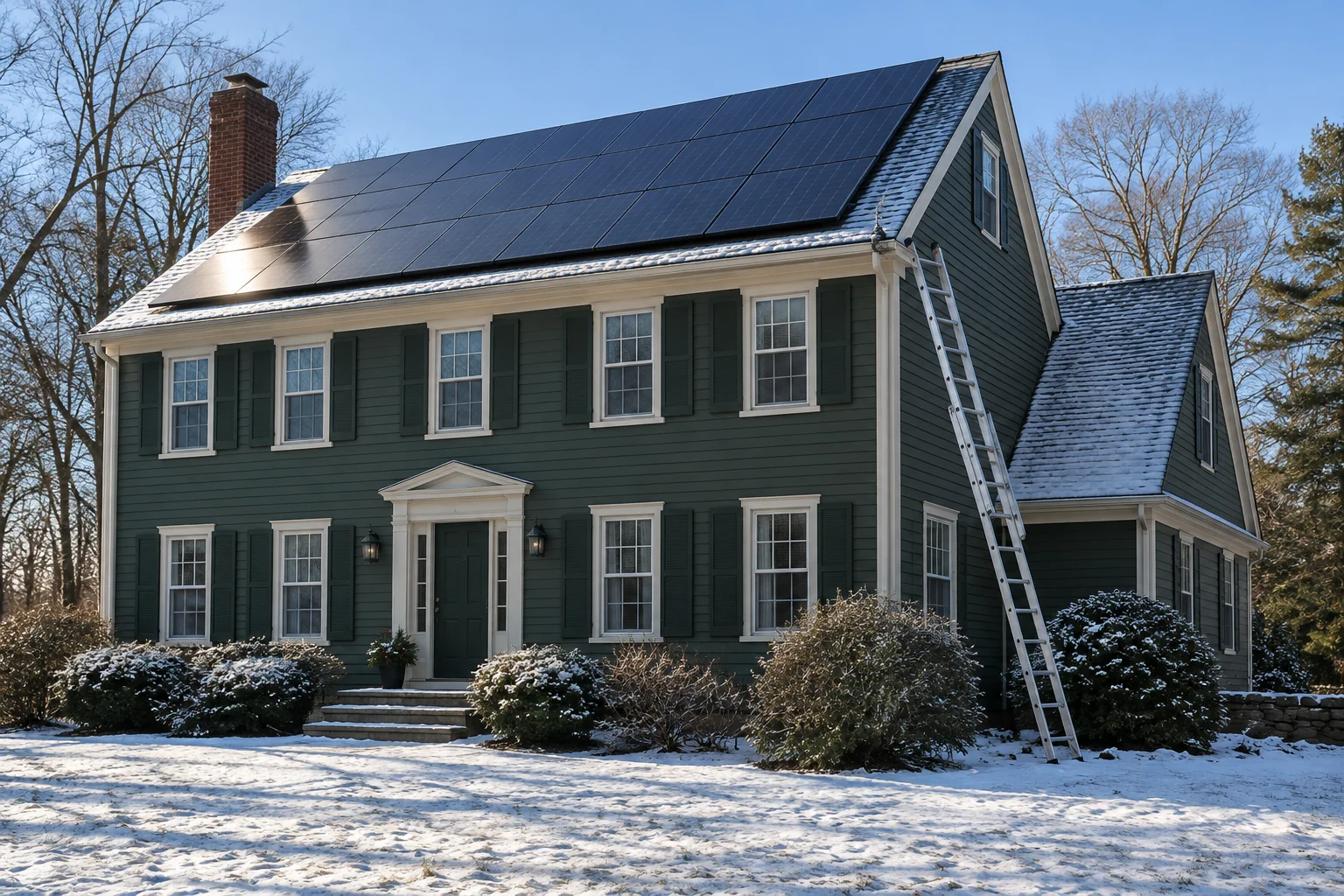
Most people picture the install as one long job on a roof, and a snowy roof looks like a stopped job. In practice, the roof work is a short stage inside a longer process. Waiting for spring usually just moves you into a busier queue.
The belief makes sense on the surface. Snow on shingles looks dangerous, and it is. Cold also feels like a problem for equipment. But panels are built to sit outside through New England winters for decades, and the people installing them follow the same weather rules roofers do.
Here is the part that gets missed. Before anyone climbs a ladder, your project goes through a site survey, engineering, a municipal building permit and a utility interconnection application. Those steps take weeks, and they run the same in January as in June. A winter signing lets that work happen while the weather is bad anyway.
There is a cost to waiting, too. If you sign in March, you are signing alongside everyone else who had the same idea, and you land in the spring rush. If you sign in winter, your permit work is done and your project is ready for the first stretch of workable weather.
What does a winter solar install actually involve?
A winter install follows the same steps as any other season: site survey, engineering, permit, utility application, roof work, inspection and power-on. The only stage that changes is the roof work, which is scheduled around snow, ice and wind. Everything else runs on office and municipal timelines.
Here is the sequence a Connecticut, Massachusetts or Rhode Island homeowner should expect.
- Site visit. A crew member checks roof age, material, pitch and framing, looks at shade, and opens your main electrical panel. Our site visit walkthrough covers what to expect.
- Engineering and design. The system layout and electrical plan are drawn from the survey.
- Permit and utility applications. Both are filed with your town and your utility. These are queue-driven.
- Equipment staging. Panels, inverter and racking are ordered and scheduled once approvals are in sight.
- Roof and electrical work. Racking goes on first, then panels, then wiring.
- Inspection. The local inspector reviews the work.
- Utility approval and power-on. The utility gives permission to operate, and the system is switched on.
Notice how few of those steps happen on the roof. That is why a winter start is much less of a handicap than it sounds.
How do crews stay safe on a snowy roof?
Crews stay safe by not working on a roof that is icy, snow-covered or too windy. They install only when the surface is dry or cleared, use fall protection on every roof, and reschedule the roof stage when conditions are bad. A skipped day costs less than an injury.
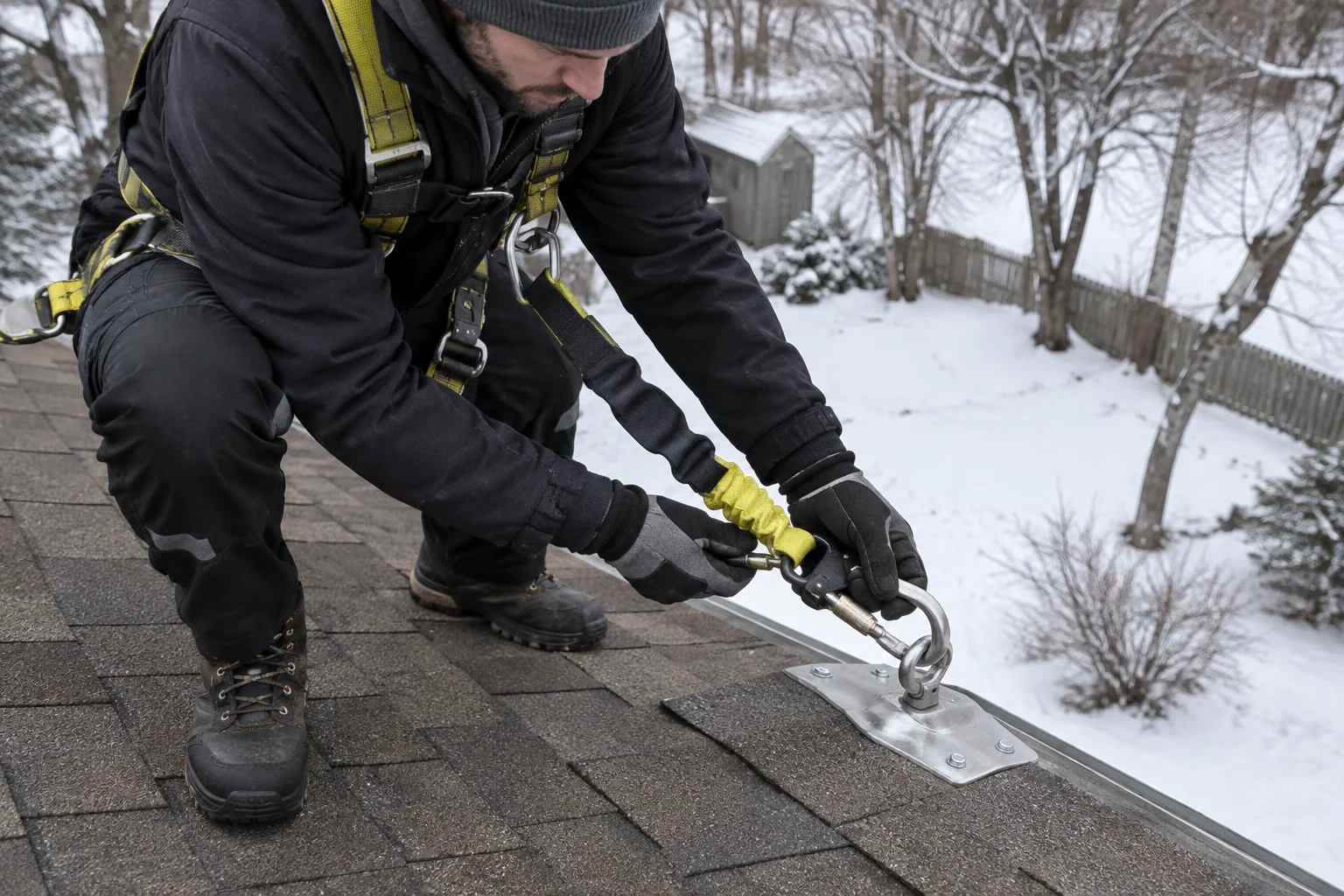
Roof safety in winter comes down to a few plain rules. We want you to know them, because they explain why a schedule moves.
- No work on ice or snow cover. Shingles with a skin of frost or a layer of snow have almost no grip. The roof stage waits until the surface is clear and dry.
- Wind counts. Panels are large, flat and catch wind like sails. High-wind days are roof-stage days off, even when the sky is clear.
- Fall protection every time. Harness, lanyard and roof anchors are used on every job, in every season.
- Short daylight is planned for. A winter day has fewer working hours, so crews schedule the roof stage in blocks that can finish before dark instead of leaving a half-covered roof overnight.
- Cold-hands work is slow work. Fastening and sealing are done carefully, and the crew takes the time to do them correctly instead of hurrying.
Why in-house crews matter in winter
Teamsun uses in-house W-2 crews, not subcontractors. In winter, that matters for a practical reason: the same team that decides the roof is too icy to climb is the team that owns the schedule, the quality and the call to you.
One accountable crew handles the install from roof to power-on, so a weather delay comes with one phone call from one company, not a game of telephone between a salesperson, a sub and a sub's sub.
It also keeps pressure off the safety call. A crew working for you has no reason to rush a roof just to hit a subcontractor's invoice date.
What happens when there is snow on the roof?
When snow covers the roof, the crew waits for it to slide off or melt, then installs. Sun on a slanted roof clears snow quickly, so a delay is usually a day or two. Homeowners should never climb up and shovel the roof themselves to speed things along.
Snow is a bigger deal for the crew than for the equipment. The U.S. Department of Energy notes that heavier snow and extreme winter weather pose a greater risk to the resilience and longevity of PV installations than light snow does, which is why system design accounts for snow load. A typical New England snowfall does not stop a well-designed system.
Do not clear the roof yourself
The temptation is to grab a roof rake or a shovel and clear a path. Do not climb up. A cleared roof is not worth a fall, and scraping at snow can scratch the panel glass or shingles. If you already have an array and want to know when clearing makes sense, read our guide to solar panel snow removal. On a pre-install roof, the crew handles it as part of the schedule.
Snow on panels after install
Once panels are on, snow is mostly self-correcting. The town of Nantucket's solar FAQ says that as long as panels are on a roof or high enough off the ground, snow should not need to be removed, since the panels melt snow that doesn't slide off on its own.
Cold-weather detail work
Roof penetrations and flashing need a sealed, weather-tight finish. Adhesives and sealants cure better in mild temperatures, so a crew may hold the sealing steps for a milder part of the day or a milder day. Skipping or rushing that step is how leaks start, so we would rather lose a day than seal a mounting point in poor conditions.
How does a winter start change the timeline to power-on?
A winter start adds a few weather days to the roof stage, not months to the project. Teamsun's average from contract to power-on is 47 days, and the permit and utility steps that fill most of that time run the same in any season. The exact date depends on your town and utility.
Here is a hypothetical example, not a real customer. Suppose a homeowner in Connecticut signs on January 5. Using our 47-day average, power-on lands around the third week of February. The roof stage might take three or four working days inside that window. If a snowstorm hits, the roof days shift by a few days. The permit and utility reviews were already moving the whole time.
That is a rough guide, not a promise. Your town's permit queue and your utility's review pace can run faster or slower than average. For the full process, see how long solar installation takes from contract.
Inspection comes before power-on
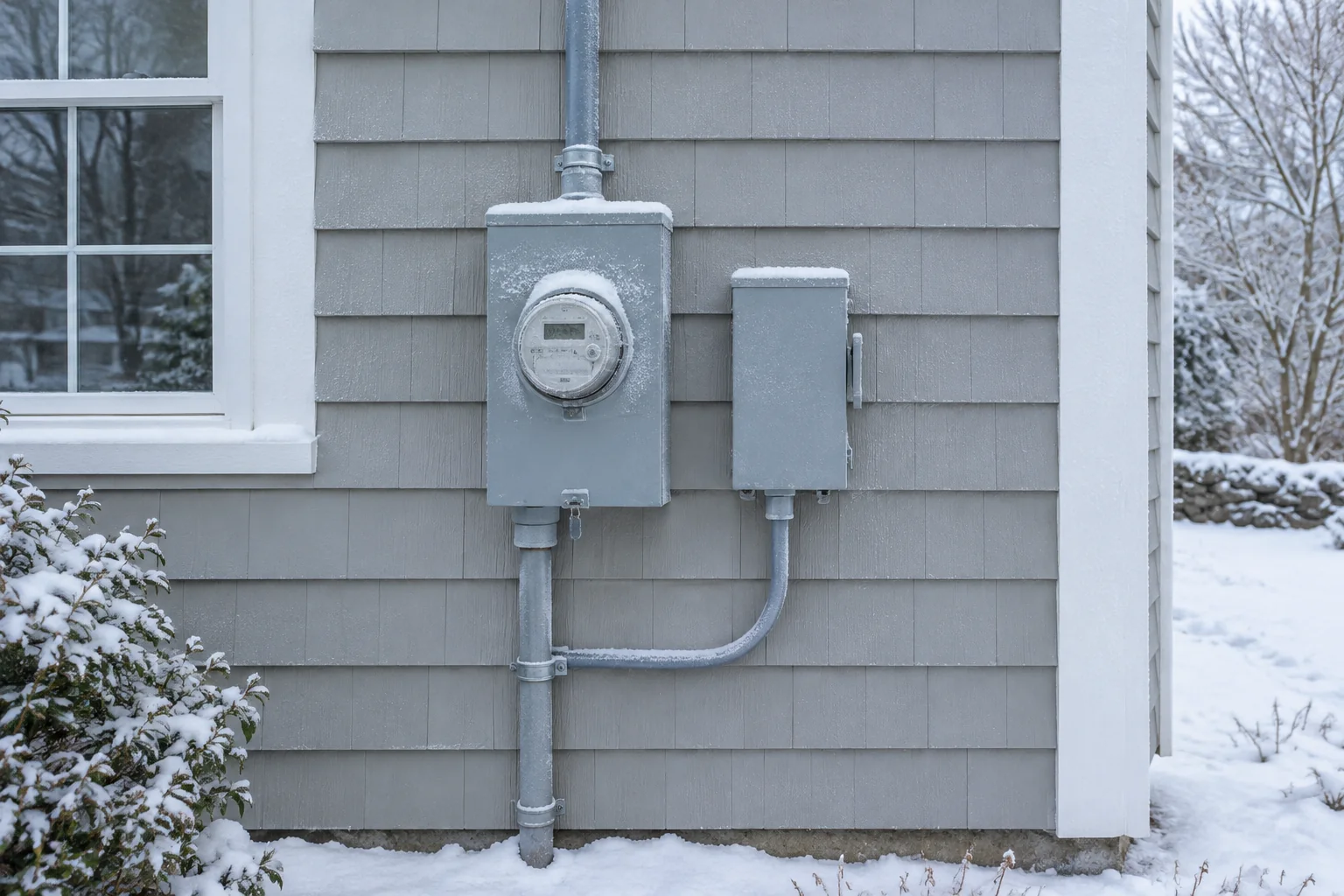
Mass.gov's model solar permitting guidance says that electrical work must remain accessible and exposed for inspection, and must not be covered, concealed, modified or energized until the local authority approves it. In plain terms, no one switches your system on before the inspector signs off. A snowstorm on inspection day can push the visit back, and that is a real source of winter slippage.
Utility upgrades can add time
Occasionally, your solar array sends enough power back to the grid that the utility needs to upgrade nearby equipment. Concord Municipal Light Plant's install explainer says that in those cases the utility covers the equipment cost, but the installer or homeowner covers its labor costs, usually about $1,000.
That example is from one Massachusetts municipal utility, so ask your own utility what applies. This kind of delay is not seasonal, but it is worth knowing about before you pick a date.
What we cannot predict
One thing nobody can promise: how many weather days a given winter will bring. A mild February might cost nothing, and a run of storms could push the roof stage by a week or more. We will not guess in advance, and you should be wary of any installer that does.
Will panels produce in winter once they are on?
Yes, panels produce all winter, just less than in summer. Days are shorter and the sun sits lower, so total output drops. Cold air itself does not hurt panels. Snow cover on the array cuts output until it slides or melts off.
If you sign in winter and power on in late winter, your system starts producing as days lengthen, which is the right direction for output. For realistic expectations on dull, overcast days, see our look at how much power solar panels produce in cloudy New England weather.
Winter install or wait for spring? A decision rule
Start in winter if your roof is sound, your main electrical panel is in good shape and you want power on before the spring rush. Wait only if the roof needs replacing first, and even then, begin the roofing and permit work now instead of waiting for spring.
Here is how we would decide.
- Sign in winter if: your roof is in good condition, shading has been checked, and you want the paperwork finished before warm weather brings the busy season.
- Fix the roof first if: the shingles are near end of life, the flashing is failing, or the roof leaks. The guidance from the town of Concord, Massachusetts, is that if your roof is over 10 to 15 years old, you may want a contract clause for removal, storage and re-installation of the panels. That is worth discussing before signing.
- Ask for a flexible schedule if: you cannot be home for a long stretch of weather-dependent days. The roof stage rarely needs you home, but the inspection and utility steps might.
The one case where we would say wait: a roof that is already failing. Panels over a bad roof lead to a costly remove-and-reinstall job later, in any season. If your roof is questionable, our guide on when to replace your roof before solar walks through the signs.
Winter checklist before you sign
- Ask who does the roof work: your installer's own employees, or a subcontractor.
- Ask what happens to the schedule on a snow day, and who calls you.
- Ask how the permit and utility applications are filed and tracked.
- Ask for the expected power-on window in writing, with the weather caveat stated.
- Ask whether a roof inspection is part of the survey.
Winter solar installation FAQ
Can solar panels be installed in January or February in New England?
Yes. Crews in Connecticut, Massachusetts and Rhode Island install panels in January and February, scheduling roof work for dry or cleared days. A winter signing mostly changes when the roof stage happens, not whether it happens.
Do I need to clear snow off my roof before the crew arrives?
No, and you should not try. Crews decide whether the roof is safe, and they wait for snow to slide or melt. Climbing up to shovel your roof puts you at risk of a fall and can damage the shingles.
Can existing panels be removed and reinstalled in winter?
Yes, but it is a separate job from a new install. The crew shuts the system down, detaches the panels and racking, stores them and reinstalls after the roofer finishes. Roof work in winter follows the same weather rules. See our guide to Teamsun services or ask about removal and reinstallation when you request a quote.
Does a winter install void any warranty?
Installing in cold weather does not by itself void a panel manufacturer's warranty. Workmanship coverage comes from your installer, so ask for the terms in writing before you sign.
Are there solar companies that install in all three states?
Yes. Teamsun is a local, privately owned installer serving Connecticut, Massachusetts and Rhode Island, with in-house crews in each state. Ask any installer you consider whether they use their own employees or subcontractors.
Start your winter solar install
Waiting for spring is a choice, not a requirement. If you are weighing a January or February start, the next step is a site visit and a written timeline that shows each phase, including the weather caveats. Request a free quote and we will tell you what your roof, panel and town permit process look like for a winter solar panel installation.
Prefer to talk it through first? Talk to a designer about your roof and schedule, or call 203-903-4091. If you are still comparing what we install, you can explore our services, from rooftop solar to battery storage and EV chargers.
Recommended Resources
Written by
Dan Katzman
Teamsun
Teamsun writes practical solar guidance to help property owners compare equipment, project scope, costs, and long-term service before making a decision.
Keep going.
How Much Power Do Solar Panels Actually Produce in Cloudy
Solar panel output in cloudy New England weather: what overcast days, short winters and seasons really do to production, plus how to size a system.
Dan Katzman
Teamsun
What Happens During a Solar Site Visit? A Homeowner's
What happens during a solar site visit: roof check, electrical panel review, shade and questions to ask before the crew leaves. A CT, MA, RI walkthrough.
Dan Katzman
Teamsun
Can Solar Panels Work With Your Home Generator?
Learn how a solar panel system with existing home generator setups can work together, what transfer switch changes are needed, and when a battery skips the generator.
Dan Katzman
Teamsun