Why is my solar quote so different from my neighbors
Why is my solar quote so different from my neighbors? Compare kW, equipment, crew type, and financing to spot what's really driving the price gap.
Dan Katzman
Teamsun
Your quote came in at $28,000. Your neighbor down the street paid $19,000 for what looks like the same roof, the same size house, and the same panels. That gap is real, but it rarely means someone got ripped off.
Why is my solar quote so different from my neighbors almost always comes down to four things: system size in kW (not panel count), roof condition, equipment tier, and how the financing is baked into the sticker price.
Key Takeaways
- Compare kW, not panel count: Eighteen 440-watt panels (7.9 kW) can outproduce twenty-two 300-watt panels (6.6 kW), so raw panel counts mislead you before you even get to price.
- Price per watt is the real number: Cash pricing nationally runs roughly $2.58 to $3.50 per watt depending on the source, so a $9,000 gap on similar homes often shrinks or disappears once you divide by system size, according to MySolarfy's 2026 breakdown of quote comparison.
- Roof condition changes the scope: An installer who flags a roof needing replacement before solar prices in tear-off, re-flashing, and possibly a roofing bundle, which a competitor's quote may simply ignore.
- Crew type affects both price and accountability: Quotes built around in-house W-2 installers versus subcontracted labor carry different overhead and different long-term service guarantees.
- Financing structure hides in the total: A loan quote with dealer fees rolled in, a PPA with no upfront cost, and a straight cash price will never look alike on paper, even for an identical system.
At a Glance: Why Solar Quotes Differ
| Factor | What to Check | Why It Changes the Number |
|---|---|---|
| System size | kW DC, not panel count | Panel counts vary by wattage; a smaller panel count can mean a bigger system |
| Roof condition | Age, decking, remaining shingle life | A roof needing work adds tear-off, flashing, and possibly a full re-roof to scope |
| Equipment tier | Panel brand, inverter type (string, micro, optimizer) | Tier-1 panels and longer warranties cost more upfront but reduce failure risk |
| Crew type | In-house W-2 vs subcontracted install teams | Overhead and accountability differ, affecting both price and long-term service |
| Financing | Cash, loan, PPA, or lease | Dealer fees, escalators, and ownership terms are folded into the number differently |
| Price per watt | Total price ÷ system size in watts | National cash pricing runs roughly $2.58 to $3.50 per watt, per MySolarfy |

Start With System Size, Not the Sticker Price
The first mistake homeowners make is comparing total dollars before comparing system size. Two quotes that look wildly apart in price can be nearly identical once you normalize for capacity, and two quotes that look similar can hide a real gap in what you're getting.
Panel count is the trap. Eighteen big 440-watt panels add up to 7.9 kW DC, while twenty-two smaller 300-watt panels only reach 6.6 kW, even though the second quote lists more panels on the roof. That single fact is why comparing headcounts instead of kilowatts gets homeowners into trouble, as explained in this breakdown on comparing solar quotes by capacity.
Once you know each quote's true kW DC, divide the total price by the system's wattage. That price-per-watt figure is the number that actually lets you compare installer to installer.
National cash pricing in 2026 runs from roughly $2.58 per watt on the low end to about $3.50 per watt on the high end, according to MySolarfy's review of quote comparison data. A quote sitting well outside that band, in either direction, deserves a second look before you sign anything.
If your neighbor's system is 6 kW and yours needs to be 9 kW to cover your usage, a $9,000 price difference stops being suspicious. It's simply a bigger job. Before comparing bills side by side with a neighbor, pull your own 12 months of kWh usage and make sure both systems were sized against real consumption, not a rough estimate.
Roof Condition Changes the Quote Before Panels Are Even Priced
A roof with fewer than 10 years of usable life left changes the scope of a solar job before a single panel gets priced. An installer who inspects the decking, flashing, and shingle age first will quote for tear-off, repair, or a full replacement bundled with the array. A competitor who skips that step quotes a lower number because they never accounted for the roof at all.
That's often the real reason two homeowners on the same street get different numbers. One roof was fine. The other needed work the second installer never priced in, and the homeowner finds out later when a re-roof gets tacked on mid-project. If you're not sure where your own roof stands, our guide on when to replace your roof before solar walks through the warning signs worth checking first.
Some installers offer a combined install to avoid double labor and double permitting. If your roof is borderline, ask every installer quoting you whether they inspected the roof at all, and compare that against our breakdown of what a solar-plus-roofing bundle typically costs.
Equipment Tier: Not All Panels and Inverters Are Priced the Same
Two systems at the same kW size can still carry very different price tags because of equipment tier. Tier-1 panel manufacturers, meaning companies with strong bankability ratings and long manufacturing track records, cost more than lesser-known imports, but they typically carry longer warranties and more consistent degradation rates over 25 years.
Inverter choice matters just as much. Microinverters attached to each panel cost more than a single string inverter, but they let the system keep producing even if one panel is shaded or damaged. Power optimizers sit in between on both price and performance. A quote using a budget string inverter will always undercut a quote built around microinverters, even on an identical panel count.
Warranty length is the tell. If one quote offers a 10-year workmanship warranty and another offers 25 years, you're not looking at the same product, even if both say "solar panel installation" on the cover page. Ask each installer to write out the manufacturer and product line by name, not just "Tier-1 panels," so you can verify the claim yourself.
Who Actually Shows Up: In-House Crew vs Subcontractors
A national solar brand's advertising doesn't tell you who bolts panels to your roof. Some installers employ their own W-2 crews. Others sell the job, then hand it to a subcontracted team that may never see the house again after the inverter powers on. That structural difference shows up directly in the price and in what happens if something breaks in year three.
Keeping an in-house crew on payroll costs more than dispatching subcontractors on a per-job basis, and that overhead gets reflected in the quote. It also means the same people who installed your system are the ones who answer the phone when you call for service.
Our comparison of in-house crews versus subcontractors covers exactly what to ask before you sign, and our side-by-side look at Sunrun versus a local installer breaks down how that structural difference plays out with a national brand specifically.
Neither model is automatically wrong. A subcontracted install can still be done well. But a lower number on paper sometimes reflects lower labor overhead, not a better deal, and you won't know which one you're looking at unless you ask directly who is on the roof.
Financing Terms Are Baked Into the Number You See
Financing structure changes the number on the page even when the underlying system is identical. A cash quote shows the raw hardware and labor cost.
A loan quote often includes a dealer fee rolled into the principal, which inflates the sticker price by a percentage point or more before interest is even calculated. A PPA or lease shows no upfront cost at all, because you're paying for the electricity the system produces rather than buying the equipment.

This is why a neighbor's "cheaper" quote sometimes isn't cheaper at all. If they signed a PPA with a $0 down number and you're comparing that to your own cash purchase quote, you're not looking at the same kind of deal.
One builds equity in a system you own outright. The other locks in a per-kWh rate for the contract term. Our explainer on how solar PPA financing works breaks down what that per-kWh rate structure actually means for your bill.
If you have a FICO score under 700, financing options narrow fast with many lenders, but that doesn't mean you're stuck. A PPA underwritten at a lower credit threshold can still put a system on your roof when a traditional loan gets declined. Ask any installer quoting you to show the financing structure in writing, line by line, rather than a single bottom-line monthly payment.
How to Build an Apples-to-Apples Comparison Table
Here's a hypothetical worked example. Suppose two installers quote the same Connecticut home. Installer A comes back at $24,000 for an 8 kW system. Installer B quotes $19,500 for what they call an 8 kW system too. Same size, different price, and an $4,500 gap that looks like a clear win for Installer B.
Line up the two quotes side by side before deciding anything. Confirm the actual kW DC on both proposals, since "8 kW" on a spec sheet sometimes means DC rating and sometimes means AC output after inverter clipping. Check panel brand and wattage, inverter type, workmanship warranty length, whether roof work is included, and whether permitting and interconnection fees are itemized or bundled into the total.
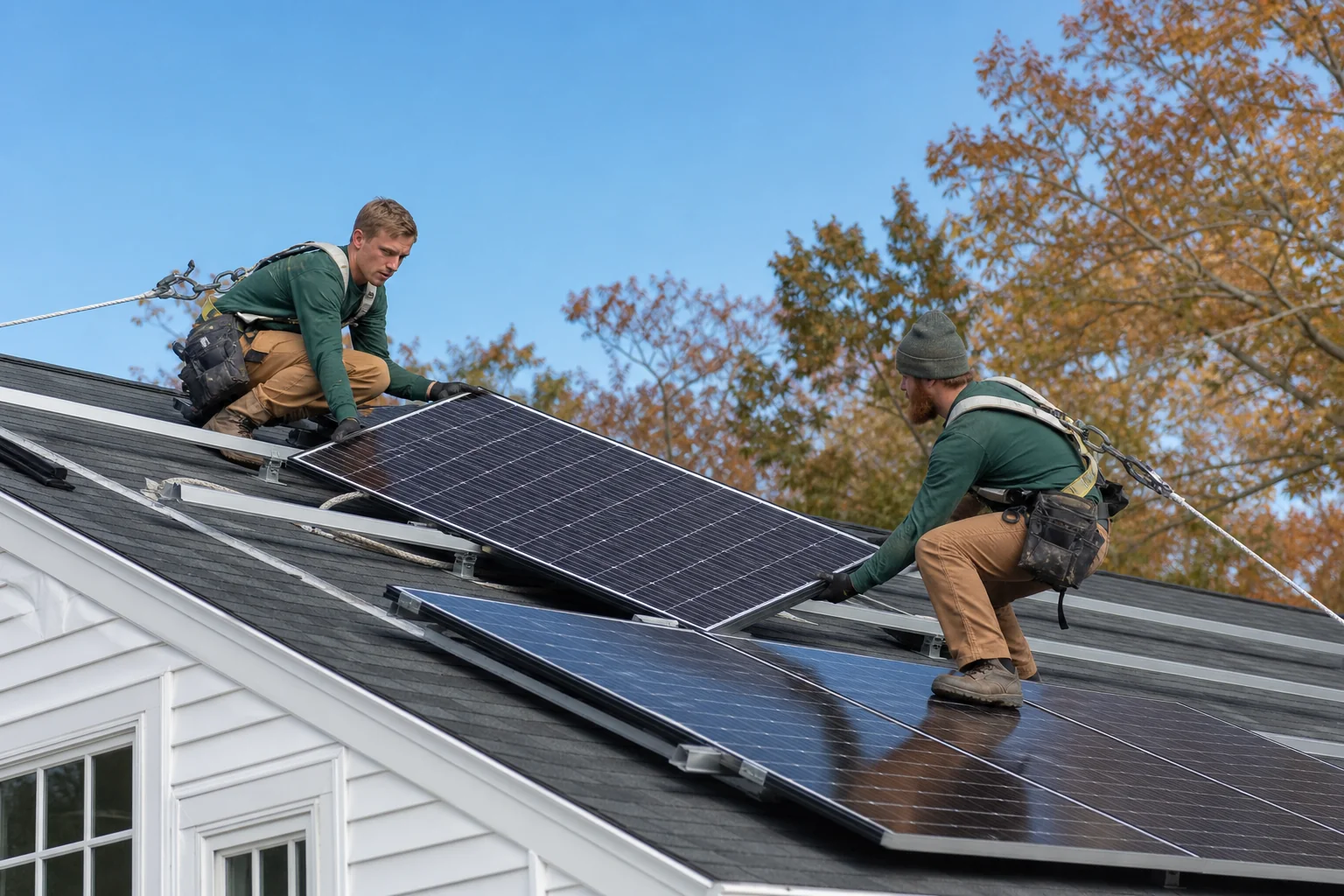
In this hypothetical, Installer B's lower price might trace back to a string inverter instead of microinverters, a 10-year workmanship warranty instead of 25 years, and no roof inspection line item at all. None of that makes Installer B wrong to hire.
It just means the $4,500 gap isn't free money, it's a different scope. A checklist of questions to ask before you sign forces both installers to answer the same questions, which is the fastest way to see where the real difference sits.
Once you've normalized scope, look at the timeline each installer commits to as well. A vague "8 to 12 weeks" answer is worth less than a specific number backed by a track record; our page on how long solar installation actually takes from contract to power-on shows what a realistic timeline looks like end to end.
Frequently Asked Questions
Is the cheapest solar quote always the worst one?
No, but it needs the same scrutiny as any other quote. A lower price sometimes reflects a smaller system, a lighter equipment tier, or a subcontracted crew, and sometimes it reflects genuinely lower overhead with no quality tradeoff. The only way to know is to normalize for kW size and scope before comparing dollar totals.
Why did my neighbor get a bigger discount than me?
Your neighbor probably didn't get a bigger discount at all. Differences in roof complexity, electrical panel upgrades, shading, system size, and financing terms usually explain the gap, not a better negotiated rate. Two homes on the same block can need very different scopes of work even with identical roofs.
Can I ask an installer to match a competitor's quote?
You can ask, but a direct price match only makes sense once both quotes cover the same system size, equipment tier, and scope of work. Bring the competing quote's specs, not just its bottom line, and ask the installer to explain any remaining gap in writing.
Does a bigger down payment always mean a better deal?
Not automatically. A larger down payment can lower your interest cost on a loan, but it doesn't change the underlying system size or equipment tier. Compare the total cost of ownership across the full contract term, not just the upfront number, before assuming a bigger down payment is the smarter move.
A quote you can't fully explain is a quote you shouldn't sign. If you want a second opinion on a proposal you've already received, or you're starting from scratch and want a system sized to your actual usage with in-house crews and Tier-1 equipment, request a free quote and get a line-by-line breakdown instead of a single bottom-line number.
You can also talk to a designer about your specific roof and usage, browse the full range of services Teamsun offers across Connecticut, Massachusetts, and Rhode Island, or call 203-903-4091 directly to walk through your existing quotes together.
Recommended Resources
Written by
Dan Katzman
Teamsun
Teamsun writes practical solar guidance to help property owners compare equipment, project scope, costs, and long-term service before making a decision.
Keep going.
When Should You Upgrade an Older Solar System?
Signs it's time for a solar system upgrade for older panels, from declining output to inverter age. Learn what Teamsun checks before recommending changes.
Dan Katzman
Teamsun
Tesla Powerwall vs FranklinWH: Which Battery Wins in 2026?
Tesla Powerwall vs FranklinWH battery: compare capacity, backup power, warranty, and cost to find the right storage system for your CT, MA, or RI home.
Dan Katzman
Teamsun