Solar System Not Working? Find a Repair Company for Any
Solar not producing power? Learn how to find a solar company that services any brand, plus what Teamsun checks before repairing or upgrading your system.
Dan Katzman
Teamsun
Your inverter throws a fault code, you call the installer who put your panels up six years ago, and the number is dead. This happens more than most homeowners expect. A solar company that services any brand is often the only way forward when the original installer has closed shop, been acquired, or simply refuses to touch equipment it didn't sell. Teamsun diagnoses and repairs panels, inverters, and batteries from any manufacturer across Connecticut, Massachusetts, and Rhode Island, regardless of who did the original install.
Key Takeaways
- Installer turnover is common: Dozens of regional solar companies have shut down or been absorbed by larger firms in the last five years, leaving customers with orphaned systems and no service contact.
- Brand doesn't have to match: A qualified service company can work on Enphase, SolarEdge, SunPower, Tesla, FranklinWH, and other equipment without having installed it originally.
- Warranty coverage often survives: Manufacturer warranties on panels and inverters usually stay valid even if the installer is gone, but you need someone licensed to file the claim and do the labor.
- In-house crews matter for accountability: Companies using W-2 electricians, not subcontractors, are easier to hold to a written service commitment.
- Repairs can double as upgrades: A service call is often the right moment to add battery storage or swap aging string inverters for more resilient equipment.
At a Glance: Getting a Solar System Repaired or Serviced
| Question | What to Look For |
|---|---|
| Who can service my system? | Any licensed solar company willing to work on your brand, not just the original installer |
| Is my equipment still under warranty? | Usually yes, 10-25 years depending on manufacturer, even if installer is gone |
| Typical diagnostic visit | 1-2 hours for a site survey and equipment audit |
| Common repair timeline | Same-week for simple part swaps; 2-4 weeks if parts must be ordered |
| Battery retrofit onto existing panels | Possible on most systems, typically 1-2 days of on-site work |
| Financing for upgrades | Cash, loan, PPA (620 FICO minimum), or prepaid lease |
| Service area | Connecticut, Massachusetts, Rhode Island, and surrounding states |
| What to avoid | Companies that only quote new installs and won't commit to ongoing service |
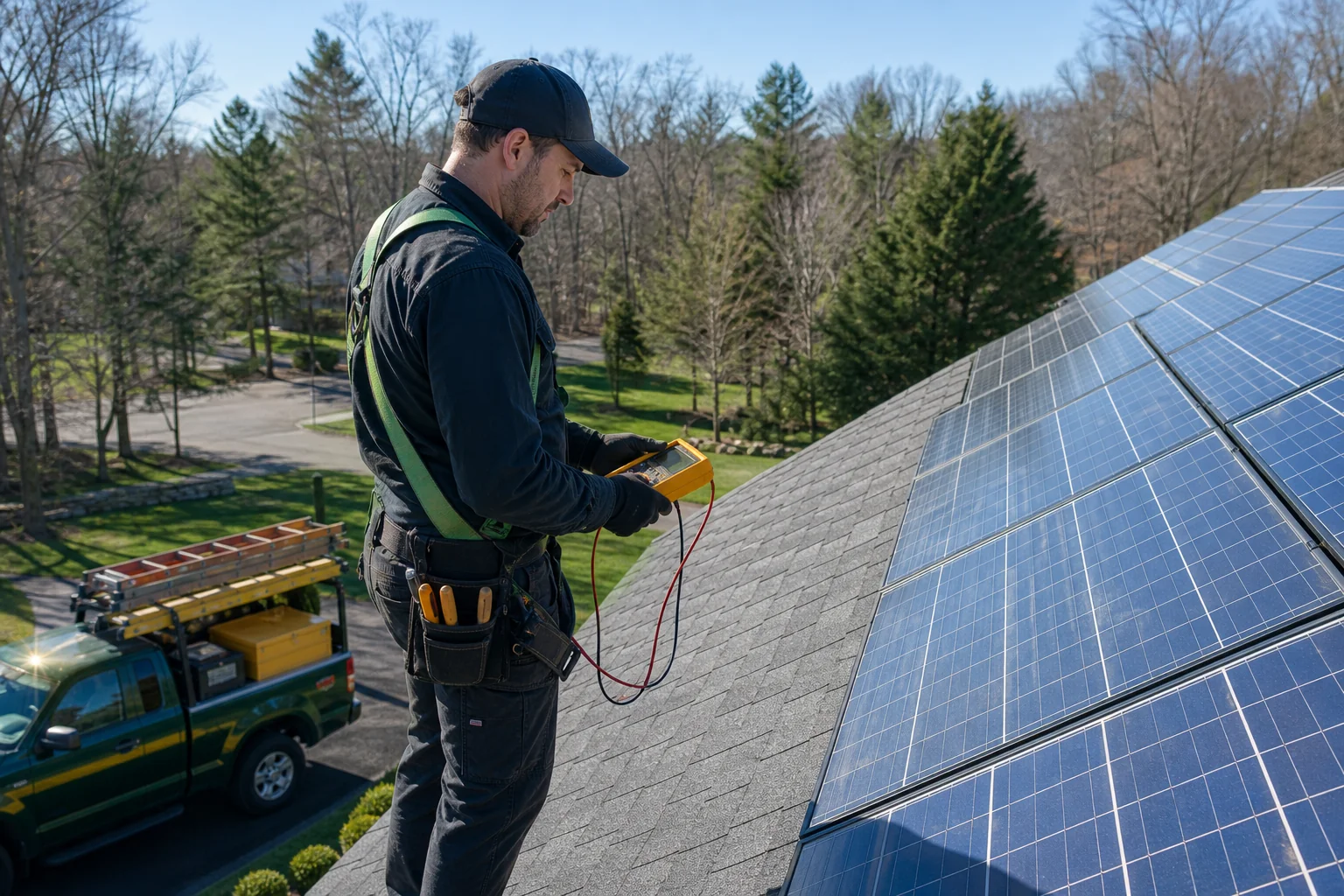
Why Your Original Solar Installer Might Not Be Around Anymore
Solar installation went through a wave of consolidation and closures over the past few years. Regional companies that grew fast on aggressive sales models often couldn't sustain service departments once install volume slowed. Some got acquired and rebranded. Others folded entirely, leaving customer records, warranty paperwork, and monitoring logins scattered or gone.
None of that erases your equipment's manufacturer warranty. Panels typically carry 25-year performance warranties, and inverters run 10-25 years depending on the brand. The problem isn't the warranty itself; it's finding someone licensed and willing to do the labor, file the claim, and stand behind the fix. That's the gap a solar company that services any brand is built to fill.
There's also a quieter version of this problem. Some installers are still in business but decline to service systems they didn't sell, especially if the equipment is older or from a manufacturer they don't carry. If you're getting that response, you're not asking the wrong question. You're asking the wrong company.
Signs Your System Needs Service Now
A few warning signs mean you shouldn't wait for your next utility bill to find out something's wrong:
- Zero or declining production on your monitoring app, especially a sudden drop rather than a gradual seasonal dip
- Inverter fault codes or a blank display where you'd normally see production numbers
- Physical damage from storms, falling branches, or animal intrusion under the panels
- Tripped breakers tied to your solar disconnect that keep resetting
- Rising electric bills despite normal sun exposure, which usually points to an inverter or wiring fault rather than a weather issue
If your monitoring app itself has gone dark because the original installer's software account was tied to their business, that's its own repair job. A new service provider can usually re-commission monitoring under your own account.
What a Solar Company That Services Any Brand Actually Does
Servicing equipment you didn't install requires more than a general electrician's license. It means knowing the quirks of different manufacturers' hardware and software well enough to diagnose problems fast instead of guessing.
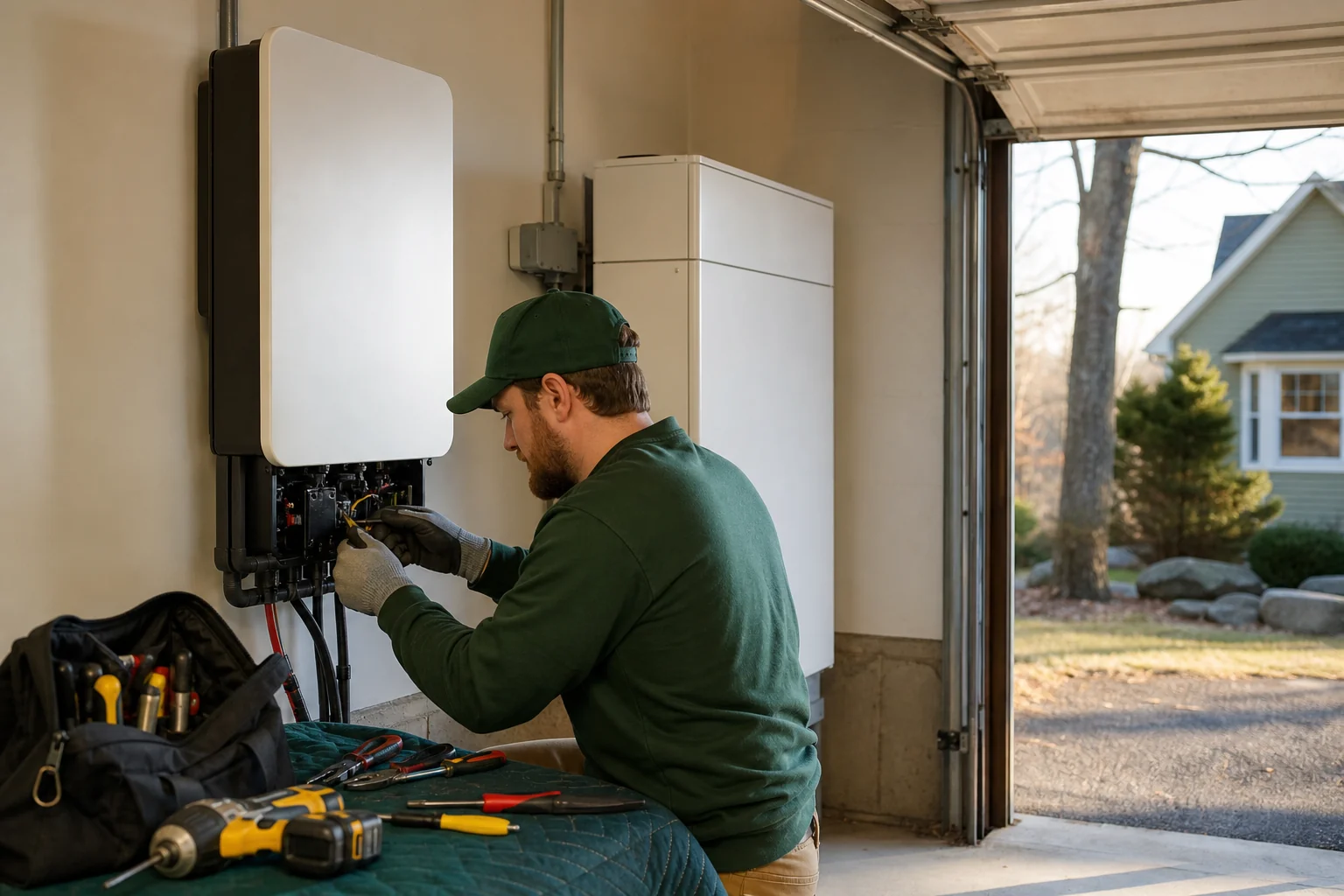
In practice, that work covers:
- Diagnosing panels, inverters, and racking regardless of who manufactured them, including legacy brands that may no longer sell in the U.S.
- Working across major equipment lines like Enphase, SolarEdge, SunPower, Tesla, and FranklinWH, since most service techs cross-train on multiple platforms
- Replacing failed micro-inverters or power optimizers without needing to pull the entire array
- Reconnecting or migrating monitoring so you have visibility into production again under an account you control
- Battery retrofits onto existing arrays, adding storage to a system that was originally panels-only, a process covered in detail in how a solar battery retrofit actually works
- Full system upgrades for older arrays that are underperforming relative to current panel efficiency standards
This range matters because a repair visit and an upgrade opportunity often show up at the same time. If a 12-year-old string inverter fails, replacing it with modern microinverters or optimizers can raise output on the whole array, not just fix the broken part.
5 Things to Check Before Hiring a Solar Repair Company
Not every company that says it services "any brand" backs that claim with real capability. Here's what to verify before you sign a service agreement.
- In-house crews or subcontractors? Ask directly. A company using W-2 electricians is accountable to you in a way a rotating subcontractor pool isn't. If the tech who diagnoses your issue isn't the one who fixes it, ask why.
- Manufacturer familiarity with your specific equipment. A company that regularly works with Tesla Powerwall and FranklinWH batteries, for instance, should be able to speak specifically to your brand's fault codes and firmware quirks, not give you a vague answer.
- Permitting and utility coordination. Any equipment swap or capacity change may require a new permit and a utility interconnection update. A company skipping that step is cutting corners that could affect your net metering agreement, a process explained further in how solar net metering works with your utility.
- A written service warranty on the labor. Manufacturer warranties cover parts; they don't cover the labor to install a replacement. Get that commitment in writing before work starts.
- Local service history, not just install volume. Ask how many systems they currently service that they didn't originally install. A company with a real answer to that question has done this before.
Common Repair and Upgrade Scenarios
Most service calls on orphaned systems fall into a handful of patterns.
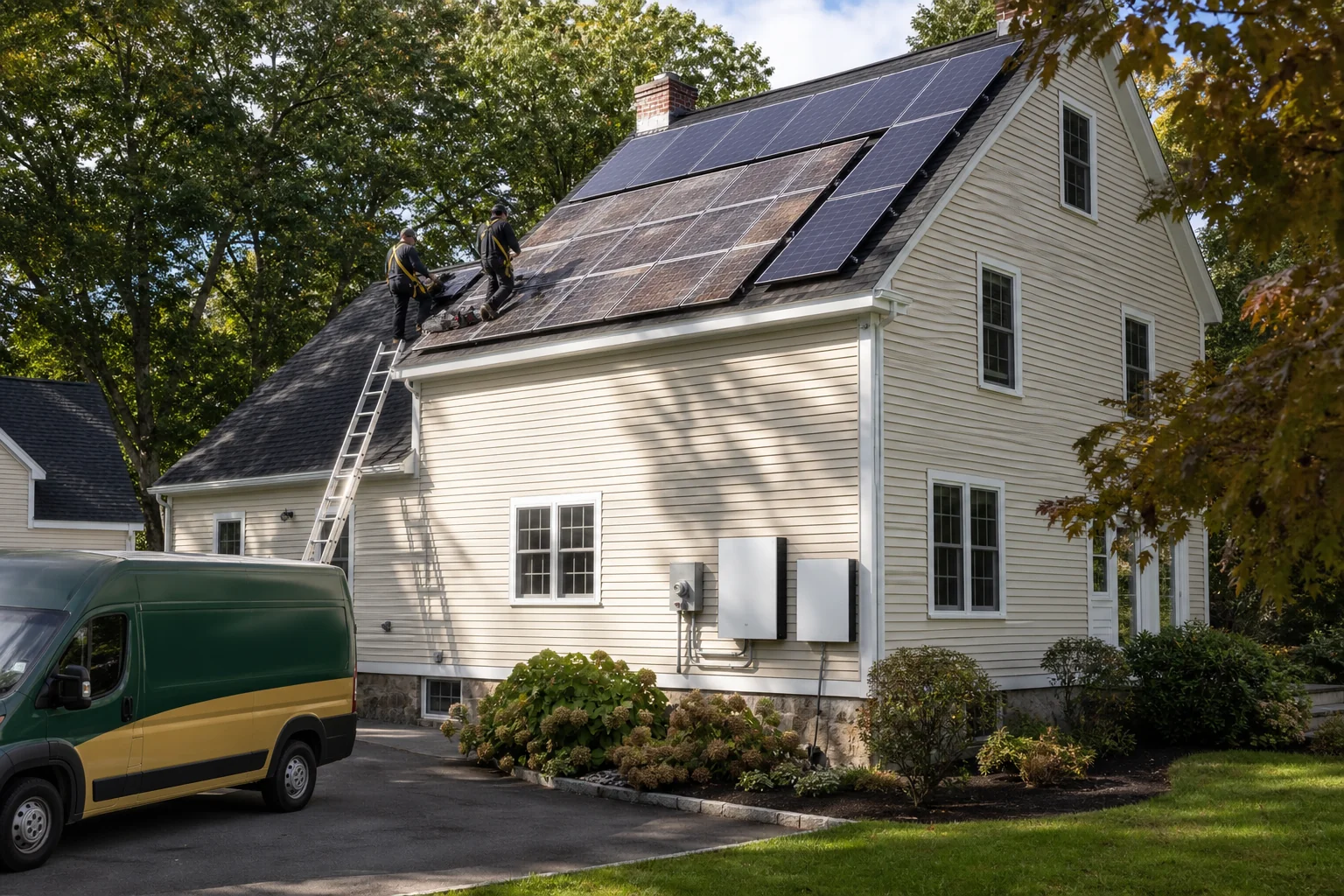
Swapping an Aging String Inverter
Central string inverters from the 2010s are reaching end-of-life across a lot of New England rooftops. Replacing one with microinverters or power optimizers usually improves shade tolerance and gives you panel-level monitoring you didn't have before.
Adding Battery Storage to a Panel-Only System
Homeowners who installed solar-only a decade ago are increasingly retrofitting batteries as prices have come down and outages have gotten more disruptive. This works on most existing arrays, brand aside, and pairs naturally with choosing between Tesla Powerwall and FranklinWH for the new hardware.
Adding an EV Charger Alongside Existing Solar
If you're buying an EV and want to charge off your existing array, a service provider can assess whether your panel and inverter capacity supports it, and handle the electrical work covered in installing a hardwired EV charger at home.
Removing and Reinstalling Panels for Roof Work
If your roof needs replacement and your original installer is gone, you'll need a company willing to pull the panels, let the roofers work, and reinstall correctly, including re-flashing and resealing mount points.
How Teamsun Services Systems It Didn't Install
Teamsun runs the same process for a system it's servicing as for one it installed, starting with a site survey and full equipment audit. That means documenting panel brand and age, inverter type, wiring condition, and whatever monitoring setup (or lack of one) currently exists.
Because Teamsun uses in-house W-2 crews rather than subcontractors across Connecticut, Massachusetts, and Rhode Island, the technician who diagnoses your system is typically the same person, or same small team, doing the repair. There's no handoff to a third party you've never met.
Financing applies to service and upgrade work the same way it applies to new installs. If a repair turns into a bigger upgrade, like replacing a failing inverter with a battery-ready setup, Teamsun offers cash, loan, PPA (620 FICO minimum), and prepaid lease options, so a lower credit score doesn't automatically shut the door. And the same 47-day average timeline standard that applies to new installs carries over to upgrade projects of comparable scope.
If your system is producing less than it should, or nothing at all, and you don't have anyone to call, that's the exact gap a service-focused solar company is meant to close.
FAQ
Will servicing a different brand void my equipment warranty?
Generally no. Manufacturer warranties are tied to the equipment itself, not the installer. Using a licensed company to service it doesn't void panel or inverter coverage, though you should confirm this with your specific manufacturer's documentation.
What if I don't know my system's brand or age?
That's normal, especially if you bought a home with solar already installed. A site survey will identify the equipment from panel and inverter labels, even if you have no paperwork.
Can you add a battery to a system that's 10+ years old?
In most cases, yes. Older panel-only systems are common candidates for battery retrofits, though very old inverters sometimes need replacement first to support the added load. This is assessed during the site visit.
Do you service commercial systems installed by another company?
Yes. The same brand-agnostic service approach applies to commercial rooftop and ground-mount systems, not just residential installs.
Get Your System Back to Full Production
An orphaned solar system doesn't have to sit there underperforming because the original installer is gone. Teamsun's crews service equipment from any manufacturer across Connecticut, Massachusetts, and Rhode Island, whether that means a quick inverter fix, a full monitoring reset, or a battery retrofit onto panels someone else installed years ago. Explore Teamsun's service and repair offerings to see what's covered, or talk to a designer about your specific setup. If you're ready to get a technician out to look at your system, request a free quote or call 203-903-4091 to get a diagnostic visit scheduled.
Written by
Dan Katzman
Teamsun
Teamsun writes practical solar guidance to help property owners compare equipment, project scope, costs, and long-term service before making a decision.
Keep going.
When Should You Upgrade an Older Solar System?
Signs it's time for a solar system upgrade for older panels, from declining output to inverter age. Learn what Teamsun checks before recommending changes.
Dan Katzman
Teamsun
Tesla Powerwall vs FranklinWH: Which Battery Wins in 2026?
Tesla Powerwall vs FranklinWH battery: compare capacity, backup power, warranty, and cost to find the right storage system for your CT, MA, or RI home.
Dan Katzman
Teamsun