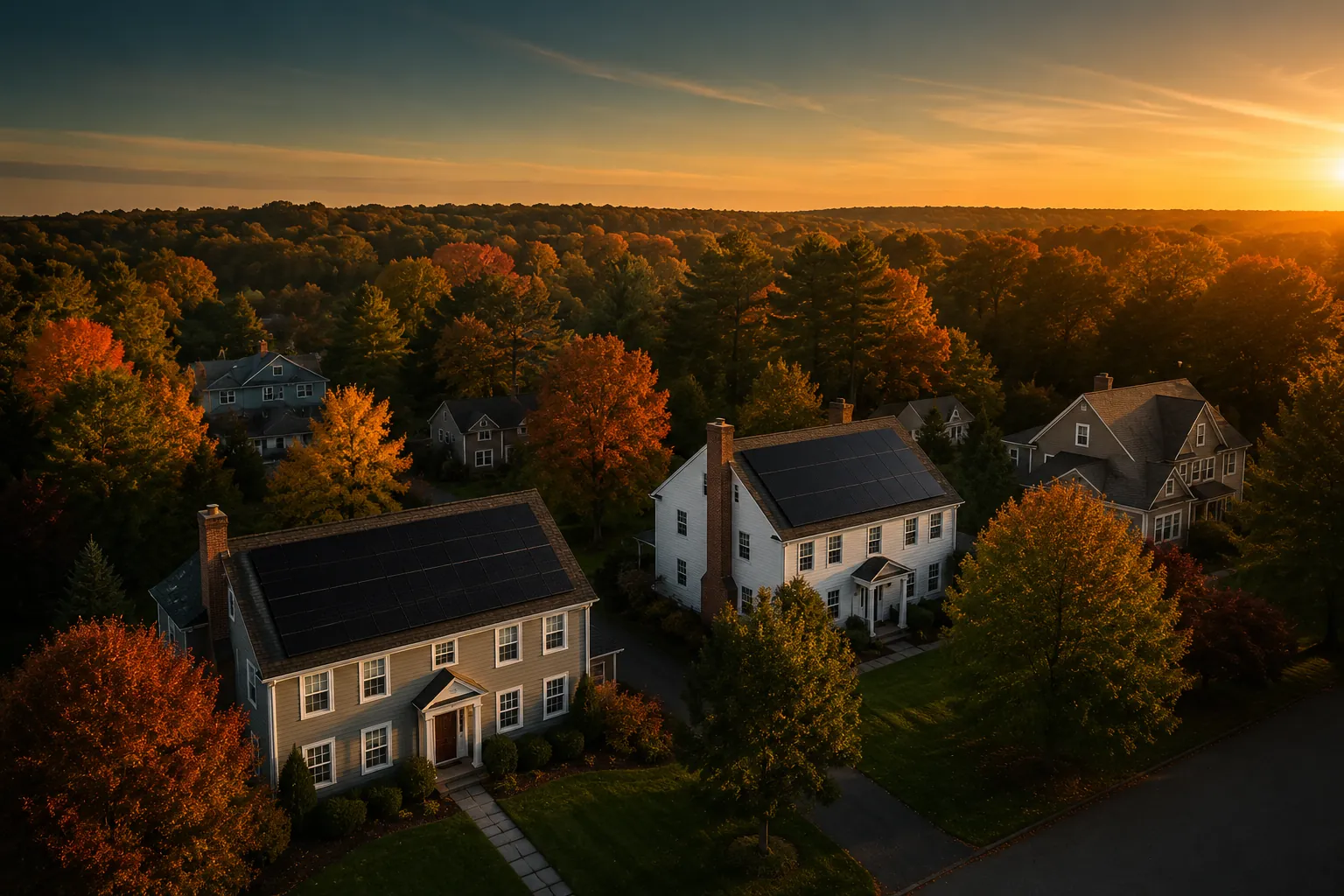
Solar and Roofing Company Near Me: 12 Checks
Find a solar and roofing company near you by verifying both trade scopes, one accountable contract, permits, insurance, warranties, and local project proof.
Dan Katzman
Founder, Teamsun
Searching for a solar and roofing company near me should lead to more than a map listing. A combined contractor is worth considering only when you can verify the legal contracting party, roofing scope, solar and electrical qualifications, permits, insurance, schedule, warranties, and responsibility for problems between trades. “One company” is a coordination claim. The contract must show whether it creates one accountable project.
This guide is for homeowners who already expect to compare combined roof-and-solar contractors. If you are still deciding whether the roof needs work first, review Teamsun’s solar and roofing service and request a roof-specific assessment before accepting a solar design. Then apply every check below to Teamsun and other bidders alike.
The quick answer: run these 12 checks before requesting a final quote
A credible solar and roofing contractor should make both scopes auditable. You should be able to identify who signs the contract, who supervises roofing, who performs electrical work, who pulls each permit, who controls subcontractors, and who responds when a leak or inspection issue crosses trade lines.
Start with this screening table:
| Check | Evidence to request | Do not accept by itself |
|---|---|---|
| 1. Legal contracting party | Exact business name and address on proposal | Brand name or salesperson’s card |
| 2. Home-improvement registration | Current state record for the contracting entity | Screenshot with no state lookup |
| 3. Roofing authority | Required registration or license for that state and scope | “Our roofer has decades of experience” |
| 4. Solar/electrical authority | Current license holder and role on your project | Companywide certification badge |
| 5. Subcontractor map | Business names, work scopes, oversight, and insurance | “Trusted local partners” |
| 6. Permit ownership | Who applies, answers corrections, and closes permits | A request that you pull trade permits |
| 7. Integrated scope | Roof, solar, electrical, structural, and restoration details | Two estimates stapled together |
| 8. Sequence and weather plan | Milestones, dry-in point, inspections, and contingencies | One completion date with no dependencies |
| 9. Insurance | Current certificates for relevant entities and work | “Fully insured” on a website |
| 10. Warranty map | Roof, penetrations, solar workmanship, equipment, and labor | One headline warranty term |
| 11. Comparable local projects | Similar roof type, solar scope, and municipality | Unverified photos from another market |
| 12. Payment control | Milestone schedule, change-order process, and closeout holdback | Large unexplained upfront demand |
The U.S. Department of Energy’s installer guidance advises homeowners to compare installers, verify licensing, bonding and insurance, identify subcontractors, inspect roof condition, and ask who is responsible for damage or leaks. The combined-contractor decision adds one question: does the same written agreement coordinate those duties, or are you still the referee between companies?
Pass/fail rule: do not move a bidder to final comparison until every company and individual required for the work can be verified under the exact name shown in the proposal.
What does “one solar and roofing company” actually mean?
The phrase describes at least four different delivery models. None is automatically good or bad. Your risk depends on contractual responsibility, competent supervision, licensing, insurance, and the handoff between work scopes.
| Delivery model | What you sign | Main advantage | Question that decides accountability |
|---|---|---|---|
| One entity performs both scopes | One contract | Fewer external handoffs | Does the entity have qualified people and authority for each trade? |
| General contractor subcontracts one or both scopes | One prime contract plus disclosed subs | One commercial point of responsibility can coordinate specialists | Does the prime contract accept responsibility for subcontracted work? |
| Solar dealer “coordinates” a roofer | Often separate or unclear agreements | Convenient sales process | Who owes you performance if the roofer or installer fails? |
| Independent roofer and solar installer | Two contracts | You can select each specialist directly | Who owns design coordination, schedule, roof access, and disputes? |
One invoice does not prove one contractor. One logo does not prove one legal entity. An affiliated roofing company may be separate from the solar company, and a sales company may not employ either field crew.
Ask for an organization map with four lines:
- Contracting entity: the business receiving your signature and payment.
- Roofing entity: the business and supervisor performing or controlling roof work.
- Solar/electrical entity: the licensed contractor and field personnel responsible for PV and electrical connections.
- Permit applicant: the person or business responsible for each building, roofing, and electrical application required locally.
Subcontracting is not an automatic rejection. The DOE says homeowners should identify subcontractors and verify their credentials. The deciding factor is whether the prime contractor names the subcontractors, supervises their work, carries the right insurance, and remains responsible under your contract.
For a deeper check on who will physically perform the work, use the in-house crew versus subcontractor guide. Keep that operational question separate from the legal question on this page.
How do you verify roofing, solar, and electrical credentials?
Verify each workstream in the issuing government’s database. A solar certification can support technical competence, but it is not a state license. A home-improvement registration may regulate contracting conduct without authorizing every skilled trade.
As of August 2026, use the route for the state where the property sits:
| State | Roofing or home-improvement check | Solar/electrical check | Important distinction |
|---|---|---|---|
| Connecticut | Search the contracting entity through CT DCP/eLicense; residential roof contracting generally falls under home-improvement registration | Verify the named PV/electrical license holders and their permitted scope | CT distinguishes limited solar-electric work from connection to existing building wiring |
| Massachusetts | Check the MA Contractor Hub and any Construction Supervisor License the project requires | Check the state eLicensing portal and confirm required licensed trades with the building official | HIC registration, CSL, trade licenses, and permits are not interchangeable |
| Rhode Island | Search CRLB registration for the general contractor and each subcontractor | Verify relevant electrical credentials and solar-retailer registration through the appropriate state portals | Contractor registration and solar-retailer registration cover different roles |
Connecticut checks
Connecticut DCP says a person or business contracting with a consumer for residential improvements must generally hold the appropriate Home Improvement Contractor registration. It also tells consumers to verify registrations and skilled-trade licenses before hiring.
For PV work, use DCP’s current solar-trade license scopes. Connecticut states that PV-1 and PV-2 holders have limited solar-electric scopes, while connection to existing building wiring or the utility meter requires the appropriate E-1 or E-2 license holder. Ask which named license holder owns each part of your project instead of checking only whether the company advertises “solar licensed.”
Massachusetts checks
MassCEC recommends gathering multiple quotes, contacting previous clients, and confirming installers through the Massachusetts HIC registry and eLicensing portal. The Commonwealth’s HIC homeowner resources explain that registration status and history can be searched in the MA Contractor Hub and that some work also requires a current CSL or trade license.
Do not decide the required credential from a blog article. Show the full roof, structural, solar, electrical, and battery scope to the local building official and ask what licenses and permits the municipality expects.
Rhode Island checks
Rhode Island’s CRLB says general contractors and subcontractors doing construction, remodeling, alterations, or repair must be registered. Its general contractor registration page also routes electrical licensing questions to the Rhode Island Department of Labor and Training.
Use the CRLB’s contractor selection and complaint search resources for the roof/general-contractor side. For the sales side, the Rhode Island Office of Energy Resources maintains solar consumer disclosures and retailer-registration information. A registered solar retailer is not, by that fact alone, proof of the construction and electrical credentials needed for the field work.
Treat certification as an additional check
If a proposal cites NABCEP, verify the named professional or company in its directory. NABCEP states that its directories help consumers verify certification, while its directory terms expressly say certification is not a government-issued professional license. Give credit for a relevant, current credential, but do not use it to skip state licensing checks.
Roof assessment
Have the deck and covering checked before the array is designed.
Teamsun inspects structure, remaining roof life, and attachment points first, so the layout is built around a roof that can carry it for the system’s full term.
What should an integrated roof-and-solar scope include?
A combined proposal should describe one build sequence, not merely discount two products. The roof affects solar layout, attachment details, structural review, conduit routes, ventilation, schedule, and future service. Missing coordination usually reappears as a change order.
Request a scope organized around these milestones:
1. Existing-condition assessment
The contractor should document roof covering, roof deck observations available before tear-off, slope, penetrations, flashing, drainage, attic or structural concerns, and the electrical conditions relevant to solar. Satellite imagery can help design, but it does not replace the on-site checks needed for a final construction scope.
The assessment should label what is known, what remains concealed, and what could trigger a change order after tear-off. If structural engineering may be required, the proposal should state who engages the engineer and who pays.
2. Coordinated design
The roof plan and solar plan should use the same roof dimensions and account for vents, ridges, valleys, setbacks, service access, attachment locations, and equipment routing. Ask whether vent relocation, decking replacement, fascia work, service upgrades, tree work, or attic access is included, excluded, or pending inspection.
DOE recommends asking that roof repairs and vent relocation be included in the proposal when relevant. That is better than accepting a roof allowance that has no relationship to the panel layout.
3. Permits, inspections, and interconnection
The contract should assign responsibility for permit applications, plan corrections, inspection scheduling, failed-inspection corrections, utility interconnection, and final records. DOE explains that rooftop systems generally require local permitting and inspection before grid operation, while exact rules and fees vary by jurisdiction.
Ask for the anticipated permit list, then verify it with your municipality. Be cautious if a contractor asks you to act as permit applicant without a clear, legitimate reason; the FTC’s home-improvement guidance lists contractor requests that homeowners obtain required permits as a warning sign.
4. Construction sequence and dry-in plan
The schedule should identify material delivery, tear-off, deck inspection, repairs, underlayment or dry-in, roof completion, solar attachment, electrical work, inspections, and closeout. It should also say what happens when rain, concealed damage, unavailable materials, or an inspection delay interrupts the plan.
Do not focus only on the total number of weeks. Ask what condition the house will be left in overnight and who has authority to stop the solar phase if the roof is not ready.
5. Closeout
Final payment should be tied to defined evidence appropriate to the contract, such as permit closeouts, equipment and roof material records, serial numbers, warranty registration, monitoring access, lien releases where applicable, inspection results, and a final punch list. Your state and contract determine the legal details; obtain professional advice for a high-value or disputed agreement.
Use a responsibility matrix to prevent roof-versus-solar disputes
The contract should name the first responder and final decision owner for every overlap. “We handle everything” is not a responsibility matrix. Ask the bidder to complete this table and incorporate the result into the proposal or contract.
| Event or decision | First responder | Decision owner | Cost rule to define |
|---|---|---|---|
| Concealed deck damage after tear-off | Roofing lead | Prime contractor/homeowner under change-order clause | Unit price or written quote before added work |
| Solar layout conflicts with vent or valley | Project manager | Design authority named in contract | Included redesign versus added roof work |
| Structural concern | Named project lead | Engineer/building official as applicable | Who retains and pays engineer |
| Building or electrical correction notice | Permit applicant | Responsible licensed contractor | Included correction versus owner-caused change |
| Roof leak before solar installation | Roofing entity | Prime contractor under roof scope | Inspection, repair, and interior-damage treatment |
| Leak near a solar penetration | Prime service contact | Cause-review process in warranty terms | Access, removal, repair, and restoration |
| Panel or racking damage during roof work | Prime contractor | Contracting entity | Replacement and lost-time treatment |
| Schedule delay by one subcontractor | Project manager | Prime contractor | Notice, resequencing, storage, and extension rules |
| Future roof repair under the array | Service contact | Warranty/service provider | Panel removal and reinstallation cost |
This matrix does not predetermine fault. It prevents the homeowner from having to guess which number to call while water, an inspection failure, or an exposed roof waits for two vendors to answer.
Mid-project check: If you want to compare a combined proposal against this responsibility map, discuss your roof and solar project with Teamsun. Ask Teamsun to document its own answers before you decide.
How should you compare combined roof-and-solar quotes?
Normalize scope before comparing price. One quote may include decking allowances, electrical upgrades, premium roof accessories, permit fees, panel removal, or monitoring while another excludes them. The lower total may simply contain more unresolved work.
Build a comparison sheet with these rows:
| Quote category | Details that must match |
|---|---|
| Roof | Measured area, tear-off layers, deck allowance, underlayment, flashing, ventilation, disposal, gutters/fascia, material model |
| Solar | DC system size, exact module and inverter models, racking, monitoring, estimated production assumptions |
| Electrical | Panel/service work, disconnects, trenching, conduit route, backup or battery provisions |
| Professional services | Structural review, engineering, design revisions, permit preparation |
| Government/utility | Permit fees, inspection corrections, interconnection applications |
| Site conditions | Access, landscaping protection, interior access, hazardous materials, weather protection |
| Schedule | Milestones, dependencies, material lead times, extension conditions |
| Closeout | Cleanup, commissioning, monitoring, documents, registrations, lien releases |
Do not compare monthly payments until you compare cash price, total financed amount, financing fees, term, and ownership structure. A bundled loan can make two scopes look simple while hiding which work is included in the financed principal. This page does not provide personalized financial or tax advice.
The FTC recommends multiple written estimates with work description, materials, completion date, and price. It also advises against paying the full project amount upfront. State rules differ, so evaluate deposit and payment terms against the official requirements for your property and contract.
Control change orders
Combined projects have legitimate unknowns, especially concealed roof-deck conditions. A fair contract does not pretend otherwise. It defines:
- the conditions that can trigger added work;
- unit pricing where practical;
- who may approve a change;
- the written evidence required;
- schedule impact; and
- whether work pauses until authorization.
A broad clause allowing any “necessary upgrade” at an unspecified price shifts too much control after tear-off. A contract with no concealed-condition process is also incomplete.
Second opinion
Have an existing proposal read before you sign it.
Send the quote you have. Teamsun will point out what is missing, what is assumed, and what changes once field conditions are verified — whether or not you buy from us.
How do you compare insurance and warranties without being misled?
Insurance addresses covered risk; warranties define contractual remedies. Neither substitutes for competent work or complete scope. Request current documents from the entities performing and contracting the project.
For insurance, ask for certificates showing the business names and relevant coverage, then verify questions with the insurance producer listed on the certificate. General liability, workers’ compensation, vehicles, professional design, and subcontractor coverage involve different risks. Do not assume “licensed and insured” means every entity and activity is covered.
For warranties, map at least:
- roofing material coverage;
- roofing workmanship;
- solar workmanship;
- roof-penetration or leak coverage;
- solar panel product and performance terms;
- inverter, racking, battery, and monitoring coverage where applicable;
- labor, access, removal, shipping, and reinstallation;
- transfer when the home is sold; and
- responsibility if a contractor, subcontractor, or manufacturer closes.
Read Teamsun’s separate guide to comparing solar installer warranties and long-term service for four claim scenarios and a detailed scorecard. On a combined project, add one more scenario: a leak appears and neither trade initially accepts the cause. The contract should identify the inspection process and first service owner without promising an outcome before investigation.
Never assume solar automatically voids a roof warranty or automatically preserves it. Obtain the existing or proposed roof warranty, tell the issuer about the planned array, and request written installation conditions. The answer depends on the roof system, warranty document, attachment method, installer, and work performed.
Which local project evidence matters most?
The best reference is a recent, similar combined project—not a generic five-star review. Ask for evidence matched to your roof, solar design, municipality, and delivery model.
Prioritize:
- a completed asphalt, metal, flat, slate, or other roof matching yours;
- a comparable solar size and electrical scope;
- the same prime contractor and proposed subcontractors;
- a municipality with similar permit and inspection steps;
- a project old enough for the homeowner to comment on post-install service; and
- permission to verify the reference directly.
Ask the reference targeted questions:
- Did the named roof and solar companies match the proposal?
- Were concealed conditions and change orders documented before work continued?
- Was the home kept weather-tight throughout the sequence?
- Who handled permits and inspection corrections?
- Did the final equipment and roof materials match the contract?
- Were warranties, registrations, monitoring, and closeout records delivered?
- Has the company responded to any service question since completion?
Photos support workmanship review only when their origin and project scope are verified. A permit record shows that a project existed and underwent local review; it does not prove every contractual promise or predict your outcome.
Get a specific answer
Every property changes at least one number above.
Share your details and Teamsun will confirm what applies to your address, what does not, and what still needs verifying before you commit.
Red flags when searching for a solar and roofing company near you
The biggest red flags hide identity, responsibility, or price until after signature. Pause when a bidder cannot answer a verification question with a document.
Watch for:
- a contract name that differs from the company in state records;
- a salesperson who will not name the roofing or electrical contractor;
- one credential presented as authority for every work scope;
- a roof decision made from satellite images alone;
- no allowance or approval process for concealed deck damage;
- solar and roof drawings based on different measurements;
- an equipment or shingle “or equivalent” clause with no approval right;
- a request that the homeowner pull permits;
- no weather-protection or dry-in plan;
- large upfront payment without a clear material and milestone basis;
- verbal leak, workmanship, or production promises missing from the contract;
- pressure to sign before license, insurance, references, and warranties are verified;
- a financing payment shown without cash price and full scope; or
- a service number that routes only to the salesperson.
The FTC home-improvement checklist recommends verifying licenses and insurance, checking complaints, gathering multiple estimates, and putting promises into the written contract. Those are minimum checks for a combined project, not optional paperwork.
Questions to ask every combined contractor
Send the same questions to each bidder and save the written replies. Ask where each answer appears in the final contract.
- What legal entity will contract with me and receive payment?
- Which business performs the roof, solar, electrical, and structural scopes?
- Which portions are subcontracted, and does the prime contractor remain responsible?
- What registrations and licenses apply, and whose names should I verify?
- Who pulls each permit and answers correction notices?
- What on-site roof assessment occurs before the final design and price?
- What concealed conditions can change the roof price?
- How are roof penetrations, flashing, ventilation, and solar attachments coordinated?
- What is the construction sequence, dry-in point, and weather-delay plan?
- Who can approve substitutions or change orders?
- What insurance applies to each contractor and subcontractor?
- Who responds first if a leak appears near the array?
- Which warranty covers roof work, solar work, penetration repair, labor, and resulting damage?
- What closeout documents, registrations, and monitoring access will I receive?
- Can I speak with owners of comparable combined projects completed by the proposed team?
You should get precise answers without demanding that a contractor guarantee unknown site conditions. Honest uncertainty with a controlled change process is stronger than a fixed promise unsupported by an inspection.
Frequently asked questions about solar and roofing contractors
Is it better to hire one company for roofing and solar?
It can reduce coordination work if one contracting entity clearly owns both scopes. It is not automatically better when the company only markets a bundle but passes responsibility to separate vendors without clear oversight.
Does one contract mean one company performs all the work?
No. A prime contractor can subcontract roofing, solar, electrical, or engineering. Ask for every business name, work scope, credential, insurance role, and the prime contractor’s written responsibility for their work.
What licenses should a solar and roofing company have?
Requirements depend on state, municipality, property, and scope. Verify home-improvement or contractor registration, roofing or construction supervision requirements, and solar/electrical license holders in official databases. Confirm the final list with the local building official.
Should the contractor inspect my roof before giving a final price?
Yes. Preliminary remote pricing can be useful, but a final construction scope should reflect an appropriate site and roof assessment. Concealed deck conditions may still require a defined change-order process after tear-off.
Who should pull roof and solar permits?
The contract should identify the qualified contractor responsible for each permit. Local rules vary. Treat a demand that you pull required trade permits as a warning sign and verify the process with your municipal building department.
How many quotes should I compare?
Compare multiple detailed written proposals. More quotes do not help when the scopes differ, so normalize roof, solar, electrical, permit, warranty, schedule, and closeout details before judging price.
Will solar void my new roof warranty?
Do not assume either answer. Give the roof warranty issuer the proposed solar attachment and contractor details, then request written conditions for preserving coverage. Also compare the solar contractor’s penetration and workmanship terms.
What happens when the roofer and solar installer disagree about a leak?
Your contract should name the first service contact, cause-review process, access responsibility, and cost rules. That does not predetermine fault; it prevents an immediate vendor standoff.
Can roof and solar work use separate financing?
Potentially. Compare cash price, financed principal, fees, term, security interest, and ownership for each option. Get independent tax, legal, or financial advice for your situation.
What should I receive when a combined project closes?
Request final permits and inspection records, roof and equipment details, serial numbers, warranty registrations, monitoring access, change orders, payment records, applicable lien releases, service contacts, and an as-built system diagram.
Sources and methodology
This contractor-vetting guide was researched on August 10, 2026. It separates consumer, construction, solar, electrical, permitting, and certification checks because no single marketing label verifies the whole combined scope. Licensing and permit requirements can change and vary locally; verify the current project with the issuing agency and authority having jurisdiction.
Primary reference set:
- DOE: Choosing a Solar Installer
- DOE: Permitting and Inspection for Rooftop Solar
- FTC: How to Avoid a Home Improvement Scam
- Connecticut DCP: Home Improvement for Consumers
- Connecticut DCP: Solar Trades Licenses and Scope of Work
- MassCEC: Tips for Finding and Selecting a Solar Installer
- Massachusetts: HIC Homeowner Resources
- Rhode Island CRLB: Choosing the Right Contractor
- Rhode Island CRLB: General Contractor Registration
- Rhode Island OER: Solar Consumer Protection
- NABCEP: Directory Terms and License Limitation
Vet the contractor, then compare the combined project
A local solar and roofing company earns a place on your shortlist by making the combined scope verifiable. Confirm the contracting entity, every work provider, state credentials, permits, insurance, sequence, change-order control, warranties, service ownership, and comparable local projects. Then compare the full cash scope and financing—not the convenience pitch.
Teamsun offers a combined roof-and-solar discussion for homeowners evaluating both scopes. The company should pass the same checks in this guide. Discuss Your Roof + Solar Project and ask for project-specific answers before requesting final contract terms.
Written by
Dan Katzman
Founder, Teamsun
Teamsun writes practical solar guidance to help property owners compare equipment, project scope, costs, and long-term service before making a decision.
Keep going.
Roof Replacement Company for Homes With Existing Solar
Choose a roof replacement company for a home with existing solar using license, custody, dry-in, reinstallation, warranty, and acceptance evidence.
Dan Katzman
Founder, Teamsun
Solar + Roofing Quote Checklist: Compare Both Scopes
Compare solar and roofing proposals with separate scopes, exact materials, change rules, warranty owners, milestones, and one combined bid worksheet.
Dan Katzman
Founder, Teamsun
Solar-Ready Roof Checklist for Homeowners
Use this solar-ready roof checklist to organize covering, deck, attic, shade, structure, attachments, electrical paths, warranties, and bids.
Dan Katzman
Founder, Teamsun