Solar Incentives Massachusetts vs Connecticut vs Rhode
Compare solar incentives in Massachusetts, Connecticut, and Rhode Island for 2026, including SMART payments, RSIP, net metering, and real payback timelines.
Dan Katzman
Teamsun
Cross a state line in New England and your solar payback period can shift by two or three years, even if the sun overhead hasn't changed at all.
Comparing solar incentives Massachusetts vs Connecticut vs Rhode Island comes down to three things: what the state pays you per kilowatt-hour, how net metering credits your excess power, and how high your utility bill already is. Connecticut's electricity rates make it the fastest payback of the three, but the right answer depends on your specific zip code.
Key Takeaways
- Connecticut wins on speed: Retail-rate net metering plus the RSIP incentive and electricity rates near $0.26-$0.30/kWh give Connecticut homeowners some of the fastest paybacks in the Northeast, per the Northeast Solar Guide 2026.
- Massachusetts pays a flat production incentive: SMART 3.0 pays a base rate of $0.03 per kWh for a standard residential system, locked in for years, according to the 2026 SMART program breakdown.
- Rhode Island forces a choice: You cannot enroll in both Renewable Energy Growth and standard net metering. Rhode Island Energy makes you pick one program or the other, not both.
- The federal credit is gone for new residential systems: The 30% Residential Clean Energy Credit expired for systems placed in service after December 31, 2025, per Sunfinity Power's tax credit update, so state programs now carry more of the payback math.
- Your utility territory matters more than your town line: Two homes ten minutes apart can sit on different utilities with different rate schedules, changing the payback by a year or more.
At a Glance: Solar Incentives by State
| Factor | Massachusetts | Connecticut | Rhode Island |
|---|---|---|---|
| Top state incentive | SMART 3.0 production payment | RSIP performance-based incentive | Renewable Energy Growth (REG) |
| Net metering type | 1:1 retail credit | Retail, statutory | Choice: REG or net metering, not both |
| Electricity rate range | High, varies by utility | $0.26-$0.30/kWh | $0.22-$0.27/kWh |
| Peak sun hours/day | Similar region-wide | 4.1 | 4.3 |
| State tax/sales exemption | 15% state tax credit up to $1,000 | Property tax exemption | Sales and property tax exemption |
| Battery incentive program | ConnectedSolutions | N/A in research notes | ConnectedSolutions |
| Typical payback range | Region-competitive | 3-5 years | 7-10 years |
Why Border Homeowners Ask This Question First
Homeowners near the Massachusetts-Connecticut line, or along the Rhode Island border with either state, don't wonder about solar in the abstract. They wonder because their neighbor two towns over got a different quote, a different payback estimate, and a different incentive program entirely.

A home in Woonsocket, Rhode Island, and a home in Blackstone, Massachusetts, sit less than five miles apart. They face completely different incentive stacks, different net metering rules, and often different utilities. That gap is the entire reason this comparison matters more here than almost anywhere else in the country.
Massachusetts Solar Incentives Explained
Massachusetts runs its incentives through the SMART 3.0 program, which pays homeowners a fixed rate for every kilowatt-hour their system produces. A standard residential system earns a base incentive of $0.03 per kWh, while income-eligible households receive $0.06 per kWh, both locked in for a set term under the current tariff structure, per SurgePV's 2026 Massachusetts incentive guide.
On top of SMART, Massachusetts homeowners can claim a state tax credit worth 15% of system cost, capped at $1,000, along with sales and property tax exemptions on the equipment. The state also runs 1:1 net metering, crediting exported power at the same retail rate you pay for imported power.
The catch with SMART is the tradeoff on renewable energy credits. Enrolling in SMART means giving up your system's RECs to the program. A homeowner who skips SMART can sell those RECs independently, but usually gives up the guaranteed production payment in exchange. That decision belongs in a conversation with your installer, not a spreadsheet guess.
Connecticut Solar Incentives Explained
Connecticut's advantage starts with the electric bill itself. Electricity rates in the state run $0.26 to $0.30 per kWh, according to the Northeast Solar Guide 2026, nearly double the national average. That single fact does more for payback speed than any rebate could.
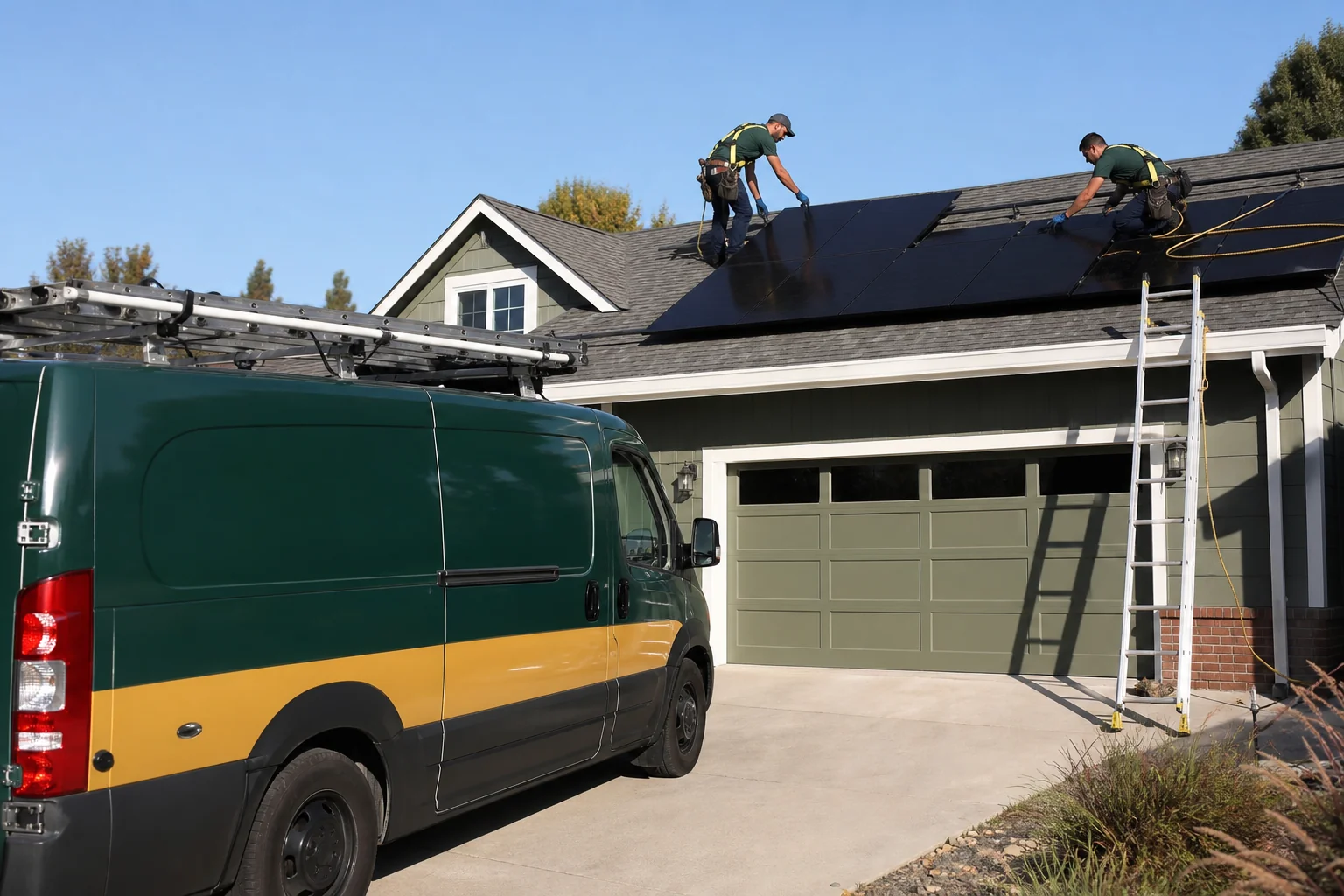
The Residential Solar Investment Program, administered by the Connecticut Green Bank, adds a performance-based incentive on top of those high rates, paying homeowners roughly $0.20 to $0.26 per kWh for six years under the current structure described in the 2026 state-by-state incentive comparison. Connecticut also runs statutory retail-rate net metering and offers a property tax exemption on solar equipment value.
Stack those pieces together, and Connecticut homeowners commonly see payback in three to five years, the fastest of the three states covered here. If you're deciding between a solar loan, PPA, or lease in Connecticut, that faster payback changes which option actually saves more over time.
Does Your Zip Code Change the Answer?
Yes, because rate schedules and interconnection timelines vary by utility territory, not by town line, so two nearby addresses can post different paybacks even within the same state.
Eversource and United Illuminating serve different parts of Connecticut with slightly different rate structures and interconnection queues. The same is true across Massachusetts, where Eversource, National Grid, and municipal utilities each run their own net metering caps and processing speeds. A homeowner's actual bill history, not a statewide average, is what determines real-world payback.
Rhode Island Solar Incentives Explained
Rhode Island's incentive structure looks generous on paper but requires a decision most homeowners don't expect: you cannot enroll in both major programs. Rhode Island Energy requires homeowners to choose either the Renewable Energy Growth (REG) program or standard net metering, not both, per the 2026 Rhode Island incentive guide.
REG pays a fixed rate for the power your system produces, similar in structure to Massachusetts SMART, while net metering credits exports at the retail rate instead. Rhode Island also offers a Renewable Energy Fund grant, full sales and property tax exemptions, and ConnectedSolutions battery payments for homeowners who add storage.
Net metering protections are currently set to run through 2039, though state budget proposals have targeted solar program funding in recent sessions, so homeowners should confirm current terms before signing.
With a full incentive stack, Rhode Island homeowners typically see payback in the seven-to-ten-year range, according to Sunfinity Power's state incentive comparison, longer than Connecticut but still competitive within New England.
How the Federal Tax Credit Changed the Math
The federal Residential Clean Energy Credit no longer applies to new residential systems, so state programs now carry the bulk of the financial case for going solar in 2026.
The credit, previously worth 30% of system cost, expired for systems placed in service after December 31, 2025, according to Sunfinity Power's tax credit update. That shift makes the comparison between Massachusetts, Connecticut, and Rhode Island more consequential than it was even a year ago.
Homeowners can no longer count on a federal cushion to offset a slower state program, which means the state you live in now does more of the heavy lifting on payback speed.
If you're still working through the paperwork side of an older filing, our guide to how solar net metering works with your utility covers how credits actually show up on your bill each month.
Massachusetts vs Connecticut vs Rhode Island: Payback Period Comparison
Put the three states side by side, and the differences in rate, incentive structure, and net metering type explain most of the payback gap between them.

| State | Electricity rate | Peak sun hours/day | Top incentive | Net metering | Standard payback |
|---|---|---|---|---|---|
| Massachusetts | Above regional average | ~4.0-4.2 | SMART 3.0, $0.03/kWh base | 1:1 retail | Competitive, varies by SMART tier |
| Connecticut | $0.26-$0.30/kWh | 4.1 | RSIP, $0.20-$0.26/kWh for 6 years | Retail, statutory | 3-5 years |
| Rhode Island | $0.22-$0.27/kWh | 4.3 | REG or net metering (choose one) | Retail (if chosen) | 7-10 years |
Notice that Rhode Island actually gets slightly more peak sun hours than Connecticut. Sun exposure isn't the deciding factor here. Electricity rate and incentive structure do most of the work, which is exactly why a homeowner asking "which state is best for solar" needs to ask about their utility bill before they ask about their roof.
How to Stack Incentives the Right Way
Enrollment order matters. Applying for a state production incentive after your system is already interconnected can delay payments or, in Rhode Island's case, lock you out of the wrong program entirely.
- Confirm your program choice before signing a contract, especially in Rhode Island, where REG and net metering are mutually exclusive.
- File state tax credit paperwork the same year you go live, since Massachusetts caps its credit and requires it to be claimed on that year's return.
- Ask your installer which utility territory you fall under, not just which town, since interconnection speed and rate schedules follow the utility.
- Get a written estimate of your production-based incentive, whether that's SMART, RSIP, or REG, before you commit to financing terms.
A local installer who works across all three states day to day, rather than a national call center reading from a script, is the difference between a smooth application and a missed deadline. That's part of why homeowners comparing a national installer against a local installer often land on the local option once they see how state-specific this paperwork actually is.
FAQ
Is Massachusetts or Connecticut better for solar?
Connecticut typically delivers a faster payback because its electricity rates run $0.26-$0.30/kWh and its RSIP incentive pays a performance-based rate on top of retail net metering. Massachusetts remains competitive through SMART 3.0, but the flat $0.03/kWh production rate generally takes longer to recoup than Connecticut's combination of high rates and upfront-style incentive payments.
Does Rhode Island still have net metering?
Yes, but homeowners must choose between net metering and the Renewable Energy Growth program; Rhode Island Energy does not allow both. Net metering protections are currently set to run through 2039, though recent state budget discussions have targeted renewable program funding, so confirming current terms with your installer before signing is worth the extra step.
Can I combine SMART and RSIP if I live near the state border?
No. Incentive programs are tied to the state where your system is physically installed and interconnected, not where you work or bank. A home in Massachusetts qualifies only for Massachusetts programs like SMART, and a home in Connecticut qualifies only for RSIP, regardless of how close the two addresses sit to each other.
Do these incentives apply to battery storage too?
Massachusetts and Rhode Island both offer ConnectedSolutions payments for battery storage, rewarding homeowners for discharging stored power during peak grid demand events. If you're weighing storage options, our comparison of Tesla Powerwall vs FranklinWH breaks down which battery pairs best with each state's incentive structure.
Comparing incentives on paper only gets you so far. The real number that matters is what your specific roof, utility account, and electric bill produce once a system is designed for your address. Teamsun installs and services systems across Connecticut, Massachusetts, and Rhode Island with in-house W-2 crews, so the same team that designs your system also handles the incentive paperwork and utility interconnection from day one.
If you're weighing a solar plus roofing bundle or a standalone install, request a free quote to see the actual payback numbers for your address, or talk to a designer about which state program fits your situation. You can also call 203-903-4091 or explore our services to see how we handle installs across all three states.
Recommended Resources
Written by
Dan Katzman
Teamsun
Teamsun writes practical solar guidance to help property owners compare equipment, project scope, costs, and long-term service before making a decision.
Keep going.

When Should You Upgrade an Older Solar System?
Signs it's time for a solar system upgrade for older panels, from declining output to inverter age. Learn what Teamsun checks before recommending changes.
Dan Katzman
Teamsun
Tesla Powerwall vs FranklinWH: Which Battery Wins in 2026?
Tesla Powerwall vs FranklinWH battery: compare capacity, backup power, warranty, and cost to find the right storage system for your CT, MA, or RI home.
Dan Katzman
Teamsun