Prepaid Solar Lease: How It Works and When It Beats a Loan
A prepaid solar lease swaps monthly bills for one upfront payment. See how it works, how it compares with a loan or PPA, and what to check in the contract.
Dan Katzman
Teamsun
A prepaid solar lease is a contract where you pay for the system's output once, up front, and the leasing company owns, insures and maintains the panels for the whole term. You get no monthly solar bill. For Connecticut, Massachusetts and Rhode Island homeowners, it suits people who want low hassle and have cash, but not ownership.
Key Takeaways
- One payment, no monthly solar bill: you pay up front for the lease term, and the leasing company keeps ownership, insurance and repairs.
- The tax credit shift explains the trend: homeowners who buy a system no longer get the residential federal credit for spending after 2025, while companies that own systems may still claim a business credit.
- The contract matters more than the product: check term length, production guarantee, repair duties, end-of-term options and what happens when you sell the house.
- It is not for everyone: if you want ownership, a loan or cash purchase fits better; if cash is tight, a PPA (620 FICO minimum at Teamsun) avoids the upfront bill.
Prepaid Solar Lease at a Glance
| Payment option | Upfront cost | Who owns the system | Who handles repairs | Best for |
|---|---|---|---|---|
| Cash purchase | Full system price | You, from day one | You (under equipment and workmanship warranties) | Owners who want full control and have the cash |
| Solar loan | Little or none, then monthly payments | You | You (under warranties) | Owners who want ownership without a large upfront payment |
| PPA | None | The PPA company | The PPA company | Households that want no upfront cost and fixed-rate power; 620 FICO minimum at Teamsun |
| Prepaid solar lease | One lump sum for the whole term | The leasing company, until the contract says otherwise | The leasing company | Households with cash who want no monthly bill and no maintenance duties |
| Standard (monthly) lease | Little or none | The leasing company | The leasing company | Households that want low upfront cost and accept a fixed monthly payment |
What Is a Prepaid Solar Lease?
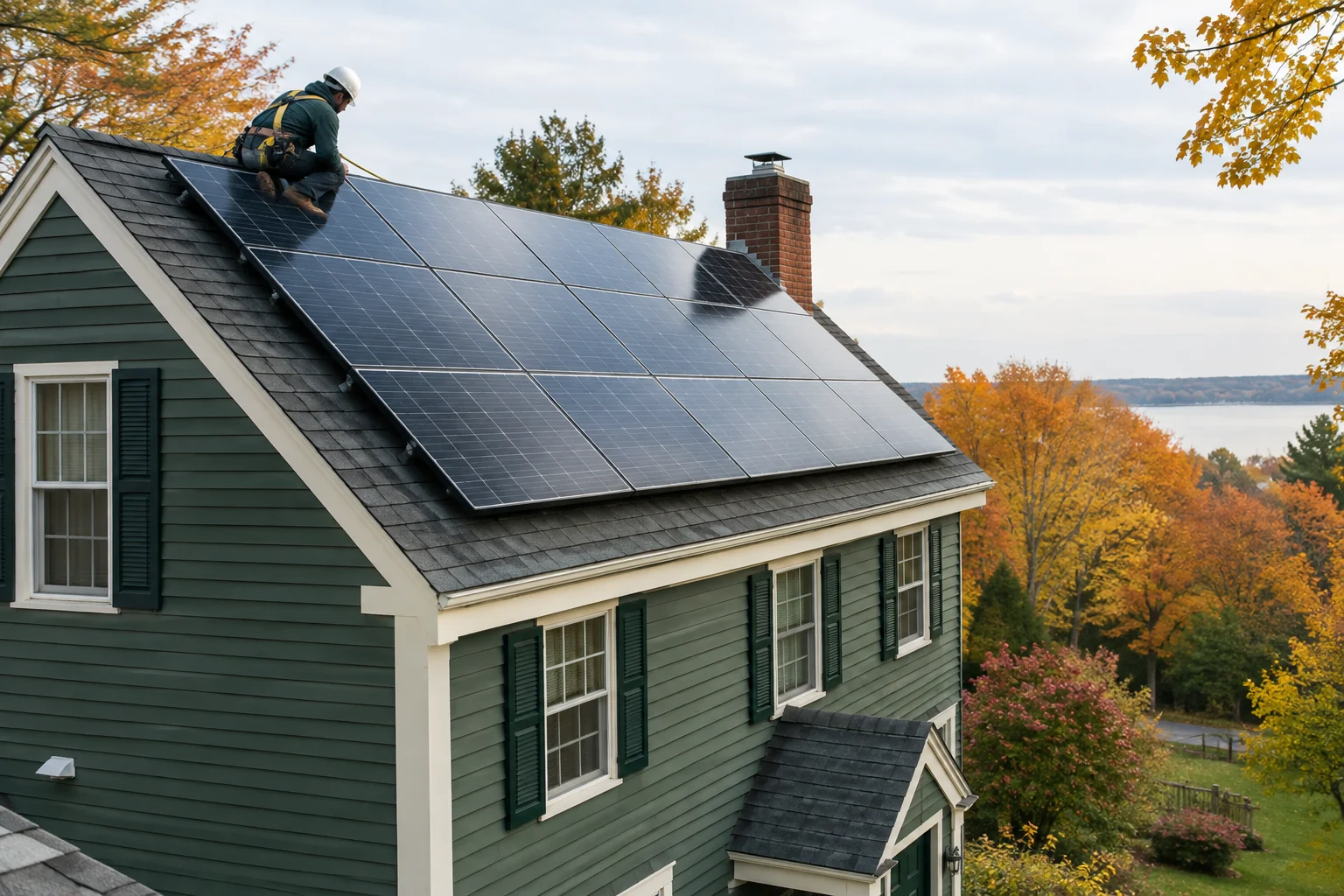
A prepaid solar lease is a solar lease where you pay the full term's cost in one upfront payment instead of monthly installments. The leasing company installs, owns, insures and maintains the system on your roof, and you use all the power it makes for the agreed term.
The Consumer Financial Protection Bureau's 2024 solar financing spotlight describes a standard lease as a contract, either with the installer or a third-party lessor, to lease panels for a fixed period instead of buying them. A prepaid lease is the same idea with the payments rolled into one.
The New York State Energy Research and Development Authority notes that a typical lease term is 15 to 20 years. Other published guides put it a little higher, so read the term in your own contract rather than assuming.
How it differs from a monthly lease and a PPA
With a monthly lease you pay a fixed amount each month for the equipment, whatever the panels produce. A PPA charges you per kilowatt-hour the system actually generates. A prepaid lease or prepaid PPA moves all of that cost to the start.
Many monthly leases carry an annual escalator, often in the low single digits, which raises the payment each year. A prepaid contract removes that exposure, because there is no payment left to escalate. That is one of its real selling points.
What stays the same across all three: you do not own the equipment while the contract runs. Prepaid does not mean "paid for, so mine." Ownership transfers only if the contract says so, and when.
Prepaid Leases and the Federal Tax Credit Change
Prepaid leases are getting more attention because the money rules changed for homeowners who buy. Under the federal law enacted in July 2025, the residential clean energy credit (the homeowner credit claimed on Form 5695) no longer applies to spending after December 31, 2025. So a homeowner buying with cash or a loan in 2026 cannot claim it.
Companies that own solar systems and lease them out are in a different position. As business owners, they may still be able to claim a federal business energy credit on systems they own, subject to the rules and deadlines in force. Some of those rules are still being worked out through Treasury guidance.
Here is why that matters to you. A leasing company that can use a credit you can no longer use can, in theory, price the lease lower than the cost of buying outright. Whether it does is a matter of the actual quote. Never assume the credit shows up as savings; ask for the numbers side by side.
We are not tax advisors, and the federal rules have shifted twice in recent years. Before you sign, confirm the current rules with a tax professional, and read our solar loan vs PPA vs lease comparison for the broader picture of how the options differ.
How Does a Prepaid Solar Lease Work Step by Step?
A prepaid solar lease works in seven steps: site evaluation, quote, contract, lump-sum payment, installation, utility approval to turn the system on, and then years of monitored production under the leasing company's care. At the end of the term you renew, buy, or have the system removed.
- Site evaluation. The installer checks your roof, electrical panel, shading and usage history. Roof age matters a lot here, because a lease can outlast an old roof. Our post on when to replace a roof before solar covers the timing.
- Quote. You receive the system size, the lease term, the prepaid amount and the production estimate. Ask for the same system priced as cash, loan and PPA so you can compare.
- Contract. You sign a lease agreement, usually with the leasing company as the other party. Read every page before you pay.
- Payment. You pay the lump sum. Ask exactly when payment is due and what is refundable if the job falls through.
- Installation. The crew installs the system. Teamsun's in-house crews average 47 days from contract to power-on across our installs, though your timeline depends on permitting and utility steps.
- Utility interconnection. Your utility approves the system before you can switch it on. Bill credits for exported power depend on your utility and state rules.
- Operation. You use the power. The leasing company monitors, insures and repairs the system under the contract.
How Does a Prepaid Lease Compare With Cash, a Loan and a PPA?
A prepaid lease costs a lump sum like a cash purchase but gives you no ownership during the term. A loan spreads the cost into monthly payments and you own the system. A PPA needs no upfront money and bills you for power produced. Each shifts cost, risk and ownership differently.
The U.S. Department of Energy's homeowner guide lays out the same three paths (leases, PPAs and loans) and recommends weighing them on your own situation. The table below adds the prepaid lease and the cash purchase, and focuses on what changes day to day.
| Factor | Cash | Loan | PPA | Prepaid lease |
|---|---|---|---|---|
| Upfront payment | Large | Small or none | None | Large |
| Monthly solar payment | None | Yes, until loan is repaid | Yes, per kWh produced | None during the term |
| Ownership during term | You | You | PPA company | Leasing company |
| Federal homeowner credit for 2026 spending | Not available | Not available | Not applicable (you do not own it) | Not applicable (you do not own it) |
| Repairs and maintenance | You, under warranty | You, under warranty | PPA company | Leasing company |
| Rate or escalator risk | None | Depends on loan rate type | Possible annual increase | None after payment |
| Effect on selling the home | Panels sell with the house | Loan payoff or transfer | Contract transfer to buyer | Lease transfer to buyer |
| Credit check | None | Yes | Yes (620 FICO minimum at Teamsun) | Depends on the lessor's terms |
Where a prepaid lease beats a loan
A prepaid lease wins when you have the cash, want no monthly bill, and do not want to be the one calling about a failed inverter. A loan leaves you with repairs, paperwork and a monthly payment, though you keep the equipment.
The CFPB's 2024 report also flagged that some residential solar loans carry markup fees and confusing terms. If you are comparing loans, ask for the full cost of borrowing in writing. A prepaid lease avoids interest, though the lump sum should still be checked for what it includes.
Where it beats a PPA
A prepaid lease beats a PPA when you want certainty. A PPA's price per kilowatt-hour can climb with an escalator, and your payment moves with production. A prepaid lease fixes the cost on day one. If you want to understand that structure first, see how solar PPA financing works.
Where it loses
It loses to cash when you want the long-term value of owning panels that keep producing after year 20. It loses to a PPA when you cannot or would rather not tie up a large sum. And it loses to a loan when you want equity in the equipment.
One open question we cannot settle for you: whether a prepaid lease's lower sticker price, if the lessor does pass along its tax benefit, beats the long-run value of ownership. That depends on the quote, the term and what the system is worth after the lease ends.
What Should You Check in a Prepaid Lease Contract?
Check six things before you sign: the term length, the production guarantee, who pays for repairs and insurance, the end-of-term options, how the lease transfers if you sell, and what happens if the leasing company fails or sells your contract. Get each answer in the document, not in a sales conversation.

Term length
Terms commonly run 15 to 25 years across published sources. Ask what the term is, when it starts (contract date or power-on date), and whether there is any extension. A longer term spreads one payment over more years, which is fine if you plan to stay.
Production guarantee
A prepaid lease bills you once, so you want proof the system will keep producing. Ask whether the lessor guarantees a minimum annual output, how it is measured, and what the remedy is if production falls short. A refund, a credit or a repair are very different remedies.
Also ask what is excluded. Shading from trees that grew after install, snow cover and roof access issues are common carve-outs. Pair the guarantee with the monitoring data; our guide on reading your solar monitoring app shows what to watch.
Repairs, insurance and roof work
The leasing company usually owns and insures the system, but "usually" is not a contract term. Ask who pays when a panel cracks, an inverter fails or a storm damages the array. Ask who pays to remove and reinstall panels if you need a new roof mid-term, and how long you may wait.
Roof work is where leases most often surprise people. If the roof is near end of life, fix it before the lease starts, not 8 years in. Our checklist on signs your roof needs replacing before solar helps you decide.
End-of-term options
Ask what happens when the term ends. Common options include renewing, buying the system at fair market value, or paying to have it removed. A few prepaid contracts transfer ownership at the end. Get the exact option, the price method and the notice dates in writing.
Lessor failure and contract sales
Leasing companies can be bought, merged or fail. Ask whether the contract can be assigned to another company, who then services your system, and how you reach someone if the original lessor disappears. Our post on what to do when your solar installer goes out of business shows the same problem from the installer side.
Also ask whether the lessor files any notice against your property. Some third-party agreements do, and it can come up at a sale or refinance. A lawyer or title professional can check this for your state.
Selling Your Home With a Prepaid Lease
Selling is the most common reason a prepaid lease turns into a problem. The lease does not vanish at closing. It has to be transferred to the buyer, or ended through a buyout, and either route needs the lessor's approval and often the buyer's credit or consent.
Ask these questions before you sign, not when you list the house:
- Is the lease transferable to a buyer, and does the buyer need to qualify?
- What fees does the lessor charge for a transfer?
- If the buyer will not take it, what is the buyout price, and is any of your prepayment refunded for unused years?
- How long does the transfer take? Delays can hold up a closing.
The NREL homeowner brochure on leasing notes that in 2012 more than half of residential solar installations in most major markets were third-party owned, so buyers and real estate agents have seen transfers before. Still, a buyer who pays for a house wants to know the panels do not come with a surprise bill. Disclose early.
Who Is a Prepaid Solar Lease Right For?
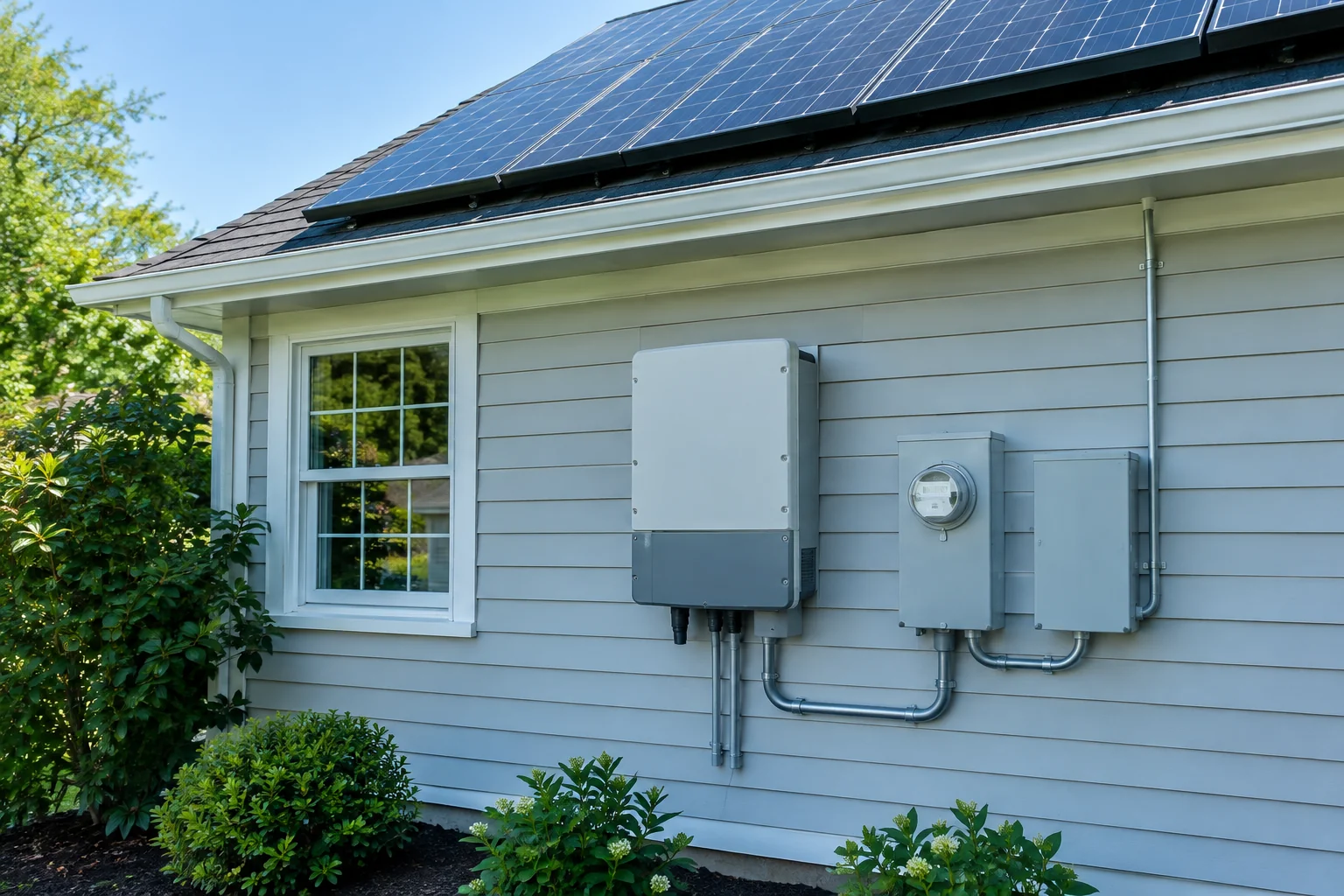
A prepaid solar lease suits homeowners who have cash on hand, plan to stay in the house for most of the term, want no monthly solar payment and want someone else to handle repairs. It is a poor fit for people who plan to move soon, want ownership or lack the cash.
A prepaid lease likely fits if you
- have cash to pay once but do not want the equipment responsibility;
- plan to stay at least as long as the lease term, or have confirmed transfer terms;
- want to avoid loan interest and escalating monthly payments;
- have a roof with many years of life left.
Choose something else if you
- want to own the system: buy with cash or a loan. You gain equity, and you keep the panels after the term.
- do not want to tie up cash: a PPA has no upfront payment. Teamsun underwrites PPAs from a 620 FICO, which opens the door for many homeowners other installers turn away.
- might sell within a few years: ownership or a PPA with a simple transfer path is usually less tangled.
- have a roof near the end of its life: fix the roof first, or consider a careful review of your installer and how they handle roof coordination.
Our view: for most homeowners who have the cash, owning is still the stronger long-term position, because the panels keep working after year 20. A prepaid lease earns its place for the household that values a hands-off setup over ownership. That is a legitimate choice, and it should be made with the contract in hand.
Prepaid Lease in Connecticut, Massachusetts and Rhode Island
Teamsun installs across Connecticut, Massachusetts and Rhode Island, and the local details change the math. Your utility's export credit rules, any state incentive program, and who is entitled to those incentives under the contract can all shift value between you and the leasing company.
Two local points to raise with any lessor. First, ask who receives any state production or export incentive that applies to your address, you or the lessor, and whether it is reflected in your prepaid price. Second, ask how the contract handles utility rule changes during a 15 to 25 year term. New England winters also mean snow cover, so ask how the production guarantee treats it.
We cover the utility side in our solar services overview, and our team can walk you through the numbers for your utility territory.
A Pre-Signing Checklist
- Get the same system quoted as cash, loan, PPA and prepaid lease.
- Confirm the term, start date and any renewal terms.
- Read the production guarantee and the remedy for shortfalls.
- Ask who pays for repairs, insurance, roof removal and reinstall.
- Get the end-of-term options and the price method for any buyout.
- Check the transfer process, fees and buyer requirements for a home sale.
- Ask what happens if the lessor fails or sells your contract.
- Ask whether any notice is filed against your property.
- Confirm which incentives go to you and which go to the lessor.
- Have a tax professional confirm current federal rules, and a lawyer review the contract if you are unsure.
FAQ
Do I own the solar panels with a prepaid solar lease?
No, not during the term. The leasing company owns the system even though you paid up front. Ownership changes hands only if your contract includes a transfer or buyout option at the end, so read that section closely before you pay anything.
Is a prepaid solar lease the same as a prepaid PPA?
They are close cousins. A prepaid lease pays for the equipment's use for the term, while a prepaid PPA pays up front for the power produced. Both leave ownership with a third party, and both share the same contract risks, so check the same list.
What happens to a prepaid solar lease if I sell my house?
The lease is usually transferred to the buyer or bought out. Either route needs the lessor's approval, and some contracts charge a fee or require the buyer to qualify. Confirm the process and any refund for unused years before you sign, not at listing time.
Can I get a prepaid solar lease with bad credit?
Credit requirements depend on the lessor, and a prepaid payment may need less underwriting than monthly billing. If you want no upfront cost, Teamsun's PPA is available from a 620 FICO minimum. Ask us which options fit your situation.
Is a prepaid solar lease better than buying solar?
Not automatically. Buying gives you ownership and the value of panels after year 20. A prepaid lease gives you a hands-off arrangement with no monthly solar bill. Which is better depends on your cash, how long you will stay and what the quotes show.
Next Step: Price All Four Payment Options on Your Roof
We offer cash, loan, PPA and prepaid lease, and we will price the same system each way so you can see the trade-offs on your own numbers. Request a free quote and ask for the lease contract up front so you can read it before you decide.
Want to talk through term length, repairs or a home sale first? Talk to a designer, or call us at 203-903-4091. Our in-house crews install and service systems across Connecticut, Massachusetts and Rhode Island.
Recommended Resources
Written by
Dan Katzman
Teamsun
Teamsun writes practical solar guidance to help property owners compare equipment, project scope, costs, and long-term service before making a decision.
Keep going.
Solar Loan vs PPA vs Lease: Which Fits You in 2026?
Compare solar loan vs PPA vs lease on ownership, tax credit eligibility, monthly cost, and credit score requirements to pick the right fit for 2026.
Dan Katzman
Teamsun
How Does Solar PPA Financing Work in 2026?
Learn how solar PPA financing works in 2026, from rate calculations to 620 FICO underwriting, and see how it stacks up against loans and cash purchases.
Dan Katzman
Teamsun
Commercial Solar ROI Payback Period
Commercial solar ROI payback depends on system size, utility rates and incentives. Learn how to estimate break-even in CT, MA and RI before you sign.
Dan Katzman
Teamsun