In-House Crew vs Subcontractors: Who Installs Your Solar?
Solar installer subcontractors vs in house crew: learn how each model affects quality, accountability, and warranty before you sign a solar contract.
Dan Katzman
Teamsun
A national solar company might sell you the system, but a locally subcontracted crew hired for a flat fee often does the actual install, and you may never speak to that crew again after the panels go up. This is the core issue in the solar installer subcontractors vs in house crew debate: who is physically on your roof, and who answers when something goes wrong.
Key Takeaways
- Ownership of accountability: With subcontractor models, warranty disputes can bounce between the sales company, the subcontractor, and the manufacturer, while an in-house W-2 crew reports to one employer who owns the outcome.
- Speed vs incentive structure: Subcontractors are frequently paid per completed job, which can push crews toward faster work rather than precise flashing, wire management, and roof penetration sealing.
- Service continuity matters years later: If a roof leak or battery retrofit issue surfaces in year three, you need the same company (not a subcontractor who's moved to another state) to answer the phone.
- Teamsun uses W-2 crews exclusively: No subcontracted labor, an average 47-day install timeline from contract to power-on, and direct service for CT, MA, and RI customers.
- Ask before you sign: Requesting proof of employment status, licensing, and warranty ownership up front prevents surprises after the contract is signed.
At a Glance: In-House Crew vs Subcontractor Model
| Factor | In-House W-2 Crew | Subcontractor Crew |
|---|---|---|
| Who supervises the install | Company's own site lead, same team every time | Third-party crew, often unfamiliar to the sales company |
| Payment incentive | Salaried or hourly, quality-focused | Often paid per job, speed-focused |
| Warranty accountability | Single point of contact | Can be split between installer, subcontractor, and manufacturer |
| Average install timeline | Teamsun averages 47 days, contract to power-on | Varies widely, often delayed by crew availability |
| Post-install service | Same company handles repairs and retrofits | Subcontractor may be unreachable months later |
| Licensing verification | Directly employed, licensed electricians on staff | Requires separate verification per crew |
| Battery retrofit support | Available for any brand, any age system | Depends on which subcontractor is still under contract |
What "Subcontractor Crew" Actually Means in Solar
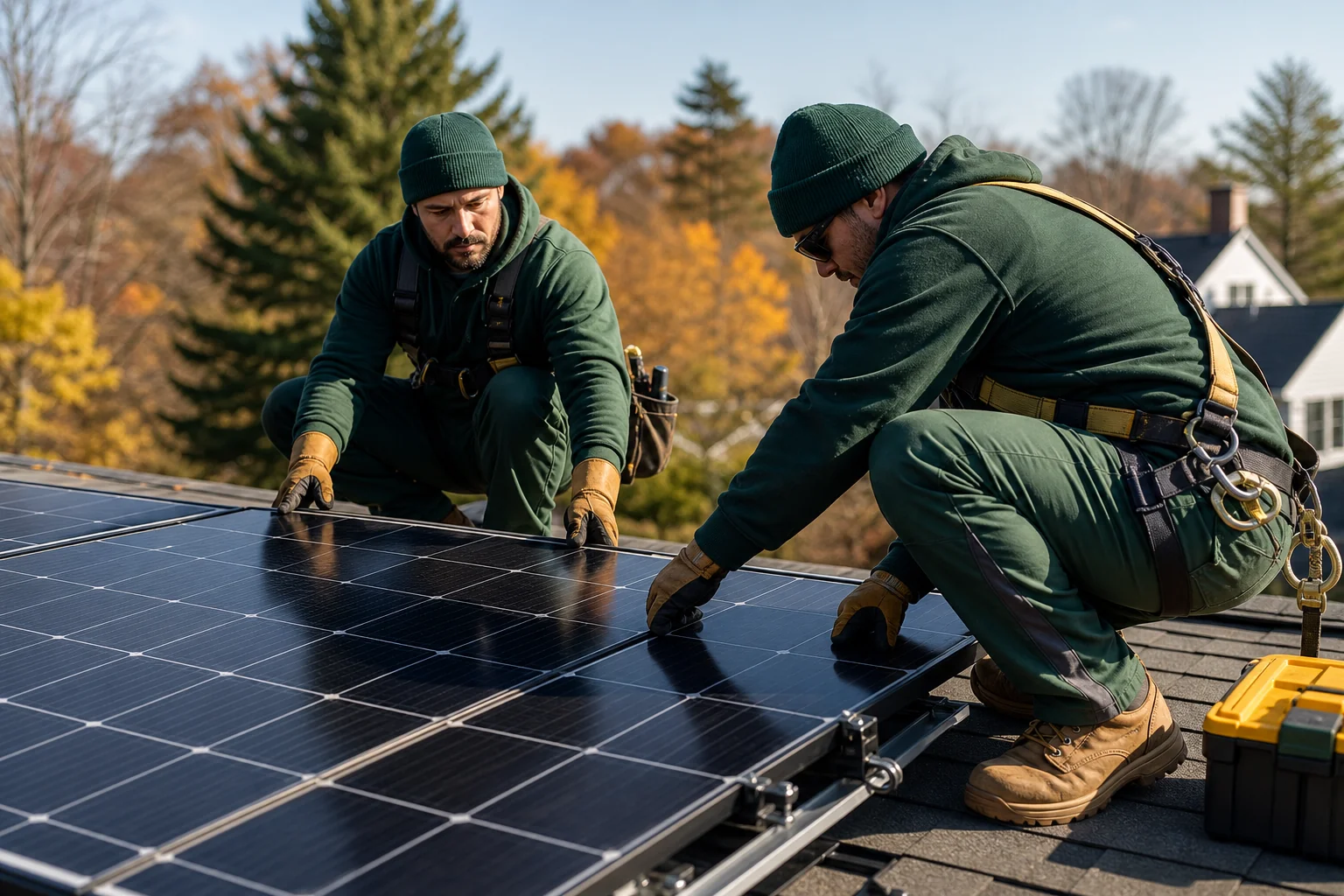
Many national solar brands operate on a dealer or referral model. A sales representative signs the contract, then the actual labor gets dispatched to a local subcontracting company that bids for the job. That subcontractor may never have met the person who sold you the system, and their crew composition can change from one install to the next.
This structure isn't inherently dishonest. It lets large companies scale into new markets quickly without hiring and training full crews everywhere. But it separates the sales relationship from the installation relationship, and that gap is exactly where accountability problems start. If you're comparing battery retrofit options down the line, knowing who actually touched your roof becomes important fast.
Door-to-door and dealer-network sales are common enough that industry groups like the Solar Energy Industries Association (SEIA) publish consumer guidance specifically about verifying installer credentials separate from the sales entity.
Why the Install Model Affects Quality and Accountability
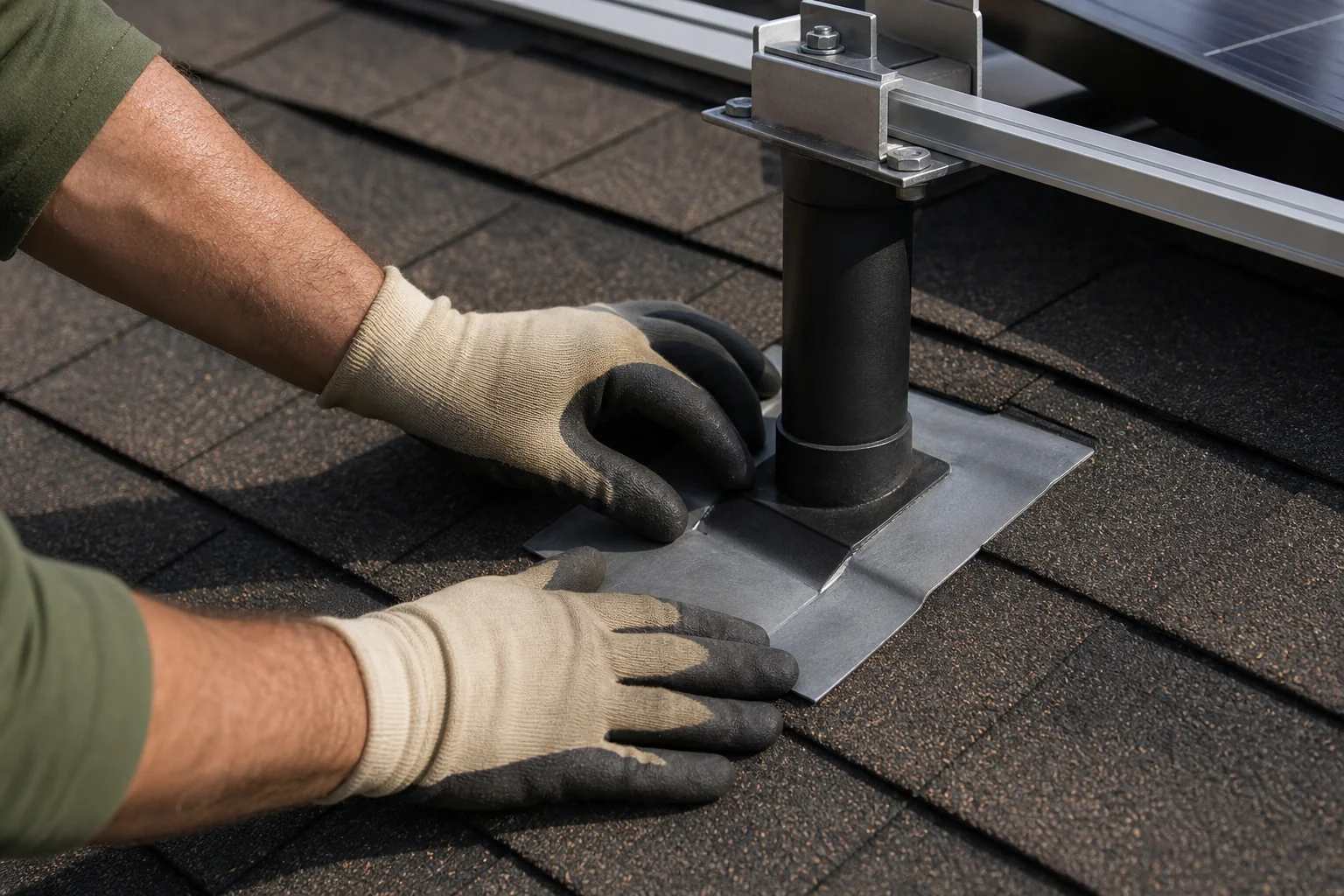
Solar installation is not just mounting panels. It involves roof penetrations, flashing, electrical panel work, and coordination with your utility for interconnection. Every one of those steps has a right way and a rushed way, and the difference shows up years later as leaks, loose racking, or code violations caught during inspection.
Subcontractor crews paid per completed job have a built-in incentive to move fast. That doesn't mean every subcontracted crew does poor work, but the structure rewards volume over precision. An in-house crew, by contrast, is compensated regardless of how many jobs they close in a week, which removes the pressure to cut corners on flashing seals or conduit runs.
Warranty accountability is the other half of this. If a subcontractor caused a roof leak but the sales company wrote the contract, homeowners often get stuck between two entities pointing fingers at each other. A single company that both sells and installs the system, using its own employees, has nowhere to point but at itself.
In-House W-2 Crews vs Subcontractor Crews: Side-by-Side Comparison
Beyond the summary above, here's how the two models typically differ across the details homeowners rarely ask about until something breaks:
| Detail | In-House W-2 Crew | Subcontractor Crew |
|---|---|---|
| Training consistency | Standardized company-wide training and tools | Varies by subcontracting company |
| On-site supervision | Company foreman present throughout | May rotate supervisors between jobs |
| Insurance and licensing | Verified once, centrally managed | Must be verified per subcontractor entity |
| Communication during install | Direct line to the company you signed with | Often routed through a call center |
| Long-term relationship | Same company available for maintenance | Subcontractor may no longer hold the contract |
Real Consequences: What Can Go Wrong With Subcontracted Installs
Roof leaks are the most common complaint homeowners raise years after a subcontracted install. When a leak appears near a mounting bracket, the sales company sometimes claims the subcontractor is responsible for warranty work, while the subcontractor has already moved on to jobs in a different state or exited the market entirely.
Permitting inconsistency is another issue. Local building departments across Connecticut, Massachusetts, and Rhode Island each have specific inspection requirements, and a subcontractor unfamiliar with a particular town's process can trigger failed inspections and delayed permission-to-operate from the utility.
Battery retrofits compound the problem. If you installed solar through a subcontracted crew years ago and now want to add storage, tracking down the original installer for system documentation, stamped drawings, or interconnection details can be nearly impossible. That's a common reason homeowners come to Teamsun asking for help retrofitting a battery onto an existing system, regardless of who installed the panels originally.
7 Questions to Ask Any Solar Company Before You Sign
- Are your installers W-2 employees, or is the labor subcontracted? Get this in writing, not just a verbal assurance from the sales rep.
- Who handles a warranty claim five years from now? Ask specifically whether the company that sold you the system will still exist and still own the workmanship warranty.
- Will the crew that installs my system be the same one who assessed my roof? A mismatch here often signals a subcontractor dispatch model.
- What's your average install timeline from signed contract to power-on? Vague answers or ranges spanning several months can indicate scheduling dependent on third-party crew availability.
- Will you service or retrofit a system even if a different company installed it originally? This tells you whether the company plans to be a long-term local partner or a one-time transaction.
- What equipment tier are you installing, and what manufacturer warranties apply? Tier-1 equipment backed by verifiable warranties matters more when the installer itself stands behind the work.
- Can I see proof of licensing and insurance for the actual crew doing my install? Not just the parent company's general business license.
These questions build on the broader vetting process homeowners should run through before signing with any solar company, and they apply whether you're comparing a national brand or a regional installer.
How Teamsun's In-House Model Works
Teamsun designs, installs, and services solar, battery storage, and EV charger systems using its own W-2 crews across Connecticut, Massachusetts, and Rhode Island. There's no subcontractor handoff between the sales conversation and the installation, which means the same company that designs your system stands behind the workmanship for the life of the install.
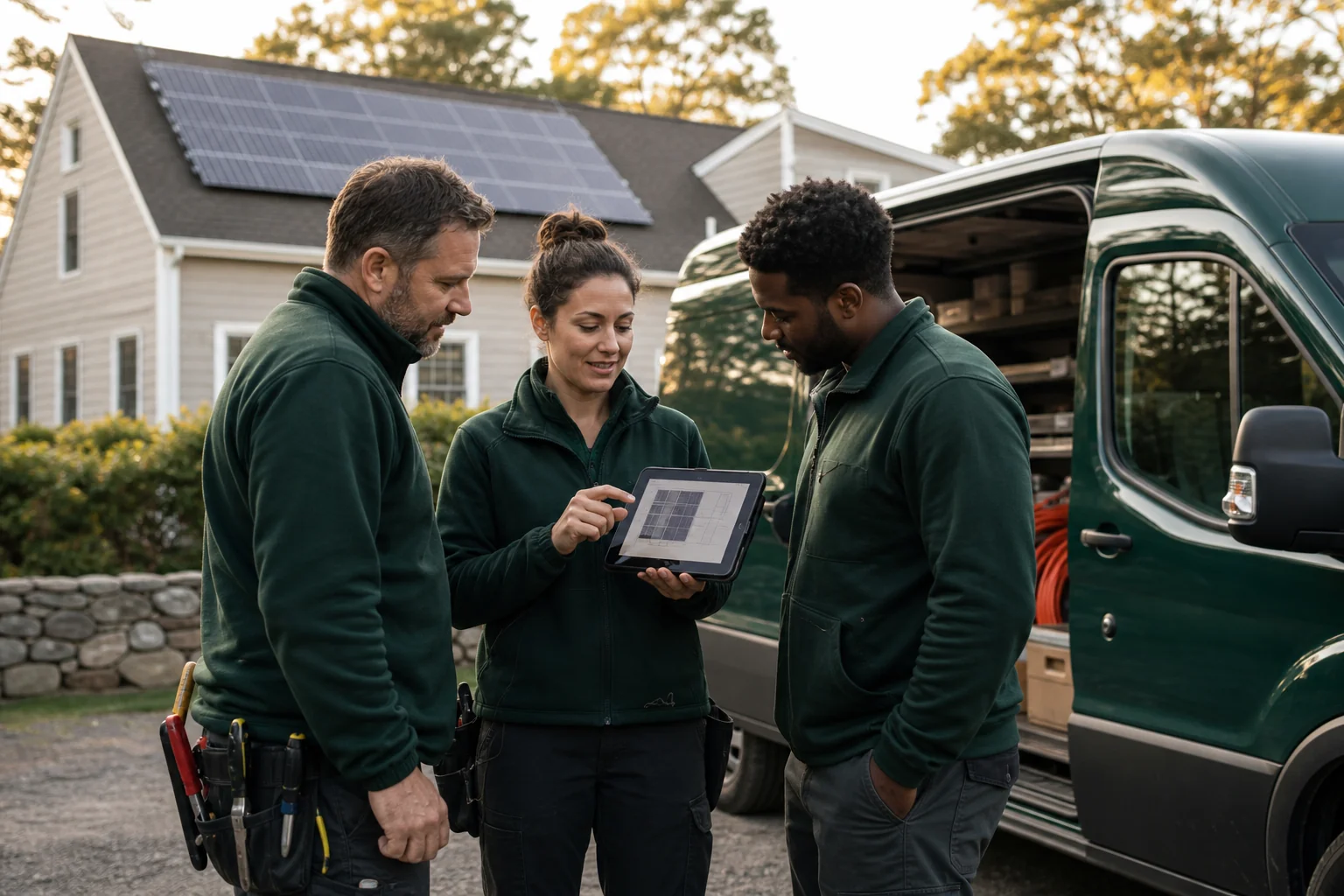
That structure supports an average 47-day timeline from contract to power-on, since scheduling doesn't depend on a third-party crew's availability across multiple client companies. It also means Teamsun can service or retrofit battery storage on systems it didn't originally install, something homeowners with orphaned subcontractor installs often struggle to find elsewhere.
Whether you're weighing a national brand's dealer network against a local installer, or trying to figure out how solar financing, net metering, or roof timing fits into your project, the underlying question is the same: who is actually accountable once the panels are on your roof?
If you want to see the full range of services, including solar, battery, and EV charger installation, Teamsun's team can walk through your specific roof, utility, and budget situation.
Frequently Asked Questions
Is subcontracted solar installation always lower quality?
Not always, but the incentive structure differs. Subcontractors paid per completed job have less built-in pressure to slow down for precision work compared to salaried in-house crews with reputations tied directly to the parent company.
Do national solar brands like Sunrun use subcontractors?
Large national installers commonly rely on regional dealer or subcontractor networks to scale quickly across many states. This is a standard part of their business model, not a secret, but it's worth confirming directly for your specific project and location.
Does using a subcontractor void my equipment manufacturer's warranty?
Typically no, manufacturer warranties on panels, inverters, and batteries usually stay intact regardless of installer type. What changes is the workmanship warranty covering the installation itself, which is separate from equipment coverage.
How can I verify who will actually install my system?
Ask the sales representative directly whether the crew is W-2 employed by the company you're signing with, and request the crew's licensing information in writing before the contract is finalized.
If you're comparing solar quotes and want a straight answer about who will actually be on your roof, talk to a designer at Teamsun or call 203-903-4091. For a firm number on your project, request a free quote and get a timeline built around an in-house crew, not a subcontractor dispatch schedule.
Written by
Dan Katzman
Teamsun
Teamsun writes practical solar guidance to help property owners compare equipment, project scope, costs, and long-term service before making a decision.
Keep going.

When Should You Upgrade an Older Solar System?
Signs it's time for a solar system upgrade for older panels, from declining output to inverter age. Learn what Teamsun checks before recommending changes.
Dan Katzman
Teamsun
Tesla Powerwall vs FranklinWH: Which Battery Wins in 2026?
Tesla Powerwall vs FranklinWH battery: compare capacity, backup power, warranty, and cost to find the right storage system for your CT, MA, or RI home.
Dan Katzman
Teamsun