Small Business Solar Tax Credit vs Residential Tax Credit
Small business solar tax credit vs residential tax credit: see why commercial Section 48E still pays 30% while the homeowner credit ended in 2026.
Dan Katzman
Teamsun
The small business solar tax credit and the residential solar tax credit are no longer close to equal: a business that installs solar can still claim 30% of project cost under Section 48E, while a homeowner buying a system outright cannot claim any federal credit at all in 2026.
That gap, not panel pricing, is now the main reason small business solar math looks different from what a homeowner next door experienced two years ago.
Key Takeaways
- Residential credit is gone: Section 25D expired for any system placed in service after December 31, 2025, so homeowners who buy solar outright in 2026 get 0% federal credit.
- Business credit still pays 30%: Section 48E keeps the 30% base rate for systems under 1 MW, which covers nearly every small business rooftop or ground mount.
- Bonus adders can push higher: Energy community and domestic content adders can move the effective commercial rate toward 50% of project cost.
- The clock is real: commercial projects generally need to begin construction by July 4, 2026, or be placed in service by the end of 2027 to keep the full credit, per current Section 48E construction rules.
- Leased residential systems still qualify indirectly: third-party-owned home systems like leases or PPAs can still carry a business credit through the owner, per current Section 48E eligibility guidance.
At a Glance: Commercial vs Residential Solar Tax Treatment
| Factor | Small Business (Section 48E) | Homeowner Purchase (Section 25D) |
|---|---|---|
| Federal credit available in 2026 | Yes, 30% base rate | No, expired January 1, 2026 |
| Who claims it | Business entity that owns the system | N/A for a purchased home system |
| Bonus adders | Energy community, domestic content, up to ~50% effective | N/A |
| Depreciation benefit | MACRS bonus depreciation available | None, homeowners can't depreciate a personal asset |
| Deadline pressure | Begin construction by mid-2026 or place in service by end of 2027 | No deadline, credit already gone |
| Workaround for homeowners | N/A | Lease or PPA where a third-party business owns the system |

Why the Residential Federal Solar Tax Credit No Longer Applies
The residential federal solar tax credit stopped applying to purchased systems the moment the calendar hit 2026. Homeowners who buy and install panels now get no federal credit at all.
The Residential Clean Energy Credit, Section 25D of the tax code, let homeowners claim 30% of system cost on Form 5695 for nearly two decades. That provision stopped applying to any expenditure made after December 31, 2025, under the law that accelerated its termination, as confirmed by recent analysis of the 2026 change.
That's a hard stop, not a phase-down. There's no partial credit, no reduced percentage, nothing to claim for a homeowner who closes on a cash or loan-financed system this year. If you've already filed paperwork from a 2025 install, that's a separate matter; our solar tax credit and rebate paperwork guide covers what still applies to older installs.
One path still works for homeowners: a lease or PPA. Because the company that owns the panels on your roof is a business, it can still claim the commercial credit and often passes some of that value through in lower monthly payments. It's not the same as owning the system outright, but it's the only route left to any federal solar incentive at the residential level.
How the Small Business Solar Tax Credit Under Section 48E Works
A small business that installs solar on its own property claims the credit differently, and for more money, than a homeowner ever could. The mechanism runs through Section 48E, the Clean Electricity Investment Credit, not the now-defunct homeowner provision.
The base rate sits at just 6% of qualified investment. It jumps to 30% once the project meets prevailing wage and apprenticeship requirements, a bar that most contracted commercial installs clear without extra paperwork since the installer handles labor compliance directly, according to current Section 48E rules.
From there, bonus adders stack. A project sited in a qualifying energy community, or one that meets domestic content thresholds, can push the effective credit rate toward 50% of total project cost, per recent Section 48E guidance. Whether your Connecticut or Massachusetts warehouse qualifies for an adder depends on census tract and equipment sourcing, something your installer should check before you sign.
Eligibility hinges on one structural fact: the taxpayer claiming the credit has to be a business entity that owns the system, not a homeowner using the property for personal residence. A commercial property owner in Rhode Island with a 50kW rooftop array qualifies. A homeowner with the same size array on a house does not, under current rules.
What About Depreciation? The Piece Homeowners Never Get
Depreciation is the second lever that separates small business solar economics from residential, and homeowners don't have access to it at all because you can't depreciate a personal-use asset on your home.

A business that buys solar equipment can generally apply Modified Accelerated Cost Recovery System depreciation, often with a bonus depreciation component in the first year. Stacked with the 30% investment credit, depreciation materially shortens the time it takes a commercial system to pay for itself compared with the same dollar investment made by a homeowner.
The exact bonus depreciation percentage and basis-reduction mechanics depend on when the asset is placed in service and your entity's specific tax situation. This is not a do-it-yourself calculation. Talk to your accountant about how MACRS interacts with the Section 48E credit on your books before you finalize a system size.
Deadlines That Actually Matter in 2026
Commercial solar's 30% credit is tied to construction timing, not just the calendar year, which makes the deadline more complicated than homeowners ever had to track.
Under current rules, a solar or wind project generally has to begin construction by July 4, 2026, or be placed in service by December 31, 2027, to keep qualifying for the full Section 48E credit, according to guidance on the 2025 federal budget law's construction rules.
"Begin construction" has a specific legal meaning, generally tied to either physical work of a significant nature or meeting a safe-harbor spending threshold, so don't assume signing a contract alone satisfies it.
If you're a small business owner in Connecticut, Massachusetts, or Rhode Island weighing a system now, the construction-start deadline is the thing to plan backward from, not the install date. A system that starts construction in July 2026 and finishes in 2027 can still work, but the margin for permitting delays, interconnection queues, or equipment backorders gets thinner the longer you wait to sign.
Commercial vs Residential Solar Tax Credit: Side-by-Side Comparison Table
Here's the fuller picture once depreciation, deadlines, and ownership structure are layered on top of the headline credit rate.
| Category | Small Business Credit | Residential Credit (2026) |
|---|---|---|
| Base federal rate | 6%, rising to 30% with labor compliance | 0%, expired |
| Maximum effective rate with adders | Up to roughly 50% | N/A |
| Depreciation stacking | Yes, MACRS plus bonus depreciation | No |
| System size covered at full rate | Under 1 MW net output | N/A |
| Claiming entity | Business that owns the equipment | N/A for purchased systems |
| Indirect access via lease/PPA | N/A, already direct | Yes, through a third-party owner |
| Hard deadline pressure | Construction start by mid-2026 or in-service by end of 2027 | None; already expired |
Does the Math Actually Work Differently for a Small Business?
Yes. A commercial system and a residential system of similar size now land in very different financial positions, mostly because one has a federal credit and depreciation working for it and the other has neither.
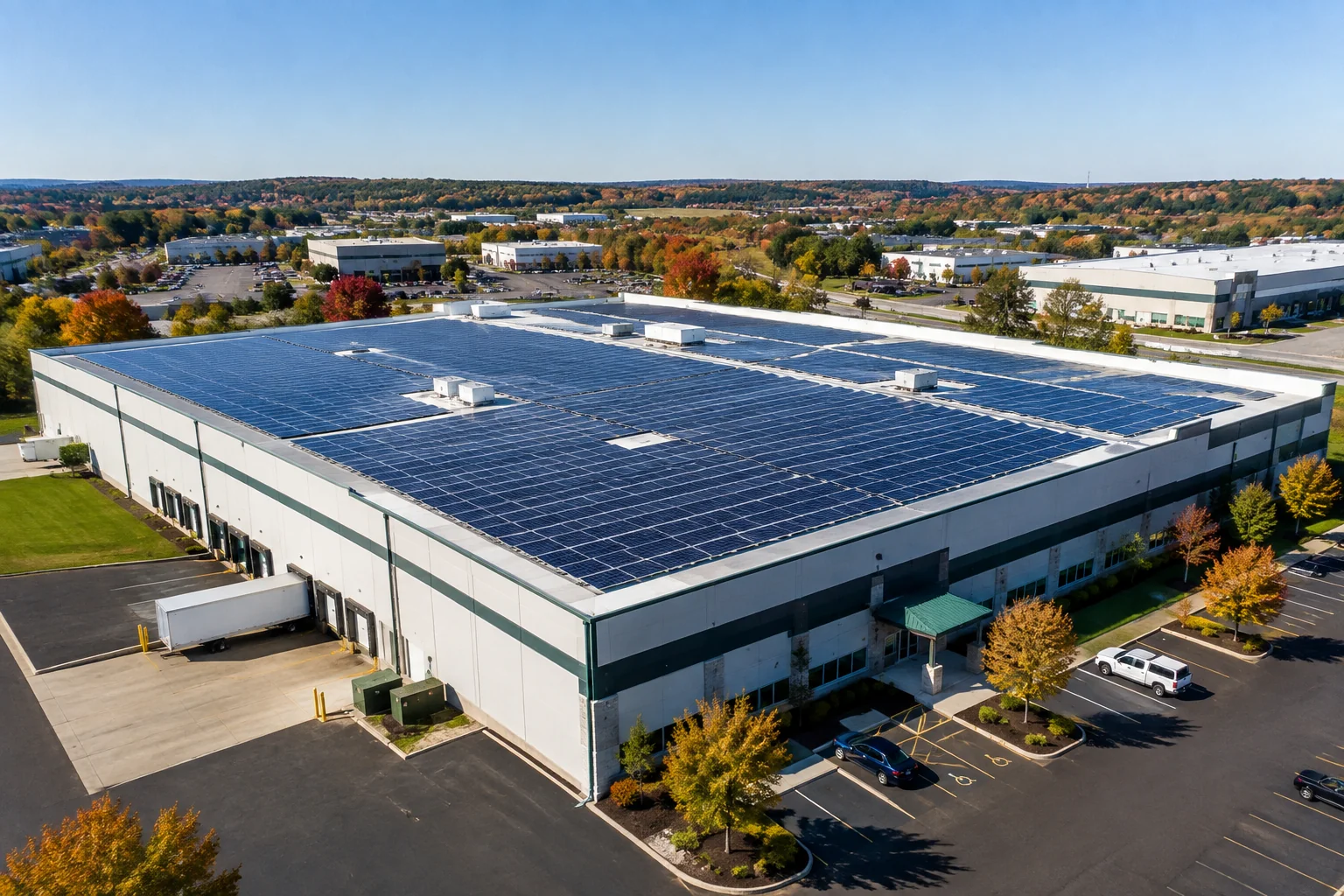
Consider a hypothetical: a small distribution company in New Haven owns its warehouse outright and is weighing a 100kW rooftop array. Under Section 48E, the business can reduce its tax liability by roughly 30% of the installed cost, assuming the project meets labor requirements, and then depreciate a large share of the remaining basis through MACRS. A homeowner installing a similarly proportioned 8-10kW system on a house gets neither benefit in 2026.
That doesn't mean residential solar stopped making sense. Utility bill savings and net metering still drive payback for homeowners, covered in our breakdown of solar panel installation costs for 2026. It means the payback timeline a homeowner should expect now runs longer than it did for a neighbor who installed in 2024, while a commercial owner's timeline got, if anything, more favorable relative to residential.
How Many Panels and What System Size Qualifies?
Most small business installations land well under the 1 MW threshold that keeps the full Section 48E rate in play, so system size rarely disqualifies a typical warehouse, office, or retail rooftop project.
A 1 MW system is large, generally the size of a sizable warehouse rooftop or a ground mount on several acres. Small-to-mid-size commercial properties in Connecticut, Massachusetts, and Rhode Island typically need systems in the 25kW to 500kW range to offset their own usage, far under that ceiling. Our guide on how many solar panels a small business needs walks through sizing by square footage and usage.
Where businesses run into trouble isn't the size cap. It's roof condition, electrical service capacity, and whether the property can support a ground mount if the roof can't. If your roof is older, review when to handle a roof replacement before solar so you're not forced to pull panels mid-warranty.
Financing a Commercial System Around the Credit Deadline
Financing structure affects who can actually use the Section 48E credit, since the credit flows to whoever owns the system for tax purposes, not necessarily whoever uses the electricity.
A cash purchase or a commercial solar loan puts your business in the owner's seat, able to claim both the credit and depreciation directly. A Power Purchase Agreement shifts ownership to the financing company, which claims the credit itself and typically passes savings through as a lower per-kWh rate rather than a tax credit you file for.
If your business doesn't have the appetite for the full upfront capital, a PPA with a 620 FICO minimum can still get a project moving before the construction deadline; see solar financing for small business owners with fair credit for how that underwriting works.
Whichever structure you pick, run it past your accountant before signing. The credit, the depreciation schedule, and your business's current tax position interact in ways a solar installer can explain in general terms but shouldn't be the final word on.
Frequently Asked Questions
Can a homeowner still get any federal solar credit in 2026?
Not through a direct purchase. The only route left is a lease or PPA where a third-party business owns the equipment and claims the commercial credit itself, sometimes passing part of the value through as a lower payment.
Does a small business need to own its building to claim the credit?
No, but the business generally needs to own the solar equipment itself, with landlord permission for the installation if it's leasing the property. Ownership of the panels, not the building, is what determines who can claim Section 48E.
What happens if construction starts after the mid-2026 deadline?
The project can still potentially qualify if it's placed in service by the end of 2027, but the safer, more documented path is beginning construction before the mid-2026 cutoff. Talk to your installer early about what "begin construction" requires to document for your specific project.
Get Your Commercial Solar Numbers Run Before the Deadline
The gap between the small business solar tax credit and the now-expired residential credit means small business owners in Connecticut, Massachusetts, and Rhode Island have a narrower, more urgent window than homeowners ever did. Teamsun's in-house crews handle design, permitting, and installation without subcontractors, and our commercial team can walk you through how the 30% credit, bonus adders, and depreciation actually apply to your building.
Explore our commercial solar services, talk to a designer about your roof or ground mount options, or call 203-903-4091 directly. If you're ready to see real numbers for your property, request a free quote before the construction-start deadline narrows your options further.
Recommended Resources
Written by
Dan Katzman
Teamsun
Teamsun writes practical solar guidance to help property owners compare equipment, project scope, costs, and long-term service before making a decision.
Keep going.
Solar Tax Credit & Rebate Paperwork: 2026 Guide
Solar federal tax credit rebate paperwork guide for 2026: which forms to file, common filing mistakes, and how a full-service installer handles it.
Dan Katzman
Teamsun
How Does Solar Net Metering Work With Your Utility?
Learn how solar net metering works with Eversource, National Grid, and other utilities in CT, MA, and RI, and how Teamsun handles interconnection paperwork.
Dan Katzman
Teamsun
Solar Financing for Small Business Owners With Fair Credit
Solar for small business with sub 700 credit is possible through PPA underwriting. See FICO minimums, required docs, and how Teamsun approves owners.
Dan Katzman
Teamsun