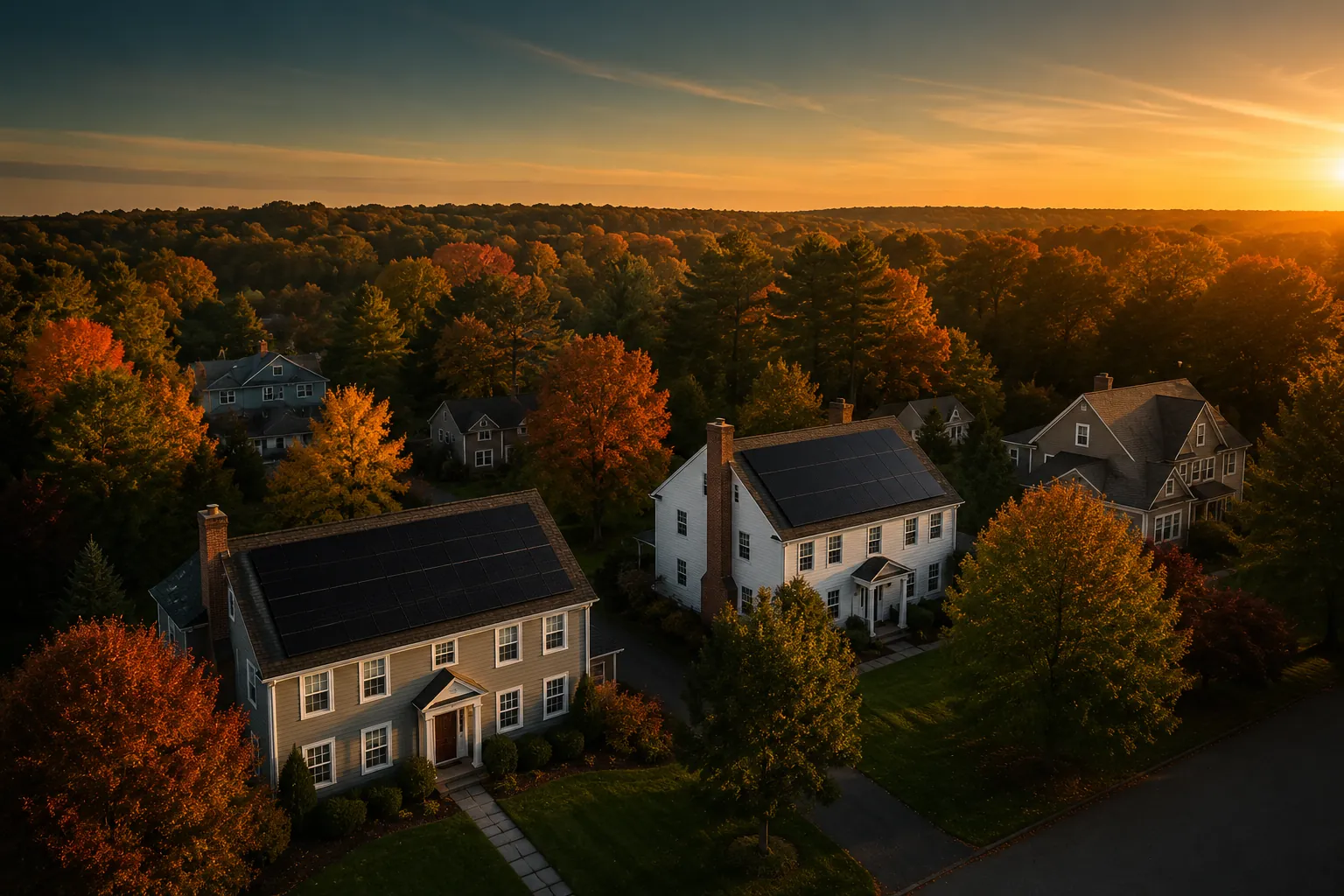
Animal and Critter Damage Under Solar Panels
Triage critter damage under solar panels safely, document electrical and roof evidence, assign wildlife work, and specify a durable repair and guard.
Dan Katzman
Founder, Teamsun
Animal noise or nesting under solar panels does not prove electrical damage—but chewed insulation, an exposed conductor, arcing, smoke, a burning odor, displaced equipment, or an unstable roof can be urgent. Keep people and pets away, do not climb or reach under the array, and route immediate danger to emergency services, the utility when appropriate, and qualified solar/electrical help. Then coordinate wildlife identification, lawful removal, contamination control, roof inspection, repair, guard design, and acceptance records.
Teamsun has a maintenance and repair request route for Connecticut, Massachusetts, and Rhode Island. That link does not verify Teamsun wildlife handling, critter-guard installation, every-brand repair, pricing, response time, warranty recovery, or support for a particular system. No audited Teamsun animal-damage projects, methods, costs, service tickets, or outcomes were available for this guide.
Direct answer: preserve safe evidence first. A qualified team should establish whether the issue is only presence/noise, nesting and contamination, roof/drainage damage, or electrical damage; identify lawful wildlife timing; inspect the complete affected circuit and roof area; repair and commission the system; then install a compatible, accessible barrier only after animals and young are out and the cavity is clear.
What should you do first when you suspect critter damage under solar panels?
Treat the first hour as triage, not pest removal. The safe action depends on what is observed, not on whether the animal is a squirrel, bird, mouse, raccoon, or bat.
| Observation from a safe location | Immediate route | Do not do |
|---|---|---|
| Flame, smoke, arcing, repeated popping, burning odor, exposed conductor, hot debris, or fire spreading | Keep distance; call emergency services; notify the utility or qualified responder as directed | Do not touch equipment, spray water, operate a generic disconnect sequence, or approach the roof |
| Loose module/racking, sagging roof, impact damage, falling material, or suspected structural instability | Keep the area below clear; request qualified roof/structural and solar assessment | Do not walk below loose material, climb, lift a panel, or attach a guard |
| Chewed-looking cable, displaced connector, damaged conduit, or exposed copper seen from ground/zoom | Keep people away; preserve photos and request qualified electrical/PV diagnostics | Do not tape, splice, move, disconnect, or test it |
| Animal enters/exits, scratching/noise, leaves, nest material, droppings, or odor—but no danger sign | Record times and locations; contact an appropriate wildlife/pest professional and solar service provider | Do not seal the exit, trap an animal under the array, remove an active nest, or disturb droppings |
| Monitoring alert or production change with no visible damage | Export the timeline; request remote review before attributing it to animals | Do not assume the animal caused an inverter, optimizer, microinverter, communications, shading, or utility issue |
OSHA identifies electrocution and arc-flash hazards around PV electrical work (OSHA solar electrical hazards). Panels can produce DC whenever illuminated; opening a building AC disconnect is not proof that every rooftop conductor is safe. A homeowner should not imitate a worker’s energized-work, fall-protection, test-equipment, or rescue plan.
The Department of Energy’s PV owner guide links animal nests, chewed wires, dry nest material, fire potential, electrical shock, roof falls, power tools, and disease exposure (DOE PV vulnerability guide, corrective action 16). That is a reason to assemble qualified roles—not permission for a homeowner to remove modules or nests.
If the situation is stable, send the safe evidence packet for a solar repair pre-screen. The provider should state what it can assess and which electrical, roof, wildlife, sanitation, manufacturer, owner, utility, or insurer roles remain outside its scope.
What evidence separates animal presence from confirmed solar damage?
Animal activity, visible debris, a monitoring alert, and a failed component are four different facts. A defensible diagnosis connects a specific observation or test to a specific affected location and component.
Safe homeowner evidence packet
| Record | What to capture | What it cannot prove alone |
|---|---|---|
| Ground-level array photos/video | Wide roof context, each array edge, visible entry point, debris, displacement, gutter/drain area; use optical zoom from a stable location | Condition beneath modules or electrical safety |
| Wildlife timeline | Species if confidently identified, count, entry/exit point, time, sounds, nesting behavior, young, injured/dead animal | Legal removal method or whether wiring is damaged |
| Monitoring export | Last known normal date, device/string alerts, daily/monthly production, reporting gaps | Root cause; offline monitoring may not equal zero generation |
| Utility data | Bills/import/export around the event | Which component failed or whether an animal caused the change |
| Equipment file | Permit set, one-line, array map, module/inverter/optimizer/microinverter/racking models and serials | Current physical condition |
| Ownership and warranty | Cash/loan/lease/PPA contract, workmanship, roof, product, service, claim contacts | That animal damage or labor is covered |
| Event history | Storm, tree work, roofing, prior guard/repair, outage, internet change, recent contractor visit | Causation without inspection |
| Interior/ground observations | Ceiling stains, odor, gutter overflow, debris below array—without entering an unsafe area | Roof leak source, contamination extent, or structural adequacy |
Use neutral labels: observed, reported by monitoring, confirmed by qualified test, probable, and unknown. “Leaves under panel 14” is an observation. “Squirrel destroyed the optimizer” is a diagnosis that still needs device identity, cable/connector examination, electrical testing, logs, and the manufacturer’s procedure.
The existing low-production diagnostic guide owns the full weather, meter, monitoring, shade, clipping, curtailment, and fault-shape analysis. B170 owns the animal-specific evidence and repair handoff; it does not turn one not-reporting device into proof of chewing.
What should qualified electrical and roof inspections cover?
The inspection should extend beyond the most obvious nest. Animals, debris, failed wire support, water, abrasion, and unrelated installation defects can overlap. The report must distinguish animal damage from pre-existing or unknown conditions.
| Inspection area | Required scope and return evidence |
|---|---|
| Work control | Ownership authorization, exact shutdown/test method, fall plan, contamination boundary, wildlife clearance, stop conditions, worker identities and licenses |
| Array map | Key every module, string/branch, optimizer/microinverter, junction, homerun, conduit path and damaged location to photos |
| PV conductors | Inspect accessible insulation for chewing/abrasion/UV damage; support, bend, routing, strain and roof contact; qualified continuity/insulation/other tests when appropriate |
| Connectors/junctions | Exact compatible connector pair, full engagement, moisture/heat/corrosion evidence, seals/caps, enclosure integrity and approved corrective method |
| MLPE and modules | Optimizer/microinverter housing and leads, module junction box/leads/backsheet/frame/glass, mounting and manufacturer-specific replacement/inspection rules |
| Grounding/bonding | Bonding path, listed hardware, disturbed rails/frames, corrosion and qualified measurements required by the design/AHJ |
| Racking/attachments | Clamps, rail/rail-less components, fasteners, movement, corrosion, animal-created debris load and access needed for guard installation/removal |
| Roof/flashing | Covering, penetrations, flashing, moisture, trapped debris, biological material, gutter/drain paths and need for a roofer or structural engineer |
| Electrical equipment | Inverter/gateway/combiner/disconnect status and logs; AC/DC circuit impact; service equipment only within qualified scope |
| Monitoring | Pre-event baseline, affected device/string, alerts, communications, post-repair mapping and a defined observation window |
DOE advises removing animal nests/debris from electrical equipment, maintaining wire management, and replacing failure-prone plastic ties as part of PV O&M (DOE existing-PV O&M). “Nest removed” is therefore not a complete electrical closeout.
Exact product instructions control. The current Enphase IQ8 installation guide, for example, requires qualified handling, correct cable routing/support, model compatibility, and manufacturer procedures rather than field repair of a microinverter. A current Qcells module manual tells owners not to disconnect modules themselves and controls allowable module/frame handling. These are model-family examples, not evidence that either product is installed or supported by Teamsun.
Get it diagnosed
Have the fault identified before you pay for parts.
Teamsun’s in-house electricians test the string, inverter, and monitoring path, then tell you whether the fix is a warranty claim, a repair, or a replacement.
Who owns wildlife removal, contamination, electrical repair, and roof work?
One company may coordinate several tasks, but the proposal should name the legally responsible provider for each. A solar electrician is not automatically a wildlife-control operator or contamination contractor; a pest professional is not automatically authorized to de-energize, remove, or repair PV equipment.
Professional RACI for a critter-damage project
| Task | Responsible professional | Solar/electrical role | Owner deliverable |
|---|---|---|---|
| Species/activity identification | Qualified wildlife/pest professional or state referral | Supplies array access/electrical boundary | Written species/activity assessment and young/active-nest finding |
| Lawful removal/exclusion timing | Wildlife authority/permitted professional as required | Coordinates safe access and prevents premature sealing | Method, permit/authorization if applicable, dates and disposition |
| Droppings/nest/carcass sanitation | Contractor with appropriate hazard assessment, PPE and disposal method | Establishes electrical safe-work boundary | Contaminant scope, method, PPE/disposal and visual clearance |
| Module access/removal | Properly licensed/qualified PV electrical contractor where required | Owns shutdown, module/MLPE/racking custody and reinstallation | Serial/location log, photos and reinstallation tests |
| Cable/component diagnosis and repair | Licensed/qualified solar/electrical contractor | Owns tests, compatible parts, permits and commissioning | Findings, measurements, parts/serials and updated records |
| Roof/structure/drainage | Qualified roofer; engineer when structural questions remain | Coordinates penetrations, access and array interfaces | Roof findings, repair/warranty record and drainage acceptance |
| Guard design/install | Provider legally qualified for affected PV/racking/roof work | Verifies product and attachment compatibility/access | Exact product, layout, attachment, gaps, warranties and maintenance plan |
| Warranty/insurance | Owner, contract party, manufacturer and insurer | Preserves evidence; does not promise coverage | Claim number, written coverage/denial and authorized scope |
CDC says disturbing fresh rodent urine, droppings, or nesting material can put contaminated material into the air, and cleanup needs exposure-specific precautions (CDC hantavirus prevention). CDC/NIOSH also links work-related histoplasmosis to disruption of bird or bat droppings and says dry sweeping or shoveling can aerosolize dust (CDC/NIOSH histoplasmosis controls). Do not pressure-wash contamination under an energized rooftop array: it adds water, uncontrolled runoff/aerosolization, roof access, and electrical risks rather than resolving them.
How do wildlife and nest rules change the repair sequence?
Do not seal a perimeter until a qualified wildlife check confirms that animals and dependent young are out and the proposed action is lawful. Otherwise a guard can entrap wildlife, drive it into a building, create decomposition/odor, or turn a manageable nest into an emergency.
The U.S. Fish and Wildlife Service says it is usually necessary to wait until a migratory-bird nest is inactive; destroying a nest in a way that causes unpermitted take of protected birds or eggs can violate federal law (USFWS bird nests). Species, nest status, state protections, health/safety facts and permits matter. Do not assume every bird or every inactive empty nest has identical treatment.
| Location | Wildlife route | Solar/electrical route |
|---|---|---|
| Connecticut | CT DEEP’s professional nuisance-wildlife program addresses trained/licensed operators, species and methods; confirm special/protected-species rules | CT DCP defines PV-1/PV-2 solar-electric work and limits connection to existing building wiring/circuits (CT solar trade scope); confirm local permit/inspection |
| Massachusetts | A licensed Problem Animal Control agent may handle defined property-damage work, while protected birds require federal/state routing (MassWildlife PAC agents); bats have seasonal/protection constraints | The Board says PV apparatus including frames, racks, rails and modules is within its licensed-electrician interpretation and electrical permits are pulled by licensed electricians/contractors (MA electrician board guidance); confirm inspector-of-wires scope |
| Rhode Island | State rules require a nuisance-wildlife-control specialist permit for covered professional services and specify species/limited exceptions (RI NWCS rules) | RI DLT says solar components that are electrical apparatus, including racking/rails in its policy, require licensed electrical work (RI renewable-energy licensing advisory); confirm local permit/inspection |
This is routing information, not legal advice. Ask the wildlife agency, local building/electrical authority and qualified contractor about the exact species, municipality, ownership, roof and work scope before removal or guard installation.
Do not improvise poison, smoke, fire, electric deterrents, glue traps, shooting, or relocation around a PV array. EPA warns that rodenticides can harm children, pets and non-target wildlife directly or through poisoned rodents, and requires label-specific controls (EPA rodenticide safety review). A pesticide label is law; a solar cavity is not permission for off-label use.
What should a durable solar critter guard specification require?
A guard is an exclusion component, not a substitute for wildlife clearance, cleanup, electrical repair, roof repair, or commissioning. Specify it by exact product, compatible array/roof geometry, attachment, access, environmental exposure, and return evidence—not as “wire mesh included.”
Guard bidder return schedule
| Required return | Bidder must state |
|---|---|
| Existing condition | Species/activity evidence; active/inactive/unknown nest; damage/contamination/roof findings; prerequisites before closure |
| Product identity | Manufacturer, model/part numbers, mesh/material/coating, aperture, height options, clips/fasteners and installation manual version |
| Compatibility | Exact module frame/return flange, racking, roof type, array edge/corners, conduit, snow/ice exposure and manufacturer/warranty review |
| Attachment | Listed/documented clip or fastening method; no assumed drilling, adhesive, improvised wire, roof penetration, module-frame modification or connector contact |
| Fit and exclusion | Perimeter drawing, heights, overlaps, corner treatment, roof undulation/gaps, entry points and tolerance/acceptance method |
| Electrical/fire | Clearance from conductors/connectors/MLPE, no abrasion or compression, bonding/fire/code review and no new ignition/debris trap |
| Roof/environment | Drainage, ventilation/airflow, snow/ice shedding, wind/corrosion/UV exposure, gutters, valleys, flashings and roof-covering protection |
| Serviceability | Removable access sections, module/MLPE service route, inspection/cleaning access and reinstatement method |
| Acceptance | Location-keyed photos, pull/engagement checks per manual, gaps/overlaps, debris clearance and post-weather inspection trigger |
| Warranty | Guard product/workmanship terms plus written module/racking/roof/installer position; exclusions and removal/reinstall responsibility |
Unirac’s current GUARDIAN product page illustrates why “compatible mesh” is not enough: it identifies a reusable clip-and-cap system, several mesh heights, pitched-roof/module conditions and separate technical documentation. A bidder still has to return the exact current installation manual and prove that its product, module frame, racking and roof combination fits. This is one product example—not a universal specification, Teamsun offering, or fit approval.
Reject any guarantee that wildlife can never return. Trees, roof access routes, guard gaps, corrosion, storm displacement, snow/ice, later service work and another species can change exclusion. Require a recurrence inspection after severe weather and after any module, roof, gutter, conduit, snow-retention or electrical work.
Get a specific answer
Every property changes at least one number above.
Share your details and Teamsun will confirm what applies to your address, what does not, and what still needs verifying before you commit.
What belongs in the repair, guard, warranty, and insurance scope ledger?
There is no responsible universal price. Array size and segmentation, roof pitch/height/material, access equipment, contamination, active wildlife, module removal, conductor length, connector/MLPE/module damage, permits, product compatibility and guard geometry can change the work.
| Cost/scope row | Quantity/basis | Included | Excluded/allowance | Responsible party |
|---|---|---|---|---|
| Remote records and monitoring review | ___ | ___ | ___ | ___ |
| Safety mobilization/access/fall protection | ___ | ___ | ___ | ___ |
| Wildlife survey, permits and removal/exclusion | ___ | ___ | ___ | ___ |
| Contamination/PPE/cleanup/disposal | ___ | ___ | ___ | ___ |
| Module/racking access and custody | ___ | ___ | ___ | ___ |
| Electrical diagnostics and report | ___ | ___ | ___ | ___ |
| PV wire/connectors/conduit/junction repair | ___ | ___ | ___ | ___ |
| Optimizer/microinverter/module replacement | ___ | ___ | ___ | ___ |
| Grounding/bonding/racking correction | ___ | ___ | ___ | ___ |
| Roof/flashing/drainage/structural work | ___ | ___ | ___ | ___ |
| Exact guard product and installation | perimeter/segments ___ | ___ | ___ | ___ |
| Permit/inspection/manufacturer/utility work | ___ | ___ | ___ | ___ |
| Monitoring remap and commissioning | ___ | ___ | ___ | ___ |
| Warranty claim/shipping/labor contribution | written claim ___ | ___ | ___ | ___ |
| Insurance deductible/non-covered work | written decision ___ | ___ | ___ | ___ |
| Follow-up/recurrence inspection | trigger/date ___ | ___ | ___ | ___ |
Separate product warranty, installer workmanship, roof coverage, wildlife/remediation contract and homeowners insurance. Animal damage may appear as an exclusion in an exact product warranty; that does not decide roof, installer, service-plan or insurance responsibility. Conversely, a replacement part does not automatically cover investigation, wildlife work, roof access, removal/reinstall, shipping, electrical labor, permitting, cleanup, guard, downtime, or monitoring.
Preserve pre-work photos, logs, damaged parts when claim instructions allow, model/serial/location, estimate, cause language, police/fire report if any, wildlife report, invoices and written approvals. Do not authorize destructive cleanup before asking the insurer/manufacturer what evidence it needs—unless immediate safety work cannot wait. Use the solar warranty comparison guide to keep coverage layers separate.
When should you stop, pause, or proceed?
| Verdict | Evidence | Next action |
|---|---|---|
| Stop / urgent | Fire, smoke, arcing, exposed energized conductor, hot/burning equipment, loose module/falling object, roof instability, water at damaged electrical equipment, unsafe animal | Keep distance; call emergency services/utility/qualified responder as appropriate; do not enter or operate equipment |
| Pause | Active/unknown nest or young; species/permit unclear; contamination unassessed; ownership authority missing; damage untested; roof unsafe; exact equipment/guard compatibility unknown; warranty/insurer evidence not preserved | Obtain the missing wildlife, electrical, roof, ownership, manufacturer, insurer or AHJ decision before cleaning, repair or sealing |
| Proceed with diagnostics | No immediate danger; safe access plan; owner authority; qualified providers; wildlife sequence and contamination scope defined; documented test plan | Inspect/map damage, produce findings and authorize a separate repair scope |
| Proceed with repair and guard | Animals/young lawfully cleared; contamination controlled; complete affected electrical/roof scope approved; exact parts/guard compatible; permits resolved; acceptance tests written | Repair, commission, install guard, photograph, hand over records and set recurrence triggers |
| Defer guard | No animal entry/damage, poor guard compatibility, roof replacement imminent, or another prerequisite changes the design | Continue safe ground/monitoring observations and resolve the prerequisite; do not buy a guard merely because a salesperson calls it mandatory |
A good closeout includes the damage map, before/after photos, test results, repaired/replaced model and serials, connector/wire method, updated array map/one-line if changed, roof findings, wildlife disposition, sanitation record, guard part/layout/attachments, permit/inspection records, monitoring restoration, warranty/claim documents, owner instructions and recurrence inspection trigger.
Frequently asked questions about critter damage under solar panels
Does scratching or animal noise mean my solar wiring is damaged?
No. Noise establishes activity, not electrical damage. Record time and location, collect safe ground-level evidence and request wildlife plus solar pre-screening. A qualified inspection and tests must connect damage to an exact cable, connector, device or circuit.
Can I turn off solar and remove a nest myself?
Do not assume a homeowner switch makes rooftop DC conductors safe. Nest removal can involve roof falls, energized equipment, disease exposure, protected wildlife and trapped young. Use the exact system instructions and qualified electrical/wildlife roles.
Should I pressure-wash bird or rodent debris from under panels?
No. Pressure washing can aerosolize contamination, force water around electrical and roof interfaces, scatter waste and require unsafe roof access. Have the contamination and electrical condition assessed before choosing a controlled method.
Will one not-reporting panel prove squirrel damage?
No. A module-level alert can also involve communication, connector, cable, branch/string, module, optimizer/microinverter, gateway or grid conditions. Preserve logs and require location-keyed diagnosis.
Must an active bird nest be removed immediately?
Not automatically. USFWS says active migratory-bird nests usually require waiting and that unpermitted take of birds or eggs is unlawful. Human safety facts, species, federal/state authority and permits can change the route; ask the appropriate wildlife professional.
Can a pest company remove solar panels to reach animals?
Pest credentials alone do not establish PV electrical, racking, roof, fall, manufacturer or permit authority. The contract should assign module access and safe-work control to the appropriately licensed/qualified solar provider and coordinate the wildlife professional.
Is solar critter guard always a good idea?
No. It fits when the wildlife risk and array geometry justify it and an exact durable product can be installed without compromising electrical safety, drainage, airflow, roof, service access or warranties. Imminent reroofing or unresolved damage may make deferral rational.
Can a guard trap animals under the array?
Yes, if the perimeter is sealed before all animals and dependent young are out. Require a species/activity check and lawful clearance before closure, plus a plan for any animal discovered during work.
Should the guard be screwed into the module frame or roof?
Do not assume so. Use the exact module, racking, roofing and guard instructions plus written warranty review. An attachment suitable for one return flange or roof may be prohibited or ineffective on another.
Does a product warranty cover animal damage and repair labor?
It depends on the exact document, cause, model/serial, claimant and remedy. Animal damage may be excluded, and even a covered part may leave diagnosis, access, wildlife work, cleanup, labor, shipping, permitting and guard costs separate.
Will homeowners insurance pay for squirrel or bird damage?
Only the insurer and policy can decide. Preserve evidence, ask for a written coverage decision and keep emergency mitigation separate from elective work. This guide does not promise coverage or characterize a specific loss.
What proves the critter-damage repair is finished?
Require electrical and monitoring acceptance, location-keyed photos, roof/drainage findings, replaced-part records, wildlife and sanitation closeout, exact guard attachment/gap evidence, permits when required, warranty/claim documents and a recurrence trigger.
Research method and intent boundary
Research was refreshed August 10, 2026 using OSHA, DOE, CDC/NIOSH, EPA, USFWS, CT DEEP/DCP, MassWildlife/electrician-board, Rhode Island wildlife/electrical authorities, current manufacturer documentation, the live Teamsun sitemap, representative 2026 SERPs, and homeowner forums. Competitors often lead with instant prices, DIY mesh or universal guard benefits; forums focus on surprise wire damage, repeated nesting, access cost and warranty uncertainty. Those sources informed questions only. No external price, frequency, warranty conclusion, DIY method or outcome became a Teamsun claim.
B170 owns safe animal-activity triage, multi-trade damage inspection, lawful wildlife/remediation sequencing, complete guard specification and recurrence acceptance. The maintenance-company article owns preventive scope and cadence. The repair-company article owns provider selection across all brands and faults. The low-production article owns the performance fault tree. The warranty article owns full warranty comparison.
If there is no immediate danger, compile ownership, equipment, monitoring, wildlife, roof and safe ground-level evidence. Request a critter-damage solar pre-screen and ask for a written boundary between electrical diagnosis, wildlife removal, sanitation, roof work, guard installation, warranty/insurance and closeout. Teamsun’s exact capability must be confirmed before any visit is booked.
Written by
Dan Katzman
Founder, Teamsun
Teamsun writes practical solar guidance to help property owners compare equipment, project scope, costs, and long-term service before making a decision.
Keep going.
Solar Panel Removal and Reinstallation Cost for Roof Work
Learn what drives solar detach-and-reset cost, how to preserve equipment and warranties, and what a complete roof-work proposal should include.
Dan Katzman
Founder, Teamsun
Help With a Solar Warranty Claim From Another Installer
Build a solar warranty claim with exact product records, qualified diagnosis, manufacturer authorization, cost gaps, replacement controls, and closeout tests.
Dan Katzman
Founder, Teamsun
Solar Inspection Before Buying a Home With Panels
Use this solar inspection before buying a house dossier to verify ownership, records, production, roof, electrical condition, transfers, and closing duties.
Dan Katzman
Founder, Teamsun